
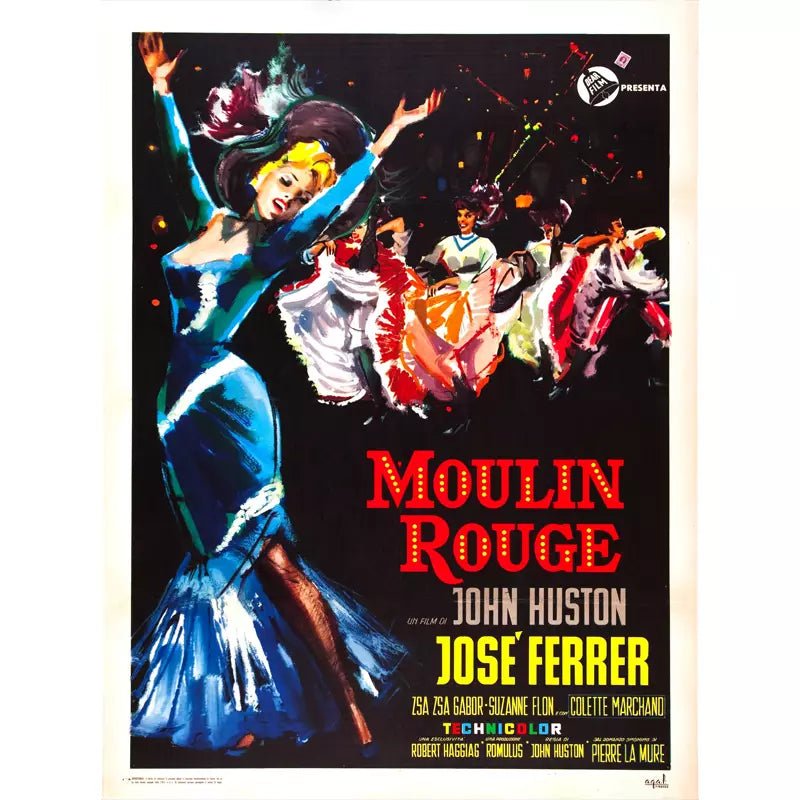
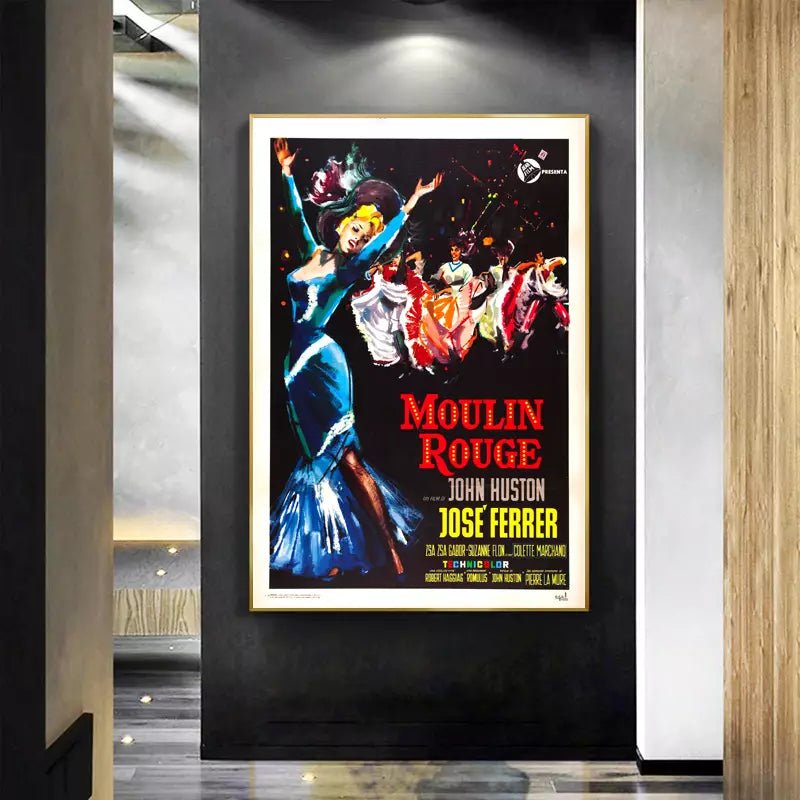
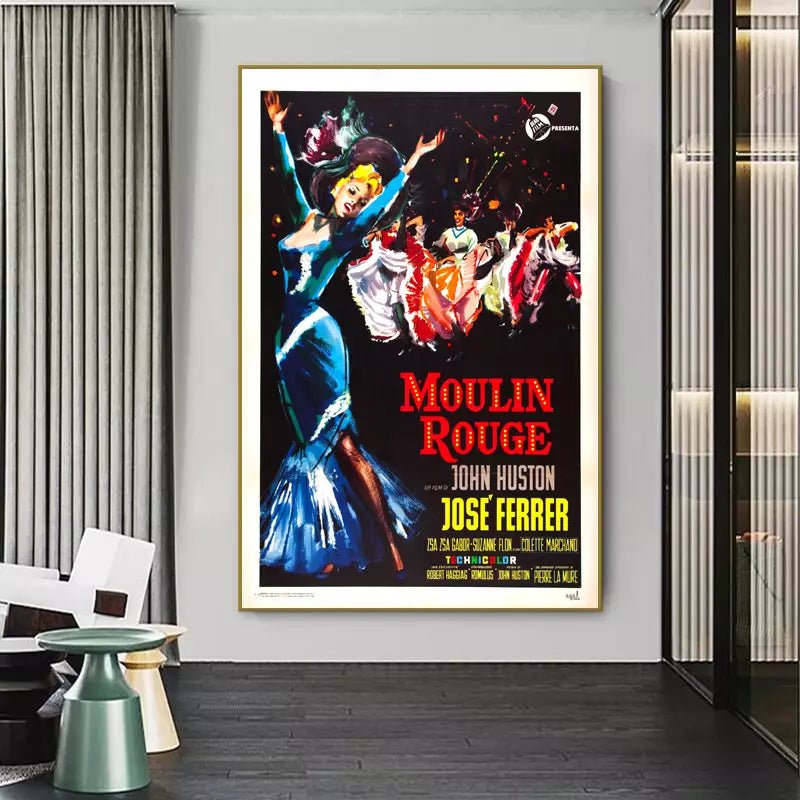
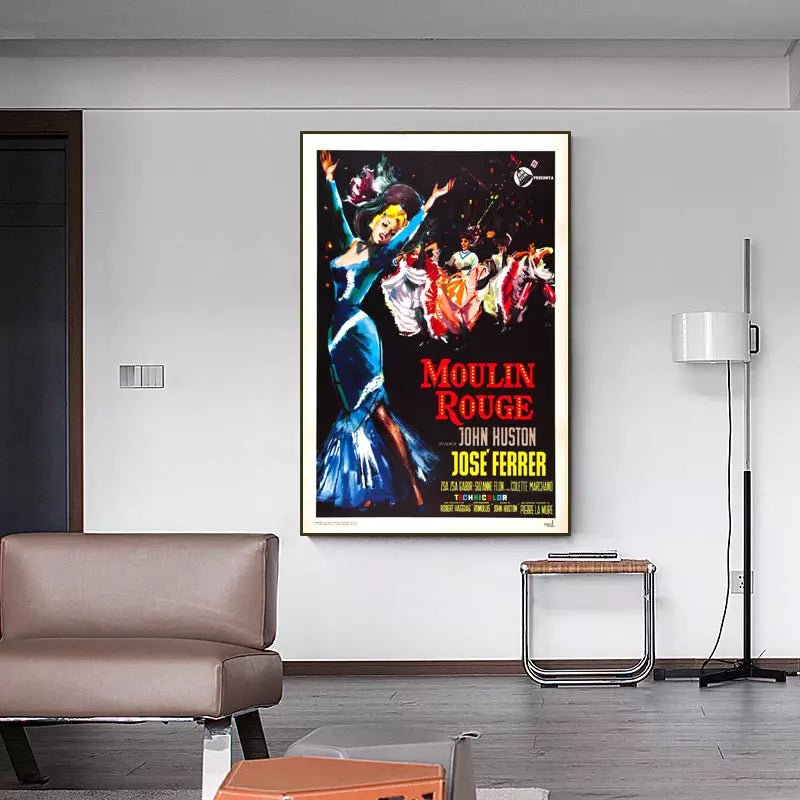
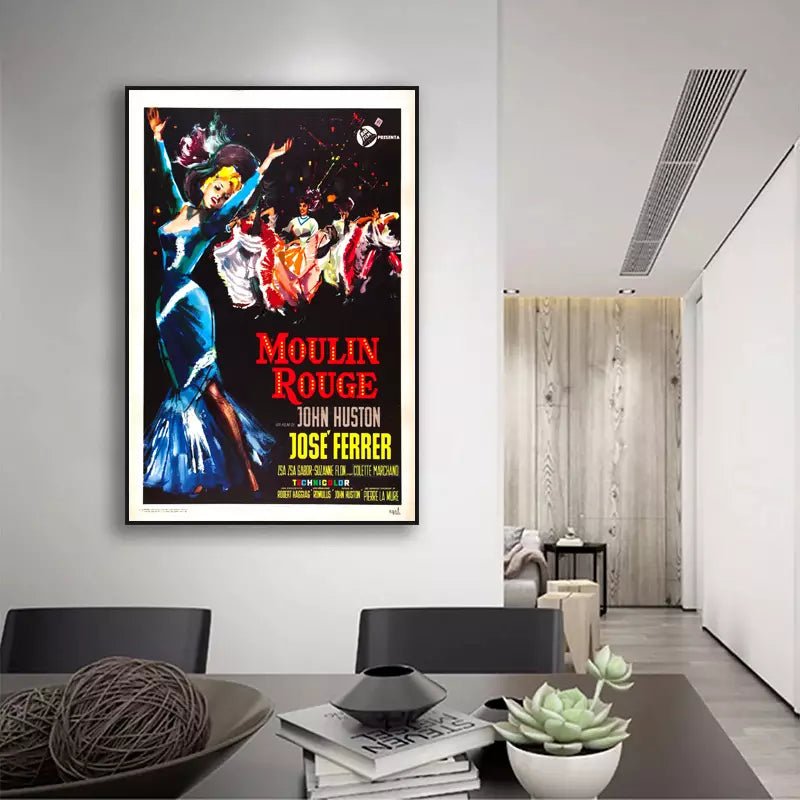
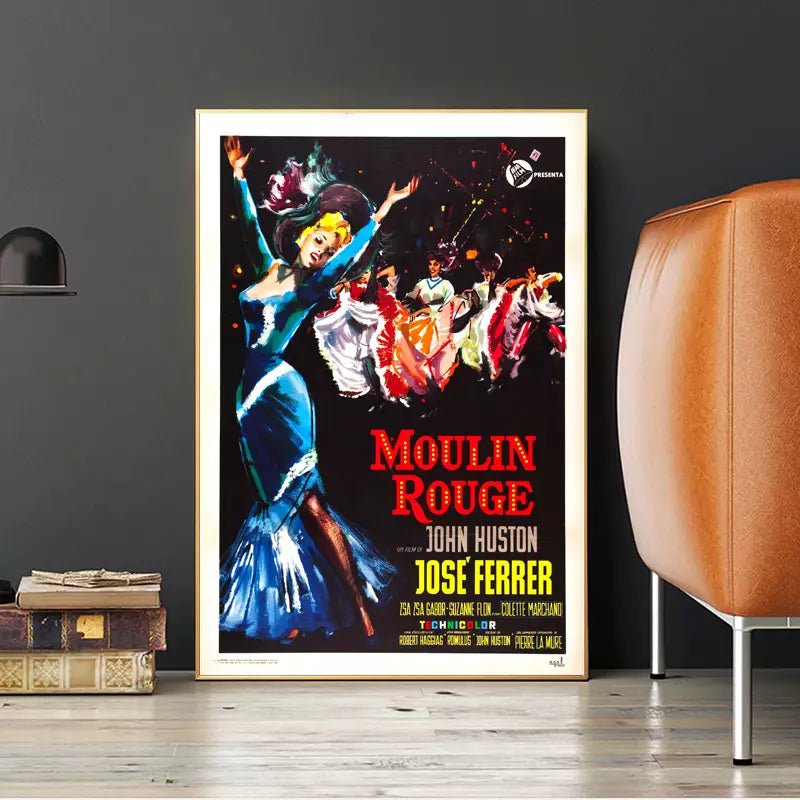
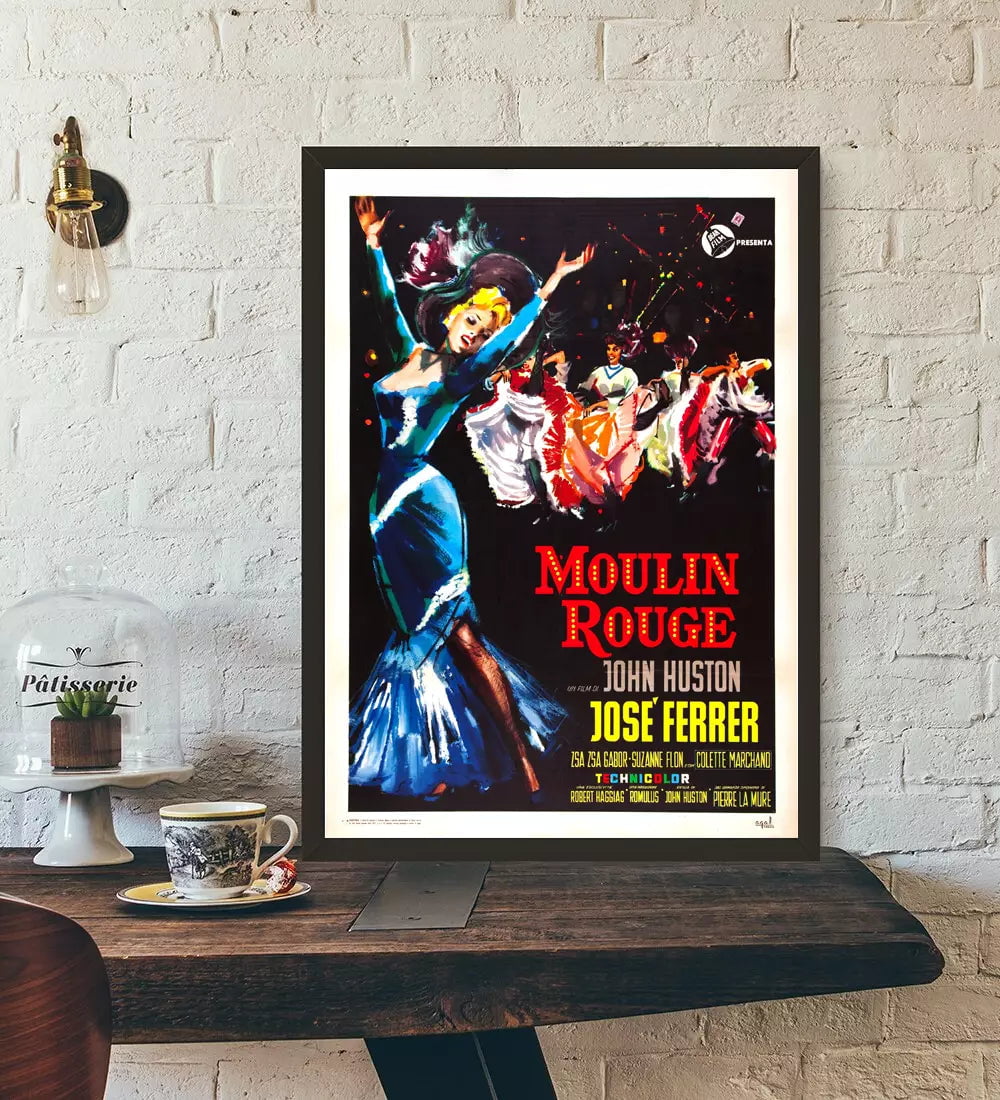
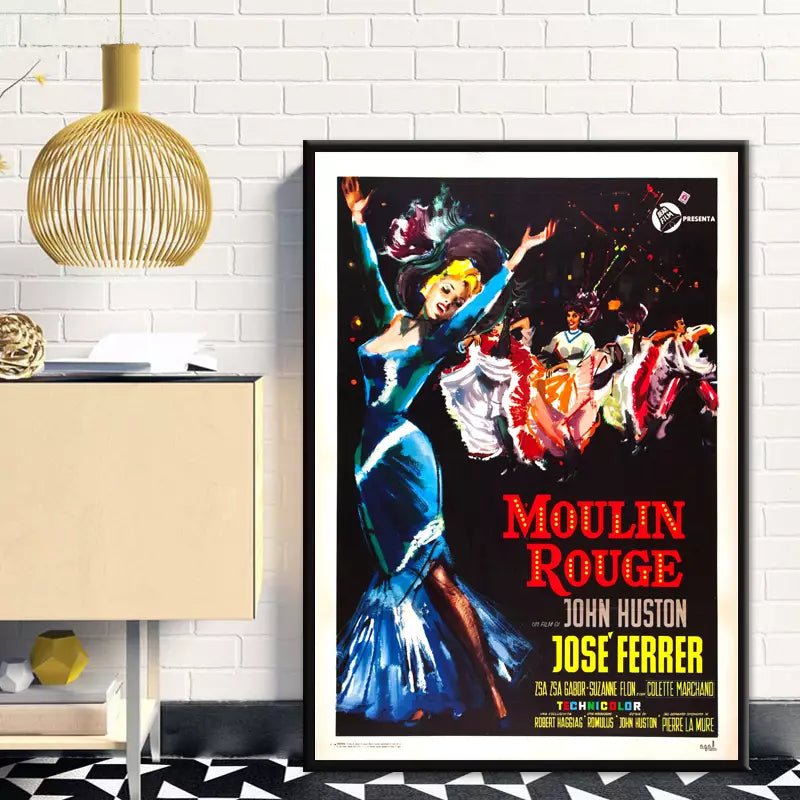
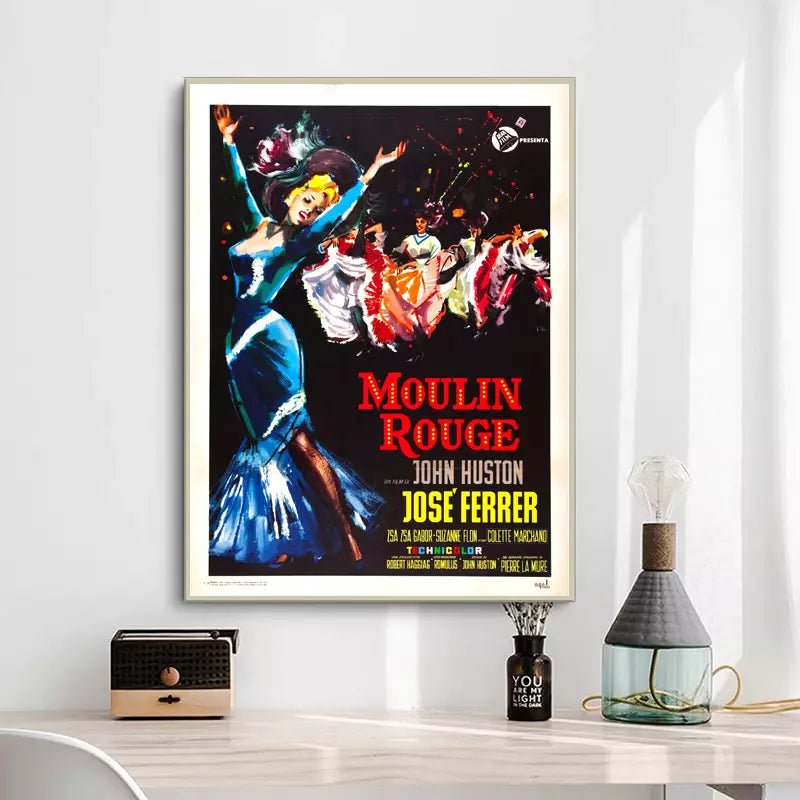
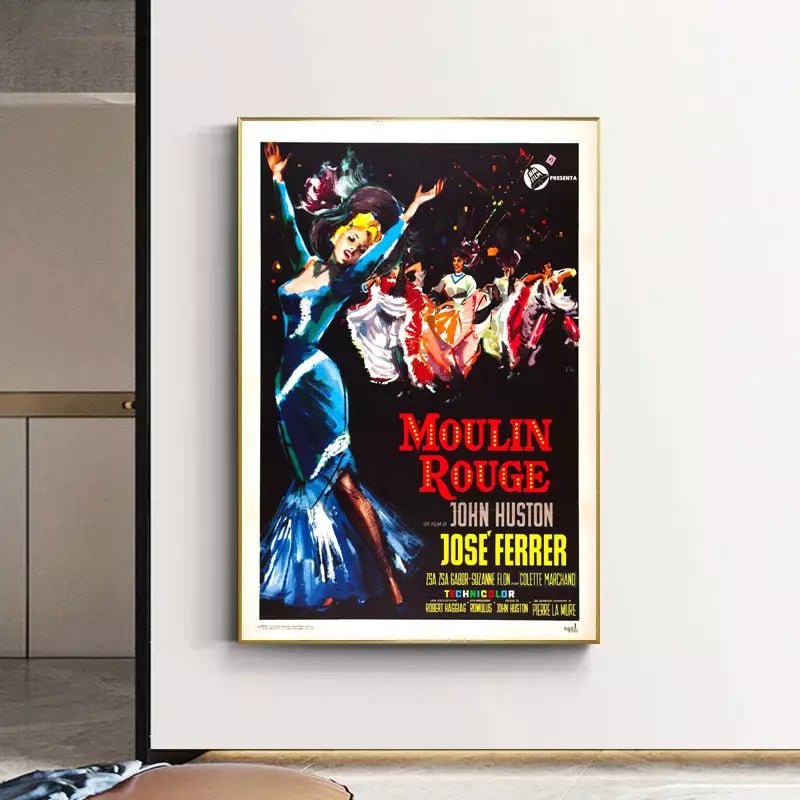
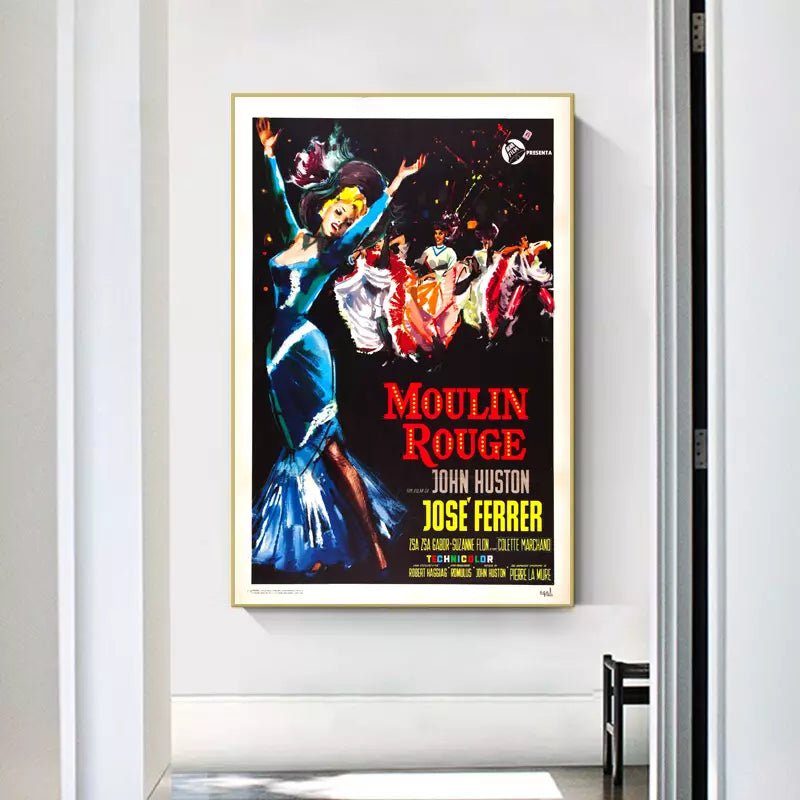


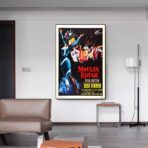


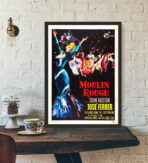


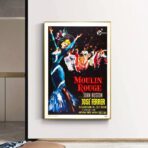
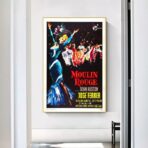









Explore the 1952 Moulin Rouge Movie Poster, directed by the talented John Huston. Immerse yourself in the captivating world of this cinematic masterpiece that exudes a multitude of emotions. Let yourself be swept away by love, passion, and the whirlwind of bohemian life in Paris at the beginning of the 20th century. Discover breathtaking performances, a romantic plot, and a captivating visual ambiance. This vintage poster is a true testament to the film’s aesthetic and soul, transporting viewers into a whirlwind of vibrant colors, sumptuous sets, and intoxicating dances. Don’t miss the opportunity to relive the glamorous era of the famous Parisian cabaret and immerse yourself in this timeless cinematic experience that is sure to move you.
- Paper Feature:
- 🎨 Canvas: global standard in terms of printing and imitating a “painting canvas” look.
- By default, the poster contains a 4cm white border for framing (frame not included). If you don’t want it, please choose “without white border”.
- ✅ Size: Multiple choices available. ✅
- High UV resistance.
- Color vibrancy maximum, glare-free.
- Paper recycled, guaranteeing environmental friendliness.
- Poster packaged carefully and delivered in a protective tube for Total protection.
- FREE STANDARD DELIVERY.
⚠️ Frame not included. ⚠️
Description of this Moulin Rouge Movie Poster
Moulin Rouge is a 1952 British historical romantic drama film directed by John Huston from a screenplay he co-wrote with Anthony Veiller, based on the 1950 novel of the same name by Pierre La Mure, and produced by John and James Woolf. The film follows artist Henri de Toulouse-Lautrec in the bohemian subculture of 19th-century Paris in and around the Moulin Rouge, a burlesque palace. The film screened at the 14th Venice International Film Festival, where it won the Silver Lion.
The film stars José Ferrer (Toulouse-Lautrec), Zsa Zsa Gabor (Jane Avril), Suzanne Flon, Eric Pohlmann, Colette Marchand, Christopher Lee, Peter Cushing, Katherine Kath, Theodore Bikel, and Muriel Smith
In 1890 Paris, crowds flock to the Moulin Rouge nightclub as artist Henri de Toulouse-Lautrec finishes a bottle of cognac while sketching the club’s dancers. The club’s regulars arrive: singer Jane Avril flirtatiously teases Henri, dancers La Goulue and Aicha wrestle, and owner Maurice Joyant offers Henri free drinks for a month in exchange for painting a promotional poster. At closing time, Henri waits for the crowd to disperse before standing up to reveal his four-foot-six-inch stature. A flashback reveals that, as a child, Henri fell down a flight of stairs and injured his legs, which never healed properly due to a genetic disorder (his aristocratic parents were first cousins), leading him to devote himself to art. Returning home to his Montmartre apartment, he meets streetwalker Marie Charlet and helps her evade police arrest. Henri is impressed that Marie notices his disability without judgment, and he allows her to stay with him. Gradually, he realizes that poverty has made Marie cruel but has also freed her from society’s hypocrisy. He adores her, but Marie takes advantage of him; one night, after staying out all evening, Henri waits for her return and angrily tells her to leave, and although they reconcile, Henri remains suspicious of Marie. When Marie insults Henri’s portrait of her, he dumps her and sinks so deeply into alcoholism that his landlady notifies his mother, who suggests he find Marie to dispel his depression. Henri finds Marie in a café, drunk and distraught. Marie reveals that she stayed with Henri simply to save money for her boyfriend, who has now left her. Henri returns to his apartment determined to kill himself, lighting the gas. While waiting to asphyxiate, he is suddenly inspired to finish the Moulin Rouge poster for Maurice. Having survived his crisis, he secretly arranges to give Marie enough money for a new life.
The next day, Henri brings the poster to the dance hall and, although the style is unusual, Maurice accepts it. This leads to increasing success, but a racy portrait prompts Henri’s father to denounce his work as “pornographic.” Despite this, Henri continues to depict Parisian nightlife, earning him rivalries and fame but no real friends. One morning, he sees a young woman standing at the edge of the Pont Alexandre III over the Seine. Thinking she might be suicidal, he stops to talk to her. She tells him she’s not going to jump and throws a wrench into the water. A few days later, Jane Avril goes shopping with Henri, where the young woman from the bridge is modeling dresses in a dress shop. She is Myriamme, Jane’s friend who, unlike Jane, lives on her own earnings and not the patronage of wealthy lovers. Myriamme is a great admirer of Henri’s paintings, and Henri is shocked to discover that she bought the portrait of Marie Charlet years earlier at a flea market. She reveals that the The key she threw into the water belonged to a wealthy suitor, Marcel de la Voisier, who asked her to be his mistress but not his wife. As Henri continues to bitterly denounce true love as an illusion, he falls in love with Myriamme. One night, the two see the dancer La Goulue on the street, washed up, drunkenly insisting that she was once a star, which makes Henri realize that the Moulin Rouge is now respectable and no longer caters to bohemians and misfits.
Myriamme informs Henri that Marcel has finally asked her to marry him. Henri, certain that she loves the most handsome man, congratulates her profusely on trapping Marcel. Myriamme asks Henri if he loves her, but, believing she is only trying to spare his feelings, he lies and tells her he does not. The next day, Henri receives a letter from Myriamme telling him that she loves him, not Marcel, but she believes Henri’s bitterness about Marie has poisoned any chance they have of being happy together. He rushes to Myriamme’s apartment, but she’s already gone.
A year later, drunk in a dive bar, Henri is still obsessively reading Myriamme’s note. He is taken home, where delirium tremens causes him to hallucinate cockroaches, and while trying to chase them away, Henri falls down a flight of stairs. Henri is taken to his family’s château, but his condition worsens; on his deathbed, Henri’s father reveals that Henri will be the first living artist to be shown at the Louvre. Henri’s father begs for forgiveness. In his final moments, Henri sees visions of figures from his Moulin Rouge paintings, including Jane Avril, dancing happily in his bedroom.