
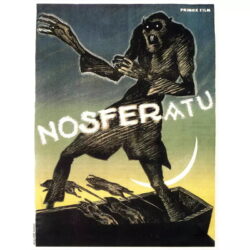
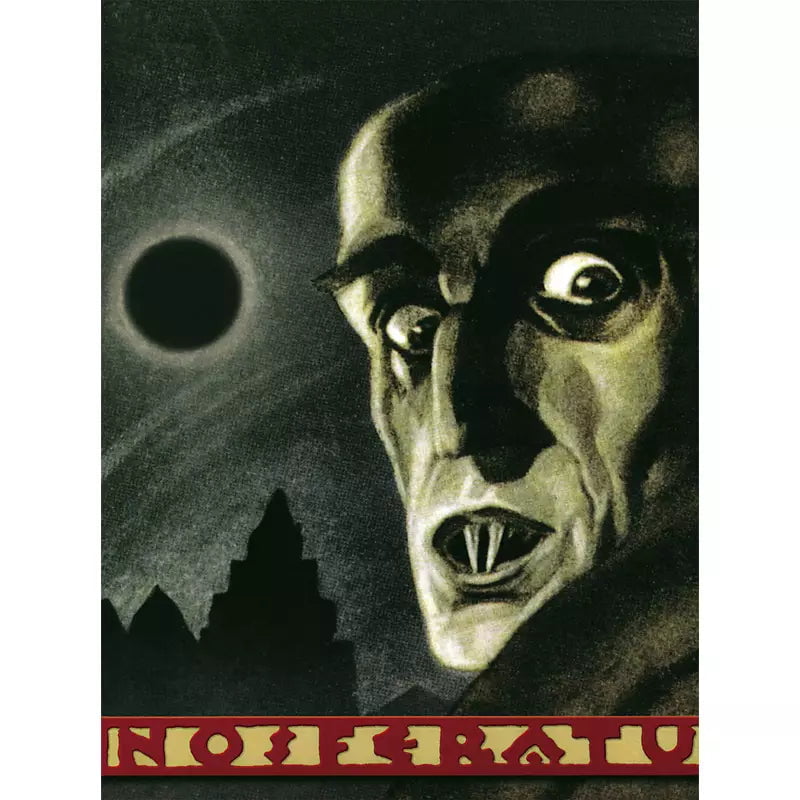
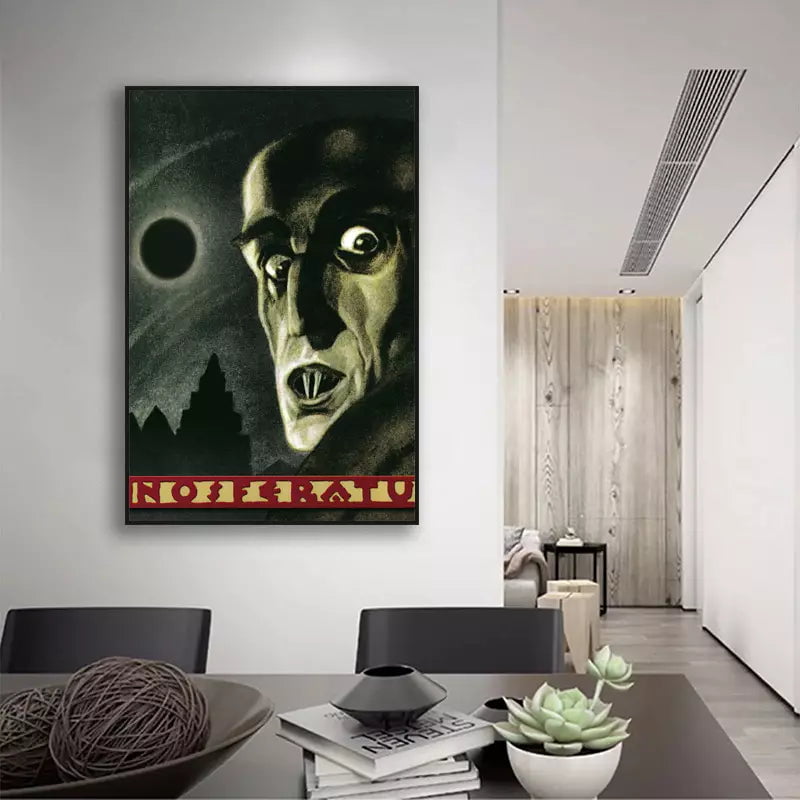
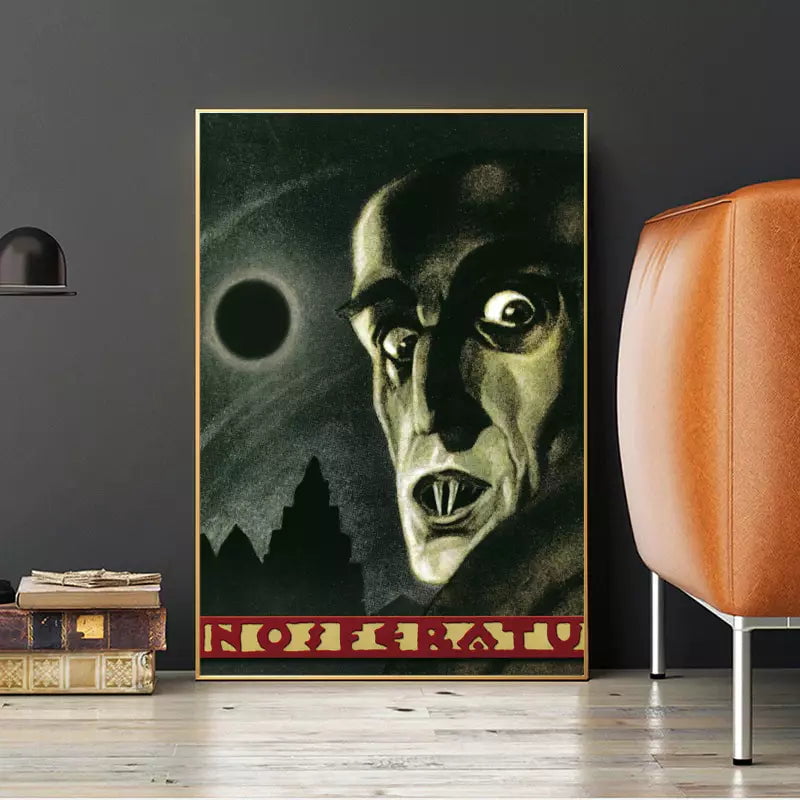
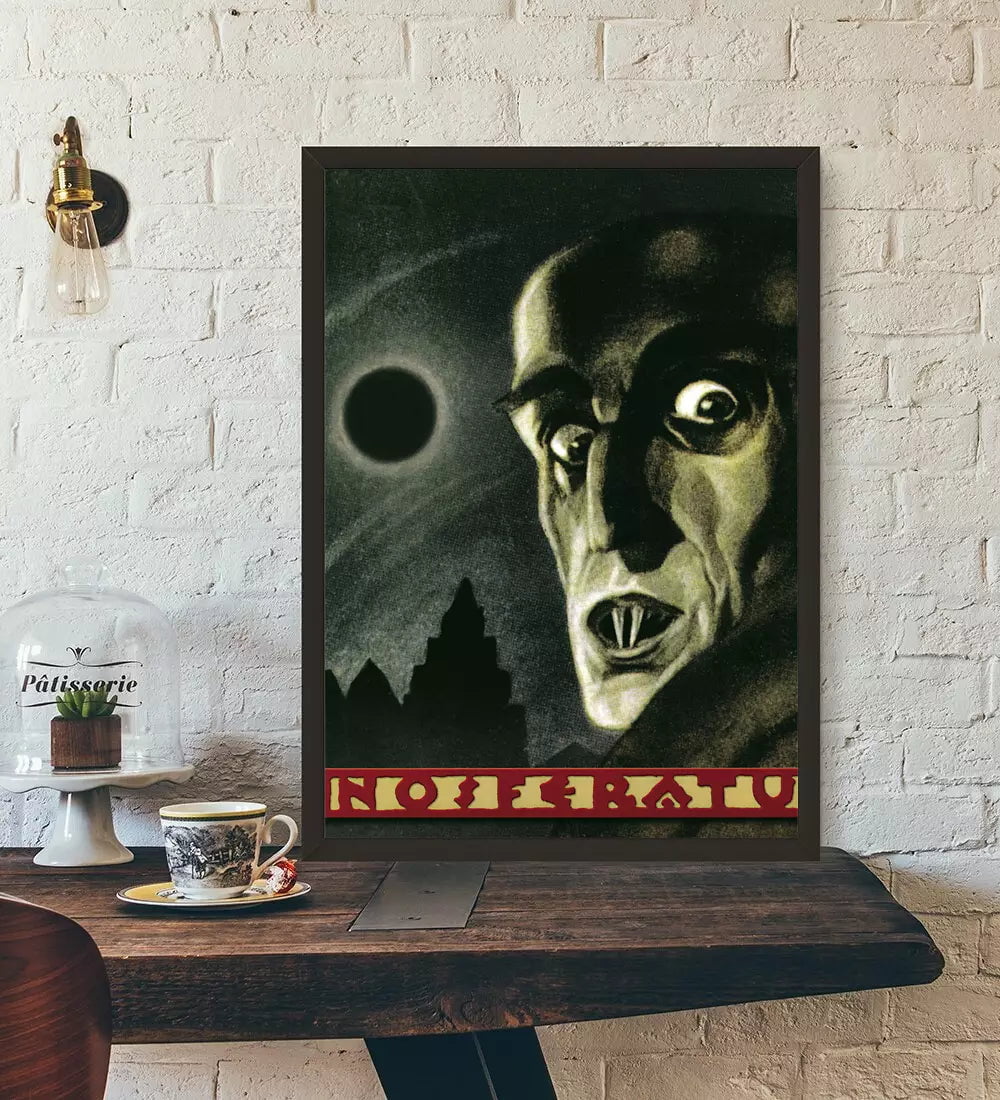
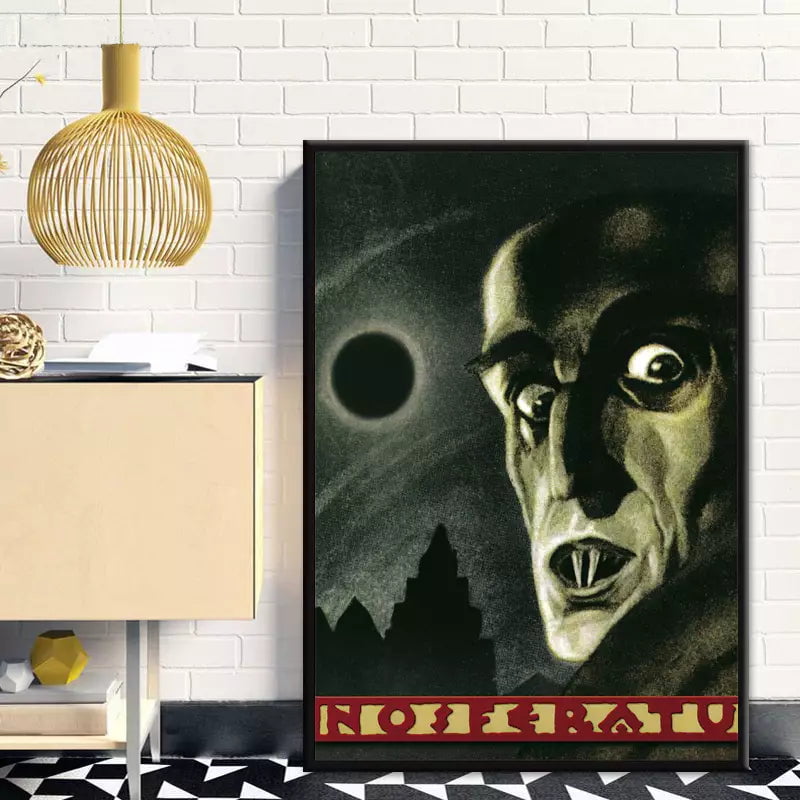
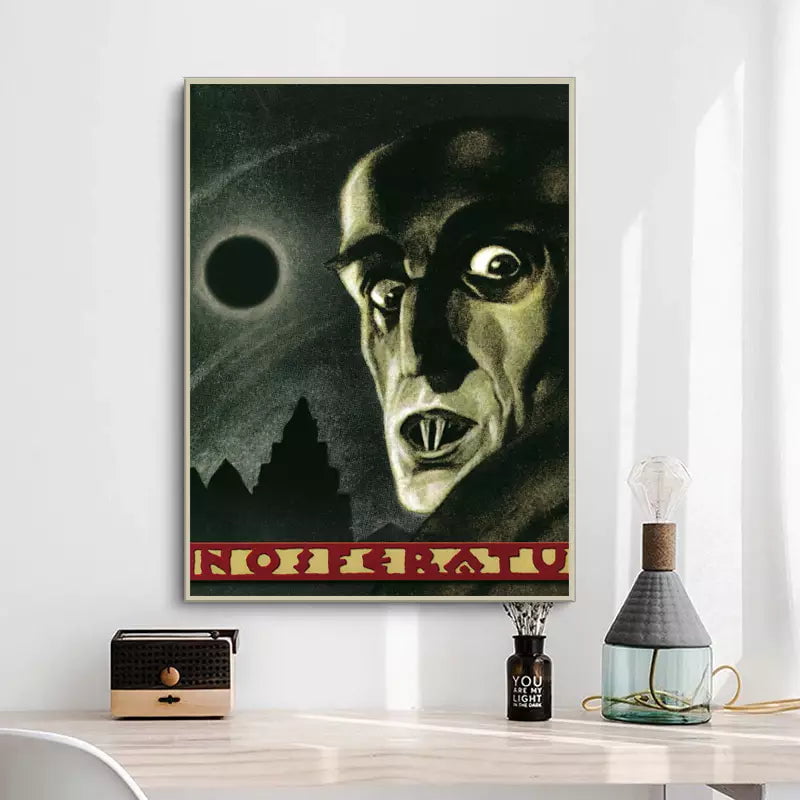
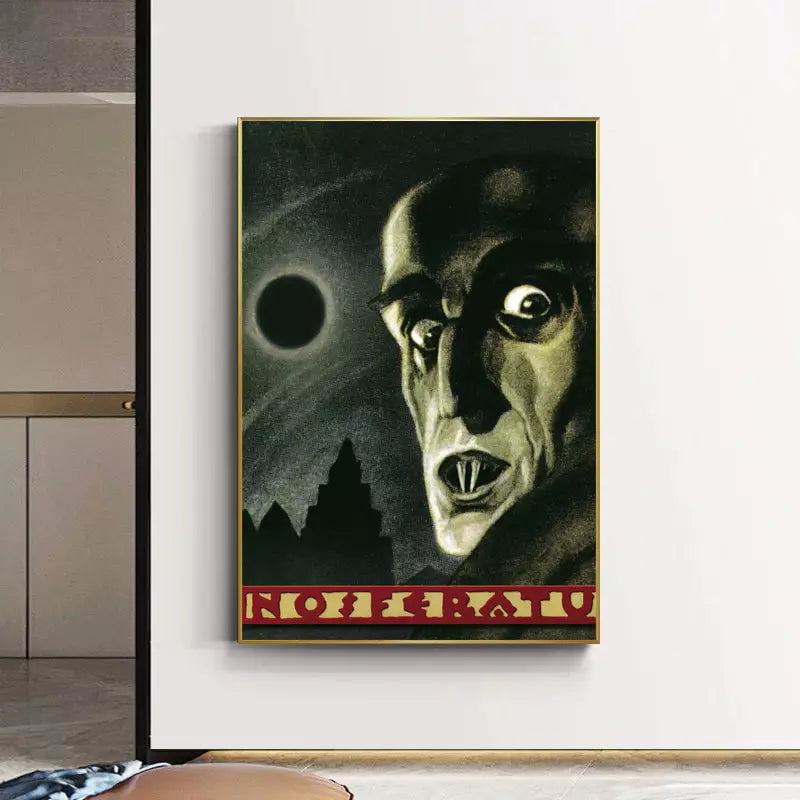
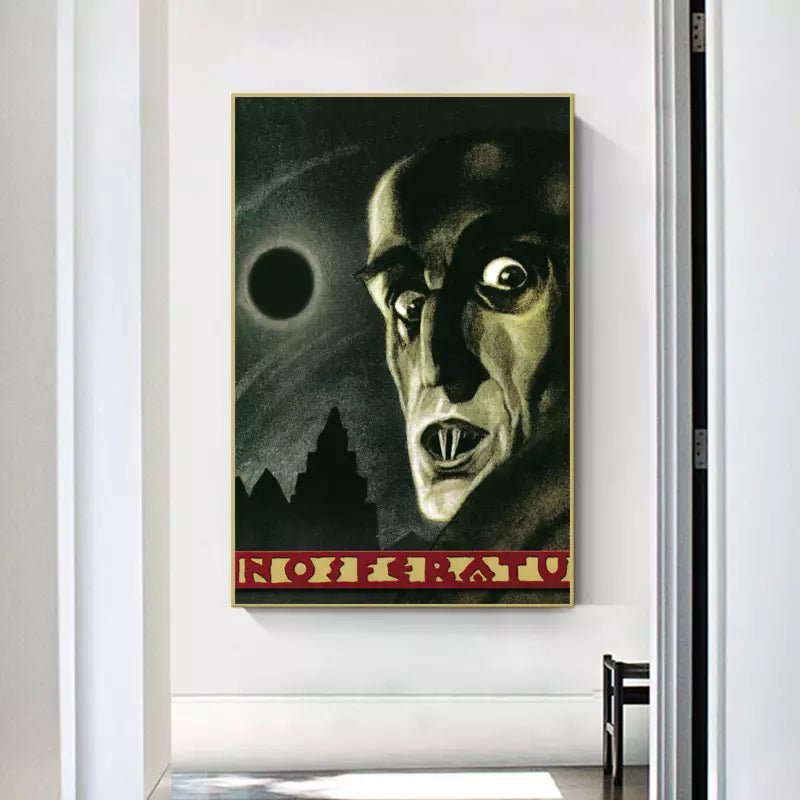
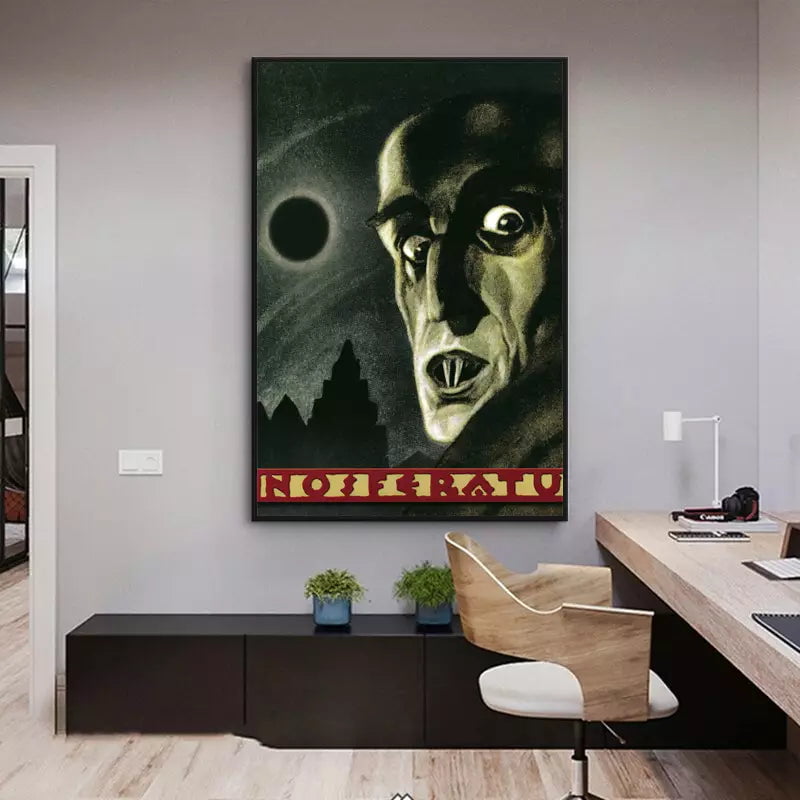
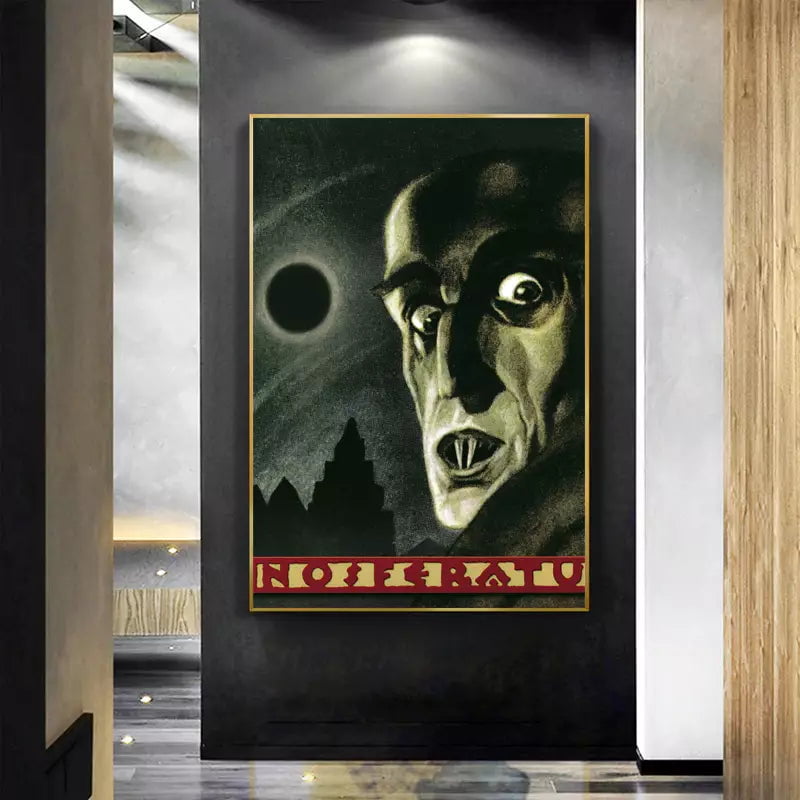
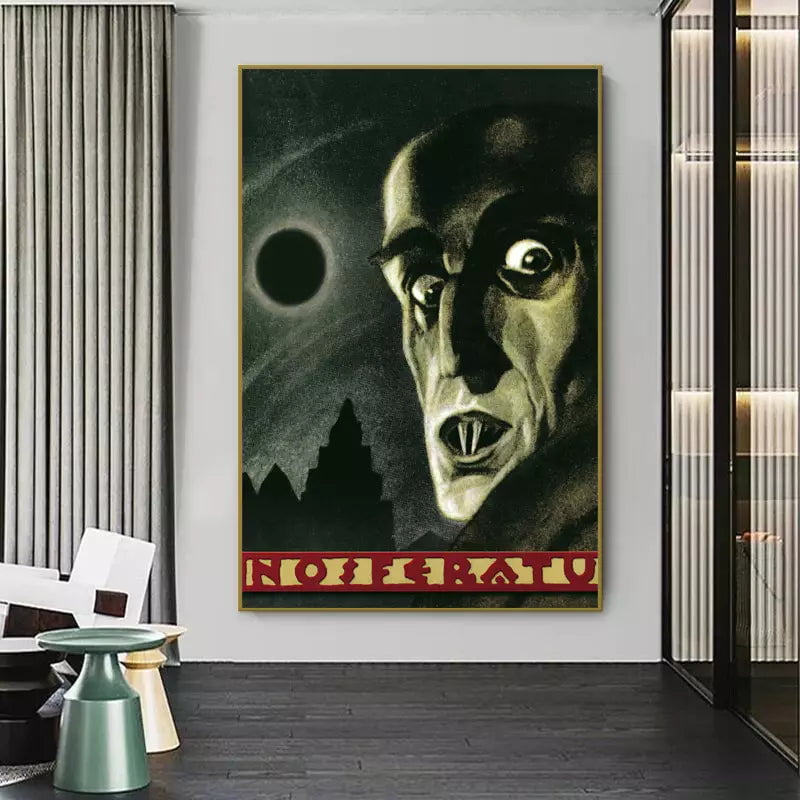
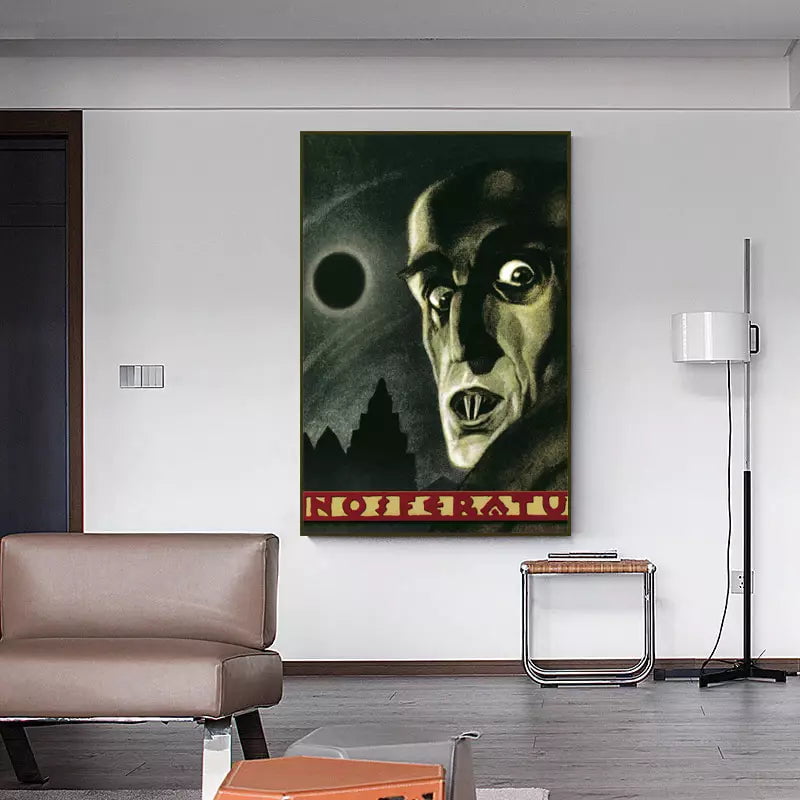
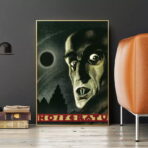
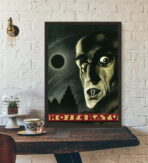
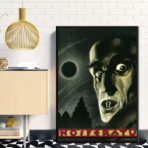
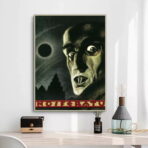
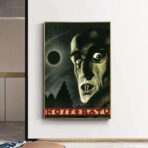


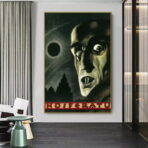
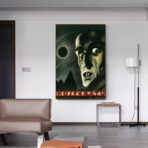











Discover the Nosferatu Poster, the essential masterpiece of German horror cinema. This timeless work, created by Friedrich Wilhelm Murnau in 1922, has left its mark on cinema history and continues to fascinate film lovers around the world. The Nosferatu poster perfectly captures the essence of the film, conveying the dark, terrifying, and oppressive atmosphere that reigns throughout the story. The scariest vampire in the history of cinema comes to life before your eyes, plunging you into a fascinating world where terror and fascination intertwine. Add this poster to your cult film collection, or decorate your home for a gothic and captivating atmosphere. Don’t miss this opportunity to own a unique piece of cinema history.
- Paper Feature:
- 🎨 Canvas: global standard in terms of printing and imitating a “painting canvas” look.
- By default, the poster contains a 4cm white border for framing (frame not included). If you don’t want it, please choose “without white border”.
- ✅ Size: Multiple choices available. ✅
- High UV resistance.
- Color vibrancy maximum, glare-free.
- Paper recycled, guaranteeing environmental friendliness.
- Poster packaged carefully and delivered in a protective tube for total protection.
- FREE STANDARD DELIVERY.
⚠️ Frame not included. ⚠️
Description of this Nosferatu Poster
Nosferatu – A Symphony of Horror is a 1922 German feature film in five acts directed by Friedrich Wilhelm Murnau. The silent film is an unauthorized adaptation of Bram Stoker’s novel Dracula and tells the story of Count Orlok (Nosferatu), a Carpathian vampire who falls in love with the beautiful Ellen and spreads terror in his hometown of Wisborg. Nosferatu is considered one of the first representatives of the horror film and had a great influence on the genre thanks to its visual design. At the same time, the work, with its demonic main character and dreamlike mise-en-scène reflecting tortured states of mind, is considered one of the most important works of Weimar Republic cinema. The film was to be destroyed in 1925 after losing a copyright lawsuit, but it has survived in countless edited versions and is now available in several restored versions. Nosferatu – A Symphony of Horror is a German feature film in five acts directed in 1922 by Friedrich Wilhelm Murnau. The silent film is an unauthorized adaptation of Bram Stoker’s novel Dracula and tells the story of Count Orlok (Nosferatu), a Carpathian vampire who falls in love with the beautiful Ellen and spreads terror in his hometown of Wisborg. Nosferatu is considered one of the first representatives of the horror film and had a significant influence on the genre thanks to its visual design. At the same time, the work, with its demonic main character and dreamlike mise-en-scène reflecting tortured states of mind, is considered one of the most important works of Weimar Republic cinema. The film was to be destroyed in 1925 after losing a copyright lawsuit, but it has survived in countless edited versions and is now available in several restored versions.
A chronicler recounts how, in 1838, the plague arrived in the port town of Wisborg: The real estate agent Knock receives a written order from a Carpathian count named Orlok to look for a house for him in Wisborg. The real estate agent, apparently delighted with the count’s request, instructs his young colleague Thomas Hutter to go to Orlok and offer him the semi-dilapidated house opposite the Hutters’ apartment. Thomas is full of energy and very much looks forward to the trip. His young wife Ellen, on the other hand, reacts with concern and gloomy forebodings to her husband’s travel plans. Thomas entrusts his wife to his friend, the shipowner Harding, and sets off. On the way, he stops at an inn. The locals are apparently very afraid of Orlok and strongly warn the young man against continuing his journey. The “Book of Vampires,” a compendium on bloodsuckers that Thomas had already taken with him when he left Wisborg, could have served as a warning. But he ignores all warnings and cautions and continues his journey.
When his guides abandon him at a bridge before the final climb to the castle, a contrite Thomas must continue his journey alone. A few miles from his destination, he is picked up by the count’s ominous carriage in a dark forest and arrives at Orlok’s gloomy castle. Once in the courtyard, there is no one there. Thomas wonders where all the castle servants have gone, but he is then received by the lord of the castle himself. Count Orlok is no less ominous than his home: a thin, bald figure with thick eyebrows, a large hooked nose, and unnaturally pointed ears. A night meal is prepared for Thomas. When he accidentally injures his thumb with a knife, Orlok eagerly wants to pounce on the blood, but ultimately lets Thomas go. The count asks the young man to stay. After a troubled night’s sleep, Thomas wakes up with two bite marks on his neck. However, he naively interprets them as mosquito bites and writes an indignant letter to his wife. The following evening, when Count Orlok accidentally spots Ellen’s portrait in a locket, he immediately accepts Thomas’s offer and signs the sales contract without even thinking about it. Thomas suspects that he has thus invited fate into his hometown. That night, Orlok approaches the sleeping Thomas to suck his blood, but in the distance, Ellen awakens in Wisborg screaming and holding out her hands in supplication. The Count renounces his victim.
Ellen enters a trance-like state and begins to sleepwalk. Meanwhile, Thomas explores Orlok’s castle during the day and finds the Count lying in a coffin, in a death-like sleep. The following evening, he witnesses the Count hastily loading earth-filled coffins onto a cart. No sooner has Orlok lain down in the last, empty coffin and pulled the lid over himself than the sinister cart speeds away. Thomas flees the castle, faints, and is rescued by locals who treat the feverish man in a hospital. Meanwhile, Orlok arranges for the coffins to be rafted to Varna and loaded onto a sailing ship. The Empusa sets sail for Wisborg with Orlok on board, while the recovered Thomas hurries home by land. Aboard the Empusa, crew members die one after the other from a mysterious illness. When the sailors investigate and open one of the coffins, a horde of rats spills out. When finally only the captain and his first boatswain are still alive, the count emerges from his coffin during the night. The first mate jumps from the boat, and the captain ties himself to the rudder. The Empusa, like a ghost ship, enters the port of Wisborg, where the dockworkers find only the captain’s corpse on the boat.
Knock, who has since landed in the insane asylum due to his appetite for live flies, is delighted that the “master” is finally here. The count, dragging a coffin and rats, leaves the ship and wanders through the city at night. Shipowner Harding finds the logbook on the orphaned Empusa, which records the deadly disease. The city declares a state of emergency, but it is too late: the plague spreads to Wisborg and claims countless victims. Even Professor Bulwer, a “Paracelsian” and expert on epidemic diseases, cannot find an antidote to the epidemic. Knock has escaped from the asylum and is being pursued by a pack that blames him for the plague, but he manages to escape and hide outside the city.
Thomas has also managed to reach Wisborg. He brings with him the “Book of Vampires,” in which Ellen reads that only a pure-hearted woman can stop “the vampire” by making him drink her blood of his own free will and thus make him “forget the rooster’s cry.” Meanwhile, Orlok has taken up residence in the desolate house across the street from the Hutters. He gazes through the window into Ellen’s room with longing and incantation. The young woman pretends to collapse and sends Thomas to find a doctor. She can now sacrifice herself to the vampire undisturbed, as she had read in the book. Orlok, unsuspecting and imagining that his wishes are about to come true, slips into her room and approaches Ellen to drink her blood. As he feeds on her, he suddenly jumps: the first rooster crows; Nosferatu has forgotten the time because of his desire. Dawn is already here, and with the first ray of sunlight, the vampire vanishes into thin air. Thomas arrives with the doctor in Ellen’s room and hugs her, but it is too late—Ellen is dead. But as Ellen hoped, the end of the vampire also means the end of the plague.