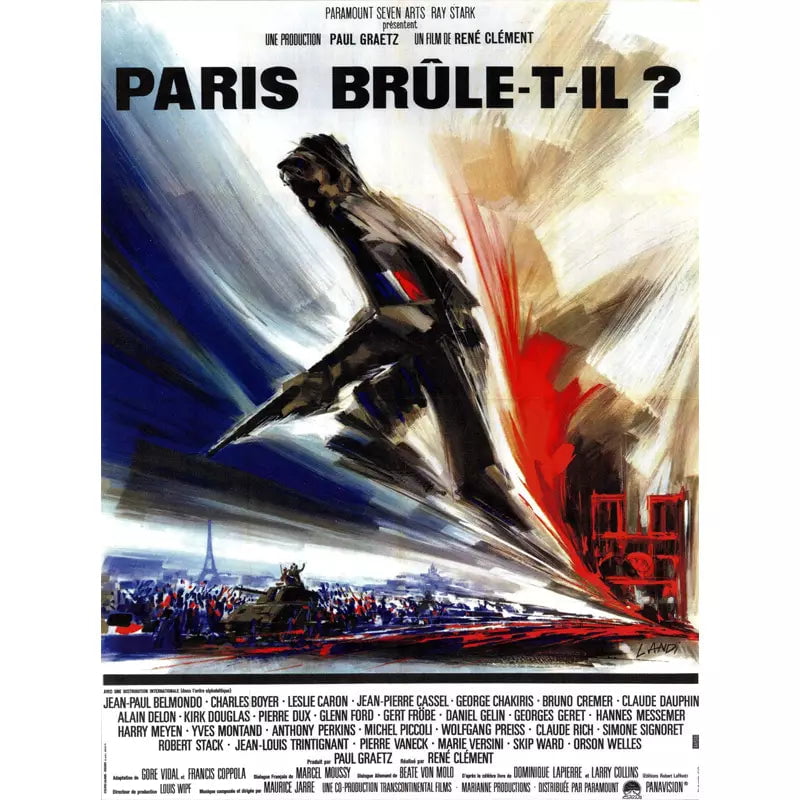


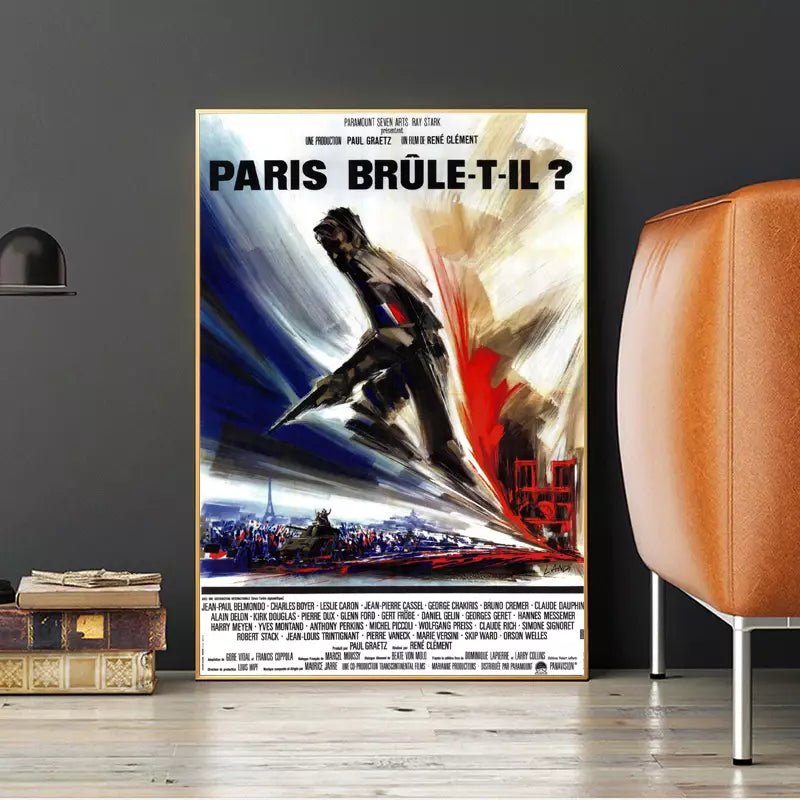
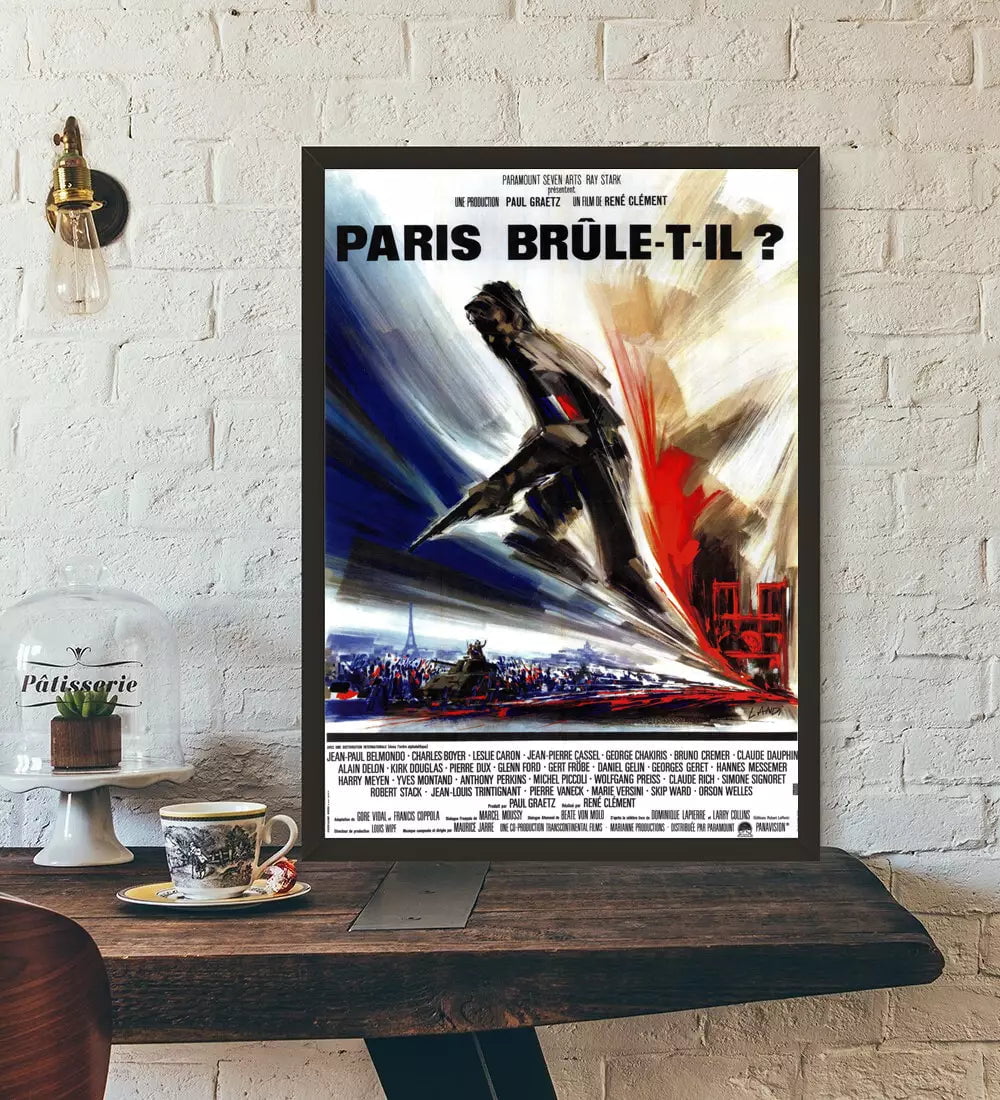
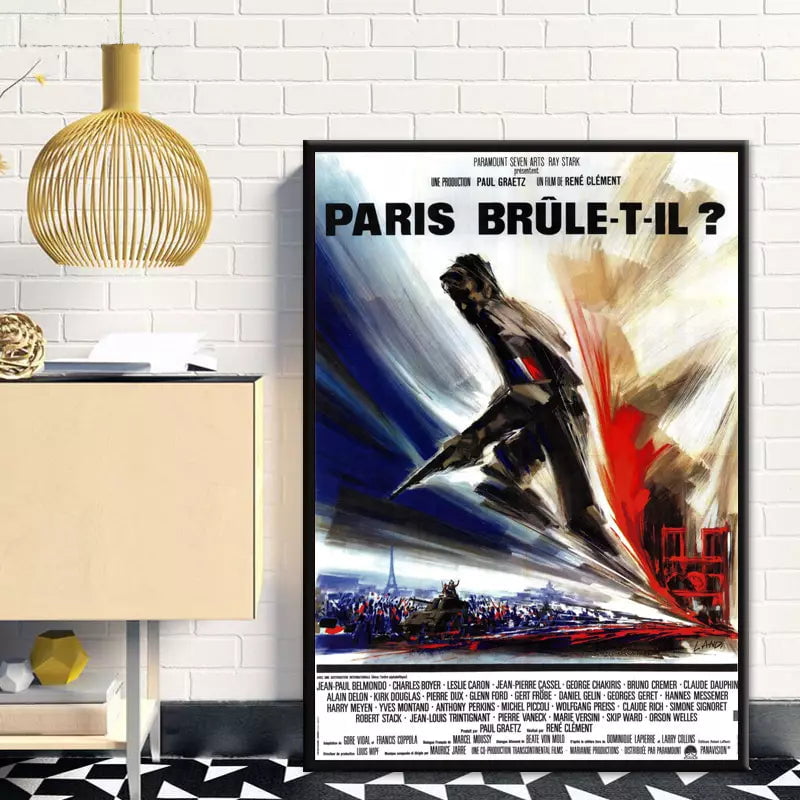
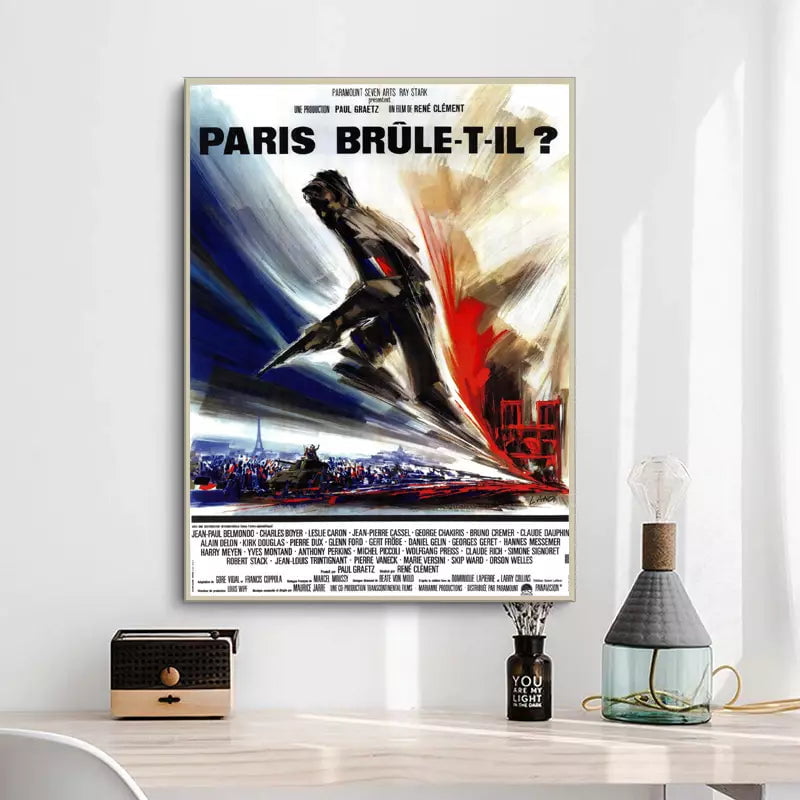

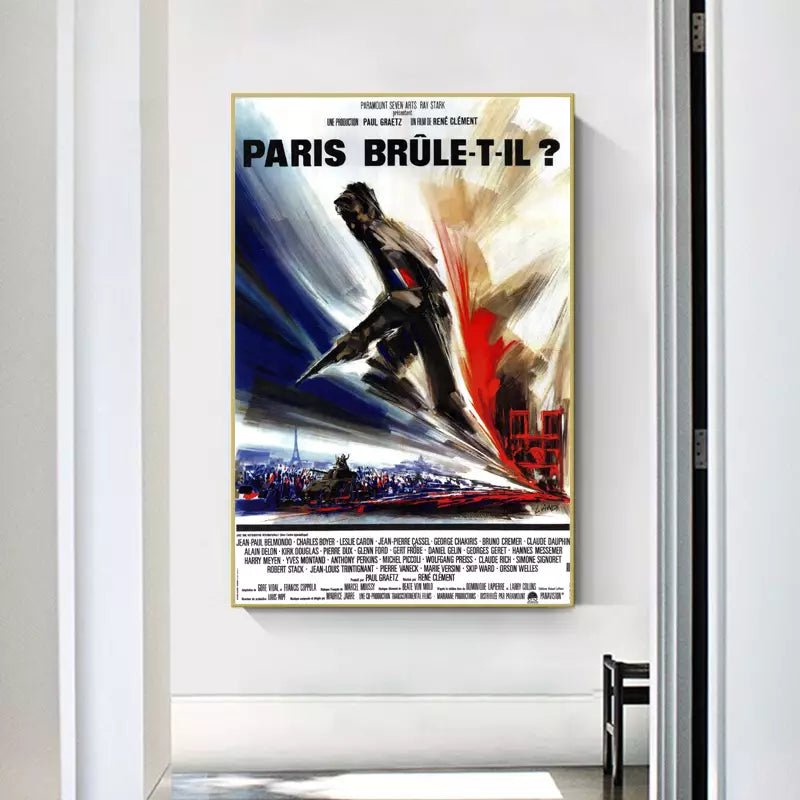
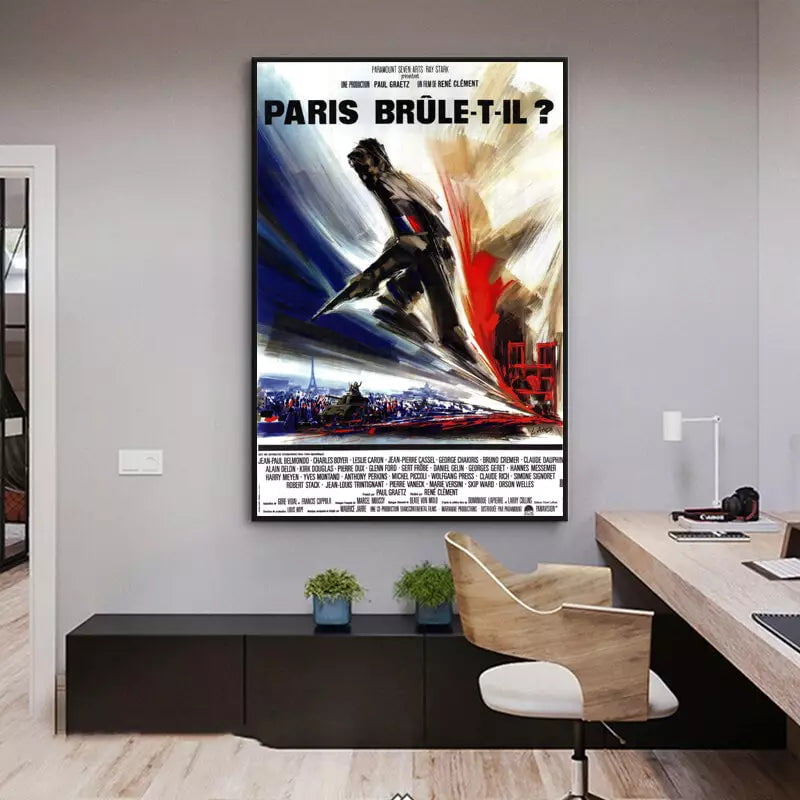
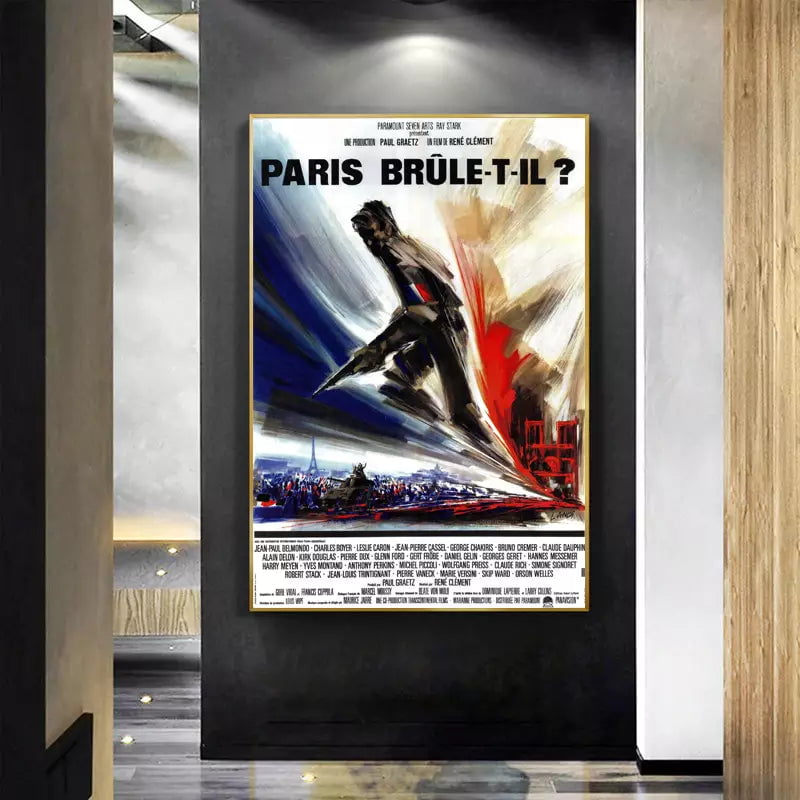
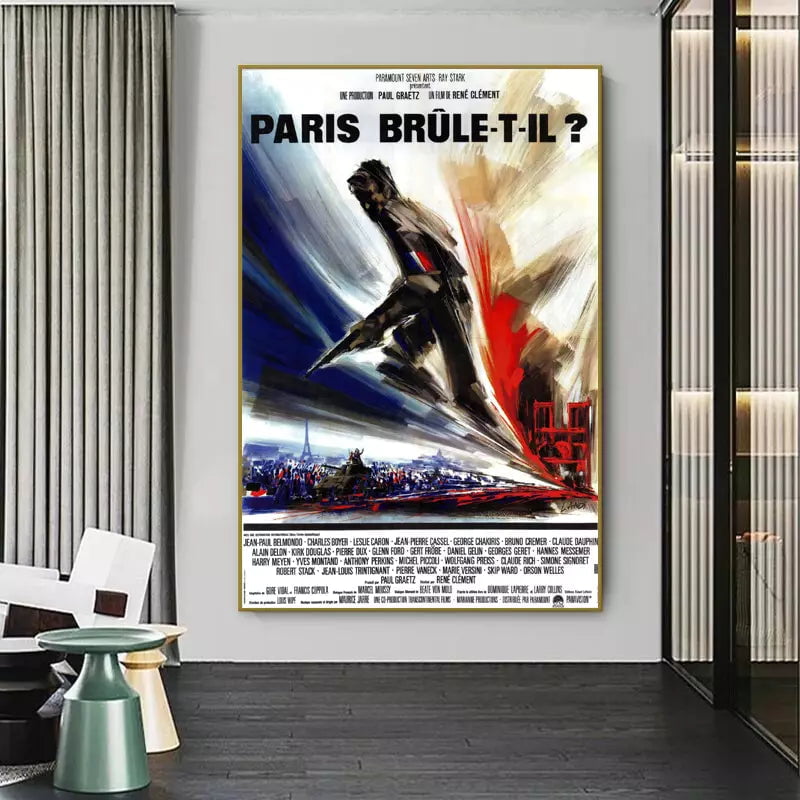
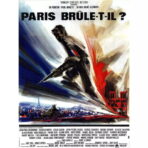



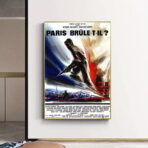



Discover the Is Paris Burning Poster, the iconic film by René Clément. Immerse yourself in a poignant and moving story through a striking graphic representation.
- Paper Feature:
- 🎨 Canvas: global standard in terms of printing and imitating a “painting canvas” look.
- By default, the poster contains a 4cm white border for framing (frame not included). If you don’t want it, please choose “without white border”.
- ✅ Size: several choices available. ✅
- High UV resistance.
- Maximum color brilliance without reflections.
- Recycled paper guaranteed environmental friendliness.
- Poster wrapped carefully and delivered in a protective tube for total protection.
- FREE STANDARD DELIVERY.
⚠️ Frame not included. ⚠️
Description of this Is Paris Burning Poster
Is Paris burning? is a 1966 black-and-white epic war film about the liberation of Paris in August 1944 by the French Resistance and the Free French Forces during World War II. A French-American co-production, the film was directed by French filmmaker René Clément, from a screenplay by Gore Vidal, Francis Ford Coppola, Jean Aurenche, Pierre Bost, and Claude Brulé, adapted from the 1965 book of the same name by Larry Collins and Dominique Lapierre. The film stars an international cast including French (Jean-Paul Belmondo, Alain Delon, Bruno Cremer, Pierre Vaneck, Jean-Pierre Cassel, Leslie Caron, Charles Boyer, Yves Montand), American (Orson Welles, Kirk Douglas, Glenn Ford, Robert Stack, Anthony Perkins, George Chakiris) and German (Gert Fröbe, Hannes Messemer, Ernst Fritz Fürbringer, Harry Meyen, Wolfgang Preiss) stars.
The film was released in France on October 26, 1966 and in the United States on November 10, 1966. It received generally positive reviews and was the fourth most popular film of 1966 in France. It was nominated for Best Cinematography (Black and White) and an Academy Award for Best Art Direction at the 40th Academy Awards, as well as a Golden Globe Award for Best Original Score.
Shortly after the failure of the July 20 plot to assassinate him in 1944, Adolf Hitler appointed Infantry General Dietrich von Choltitz as military governor of occupied Paris. Hitler believed that Choltitz would obey his order not to let the Allies capture Paris without the Germans completely destroying it, similar to the planned destruction of Warsaw.
The French Resistance learned that the Allies had no intention of capturing Paris, but were bypassing it to avoid a confrontation and heading directly toward Germany. The two factions of the Resistance reacted differently to this news. Jacques Chaban-Delmas’s Gaullists wanted to wait and see, while Colonel Rol-Tanguy’s Communists wanted to act. The Communists pushed the issue by calling for a general uprising of Paris’s citizens and occupying important government buildings. The Gaullists rallied behind this plan of action once it was implemented.
Initially, Choltitz intended to follow Hitler’s order to raze the city. After his troops failed to dislodge the Resistance from the Paris police headquarters, he ordered the Luftwaffe to bomb the building, but withdrew his order at the request of Swedish Consul Raoul Nordling, who pointed out that bombs that missed the headquarters risked destroying nearby buildings of inestimable cultural value, such as Notre-Dame Cathedral. Choltitz accepted the Resistance’s offer of a truce (engineered by the Gaullist faction), but the Communists wanted to continue fighting, despite the lack of ammunition. The truce was therefore reduced to one day, and fighting resumed.
After learning that the Germans planned to destroy Paris (the Eiffel Tower and other monuments were rigged with explosives), a Resistance messenger was sent across enemy lines to contact the Americans. He informed the Allies that the Resistance had already taken control of certain areas of the city and implored them to support them to prevent the uprising from being crushed as it had been in Warsaw. He added that France would never forgive the Allies for allowing the destruction of Paris. Later, General Omar Bradley agreed to allow General Philippe Leclerc’s 2nd Armored Division to attack Paris. As the German military situation deteriorated, Choltitz delayed the order to destroy Paris, believing Hitler to be mad and the war lost, making the destruction of Paris a futile gesture. When two SS officers arrived, he thought he was about to be arrested, but instead, they simply stated that Himmler had asked them to save the Bayeux Tapestry for his private collection before the destruction of the Louvre. Finally, the French major persuaded General Leclerc that it was essential that at least a token force of Allied tanks enter and occupy Paris, as this symbolic gesture would save the city. A line of Sherman tanks moved out. Although the equipment was American, they allowed the Free French Army to control them with only a small American escort. As the line reached within 50 km of Paris, German troops placed explosives in the Eiffel Tower and under various bridges. The Germans freed some of the imprisoned men to help defend their strongpoints. The first Sherman arrived and was hit by an artillery shell, but the other tanks, each named after a French victory in World War I, reached the Hôtel de Ville.
Choltitz chose not to give the detonation order and surrendered shortly after the Allies entered the city. He telephoned the German high command to ask that his family not suffer for his inaction. Meanwhile, some officers continued to plant explosives. Two officers discussed laying mines on Napoleon’s tomb at Les Invalides.
There were casualties on both sides, but civilians began to join the battle. The fighting reaches the Rue de Rivoli, where the Germans have their headquarters at the Hôtel Meurice. As the Allied soldiers enter his office, Choltitz asks to be allowed to surrender to an officer. He is asked to order some of his officers to ride with the Free French, carrying a white flag to convey the order of surrender to his troops. French tanks reach Notre-Dame Cathedral and reactivate the bells after years of silence. The crowd cheers and sings “La Marseillaise.” Actual documentary footage of the liberation crowds is shown. As the Free French forces and de Gaulle march through the streets of Paris, greeted by cheering crowds, an off-hook telephone receiver is seen, on which a voice in German repeatedly asks, “Is Paris burning?” From the air, we see Paris with its buildings intact, then we switch from black and white to color for the end credits.