

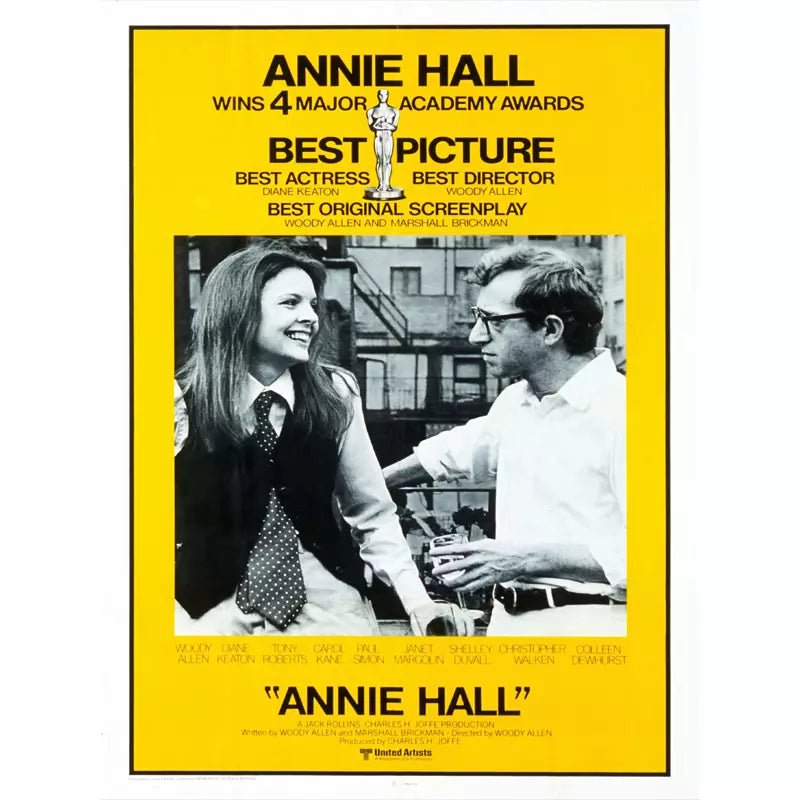
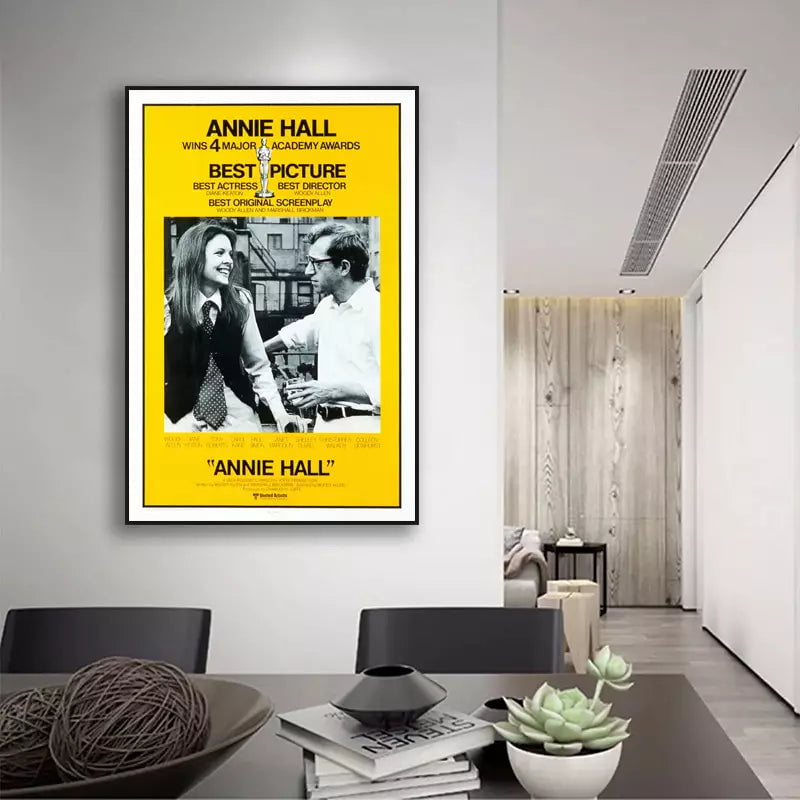
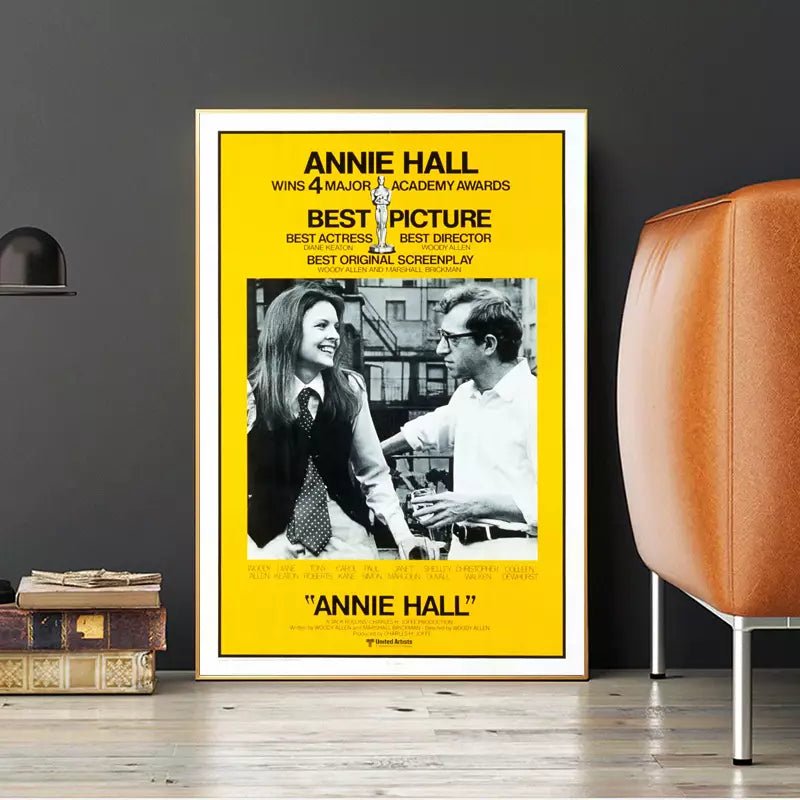
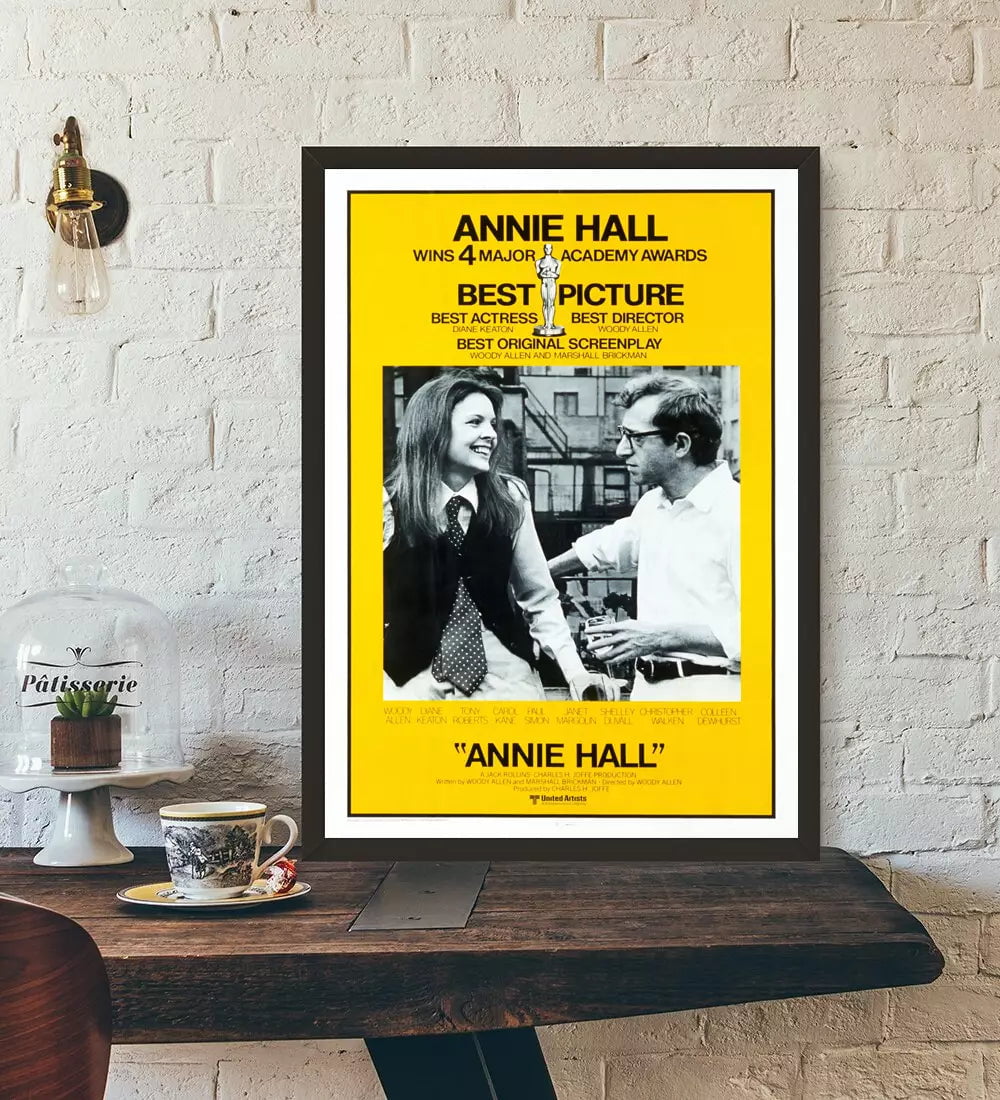
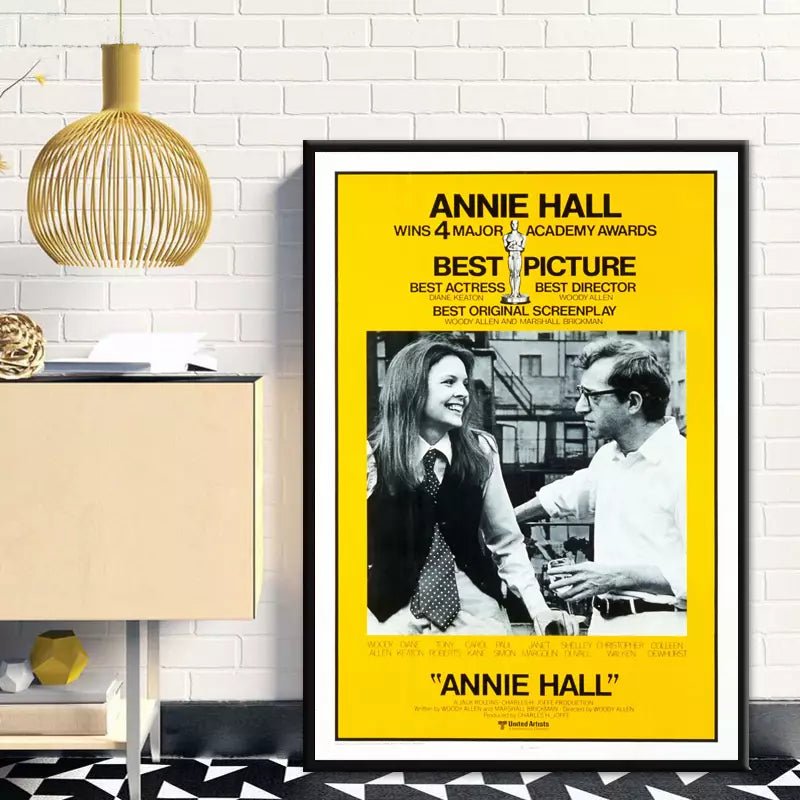
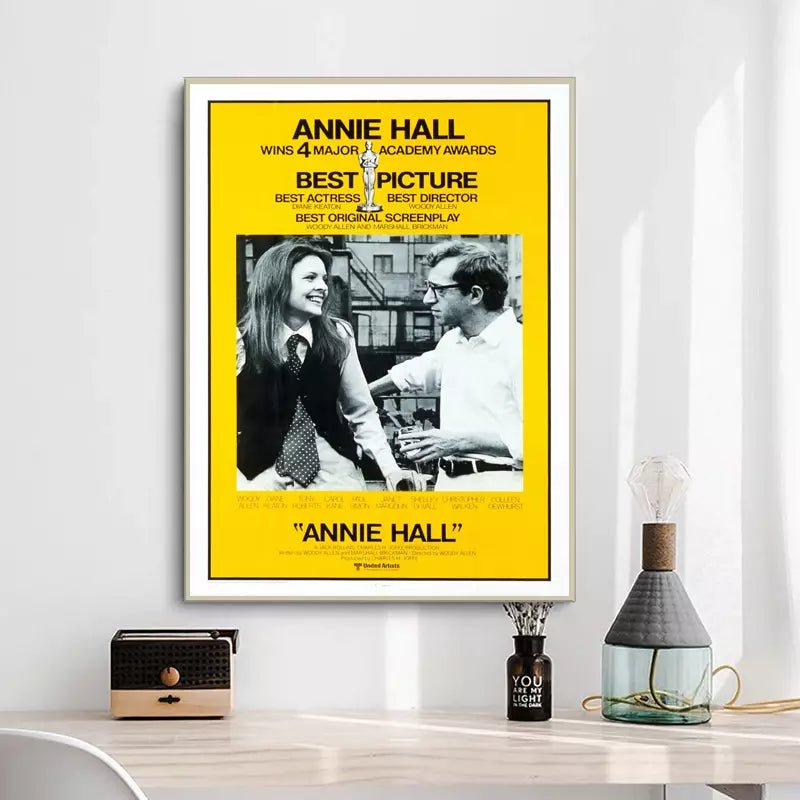
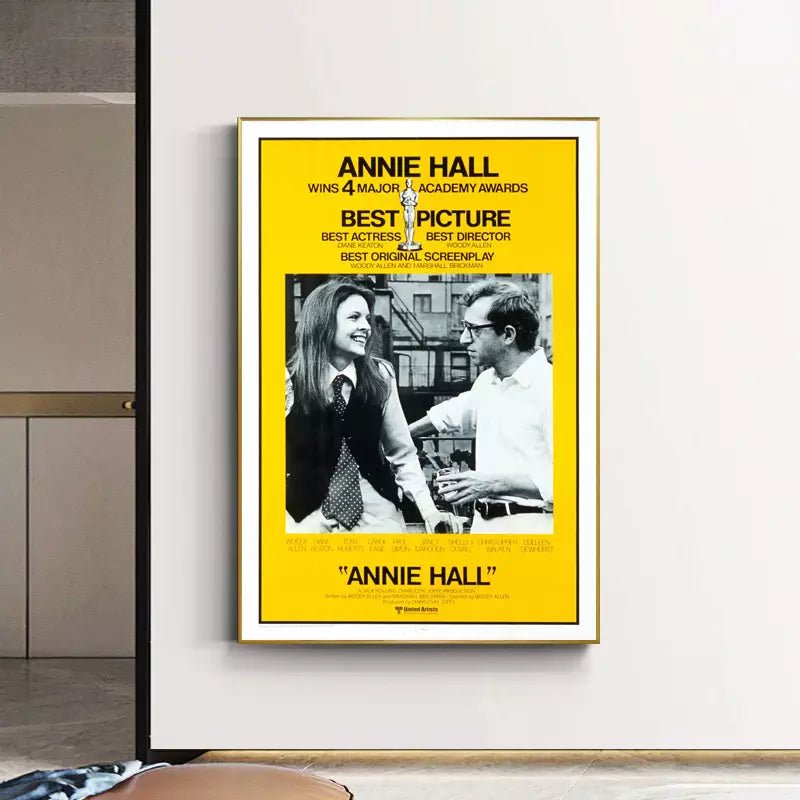
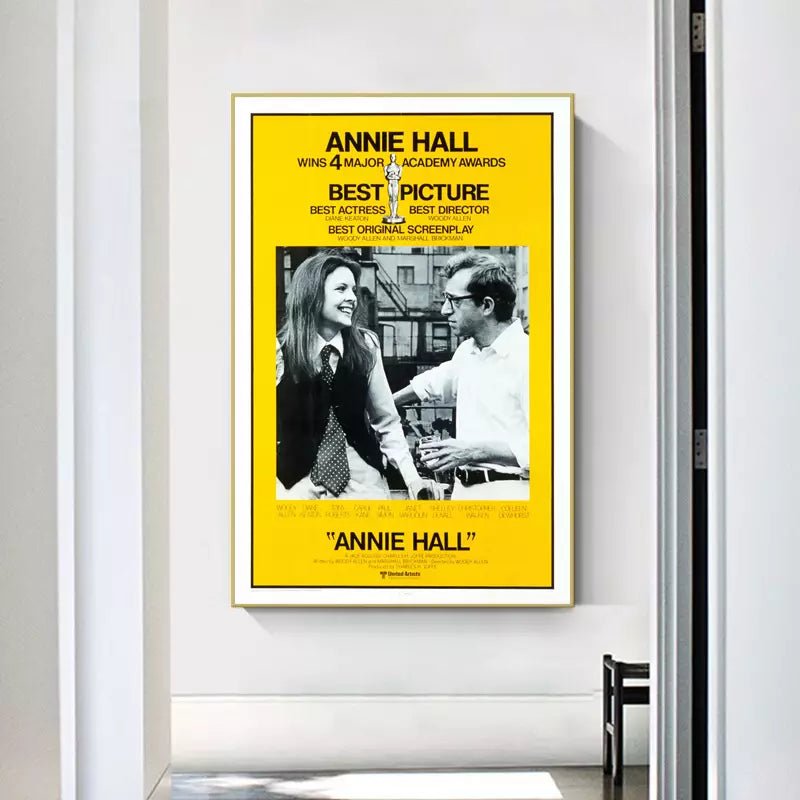


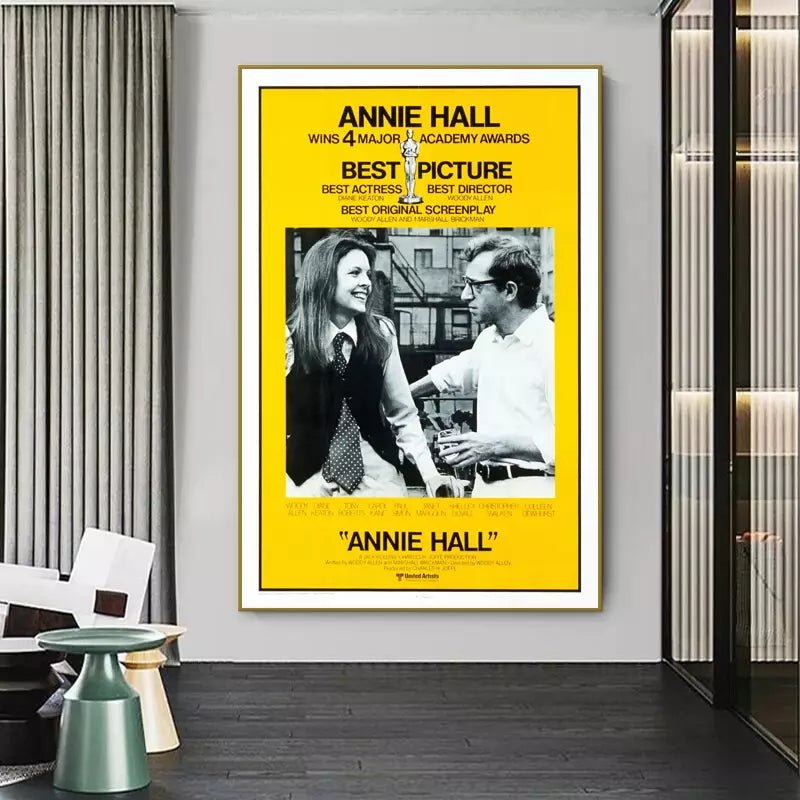
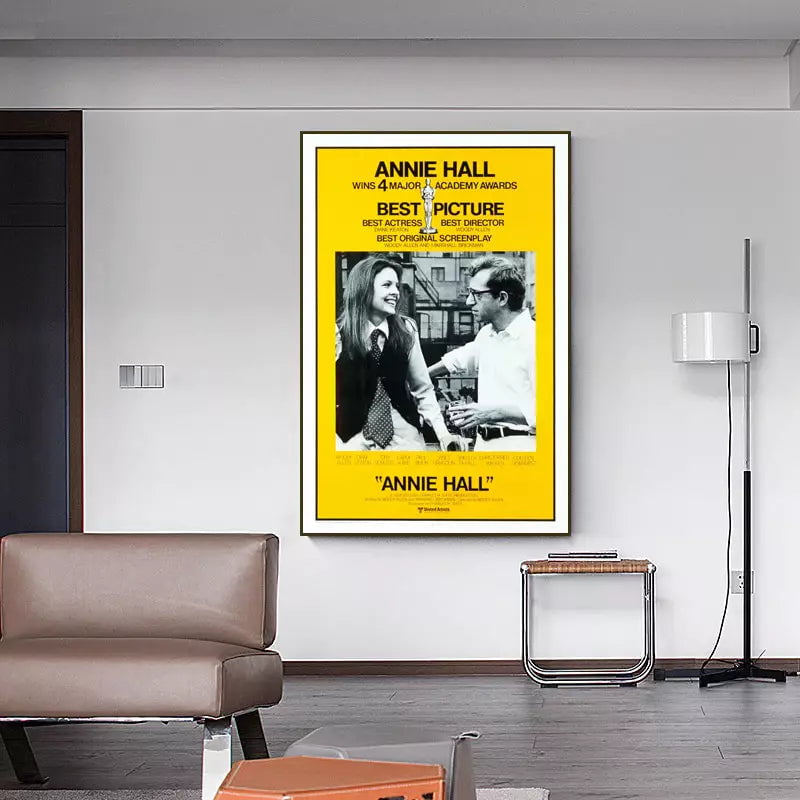


















The Annie Hall Poster is the visual embodiment of a film that has left its mark on cinematic history. Directed by Woody Allen in 1977, this iconic romantic comedy features the characters of Alvy Singer, played by Allen, and Annie Hall, played by Diane Keaton. This poster invites you to dive into a world that is both funny and melancholic, where love, life, and the complexity of human relationships are portrayed with remarkable accuracy. With witty dialogue and inventive direction, Annie Hall captured the spirit of an era and touched the hearts of a generation of viewers. If you’re looking for a film that is both entertaining and deeply moving, Annie Hall is a must-have.
- Paper Feature:
- 🎨 Canvas: The global standard in printing and imitating a “canvas” look.
- By default, the poster contains a 4cm white border for framing (frame not included). If you don’t want it, please choose “without white border”.
- ✅ Size: several choices available. ✅
- High UV resistance.
- Maximum color brilliance , without reflections.
- Recycled paper guaranteed a environmentally friendly.
- Poster packaged carefully and delivered in a protective tube for total protection.
- FREE STANDARD DELIVERY.
⚠️ Frame not included. ⚠️
Description of this Annie Hall Poster
Annie Hall is a 1977 American satirical romantic comedy film directed by Woody Allen from a screenplay written by him and Marshall Brickman, and produced by Allen’s manager, Charles H. Joffe. The film stars Allen as Alvy Singer, who is trying to understand the reasons for the failure of his relationship with the eponymous female lead, played by Diane Keaton in a role written specifically for her.
Principal photography on the film began on May 19, 1976, on the South Fork of Long Island, and continued periodically for the next ten months. Allen described the result, which marked his first collaboration with cinematographer Gordon Willis, as “a major turning point” in that, unlike the farces and comedies that had become his standard work to that point, it introduced a new level of seriousness. Scholars have noted the contrast between the New York and Los Angeles contexts, the stereotyping of gender differences in sexuality, the portrayal of Jewish identity, and elements of psychoanalysis and modernism.
Annie Hall was screened at the Los Angeles Film Festival on March 27, 1977, before its official U.S. release on April 20, 1977. The film was highly acclaimed and was nominated for the Big Five Academy Awards, winning four: the Academy Award for Best Picture, two for Allen (Best Director and, with Brickman, Best Original Screenplay), and Best Actress for Keaton. The film also won four BAFTA Awards and a Golden Globe, the latter going to Keaton. The film’s box office revenue in the United States and Canada of $38,251,425 is the fourth-highest of Allen’s works when not adjusted for inflation.
Ranked among the best films ever made, it ranks 31st on AFI’s list of the greatest films in American cinema, 4th on their list of the greatest comedy films, and 28th on Bravo’s “100 Funniest Movies.” Film critic Roger Ebert called it “pretty much everyone’s favorite Woody Allen movie.” The film’s screenplay was also named the funniest ever written by the Writers Guild of America in its list of “101 Funniest Screenplays.” In 1992, the Library of Congress selected the film for preservation in the United States National Film Registry as being “culturally, historically, or aesthetically significant.”
Comedian Alvy Singer tries to understand why his relationship with Annie Hall ended a year ago. Growing up in Brooklyn, he vexed his mother with impossible questions about the emptiness of existence, but he was precocious in his innocent sexual curiosity, suddenly kissing a classmate at six and not understanding why she wasn’t eager to do the same.
Annie and Alvy, in a line for The Sorrow and the Pity, overhear another man mocking the work of Federico Fellini and Marshall McLuhan; Alvy imagines that McLuhan himself interjects at his invitation to critique the man’s understanding. That night, Annie shows no interest in sex with Alvy. Instead, they discuss his first wife, whose ardor gave him no pleasure. His second marriage was to a New York writer who disliked sports and couldn’t reach orgasm.
With Annie, it’s different. The two enjoy cooking a boiled lobster meal together. He teases her about the unusual men in her past. They had met tennis doubles with friends. After the match, awkward small talk leads to him offering her a walk downtown, then a glass of wine on her balcony. There, what seemed like a light exchange of trivial personal details is revealed in the “mental subtitles” as an escalating flirtation. Their first date follows Annie’s singing audition for a nightclub (“It had to be you”). After their lovemaking that evening, Alvy is “a wreck,” while Annie relaxes with a joint.
Soon, Annie admits that she loves Alvy, while he buys her books on death and says his feelings for her are more than love. When Annie moves in with him, things become very tense. Eventually, Alvy finds her arm in arm with one of her college professors, and the two begin to wonder if this is the “flexibility” they discussed. They eventually break up, and he searches for the truth of relationships, asking strangers on the street about the nature of love, questioning his formative years, and imagining a cartoon version of himself arguing with a cartoon Annie portrayed as the Evil Queen in Snow White.
Alvy attempts a return to dating, but the effort is marred by neurosis and a bout of bad sex that is cut short when Annie calls in the middle of the night, insisting he come immediately to kill two spiders in her bathroom. A reconciliation ensues, coupled with a vow to stay together, no matter what. However, their separate discussions with their therapists make it clear that there is an unspoken, unbridgeable divide. When Alvy accepts an offer to present a television awards show, they travel to Los Angeles with Alvy’s friend, Rob. However, on the return trip, they agree that their relationship isn’t working. After losing Annie to her record producer, Tony Lacey, Alvy tries unsuccessfully to rekindle the flame with a marriage proposal. Back in New York, he stages a play on their relationship, but he changes the ending: now she accepts.
Annie and Alvy’s final meeting is a melancholy coda on Manhattan’s Upper West Side after they have both moved on to someone new. Alvy’s voice returns with a summary: love is essential, especially if it’s neurotic. Annie sings “Seems Like Old Times” and the credits roll.