
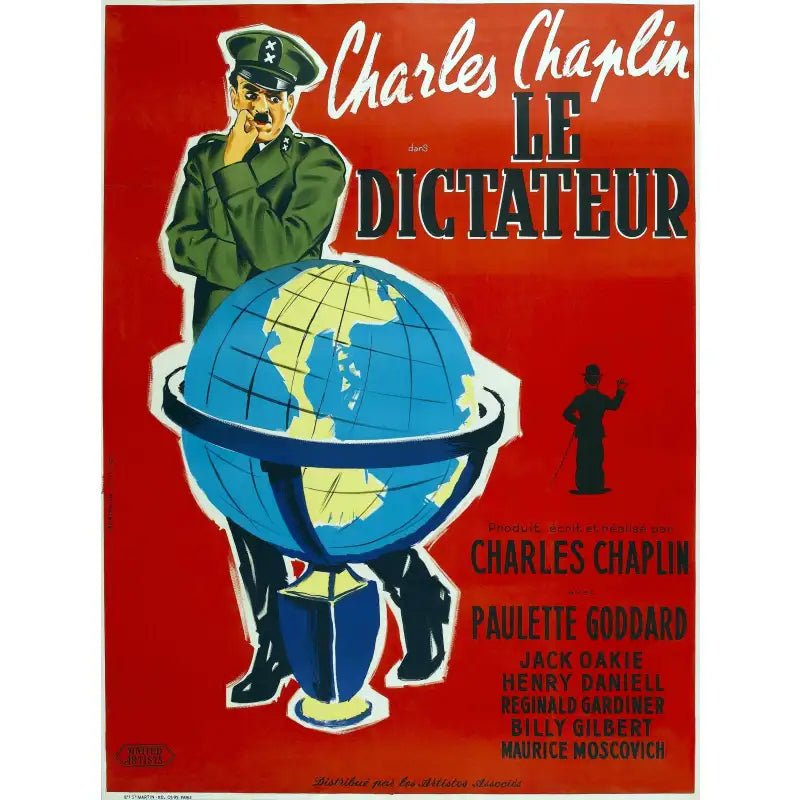
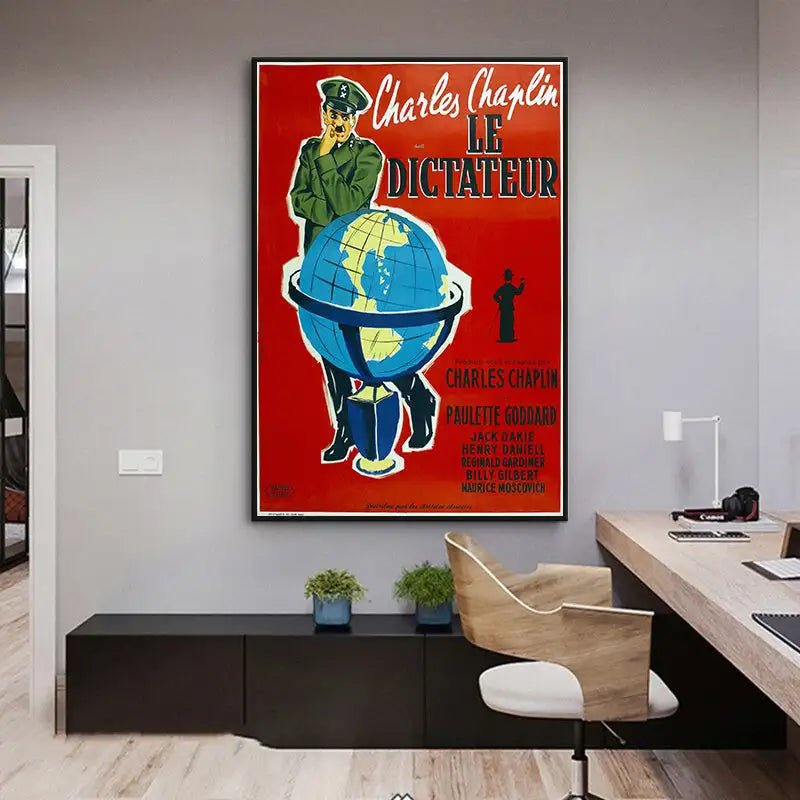
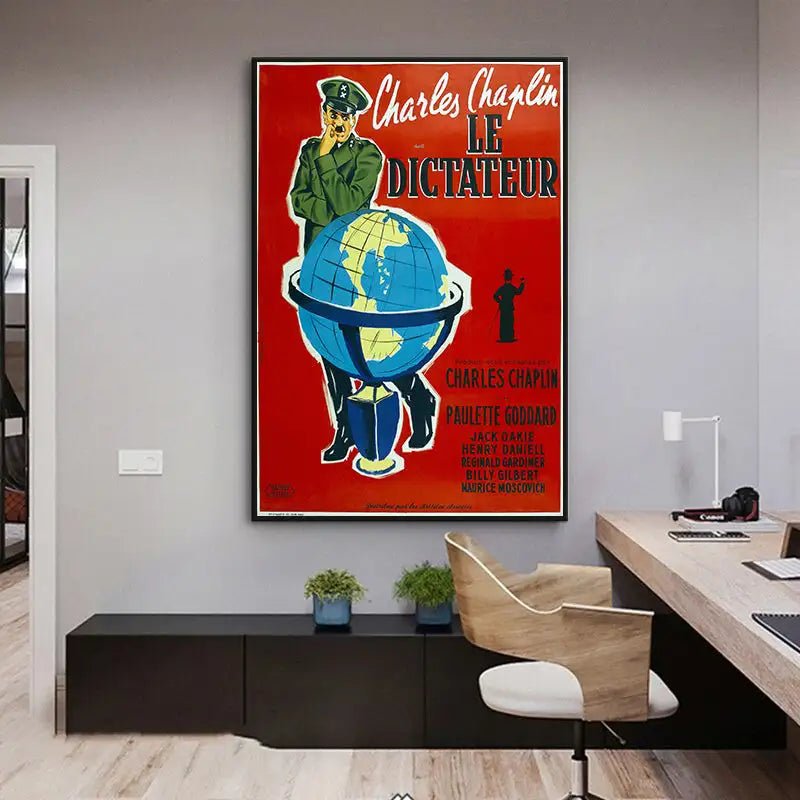
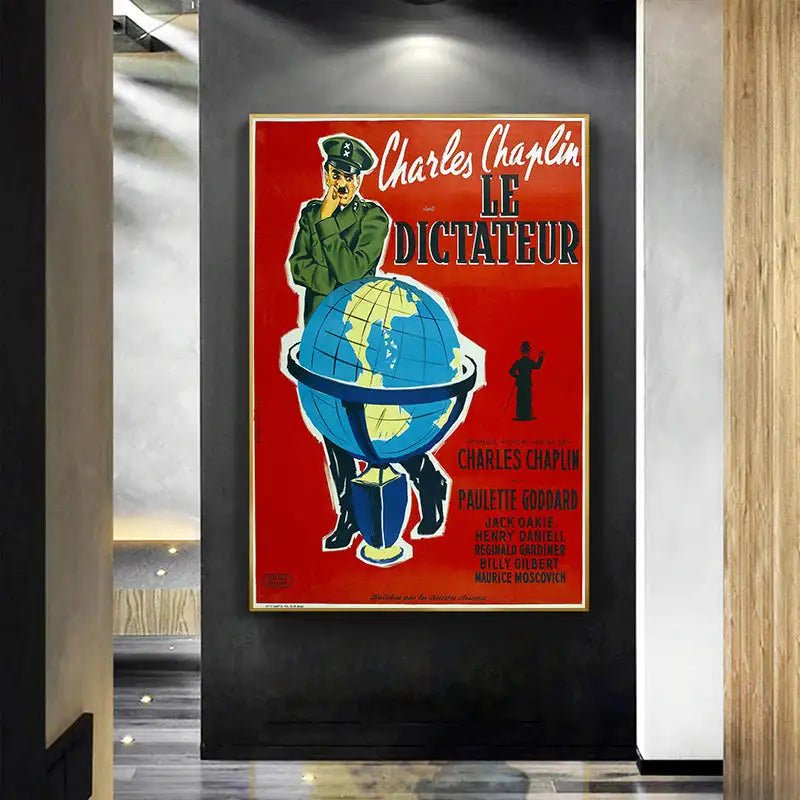
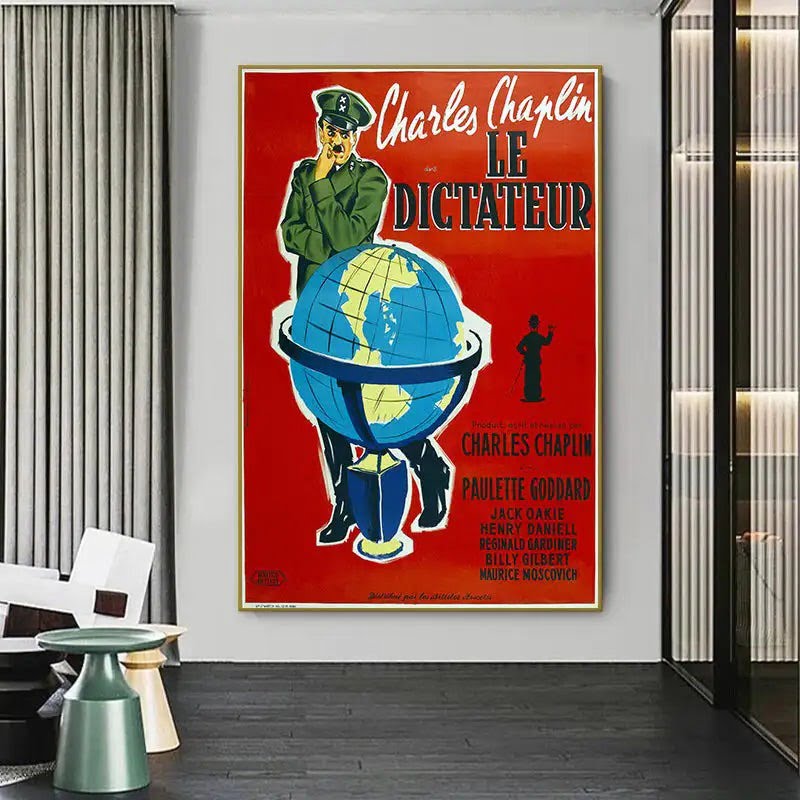
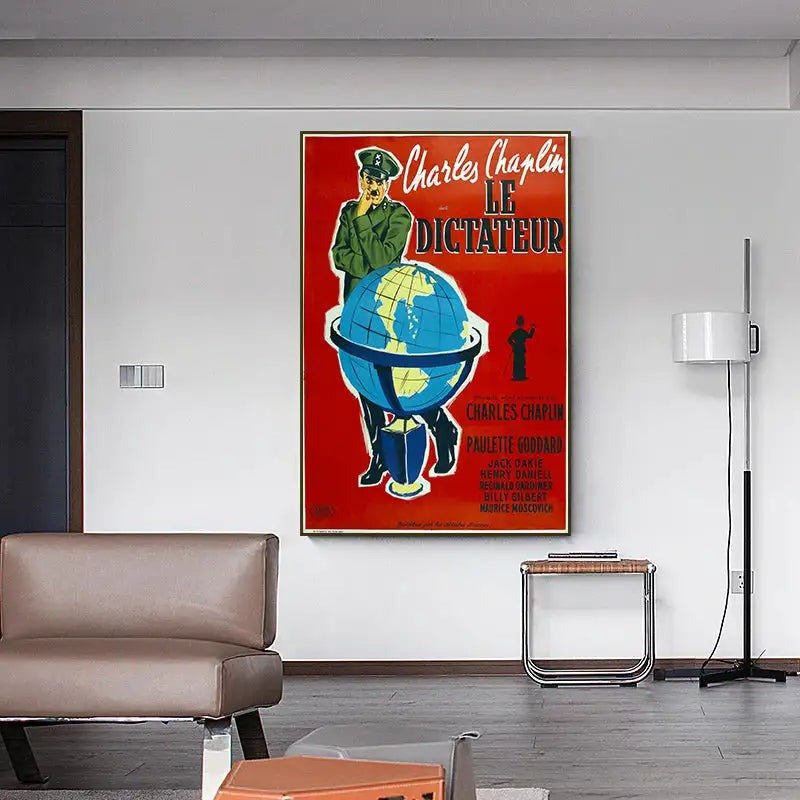
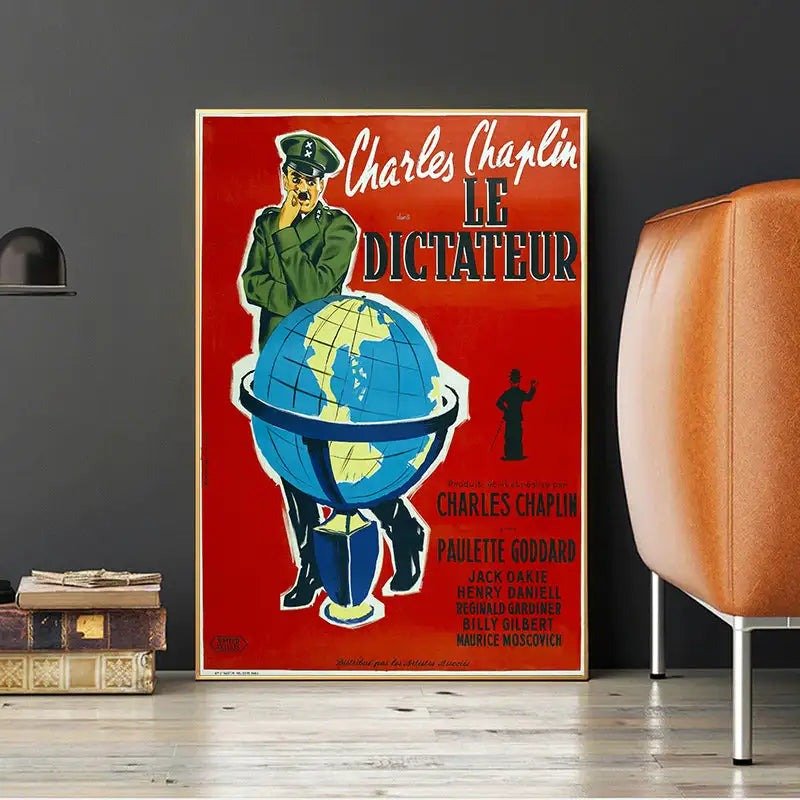
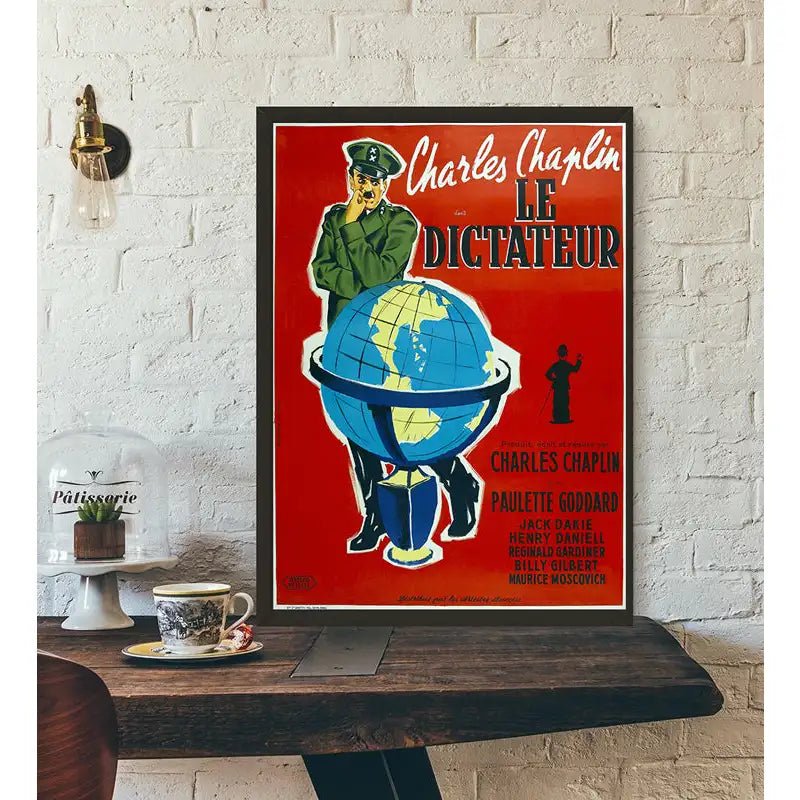
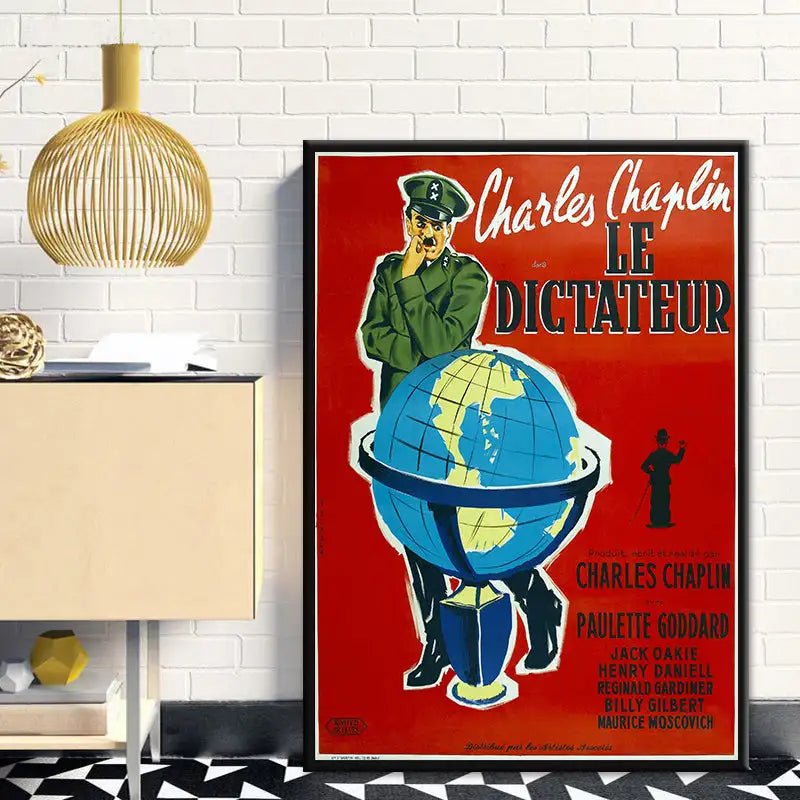
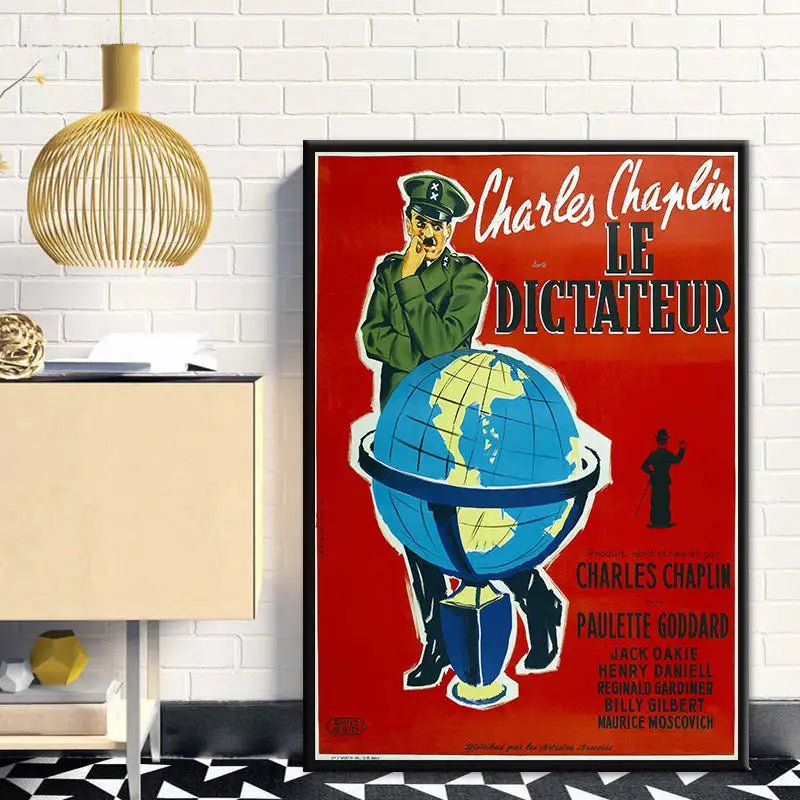
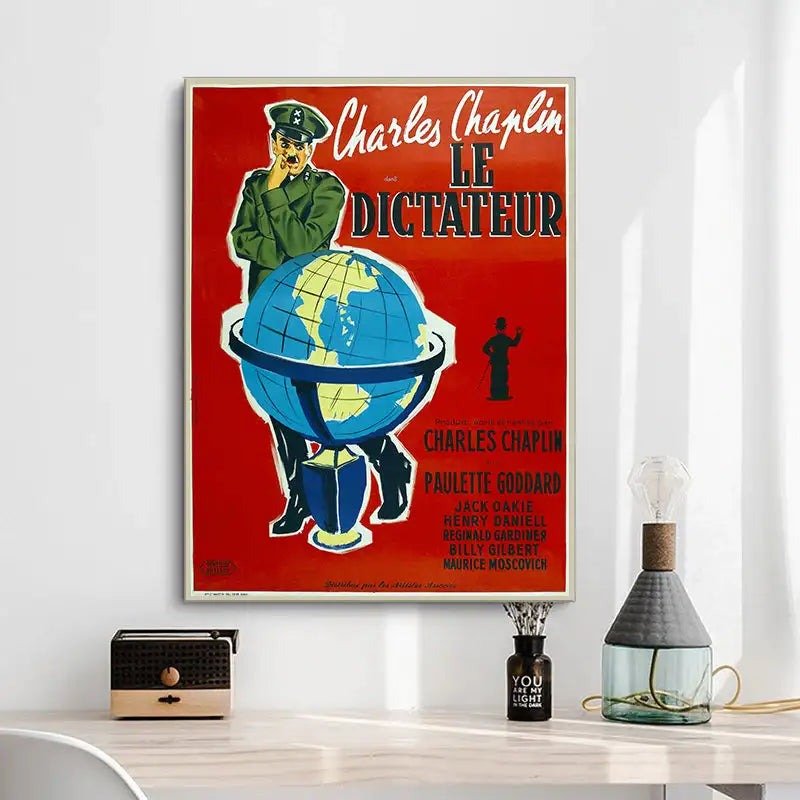
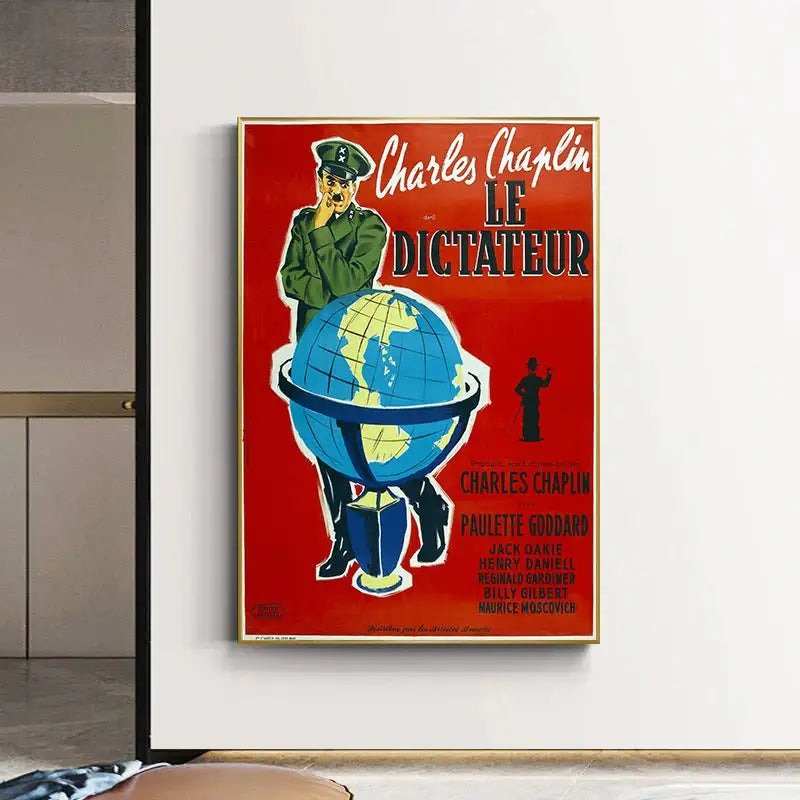
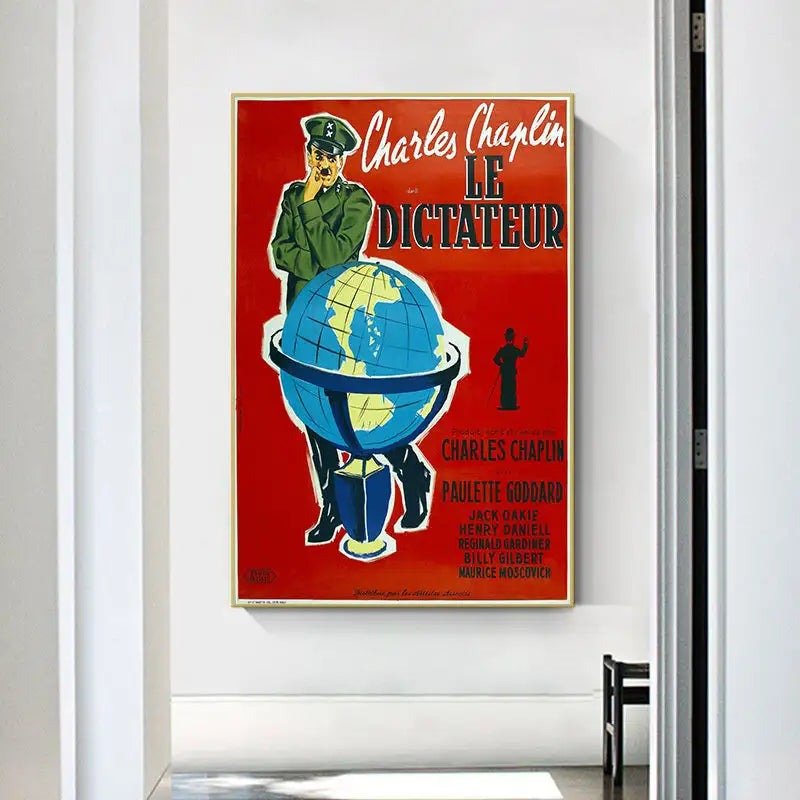


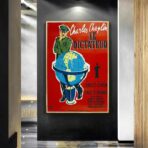















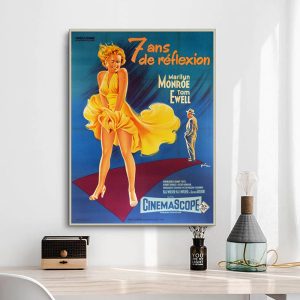

A satire against Adolf Hitler and Nazism, the vintage style of this Charlie Chaplin’s The Great Dictator Poster will make it an ideal item for your home decor.
- Paper Feature:
- 🎨 Canvas: world standard in terms of printing and imitating a “painting canvas” look.
- By default, the poster contains a 4cm white border for framing (frame not included). If you don’t want it, please choose “without white border”.
- ✅ Size: Multiple choices available. ✅
- High UV resistance.
- Maximum color vibrancy, no glare.
- Recycled paper, ensuring environmental friendliness.
- Poster packaged carefully and delivered in a protective tube for total protection.
- FREE STANDARD DELIVERY.
⚠️Frame not included. ⚠️
Description of this Chaplin’s The Great Dictator Poster
The Great Dictator is a 1940 American black comedy film written, directed, and produced by British comedian Charlie Chaplin, starring British comedian Charlie Chaplin in the lead role. Having been the only Hollywood filmmaker to continue making silent films into the sound period, Chaplin made this film his first proper sound film.
Chaplin’s film presents a moving indictment of Adolf Hitler, Benito Mussolini, fascism, anti-Semitism, and the Nazis. At the time of its release, the United States was still officially at peace with Nazi Germany and neutral during what was the early days of World War II. Chaplin plays the two main roles: a ruthless fascist dictator and a persecuted Jewish barber.
The Great Dictator was popular with audiences, becoming Chaplin’s most commercially successful film.[3] Modern critics have hailed it as a historically significant film, one of the greatest comedy films ever made, and an important work of satire. Chaplin’s final monologue has often been cited by critics, historians, and film buffs as perhaps the greatest monologue in the history of cinema, and probably the most poignant recorded speech of the 20th century. [In 1997, it was selected by the Library of Congress for preservation in the United States National Film Registry because of its “cultural, historical, or aesthetic significance.” The Great Dictator was nominated for five Academy Awards – Outstanding Production Design, Best Actor, Best Original Screenplay, Best Supporting Actor for Jack Oakie, and Best Music (Original Score).
In his 1964 autobiography, Chaplin stated that he could not have made the film if he had known the true extent of the horrors of the Nazi concentration camps of the time.