


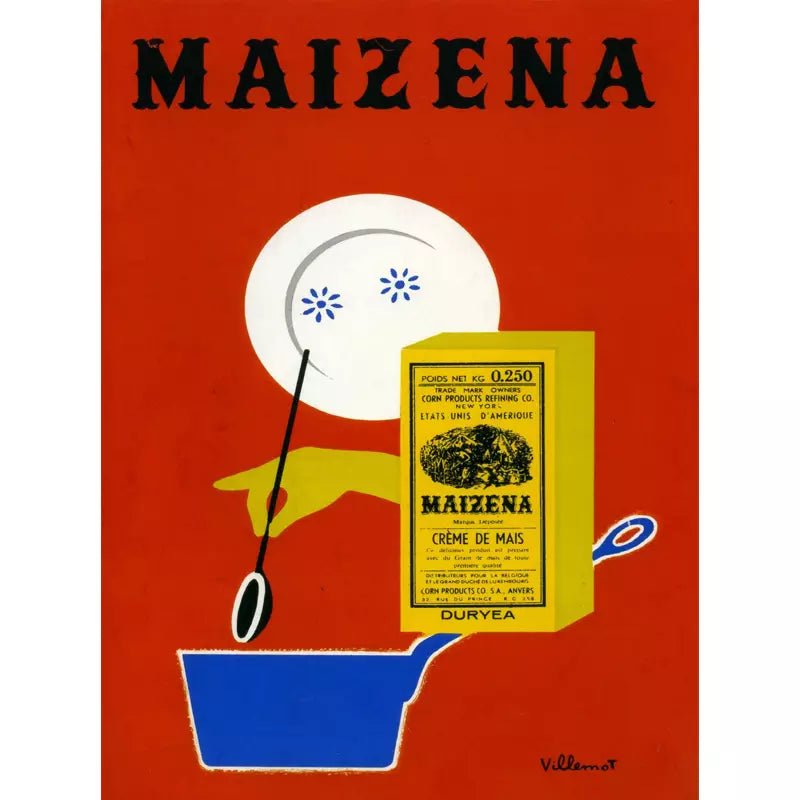
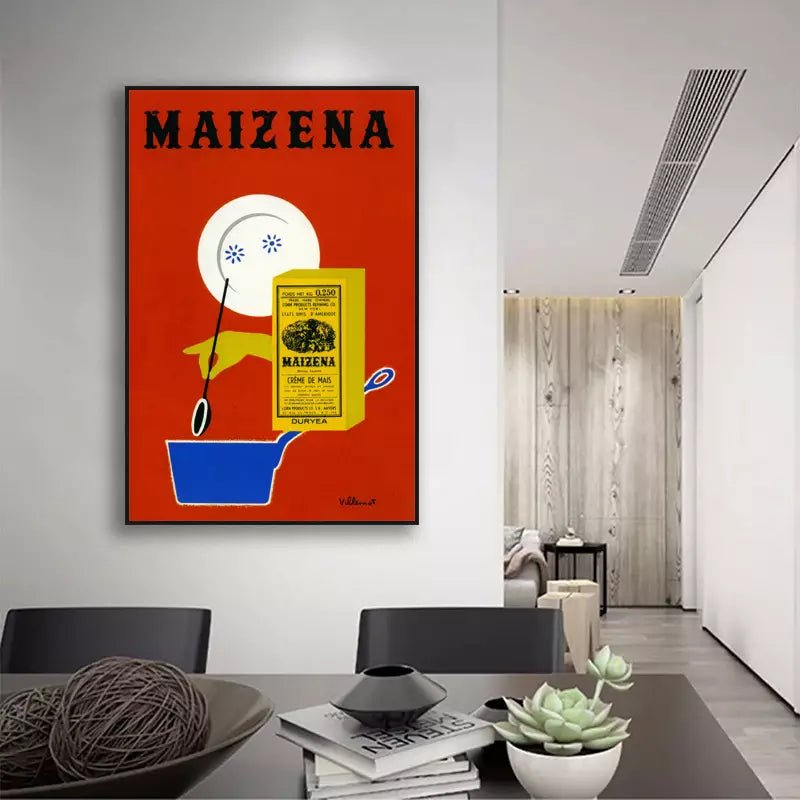
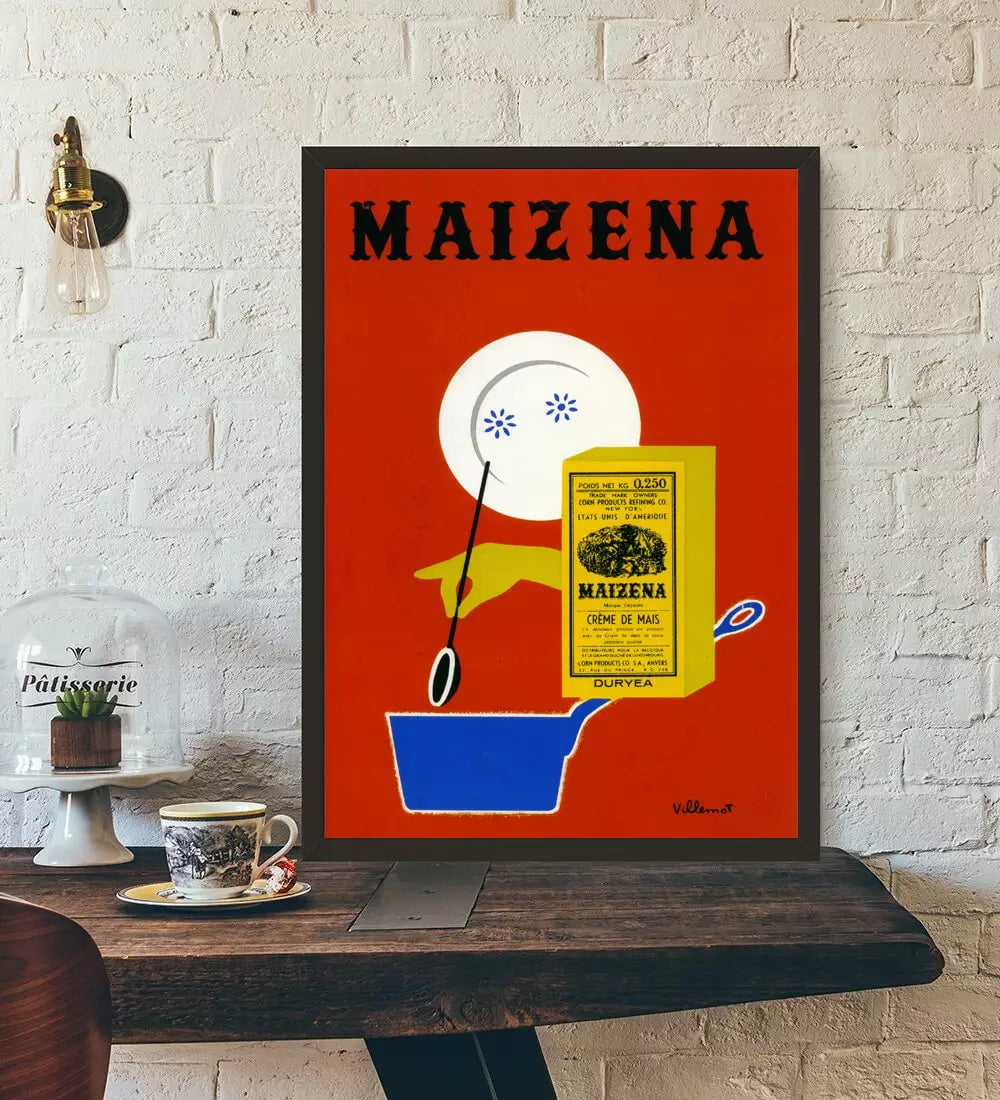
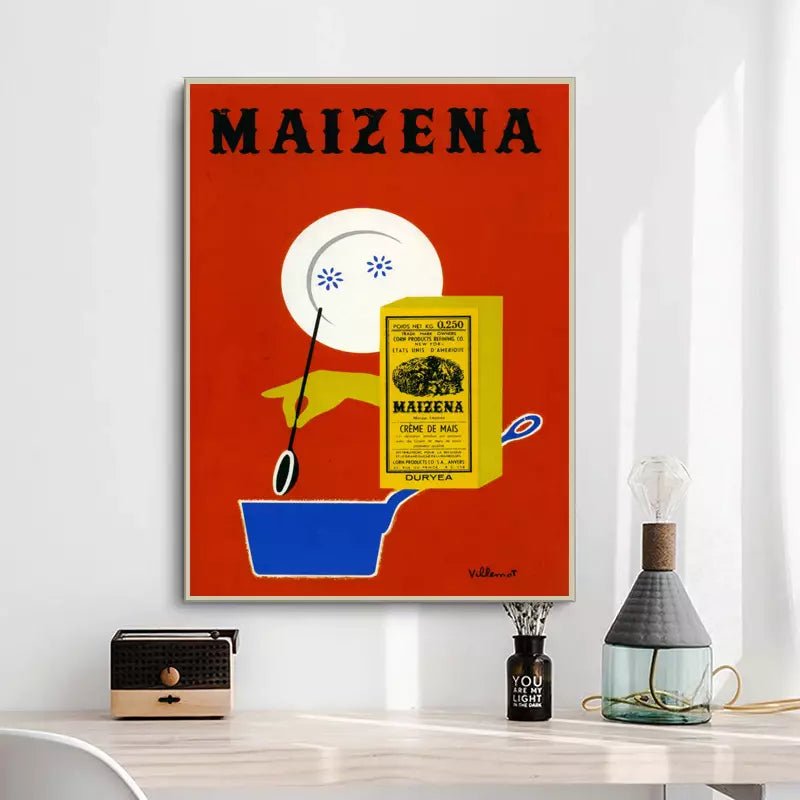
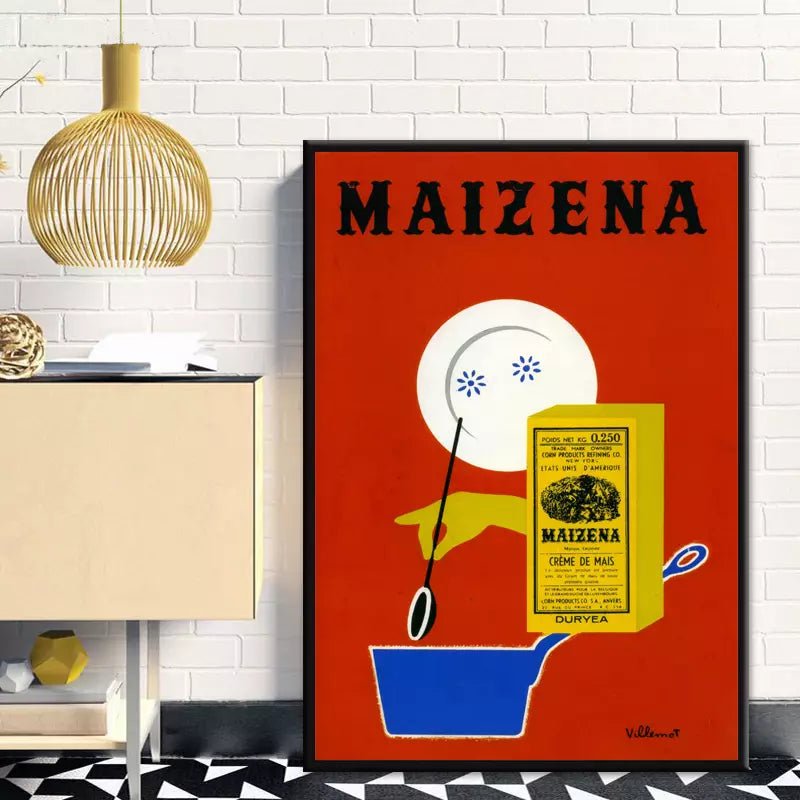
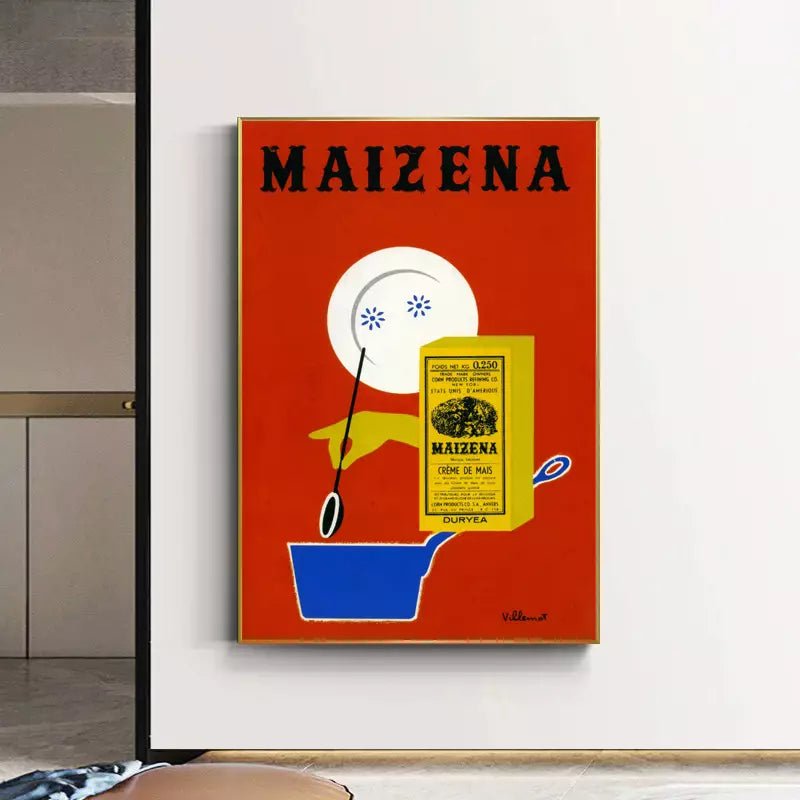
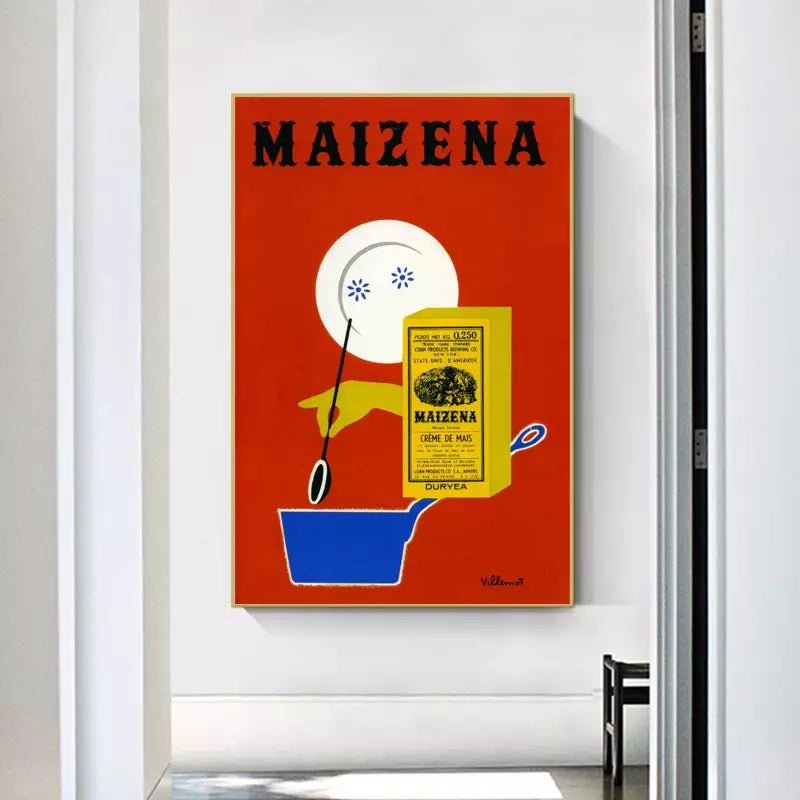

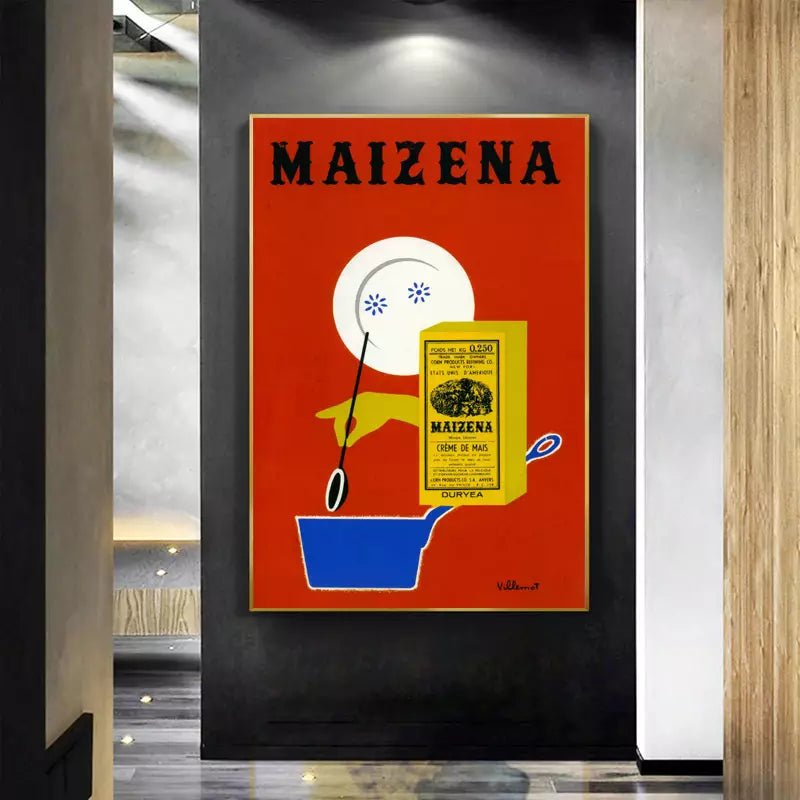
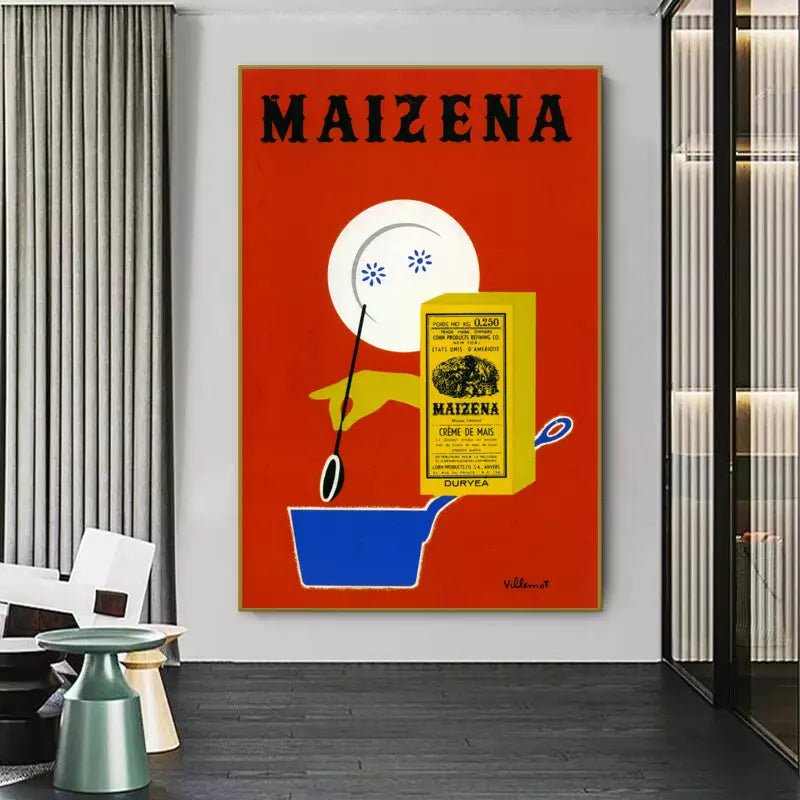
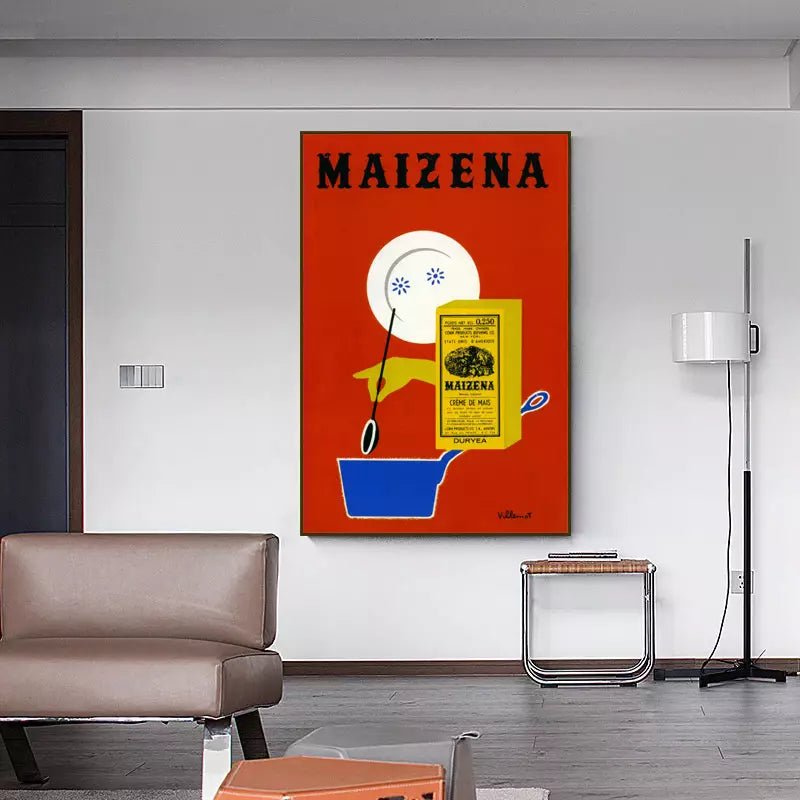
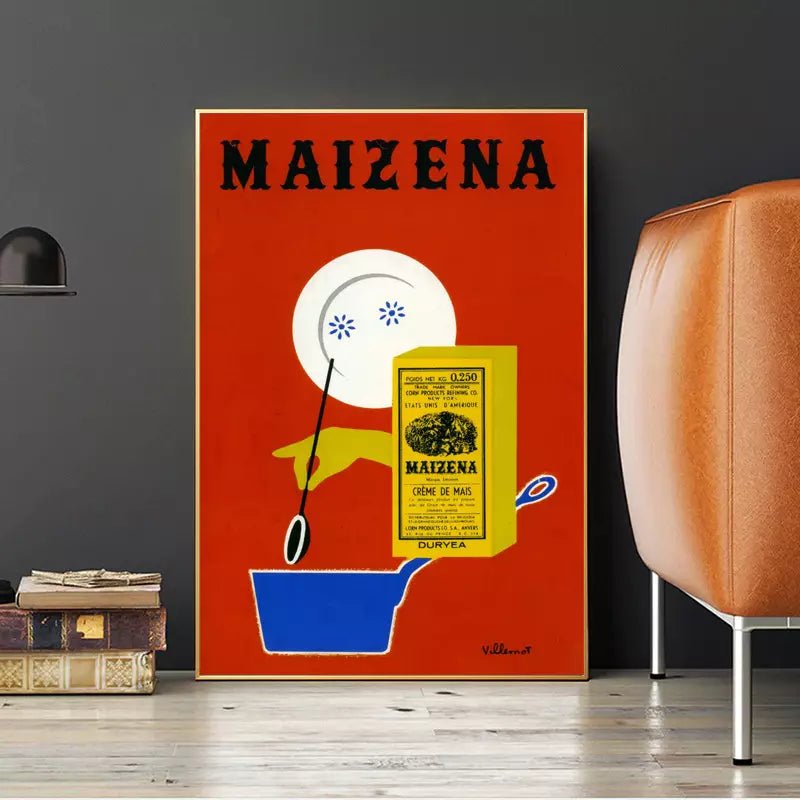

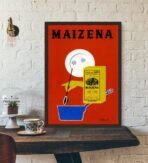






















Discover our Maizena Poster, a captivating work of art, perfect for enhancing the ambiance of your kitchen or dining room. With a vibrant red background and the title “Maizena” in black, this poster grabs attention and whets the appetite. The central illustration features a yellow hand holding a spoon, skillfully mixing cornstarch in a blue saucepan. A prominent Maizena package completes the picture, while a white plate adorned with blue flower petals adds a touch of originality. Signed by renowned artist Villemot, this Maizena poster is the perfect accessory to bring color and creativity to your home decor. Get this unique piece now and make a splash with your guests!
- Paper Feature:
- 🎨 Canvas: The global standard in printing and imitating a “canvas” look.
- By default, the poster contains a 4cm white border for framing (frame not included). If you don’t want it, please choose “without white border”.
- ✅ Size: several choices available. ✅
- High UV resistance.
- Maximum color brilliance , without reflections.
- Recycled paper guaranteed a environmentally friendly.
- Poster packaged carefully and delivered in a protective tube for total protection.
- FREE STANDARD DELIVERY.
⚠️ Frame not included. ⚠️
Description of this Maizena Poster
Maizena is a brand name of cornstarch, used primarily as a thickener and binder in various culinary recipes. It is produced from corn starch, which is extracted from ground corn kernels. Maizena is a versatile ingredient in cooking and is highly valued for its thickening and softening properties.
Maizena was invented in 1842 by Thomas Kingsford, an American industrialist, while working in a corn starch factory in Oswego, New York. The name “Maizena” is derived from the Spanish word “maíz,” meaning corn. The product quickly became popular in America and around the world due to its versatility and ease of use.
Maizena is widely used in various recipes, including thickening sauces, soups, and stews. It is also commonly used to bind ingredients in baked goods and desserts, such as cakes, cookies, puddings, and custards.