
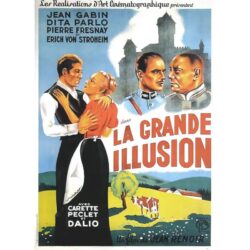
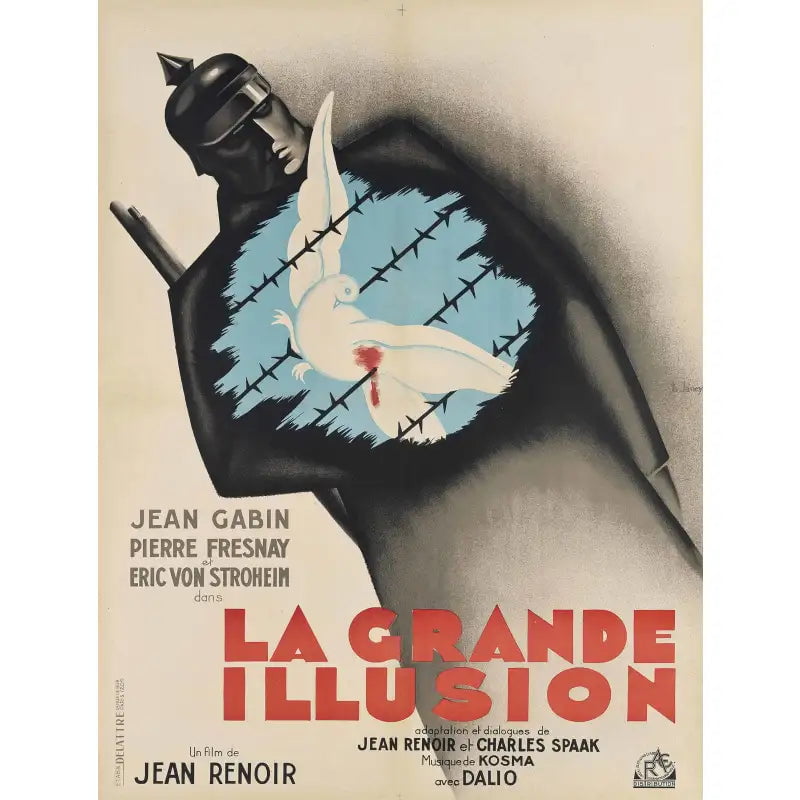
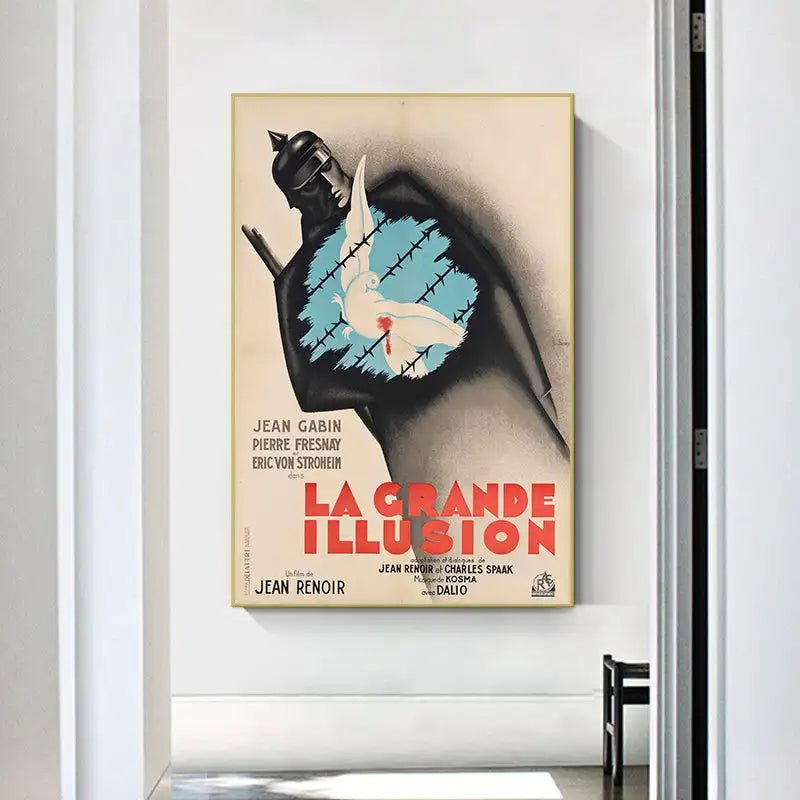
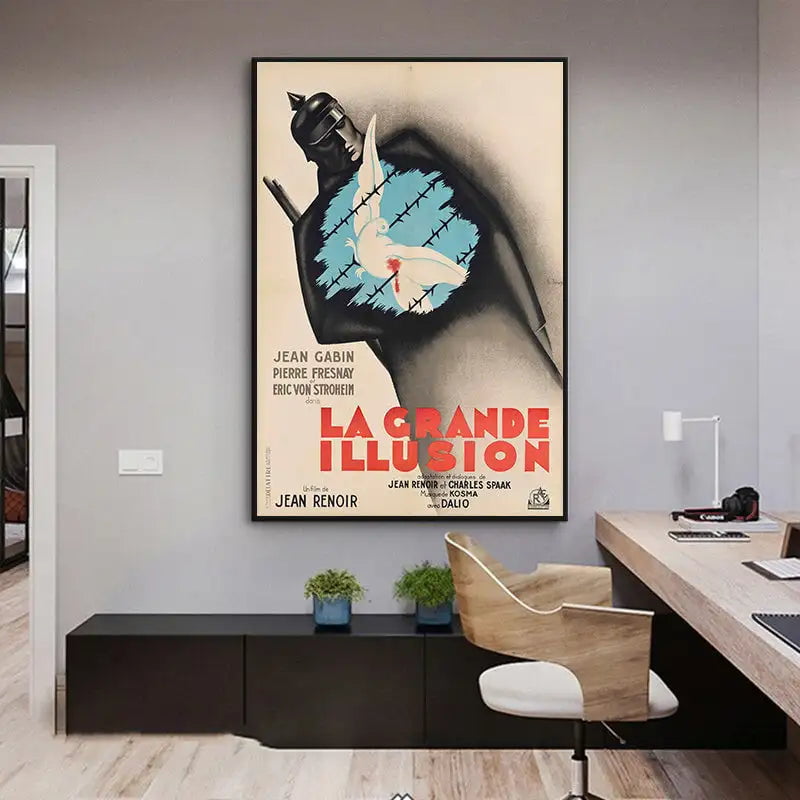
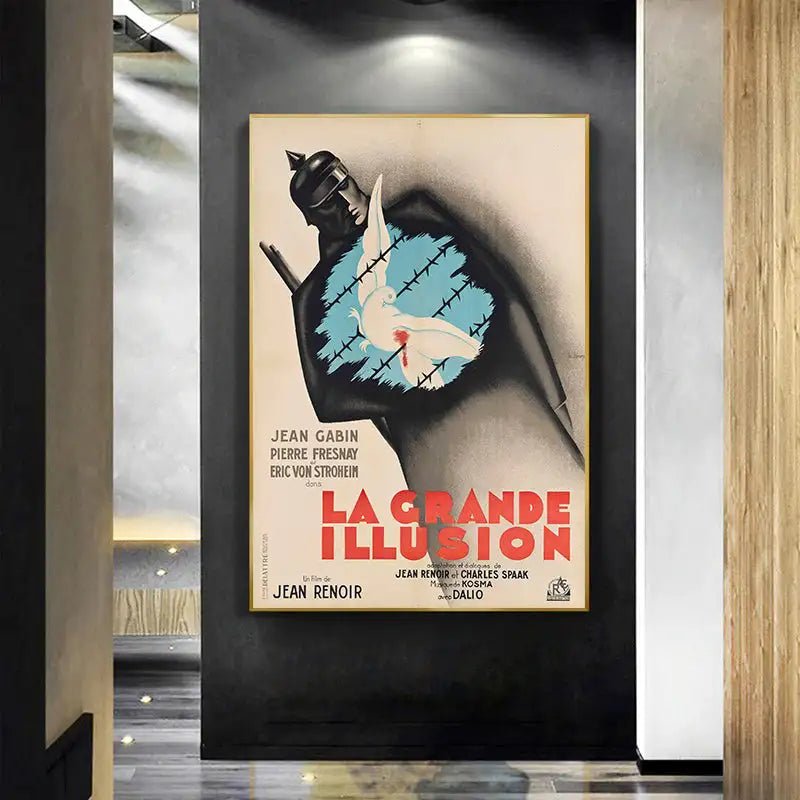
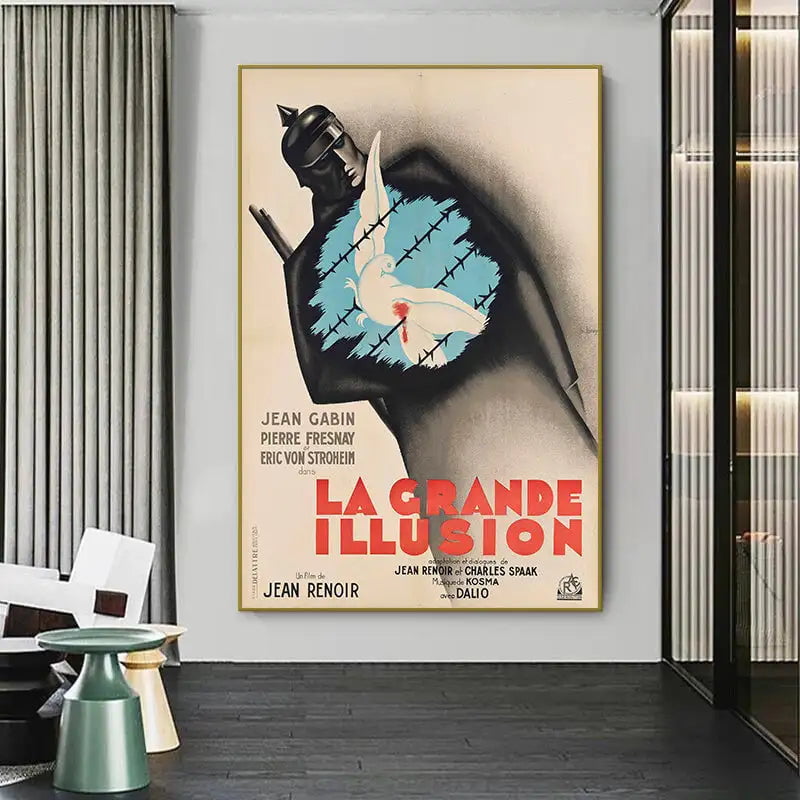
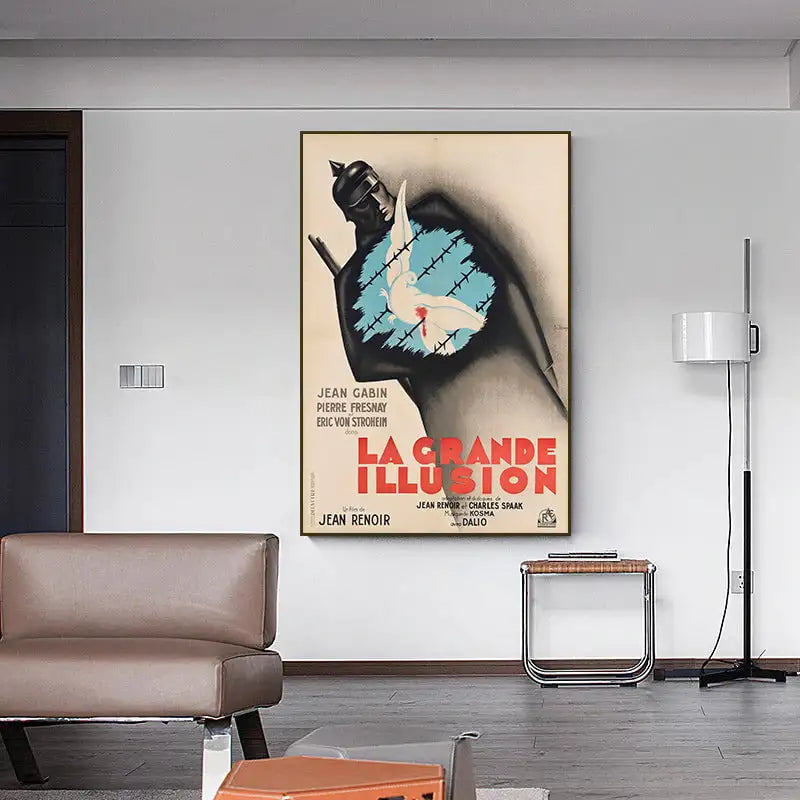
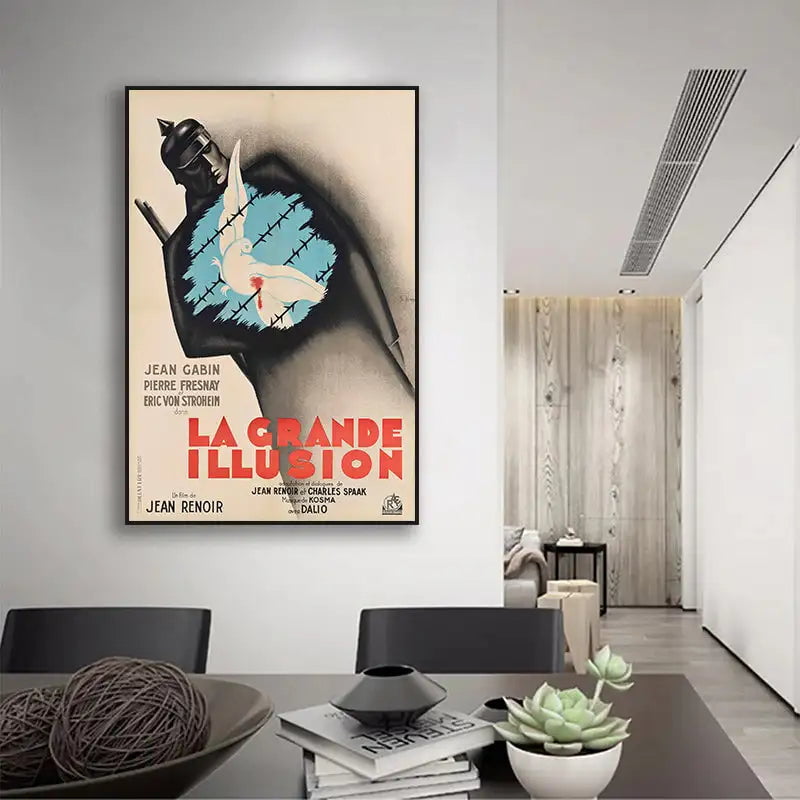
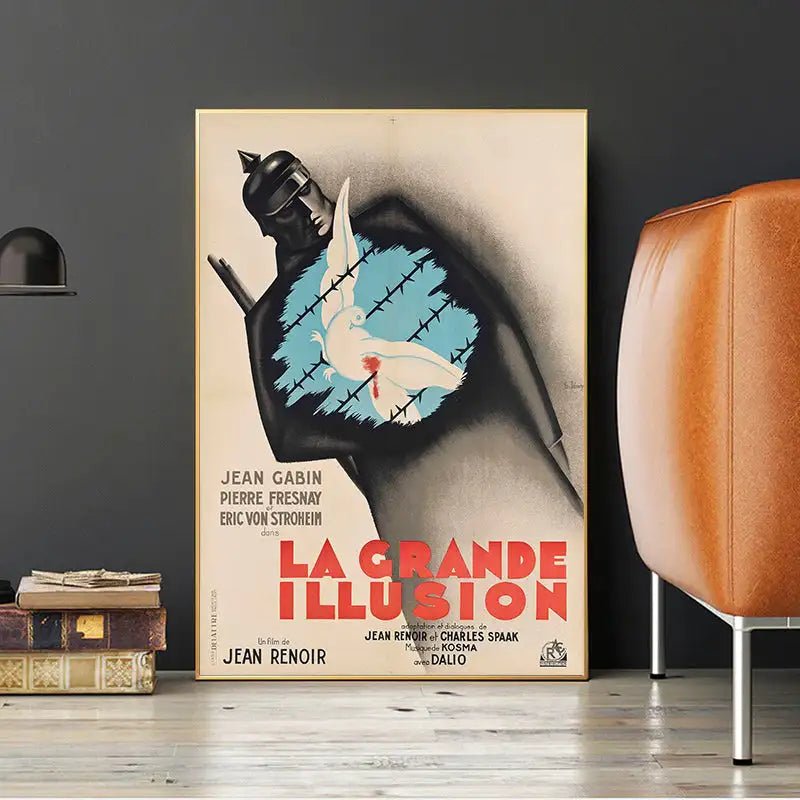
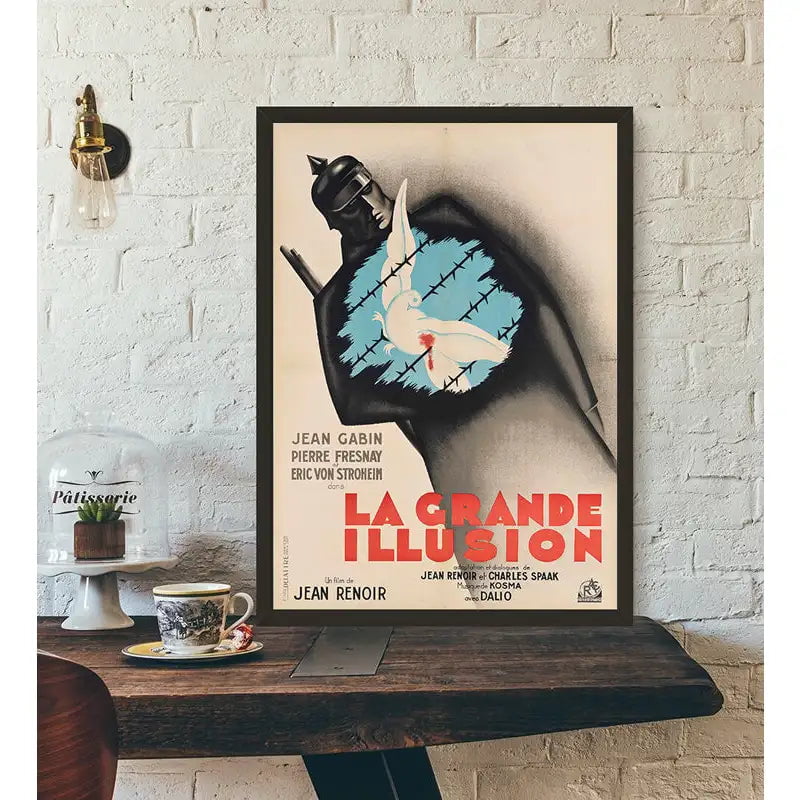
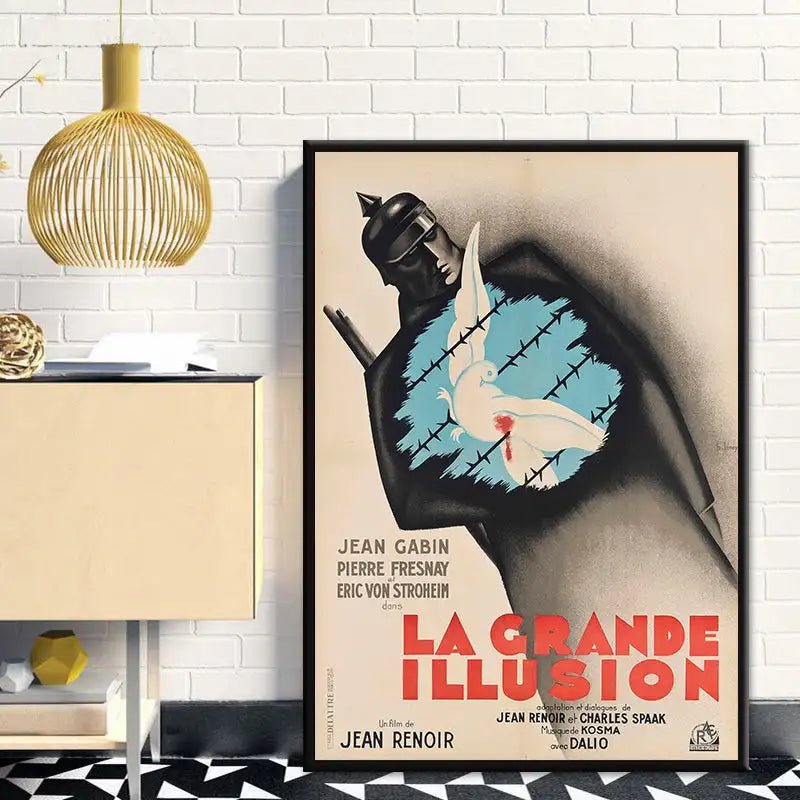
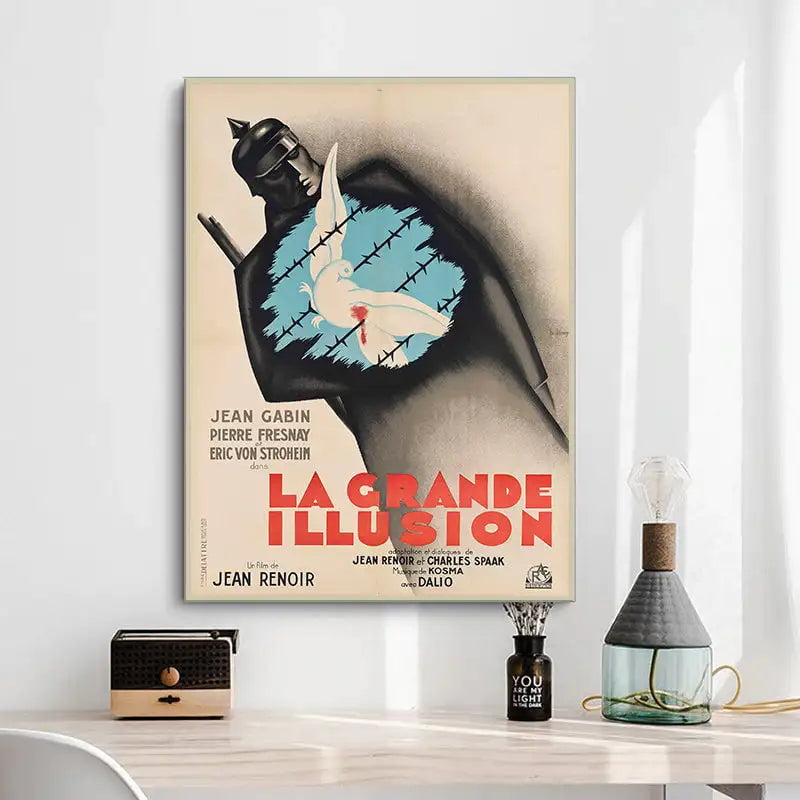
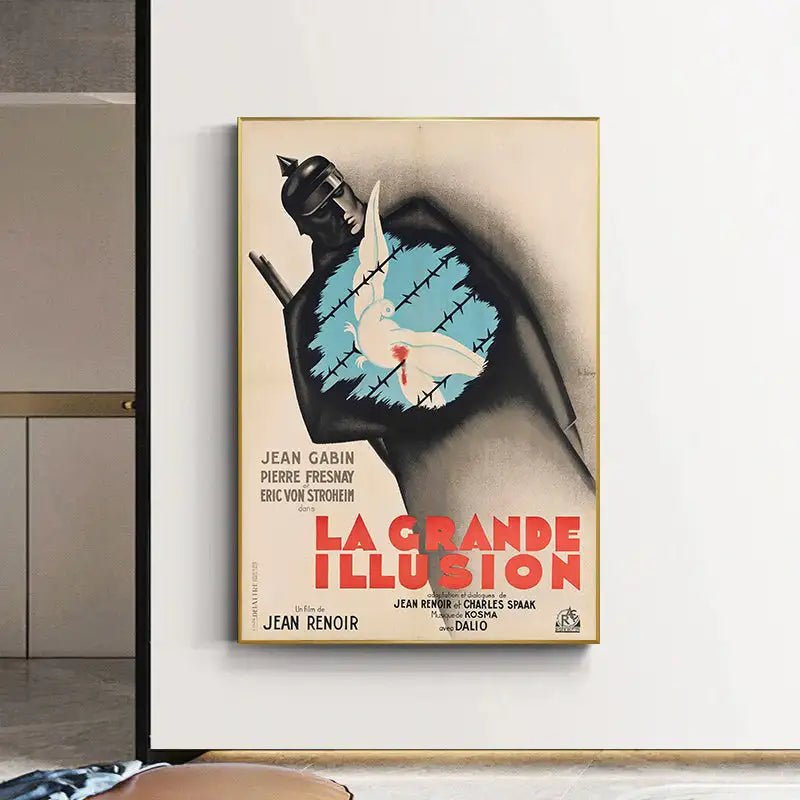

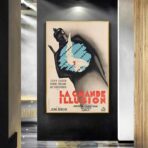
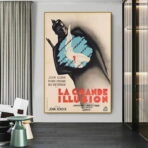
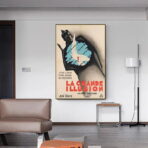

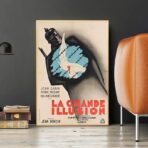
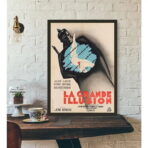

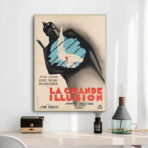

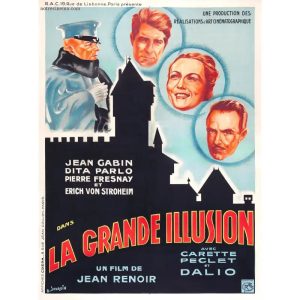
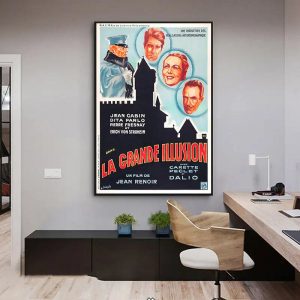





Rediscover this classic of French cinema starring Jean Gabin with this magnificent La Grande Illusion Poster!
- Paper characteristics:
- 🎨 Canvas: global standard in terms of printing and imitating a “painting canvas” look.
- By default, the poster contains a 4cm white border for framing (frame not included). If you don’t want it, please choose “without white border”.
- ✅ Size: Multiple choices available. ✅
- High UV resistance.
- Color vibrancy maximum, glare-free.
- Paper recycled, guaranteeing environmental friendliness.
- Poster packaged carefully and delivered in a protective tube for total protection.
- FREE STANDARD DELIVERY.
⚠️ Frame not included. ⚠️
Description of this La Grande Illusion Poster
La Grande Illusion is a 1937 French war film directed by Jean Renoir, who co-wrote the screenplay with Charles Spaak. The story concerns the class relations within a small group of French officers who are prisoners of war during the First World War and who are planning an escape. The film’s title is taken from the 1909 book The Great Illusion by British journalist Norman Angell, which argued that war is futile because of the shared economic interests of all European nations. The film’s perspective is generously humanistic for its characters of diverse nationalities.
La Grande Illusion is considered by critics and film historians to be one of the masterpieces of French cinema and among the greatest films ever made. Orson Welles named La Grande Illusion as one of the two films he would take with him “on the ark.” In 1958, the film was voted number 5 on the prestigious Brussels 12 list at the 1958 World’s Fair. In 1995, the Vatican included La Grande Illusion in its list of 45 “great films” in the “Art” category. Empire magazine ranked it No. 35 in “The 100 Best Films of World Cinema” in 2010.
During World War I, two French airmen, the aristocrat Captain de Boëldieu and the factory worker Lieutenant Maréchal, go in search of a blur in reconnaissance photographs. They are shot down by German flying ace and aristocrat, Rittmeister von Rauffenstein, and both are taken prisoner by the Imperial German Army. Back at the airfield, von Rauffenstein sends a subordinate to find out if the airmen are officers and, if so, to invite them to lunch. During the meal, Rauffenstein and Boëldieu discover they have common acquaintances, illustrating the familiarity, even solidarity, that exists among the upper classes across national borders.
Boëldieu and Maréchal are then taken to a prisoner-of-war camp, where they meet a colorful group of French prisoners and put on a vaudeville-style show just after the Germans capture Fort Douaumont during the epic Battle of Verdun. During the performance, word spreads that the French have retaken the fort. Maréchal interrupts the show, and the French prisoners spontaneously break into “La Marseillaise.” Following this interruption, Maréchal is placed in solitary confinement, where he suffers cruelly from lack of human contact and hunger; the fort changes hands again while he is imprisoned. Boëldieu and Maréchal also help their fellow prisoners finish digging an escape tunnel. However, just before it is completed, everyone is transferred to other camps. Due to the language barrier, Maréchal is unable to explain the tunnel to an arriving British prisoner.
Boëldieu and Maréchal are moved from camp to camp, finally arriving at Wintersborn, a mountain fortress prison commanded by Rauffenstein, who was so badly wounded in combat that he was posted far from the front, much to his chagrin. Rauffenstein tells them that Wintersborn is safe from escape.
At Wintersborn, the pair meets another prisoner, Rosenthal, from the first camp. Rosenthal is a wealthy French Jew, naturalized French, who generously shares the food parcels he receives. Boëldieu has an idea, after carefully observing how the German guards react in an emergency. He volunteers to distract the guards for the few minutes it takes for Maréchal and Rosenthal to escape. After a staged commotion by the prisoners, the guards were ordered to gather them in the fortress courtyard. During roll call, Boëldieu was discovered to be absent. He made himself known in the upper reaches of the fortress, leading the German guards in pursuit. Maréchal and Rosenthal took the opportunity to lower themselves from a window by a homemade rope and escape. Rauffenstein prevented the guards from shooting Boëldieu and begged his friend to surrender. Boëldieu refused, and Rauffenstein reluctantly shot him with his pistol, aiming for the legs but fatally hitting him in the stomach. Nursed in his final moments by a grieving Rauffenstein, Boëldieu lamented that the war was destroying the purpose of nobility and its usefulness to French and German culture. He expresses pity for von Rauffenstein, who will have to find a new purpose in the postwar world.
Marshal and Rosenthal cross the German countryside in an attempt to reach neutral Switzerland. Rosenthal injures his foot, slowing Marshal down. They argue and separate, but Marshal then returns to help his comrade. They take refuge in the modest farmhouse of a German woman, Elsa, who lost her husband at Verdun, along with three brothers, in battles she calls, with quiet irony, “our greatest victories.” She takes them in and does not betray them when an army patrol passes by. She and Marshal fall in love, despite not speaking each other’s language, but he and Rosenthal eventually leave out of a sense of duty after Rosenthal recovers from his injury. Marshal declares that he will return to Elsa and his young daughter, Lotte, if he survives the war.
A German patrol spots the two fugitives crossing a snowy valley. They fire a few shots, but their commander orders them to stop, claiming that the two men have crossed into Switzerland.