
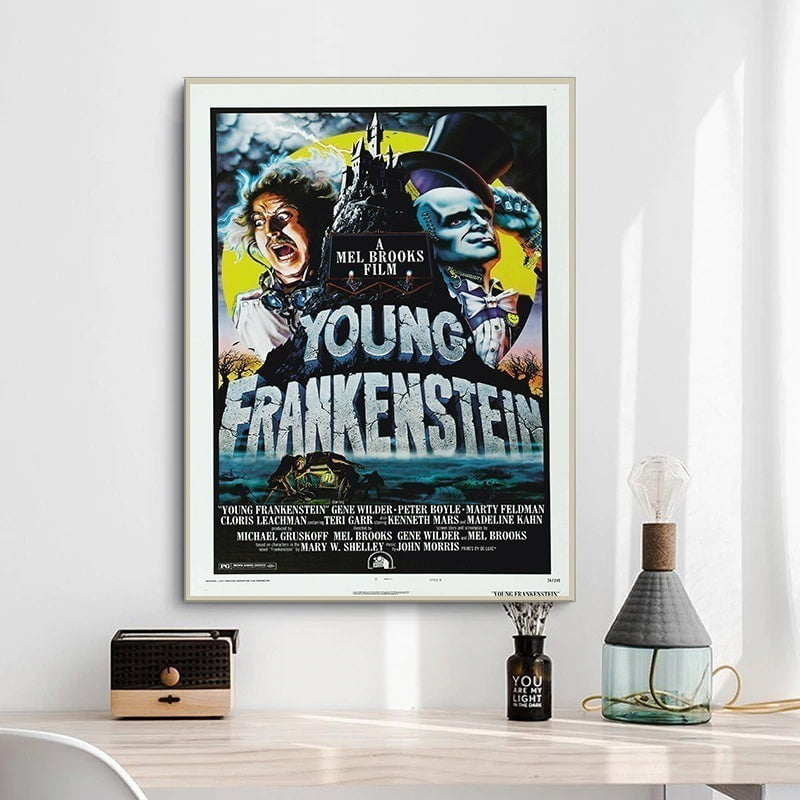
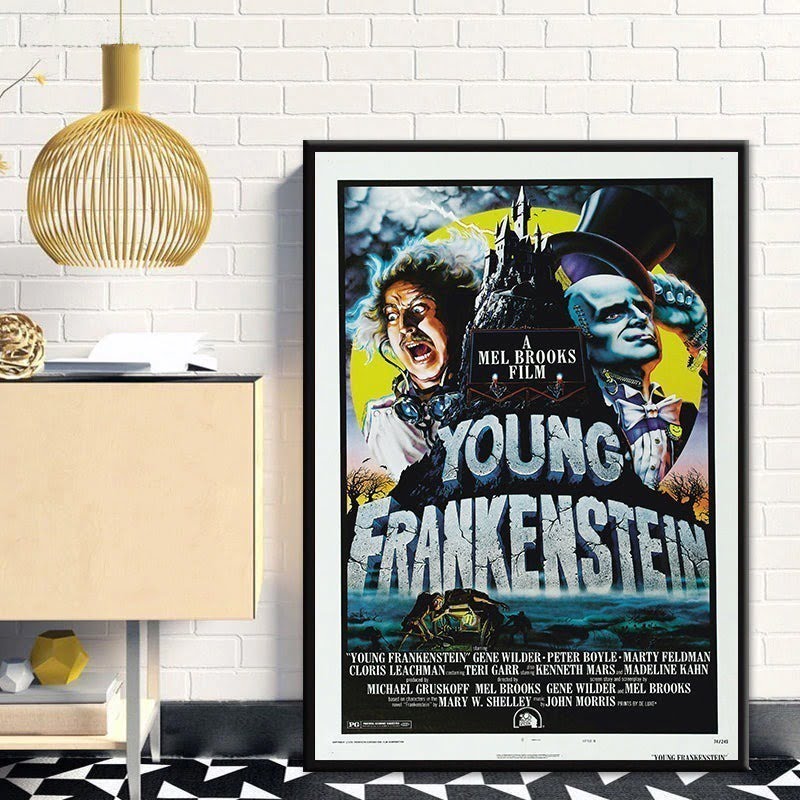
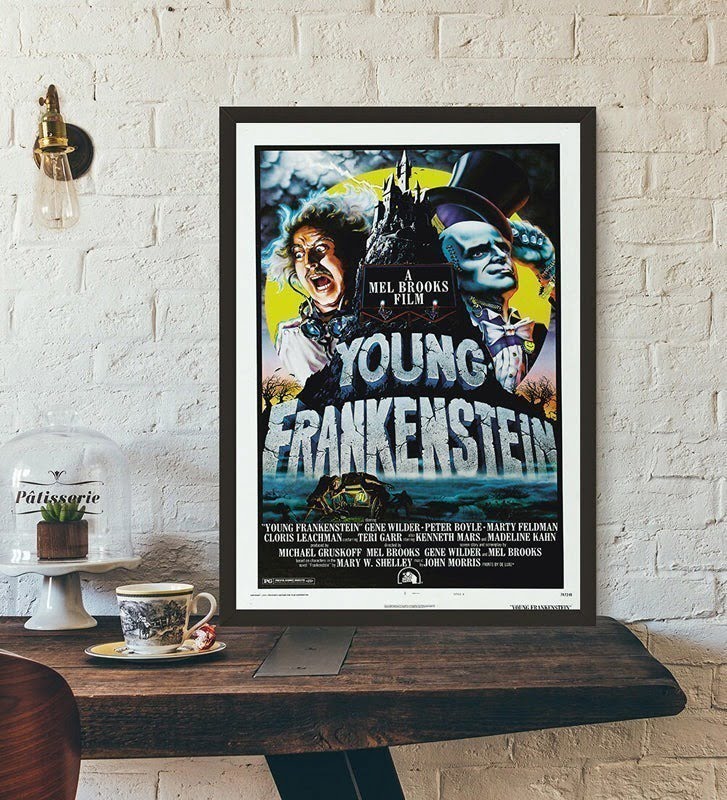
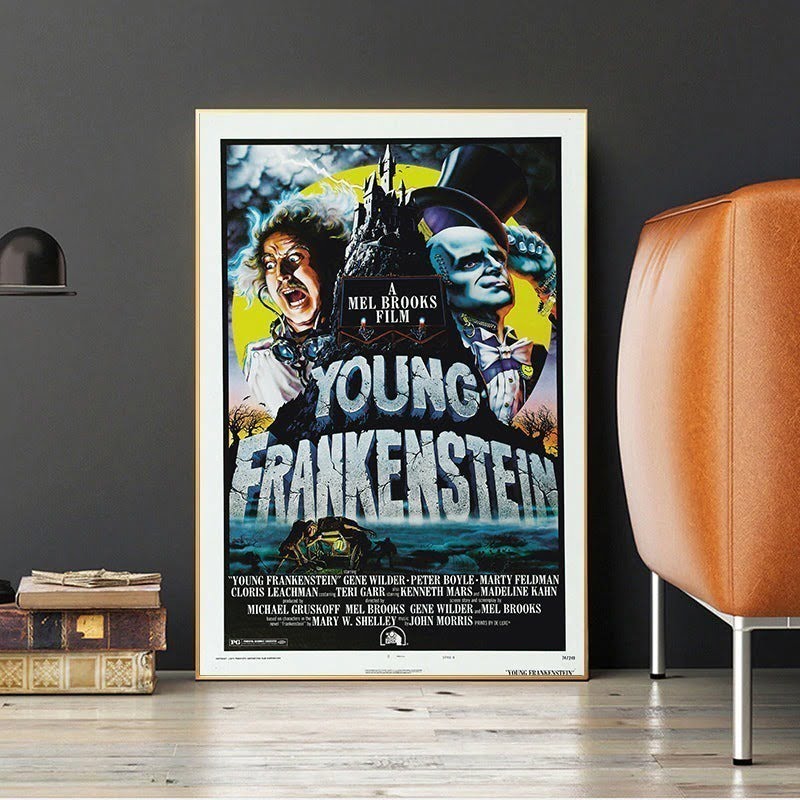
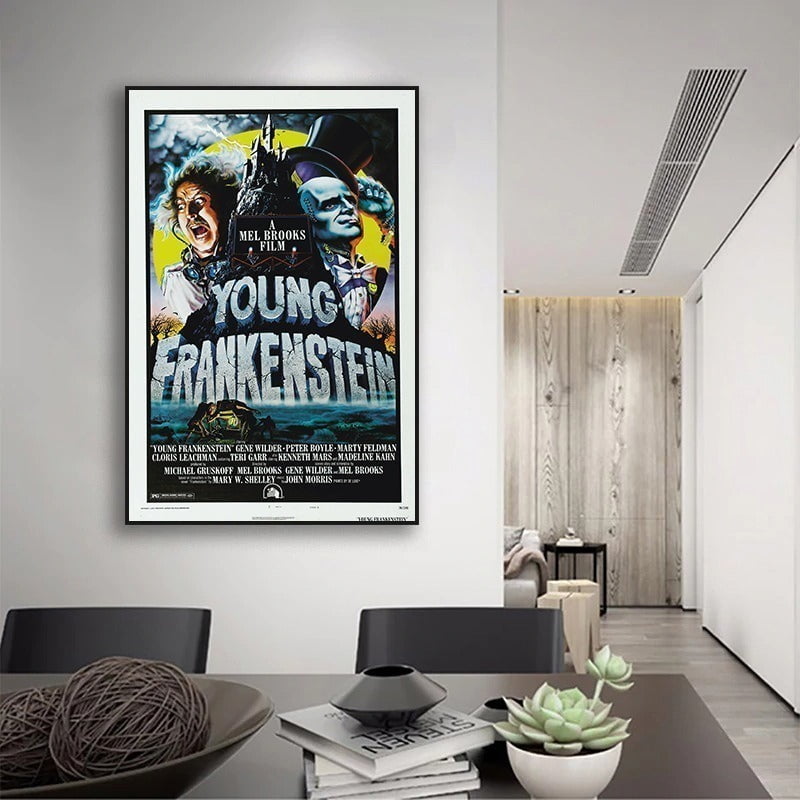
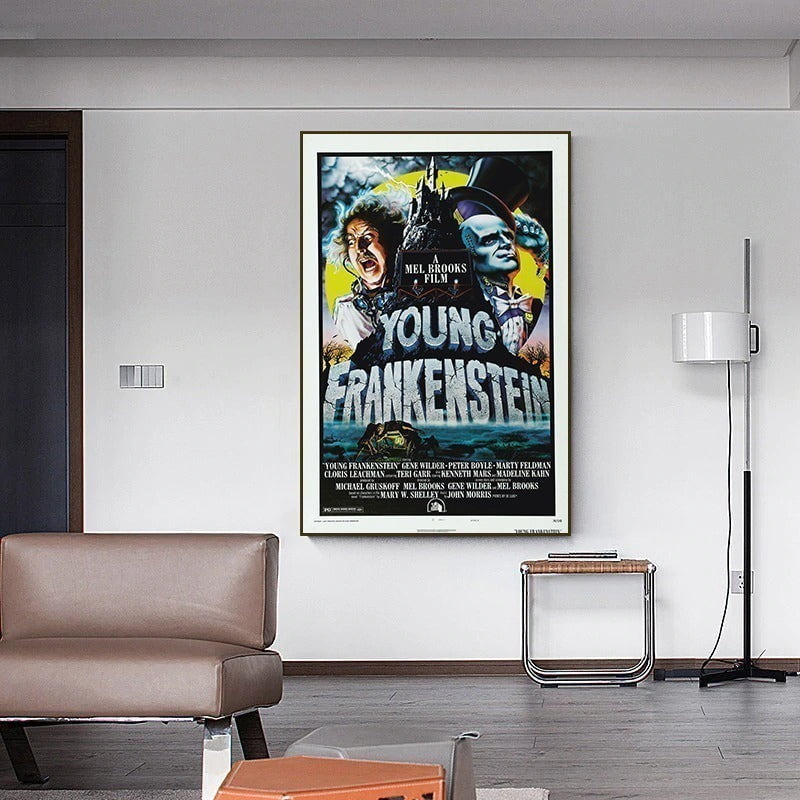
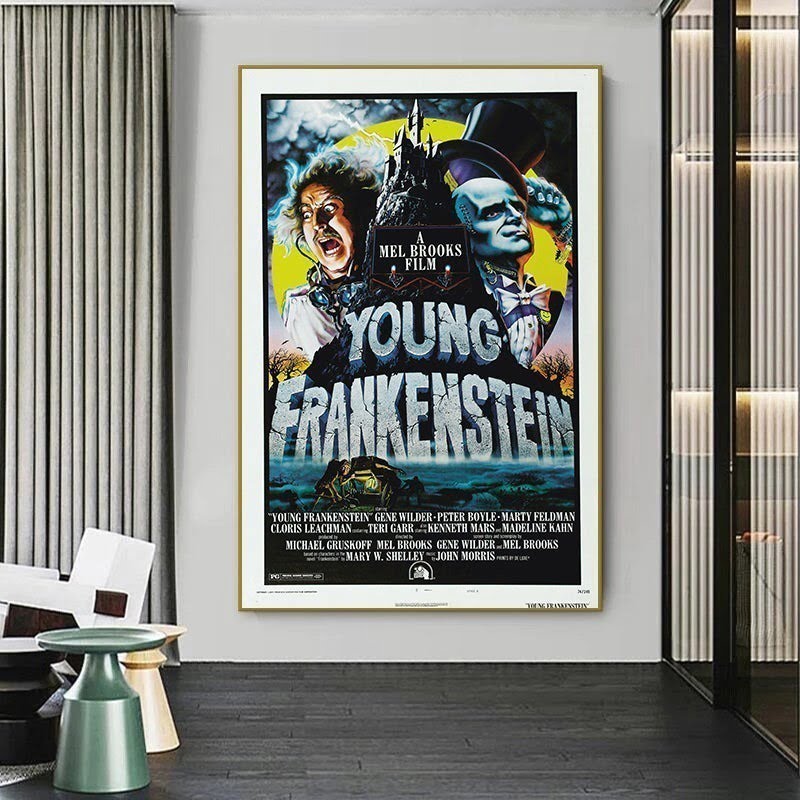
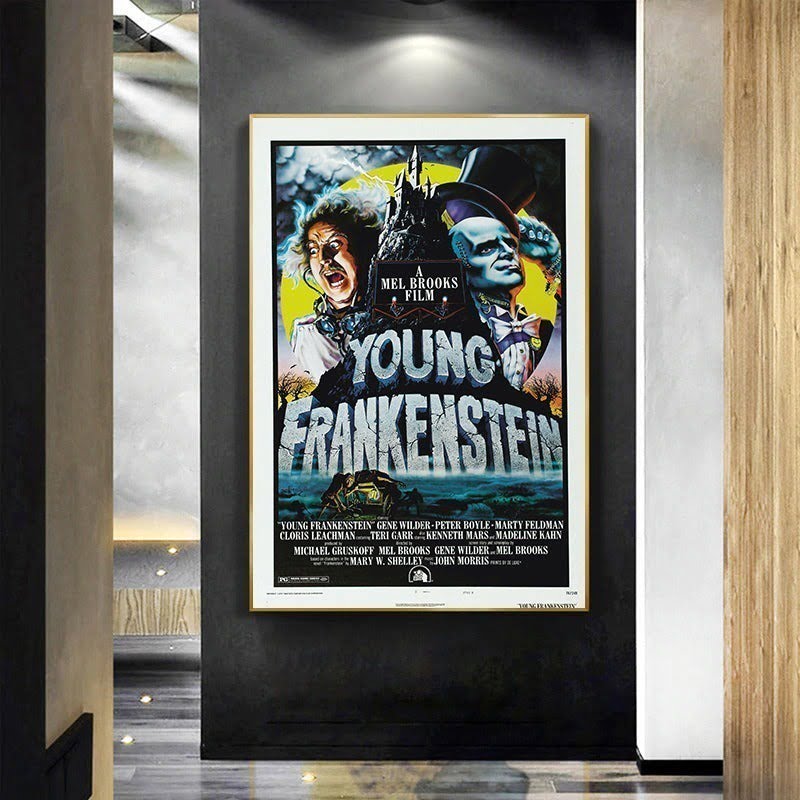
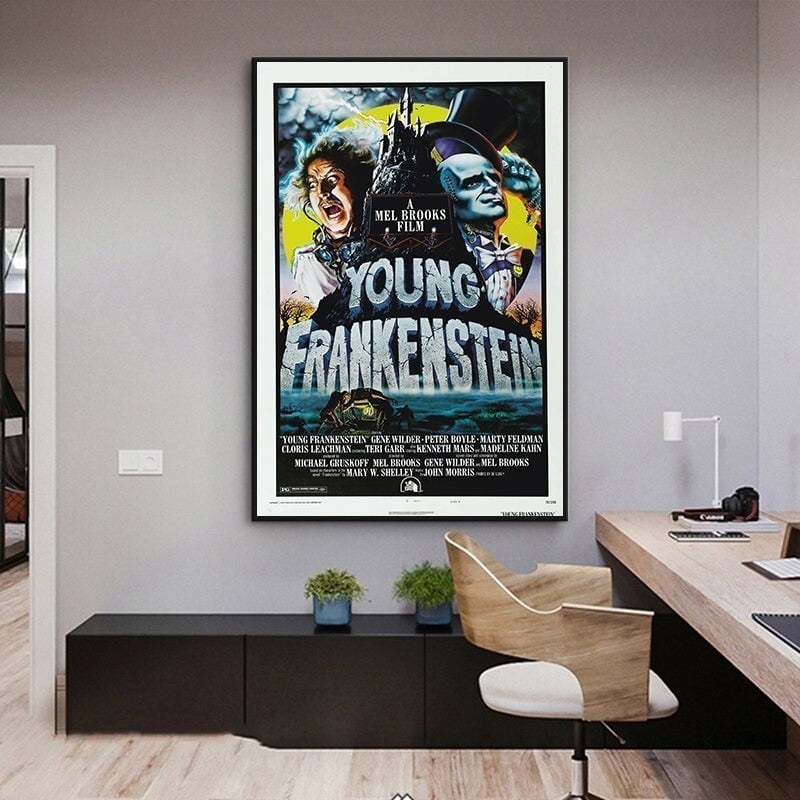



Tremble with this splendid Frankenstein Junior Poster! Its originality will be ideal and perfect to give your decoration a unique vintage look!
- Paper characteristic:
- 🎨 Canvas: world standard in terms of printing and imitating a “painting canvas” look.
- By default, the poster contains a 4cm white border for framing (frame not included). If you don’t want it, please choose “without white border”.
- ✅ Size: Multiple choices available. ✅
- High UV resistance.
- Color vibrancy maximum, glare-free.
- recycled paper, guaranteeing environmental friendliness.
- Poster packaged carefully and delivered in a protective tube for Total protection.
- FREE STANDARD DELIVERY.
⚠️ Frame not included. ⚠️
Description of this Junior Frankenstein Poster
Junior Frankenstein is a 1974 American horror comedy film directed by Mel Brooks. The screenplay was co-written by Brooks and Gene Wilder. Wilder plays the title character, a descendant of the infamous Dr. Victor Frankenstein, and Peter Boyle plays the monster. The film stars Teri Garr, Cloris Leachman, Marty Feldman, Madeline Kahn, Kenneth Mars, Richard Haydn, and Gene Hackman.
The film is a parody of the classic horror film genre, specifically the various film adaptations of Mary Shelley’s 1818 novel Frankenstein, or The Modern Prometheus, produced by Universal Pictures in the 1930s. Most of the laboratory equipment used as props was created by Kenneth Strickfaden for the 1931 film Frankenstein. To evoke the atmosphere of the early films, Brooks shot the film entirely in black and white, a rarity in the 1970s, and used 1930s-style opening credits and scene transitions, such as iris flares, wipeouts, and fades to black. The film also features a period score composed by Brooks’ longtime composer John Morris.
A critical favorite and box-office success, Frankenstein Junio ranked #28 on Total Film magazine’s readers’ “50 Greatest Comedy Movies of All Time” list, #56 on Bravo’s “100 Funniest Movies” list, and #13 on the American Film Institute’s list of the 100 Funniest American Movies. In 2003, it was deemed “culturally, historically, or aesthetically significant” by the U.S. National Film Preservation Board and selected for preservation in the Library of Congress’s National Film Registry. It was later adapted by Brooks and Thomas Meehan as a stage musical. The film was nominated for Academy Awards for Best Sound and Best Adapted Screenplay, the latter shared with Wilder and Brooks.
On its 40th anniversary, Brooks considers it by far his best film (though not his funniest) as a writer and director.