

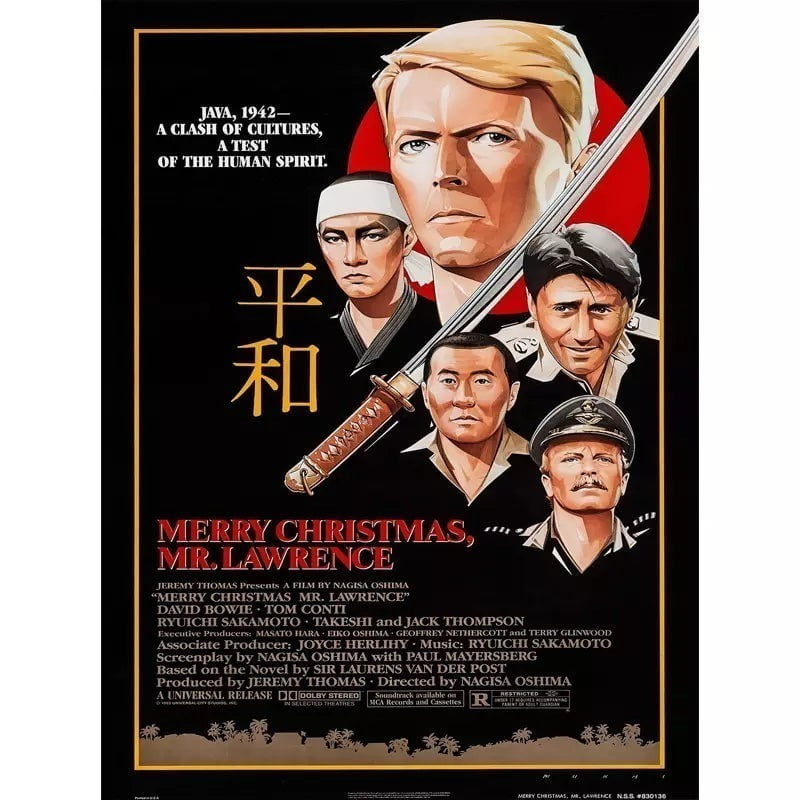
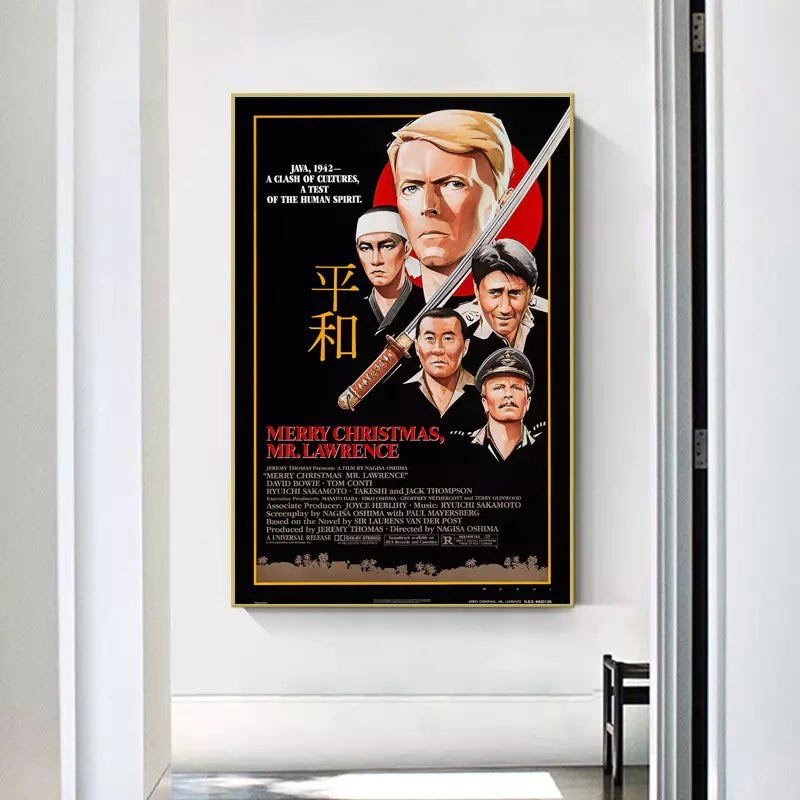
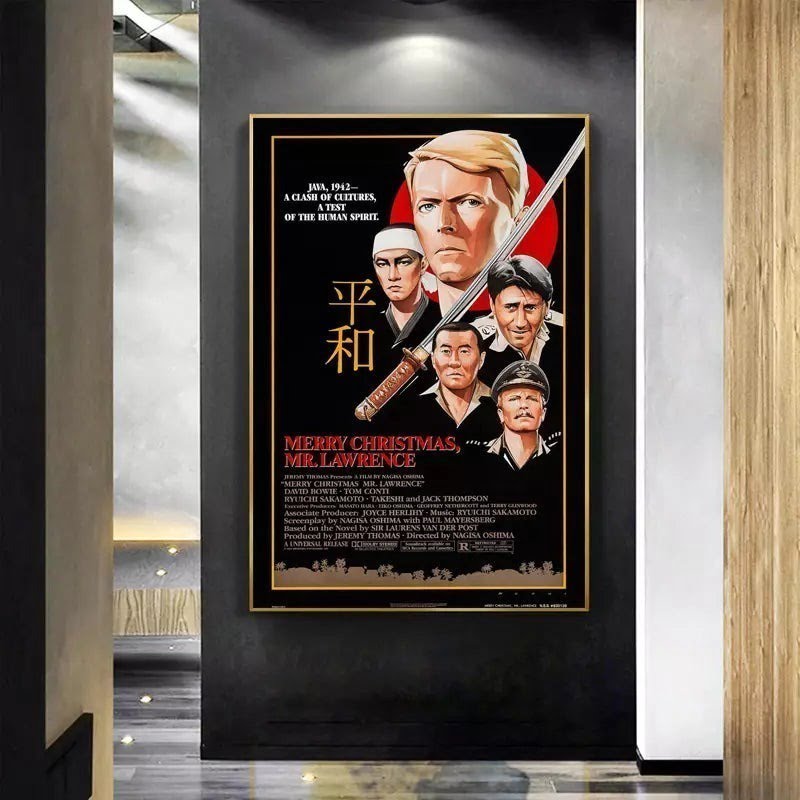
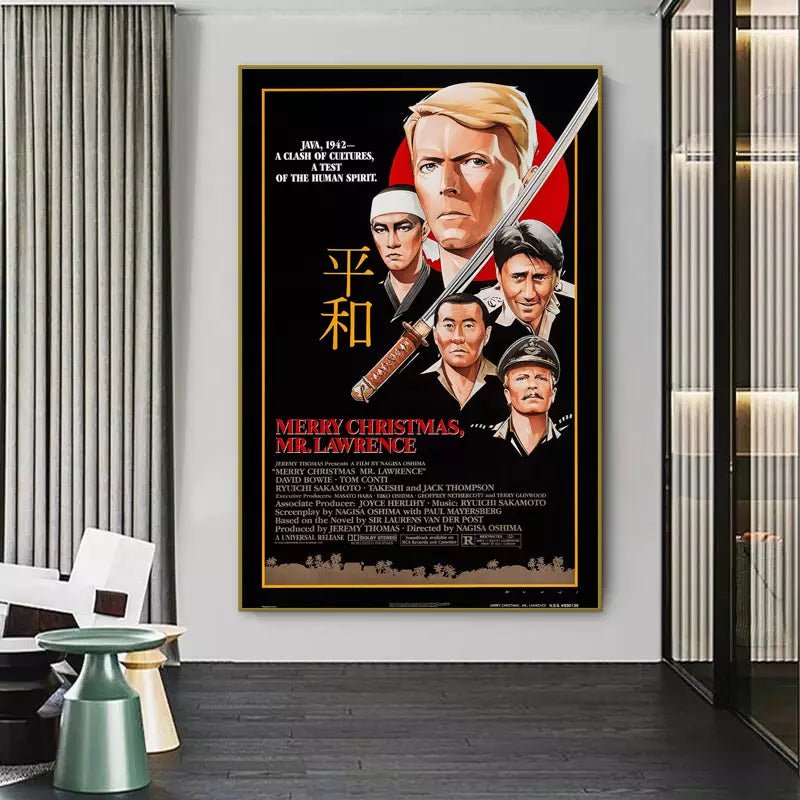
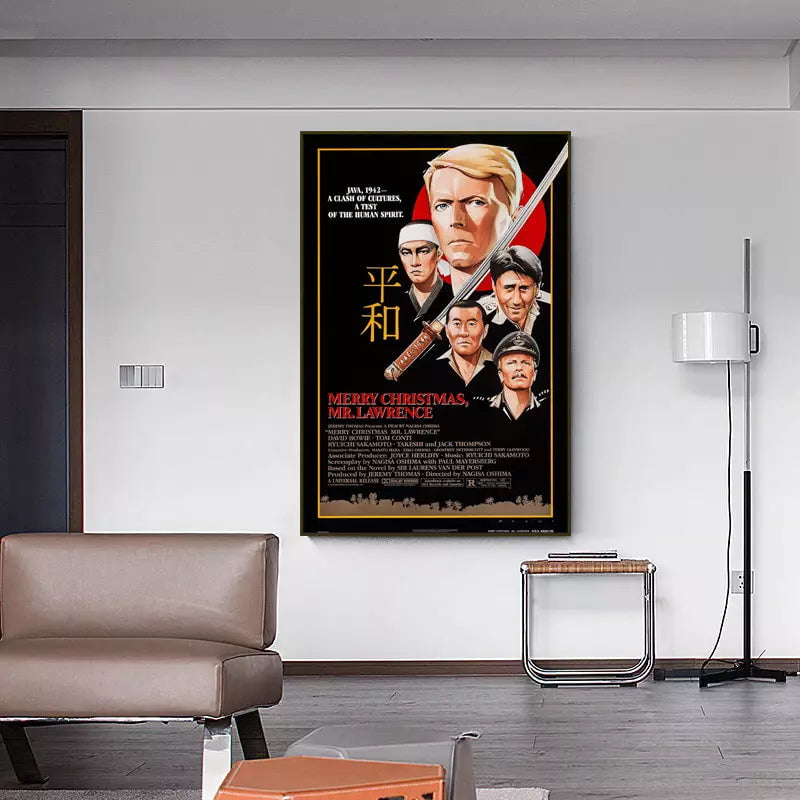
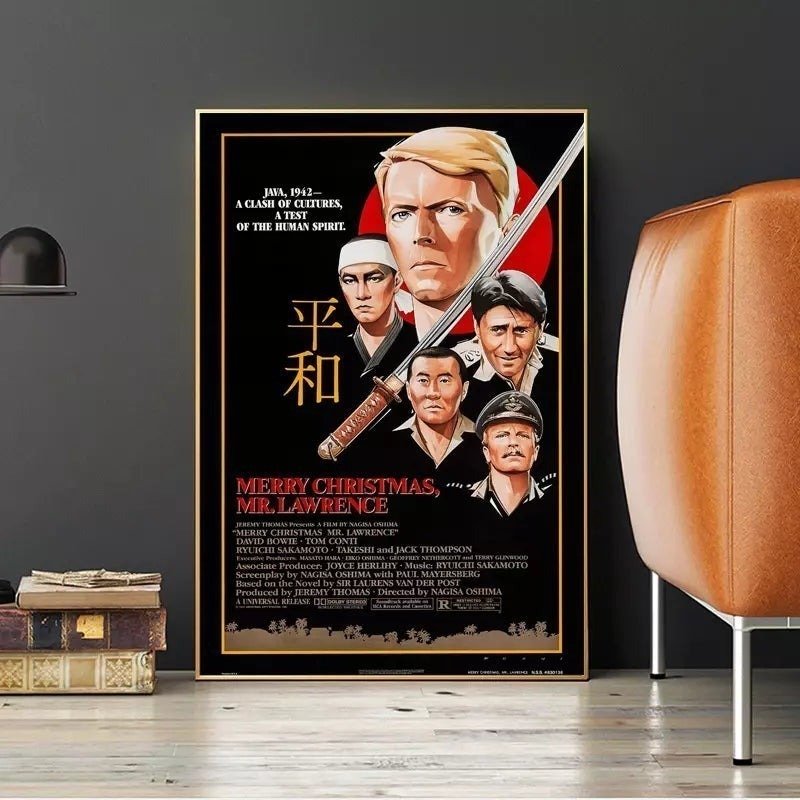

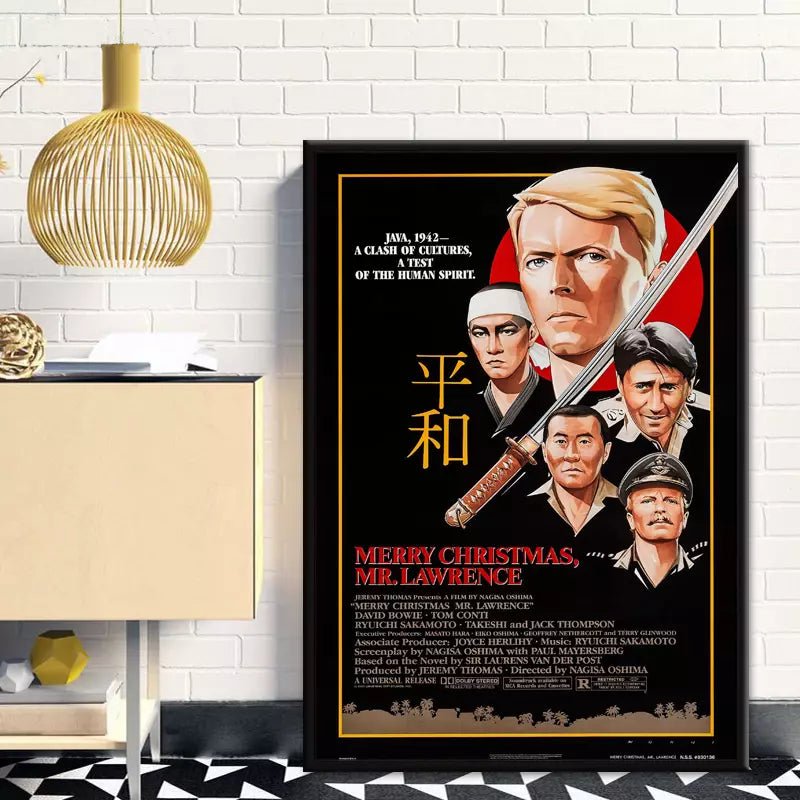
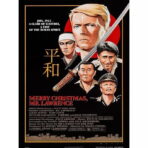


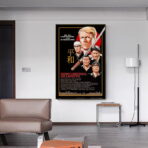

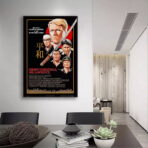
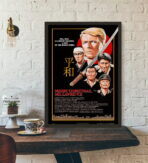

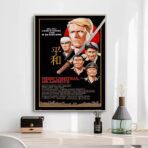




With our Furyo Poster, immerse yourself in the captivating and emotional world of the film thanks to our visual that conveys all the power of this iconic work. Experience the intensity of passions rooted in rebellion and unwavering friendship, for an unforgettable cinematic experience.
- Paper Feature:
- 🎨 Canvas: global standard in terms of printing and imitating a “painting canvas” look.
- By default, the poster contains a 4cm white border for framing (frame not included). If you don’t want it, please choose “without white border”.
- ✅ Size: several choices available. ✅
- High UV resistance.
- Maximum color brilliance without reflections.
- Recycled paper guaranteed environmental friendliness.
- Poster wrapped carefully and delivered in a protective tube for total protection.
- FREE STANDARD DELIVERY.
⚠️ Frame not included. ⚠️
Description of this Furyo Poster
Furyo is a 1983 war film co-written and directed by Nagisa Ōshima, co-written by Paul Mayersberg, and produced by Jeremy Thomas. The film is based on the experiences of Sir Laurens van der Post (played by Tom Conti) as a prisoner of war in Japan during World War II, as depicted in his books The Seed and the Sower (1963) and The Night of the New Moon (1970). It stars David Bowie, Ryuichi Sakamoto, Takeshi Kitano, and Jack Thompson; Sakamoto also wrote the score, including the vocal version of the main theme “Forbidden Colors”, with lyrics written and sung by David Sylvian.
The film was entered into the 1983 Cannes Film Festival in competition for the Palme d’Or.[5] Sakamoto’s score won the BAFTA Award for Best Film Music.
In 1942, Captain Yonoi is the commandant of the Lebak Sembada POW camp in Japanese-occupied Java. A strict adherent to the code of bushido, his only sources of connection with the prisoners are the empathetic Lt. Col. John Lawrence, the only inmate fluent in Japanese, and the abrasive spokesman Gp. Capt. Hicksley, who repeatedly resists Yonoi’s attempts to find weapons experts among the prisoners for the interests of the Japanese military. Lawrence has befriended Sgt. Gengo Hara, but remains at odds with the rest of the staff. Summoned to the military trial of the recently captured Major Jack Celliers, Yonoi is fascinated by his resilience and has him committed to the camp. After the trial, Yonoi confides in Lawrence that he is haunted by shame due to his absence during the February 26th Incident, believing he should have died alongside the rebels and implying that his focus on honor stems from this. Sensing a kindred spirit in Celliers, Yonoi’s fascination becomes a romantic obsession: he treats him specially, watches him sleep, and repeatedly questions Hara about him in private. When the inmates are forced to fast as punishment for insubordination during a guard’s enforced seppuku (Okura), Celliers sneaks food. The guards catch him and find a contraband radio during the subsequent investigation, forcing him and Lawrence to take responsibility. Yonoi’s batman, realizing Celliers has him, attempts to kill Celliers in his sleep that night, but fails after he wakes up and escapes, freeing Lawrence as well. Yonoi catches Celliers and challenges him to a duel in exchange for his freedom, but Celliers refuses; the batman returns and commits suicide for his failure, urging Yonoi to kill Celliers before his feelings overpower him.
At the funeral, Lawrence learns that he and Celliers will be executed for the radio, despite the lack of evidence, to preserve order in the camp; enraged, he trashes the funeral altar and is forced to return to his cell. That night, Celliers reveals to Lawrence that as a teenager, he betrayed his younger brother, long bullied for his hunchback, by refusing to spare him a humiliating and traumatic initiation ritual at their boarding school. Facing his past, he describes the lifelong shame he felt over his actions, alongside Yonoi’s predicament. During their conversation, the pair are freed by a drunken Hara, just as another prisoner has confessed to delivering the radio. As they leave, Hara calls out in English, “Merry Christmas, Lawrence!” Although Yonoi is angry at Hara for overstepping his authority, he only mildly reprimands him.
Hicksley, realizing that Yonoi wants to replace him with Celliers as spokesman, confronts him. The two argue over their withholding of information from each other before an enraged Yonoi orders the entire camp to form up outside the barracks, including the sick patients in the infirmary, resulting in death. Hicksley, who refused to bring the patients out, is to be punished for his insubordination with on-the-spot execution. Before he can be killed, Celliers breaks down and kisses Yonoi on each cheek, choosing to save Hicksley’s life at the cost of his own. Caught between a desire for vindication and his feelings for Celliers, a distraught Yonoi collapses and is eventually relieved of his duties. His more rigid replacement has Celliers buried up to his neck in sand and left for dead. Before leaving, Yonoi sneaks into his quill and cuts off a lock of his hair, moments before his death. Four years later, Lawrence visits Hara, who is now a prisoner of the Allies. Hara has learned to speak English and reveals that he is to be executed the next day for war crimes. Expressing confusion over the harshness of his sentence given the banality of his actions between both sides of the war, he and Lawrence both conclude that while the Allies officially won, morally “we’re all wrong.” The two reminisce about Celliers and Yonoi, the latter having been killed after the war, before saying their goodbyes. As he leaves, Hara calls out, “Merry Christmas, Mr. Lawrence!”