
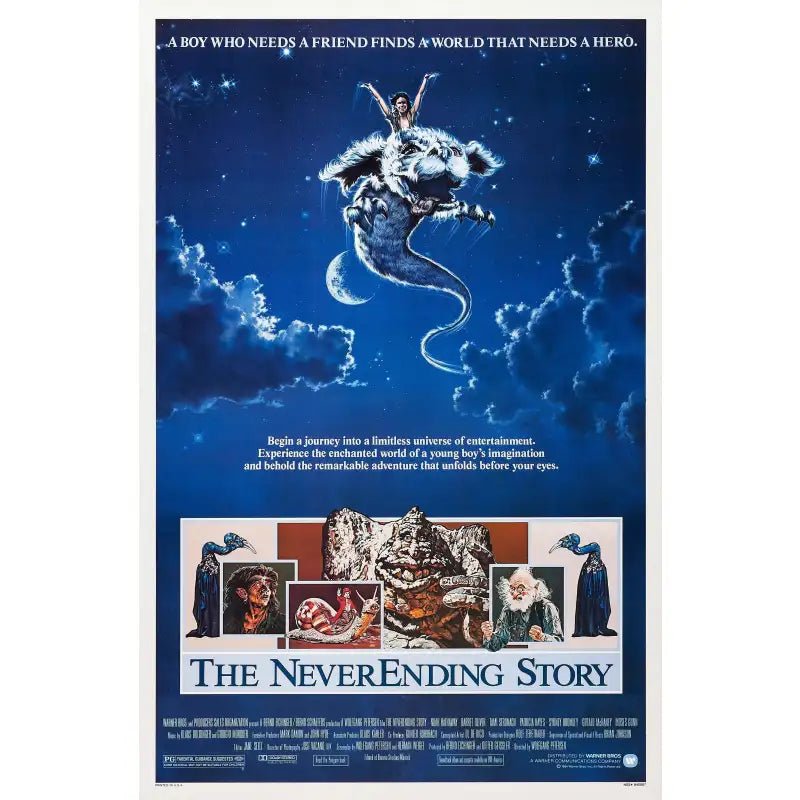
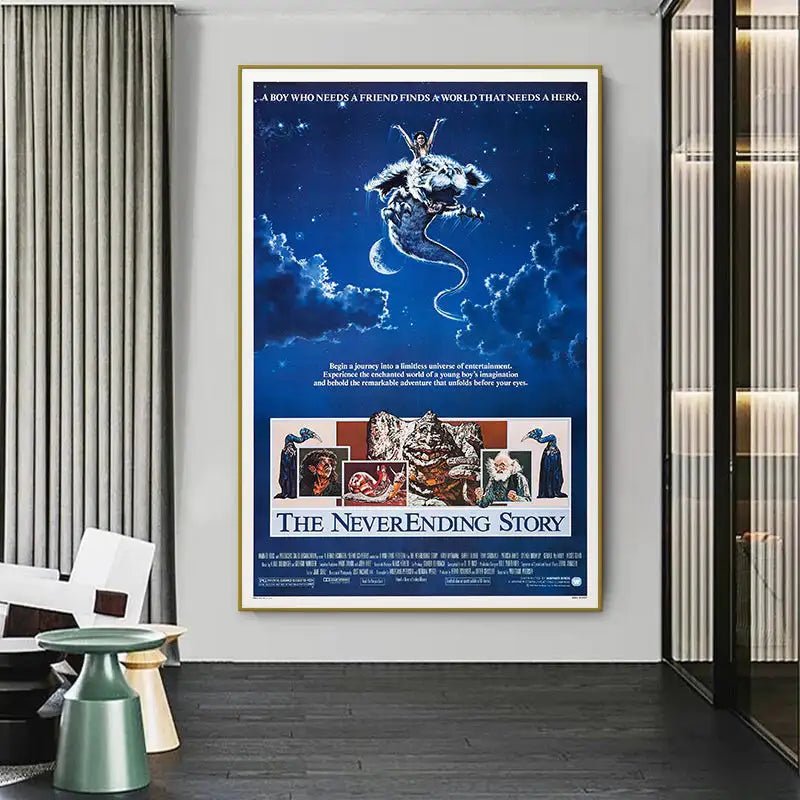
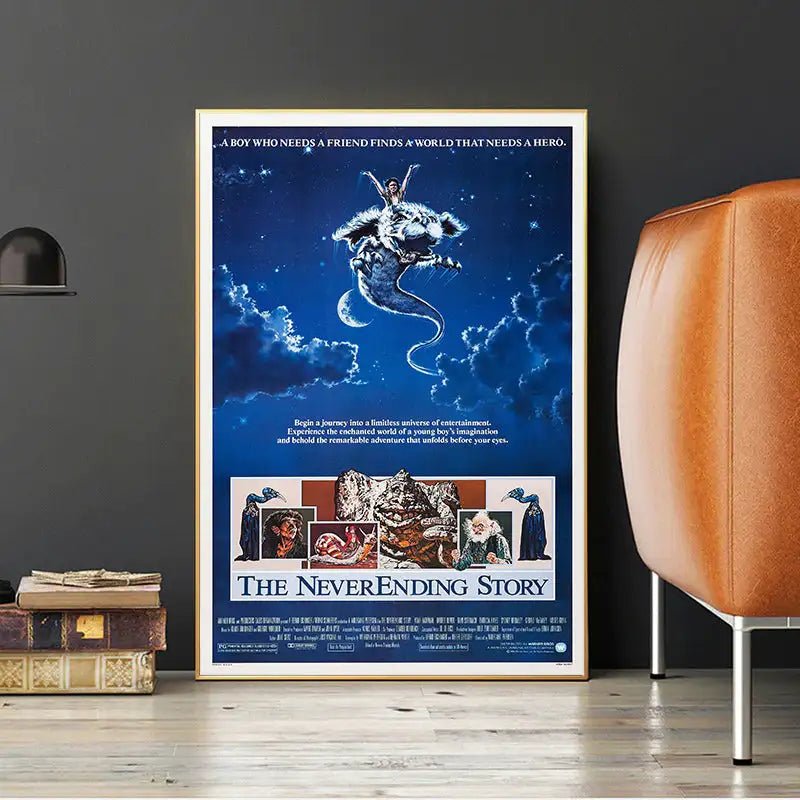
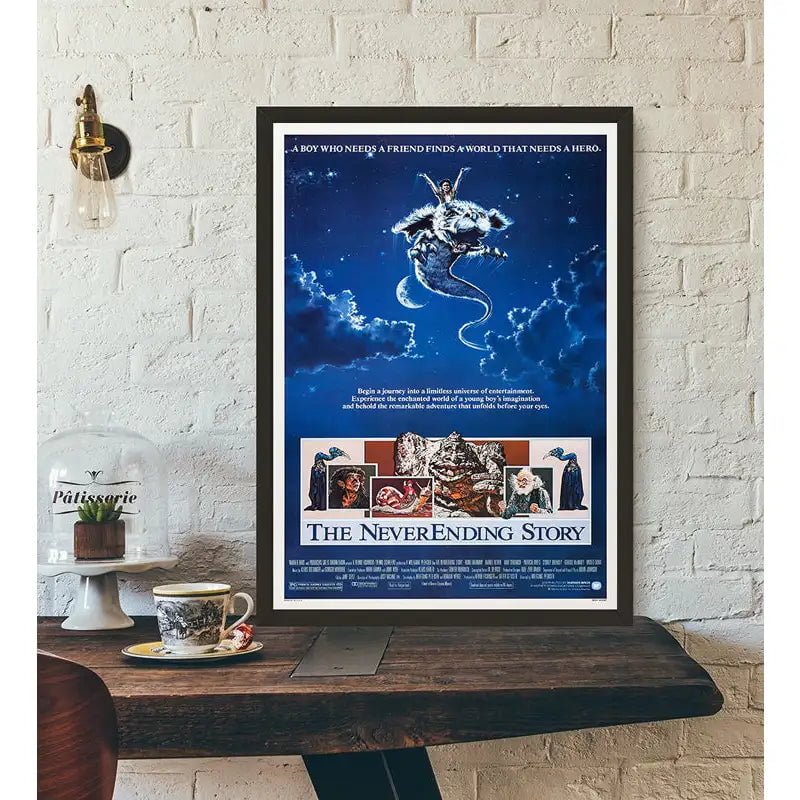

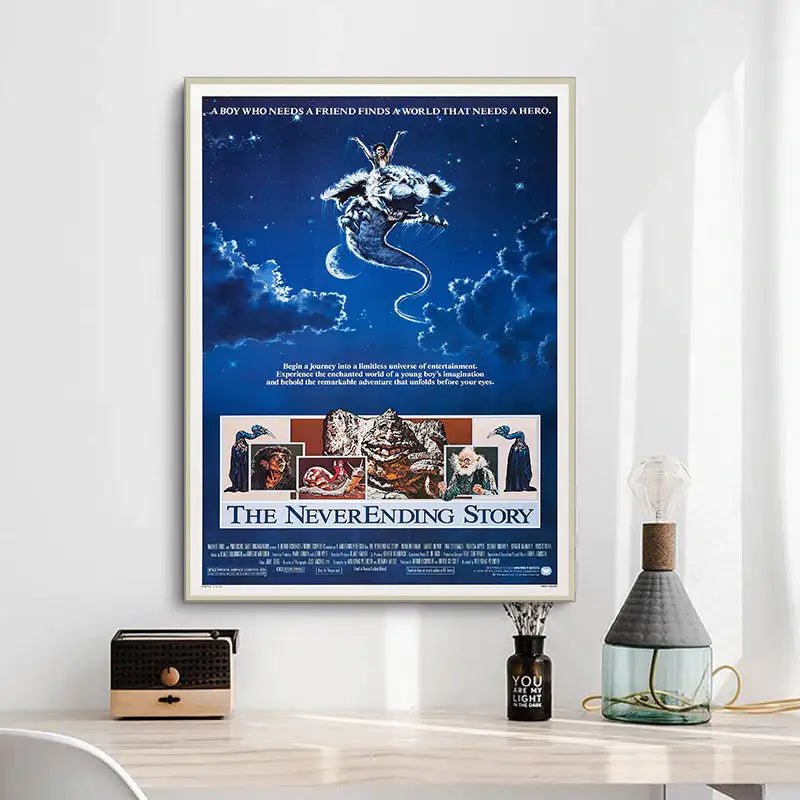
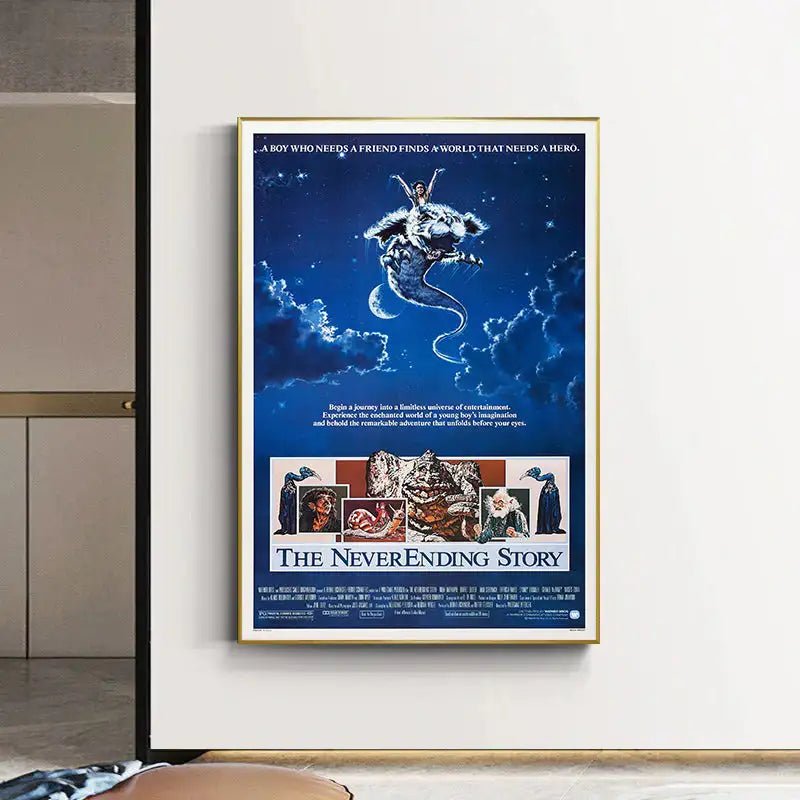
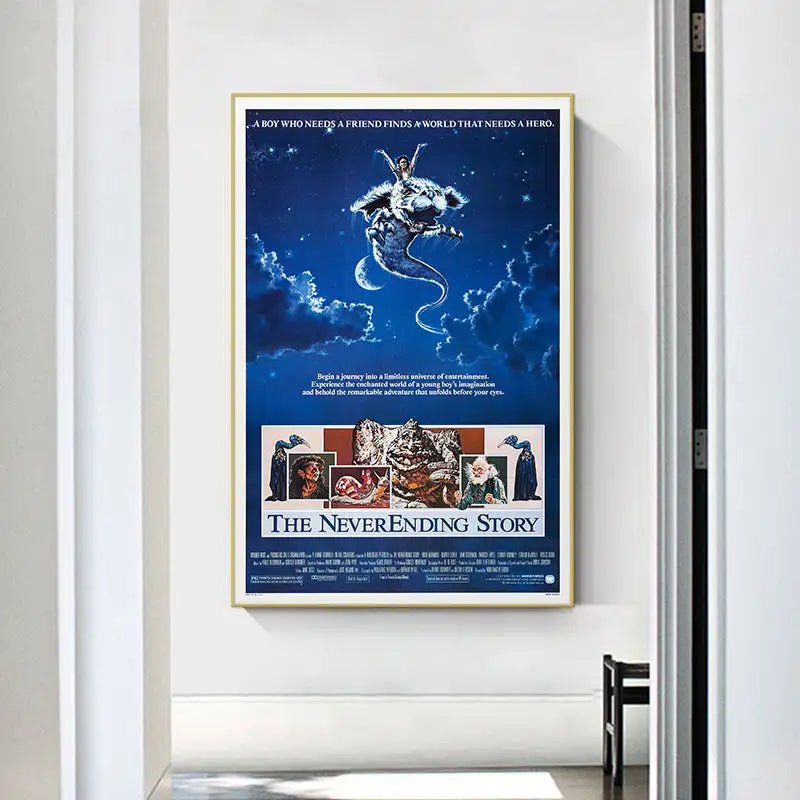
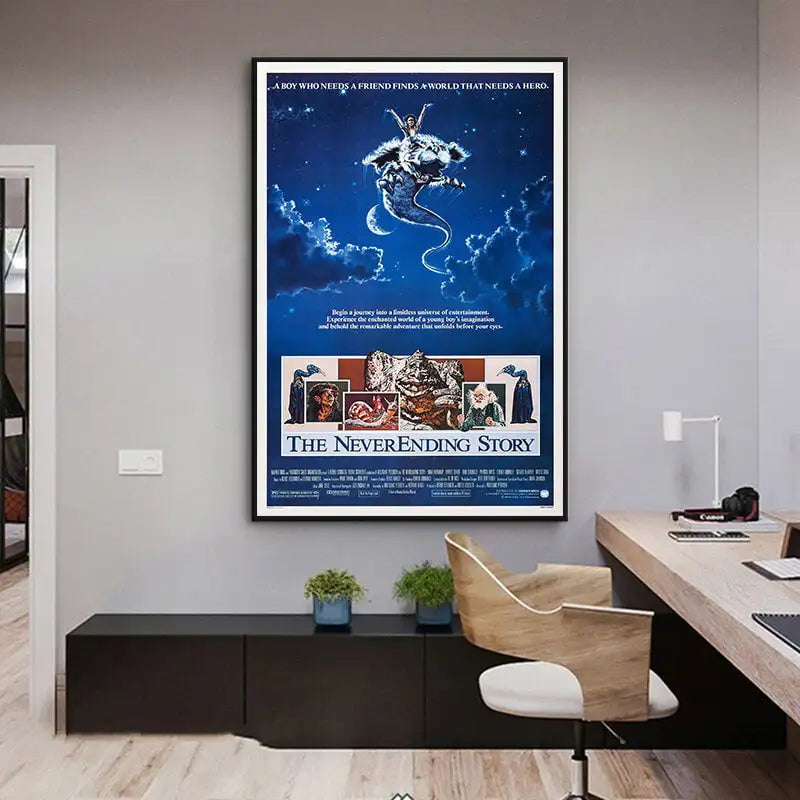



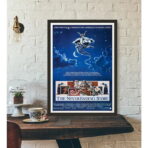

















With this The Neverending Story Movie Poster, rediscover the wonderful world of Fantasia that will transport you straight to your childhood!
- Paper Feature:
- 🎨 Canvas: global standard in terms of printing and imitating a “painting canvas” look.
- By default, the poster contains a 4cm white border for framing (frame not included). If you don’t want it, please choose “without white border”.
- ✅ Size: Multiple choices available. ✅
- High UV resistance.
- Color vibrancy maximum, glare-free.
- Paper recycled, guaranteeing environmental friendliness.
- Poster packaged carefully and delivered in a protective tube for Total protection.
- FREE STANDARD DELIVERY.
⚠️ Frame not included. ⚠️
Description of this The NeverEnding Story Movie Poster
The NeverEnding Story is a 1984 German-American fantasy film directed by Wolfgang Petersen, who also wrote the screenplay. The model is the novel of the same name by Michael Ende. The film only covers the first third of the novel. Michael Ende was unhappy with the film and had his name removed from the opening credits; however, he is still mentioned in the closing credits. The film premiered on April 6, 1984, in Germany.
Limahl’s title song “The NeverEnding Story” was initially only used in the American version of the film. After Limahl’s version also charted in Europe, the film was re-released in Germany with the American soundtrack.
Ten-year-old Bastian Balthasar Bux is regularly bullied by his classmates. While fleeing, he takes refuge one day in a second-hand bookstore, where he meets the elderly bookseller Karl Konrad Koreander. The latter is reading a mysterious book, which he nevertheless sternly warns Bastian against. Bastian cannot resist and steals the book to read in the attic of his school (where he is hiding). The book is called “The NeverEnding Story” and tells of a mysterious world called Phantasia. A young warrior named Atreju has embarked on a journey to help the ruler of Phantasia, the Child Empress, who lives in the Ivory Tower, because she is gravely ill. At the same time, an ominous power, called “The Void,” is engulfing large areas of the country. The origin of the Void is mysterious, but seems to be somehow linked to the Child Empress’s malaise.
To the astonishment and confusion of the Child Empress’s High Council, Atreju is tasked with investigating the circumstances of the ruler’s illness and finding a cure for her. To grant her ultimate authority and magical protection, Atreju is entrusted with Aurýn, the Child Empress’s pendant. The amulet is composed of two snakes (one silver and one gold) entwined and biting each other’s tails. Atréju immediately sets out, his first destination being the “Marshes of Sadness.” It is there that Aurýn makes his first impact: Atréju resists the marshes, which normally drive any hiker to suicide. Unfortunately, Aurýn protects only Atréju, while his faithful little horse Artax himself drowns in the marshes. When Atréju questions the ruler of the marshes, a gigantic, senile turtle called “The Elder Morla,” about the Void and the Child Empress, Morla only babbles uselessly. Only the indication of a “Southern Oracle” offers Atréju a new objective. But Atréju is excessively exhausted by the journey and soon threatens to sink into the moor himself. Then Fuchur, the lucky dragon, suddenly seizes him and takes him to the Southern Oracle. There, both are cared for by the elves Engywuk and his wife Urgl. Engywuk has studied the Southern Oracle for decades. He knows that the oracle consists of three closely guarded gates. It is impossible to cheat: the next gate only appears if one has successfully passed through the first. The first gate is guarded by two giant winged sphinxes. Normally, the sphinxes’ eyes are peacefully closed. But if an unworthy person without self-confidence enters their field of vision, the sphinxes kill the adventurer with their ray-emitting eyes. Even after witnessing the killing of an ostentatious horseman in shining armor, Atreju decides to take a chance. He only just manages to slip past the sphinxes. When he finds the oracle’s second door, he is amazed: a giant mirror shows Bastian following Atreju’s story in the attic.
Bastian is in turn shocked to see that the book describes him perfectly. He understands that he himself has literally become part of the story—this is what the bookseller had wanted to warn him against. Bastian can nevertheless resolve to continue reading. Meanwhile, Atreju is no less amazed, because he expected to see his own reflection, or at least a monstrous grimace. He finally understands that he must cross the mirror. On the other side, the real oracle awaits him. They are winged sphinxes again, but this time, they are friendly. They tell Atreju that the Void is actually the cause of the Child Empress’s illness and that she needs a new name to heal. However, this new name must be given to her by a “real-world human child.” When Atreju wants to know how he can obtain a real-world human child, the Void bursts in and destroys the oracle. Atreju must once again be rescued by Fuchur, but he is thrown off Fuchur’s back during the flight. Atreju eventually wakes up near the ruins of an ancient city and meets Rockbiter, who laments the loss of his family and friends. In the ruins, Atreju discovers murals that tell the story of his adventurous journey. Suddenly, he is surprised by a werewolf named Gmork. Gmork is a creature born from the Void whose mission is to catch Atreju and kill him in the name of the Void. Since Fuchur had once unexpectedly saved the hero from the Swamps of Sadness, Gmork had to look for a new lead he could follow.
Gmork eventually told Atreyu what the Void is.