
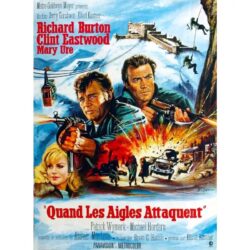
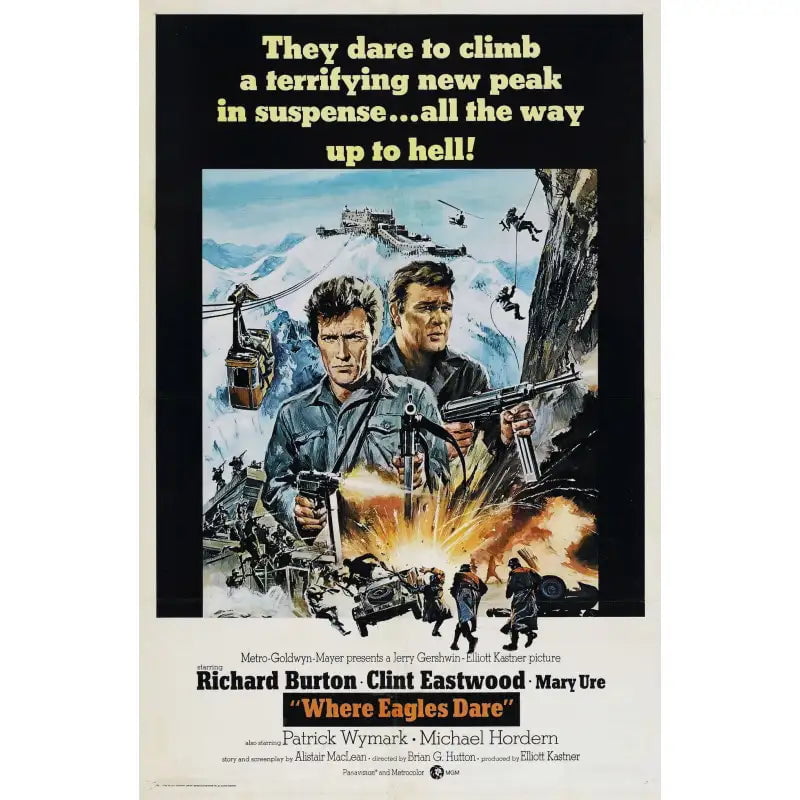
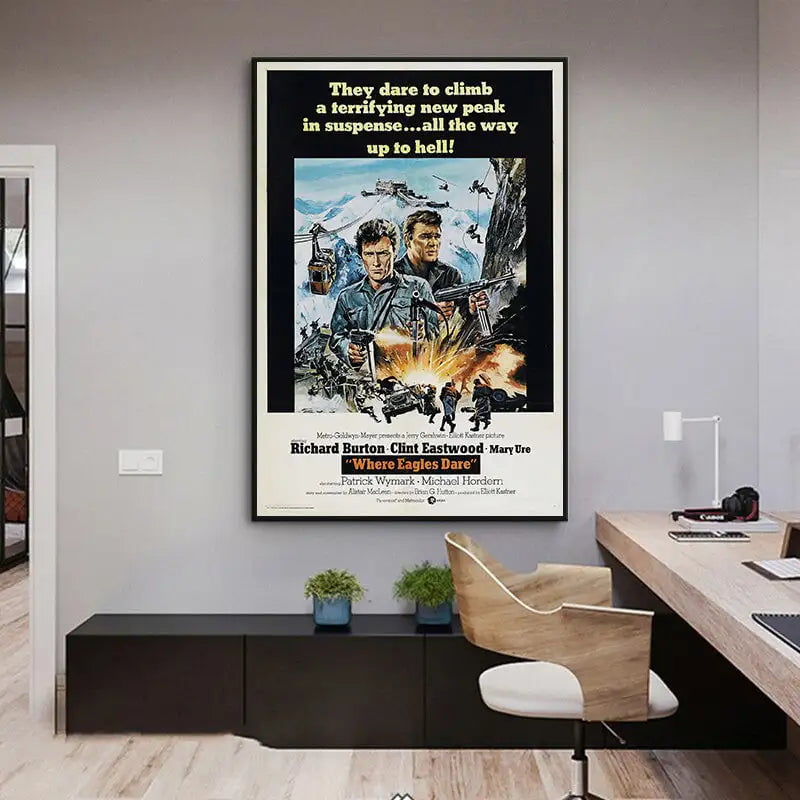
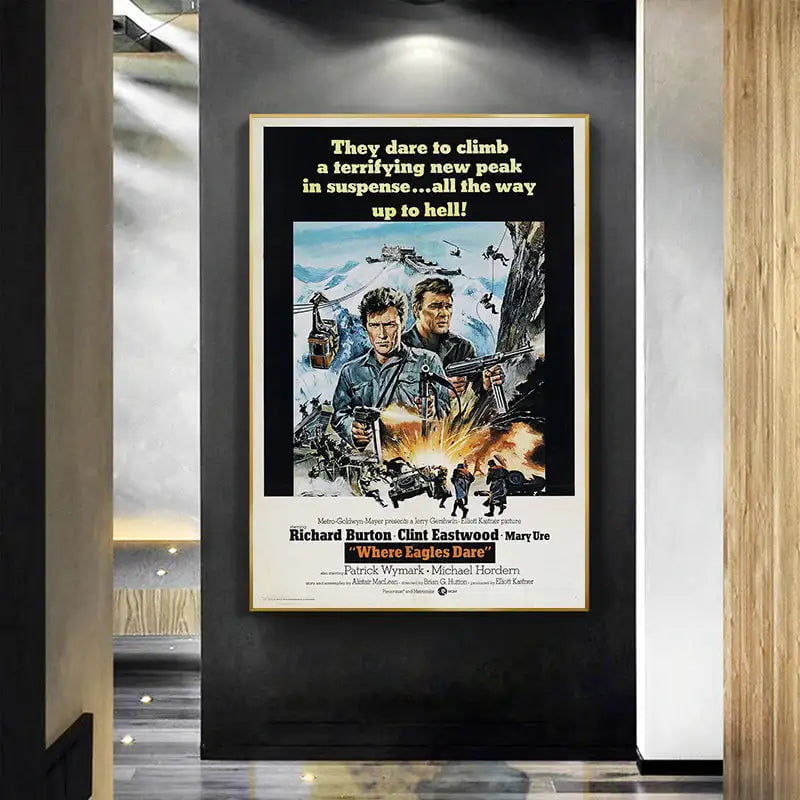
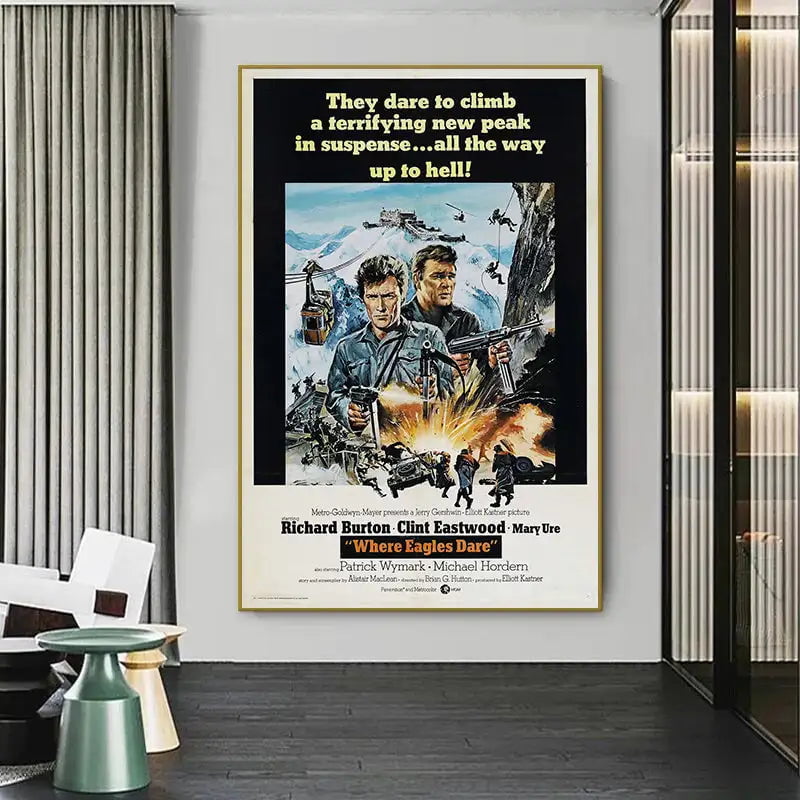
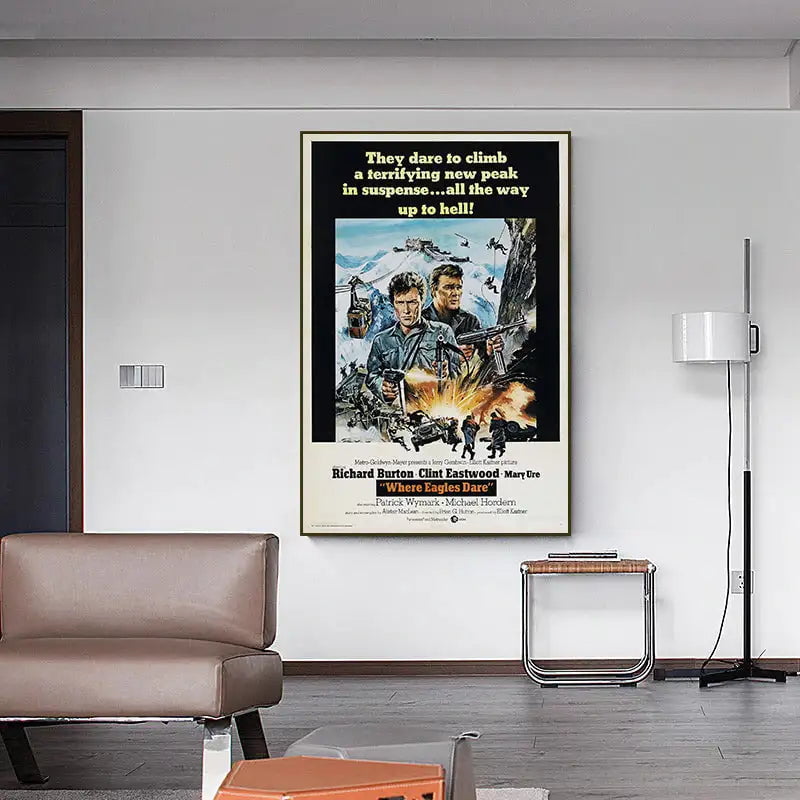
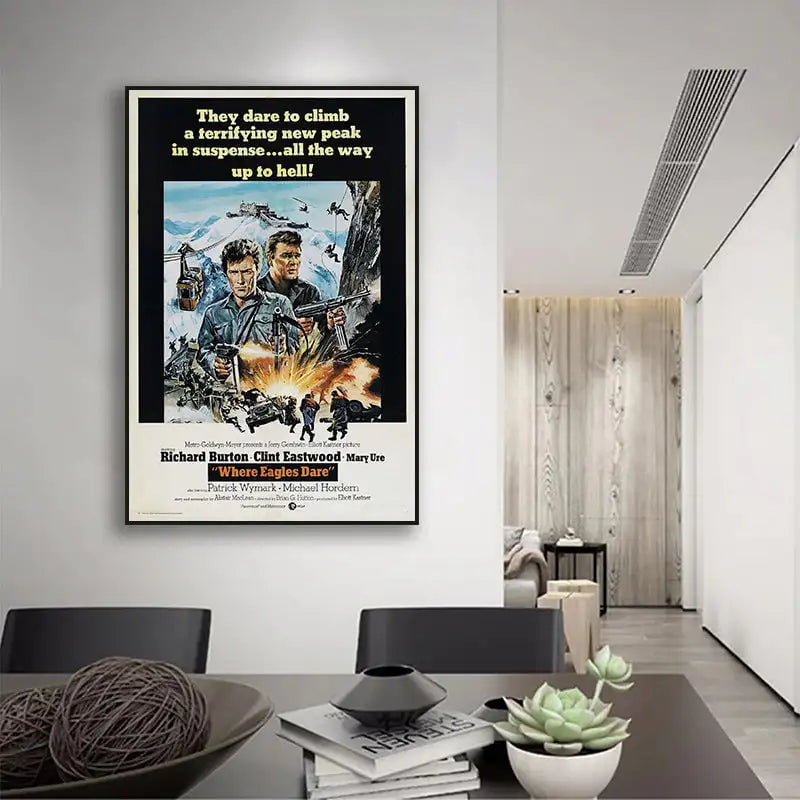
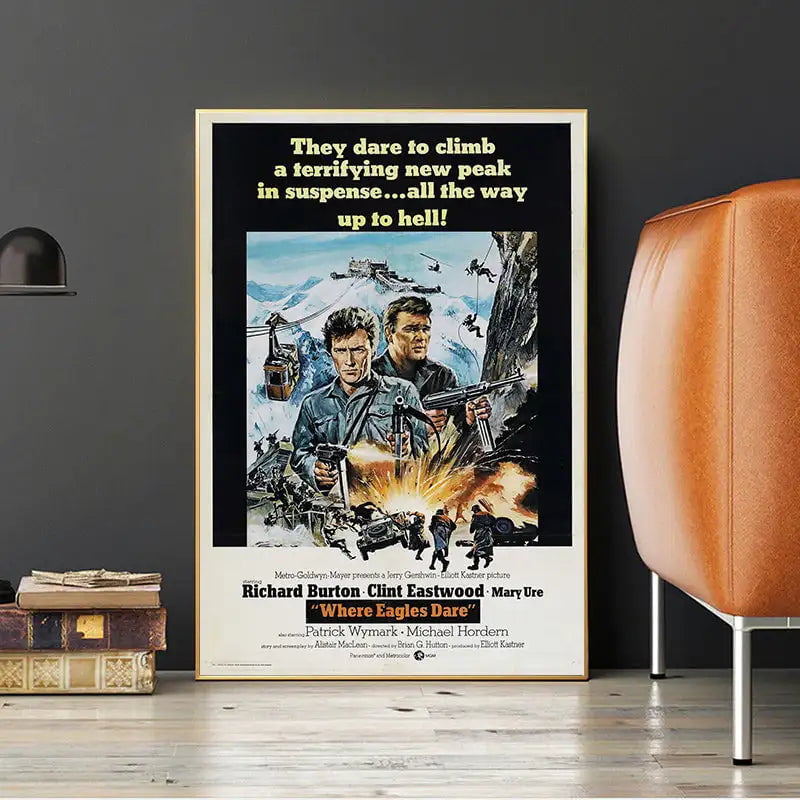
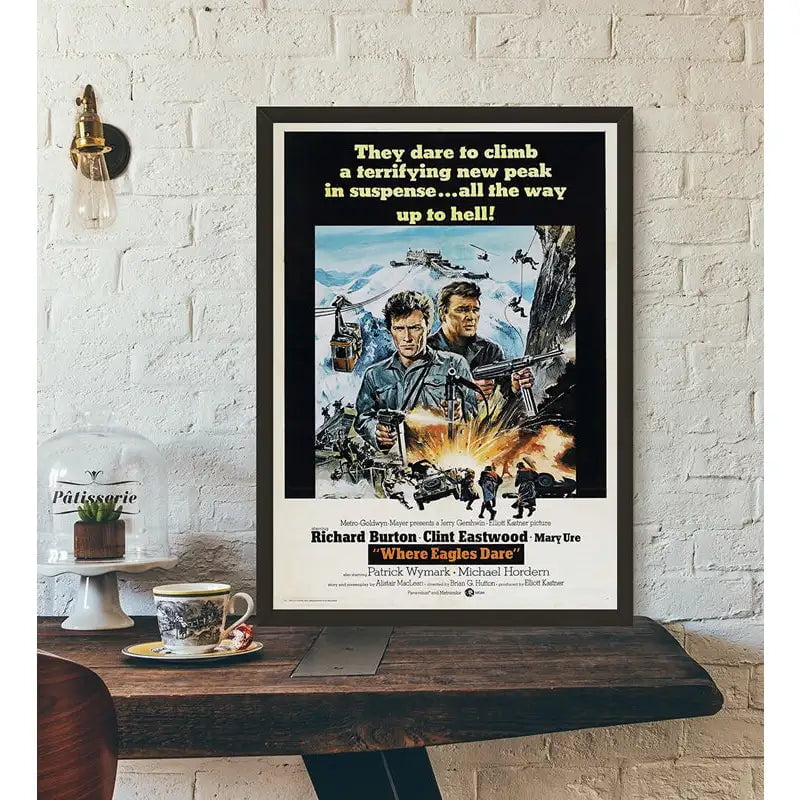
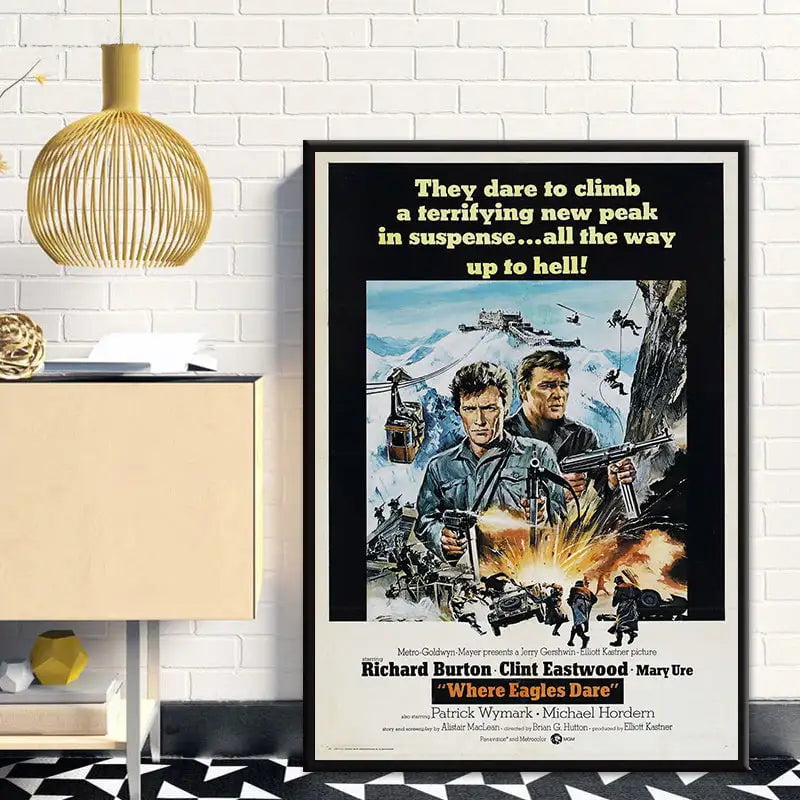
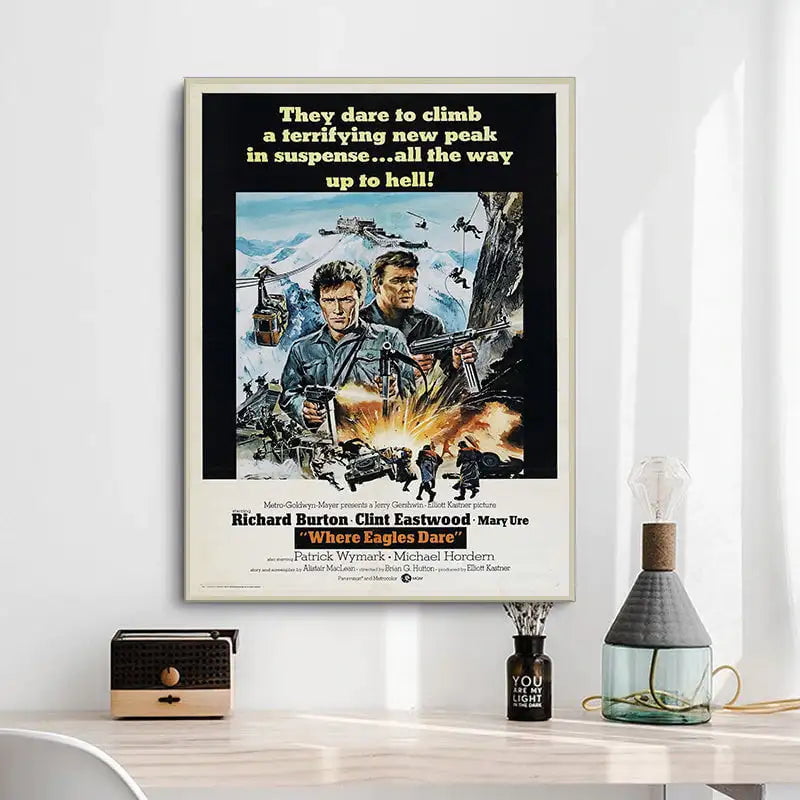
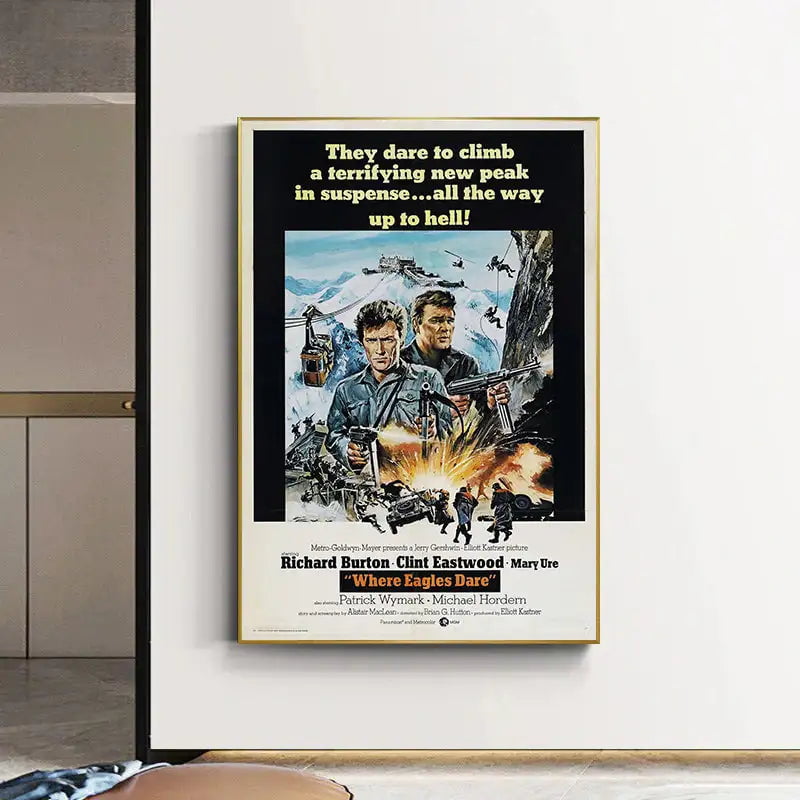
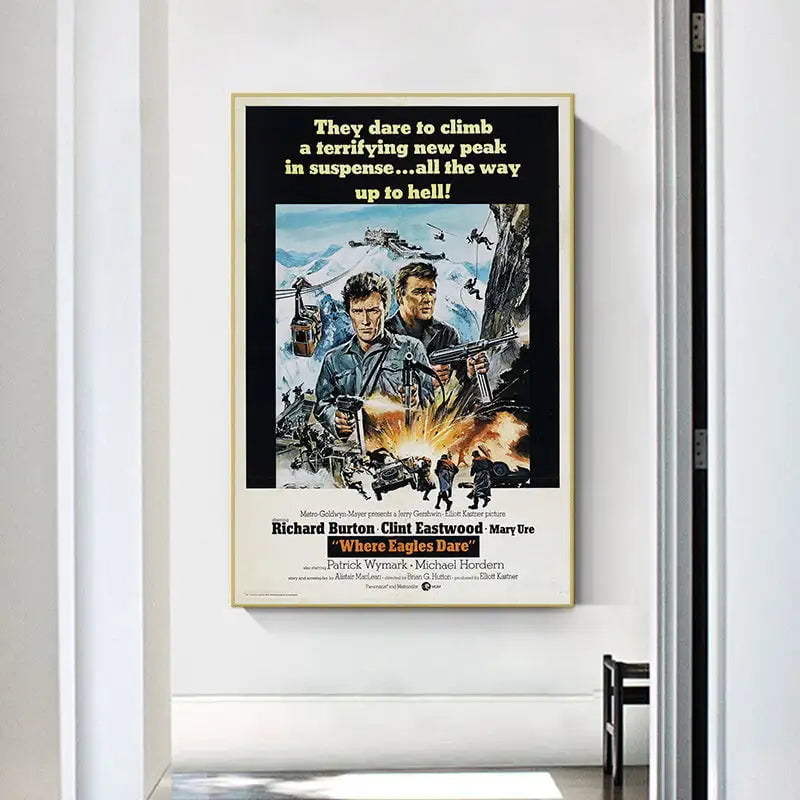


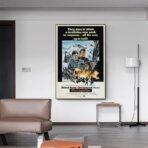


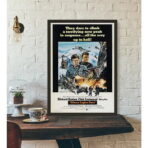
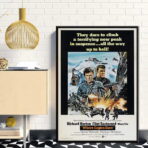

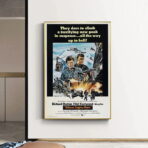

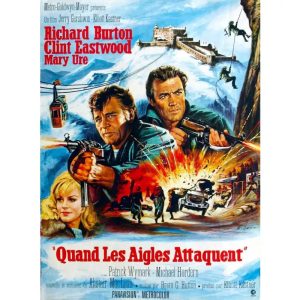
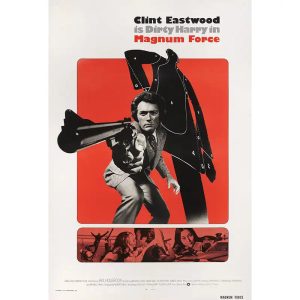
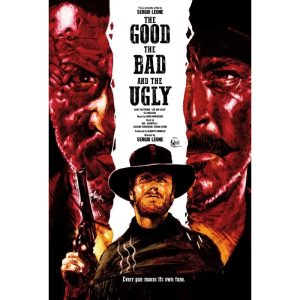

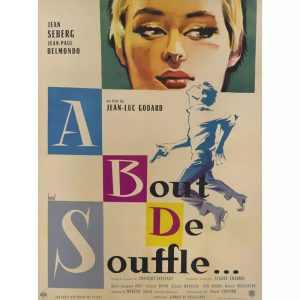

Rediscover this classic film starring Clint Eastwood and Richard Buton with this superb When Eagles Strike Movie Poster!
- Paper Feature:
- 🎨 Canvas: global standard in terms of printing and imitating a “painting canvas” look.
- By default, the poster contains a 4cm white border for framing (frame not included). If you don’t want it, please choose “without white border”.
- ✅ Size: Multiple choices available. ✅
- High UV resistance.
- Color vibrancy maximum, glare-free.
- recycled paper, guaranteeing environmental friendliness.
- Poster packaged carefully and delivered in a protective tube for Total protection.
- FREE STANDARD DELIVERY.
⚠️ Frame not included. ⚠️
Description of this When Eagles Strike Movie Poster
When Eagles Strike is a 1968 British-American spy war film. Set during World War II, the film was adapted for the screen by American director Brian G. Hutton from a screenplay by Alistair MacLean. A special British intelligence team is tasked with freeing an American general who is a prisoner of war in Germany.
The film is based on a Nazi propaganda rumor that persisted long after the war: that a powerful German arsenal and numerous military personnel were located in the Alps. Following this rumor, the American attack on the German Reich in 1944 would not have focused on the capital, Berlin, but on southern Germany. This estimate is false: there was no secret German military camp in the Alps, and this was not the reason why the Americans did not march directly on Berlin.
Winter 1943/44: During World War II, American Brigadier General George Carnaby was one of the highest-ranking officers involved in the planning of D-Day. He was killed in a plane crash. During a flight to Crete, his plane was shot down, and Carnaby was taken prisoner of war. To interrogate him about the impending Allied invasion, the Wehrmacht takes him to the headquarters of the German Alpine Corps, the heavily fortified Schloss Adler. A special British unit, led by Major John Smith, is tasked with freeing Carnaby so that he does not reveal any important information. The handpicked soldiers are instructed by Colonel Wyatt Turner and Admiral Rolland of MI6 intelligence. American Lieutenant Morris Schaffer of the United States Army Rangers is assigned to the command as an elite fighter. Agent Mary Ellison, assigned to MI6’s operational sector, secretly accompanies the mission; her presence is known only to Smith, with whom she is having a relationship. Under the protection of twilight, Smith and his team parachute over the Alps. Shortly after, they find the commando’s radio operator dead; Smith realizes his neck has been broken. Disguised as German soldiers, they go to an inn in the nearby village of Werfen. Smith briefly leaves the building for a secret conversation with a British agent working at the inn under the name “Heidi.” During this time, a second member of the unit is killed. Back at the inn, Smith and his men are arrested under some pretext. During the car ride to their interrogation, Smith and Schaffer, who have been separated from the other three men, manage to kill their guards. With some effort, they are able to enter the castle, which is only accessible by cable car. They are assisted in their task by Agent Ellison, who has obtained a job as a servant at the castle.
There, Smith and Schaffer infiltrate the German commander and observe General Rosemeyer and SS-Standartenführer Kramer interrogating the American General Carnaby. They then learn that the three other survivors of the liberation commando are German agents who have infiltrated the British army. Smith and Schaffer take the patrol by surprise and manage to disarm the Germans. But to everyone’s surprise, Smith also holds Schaffer at bay with his weapon. He claims to be Major Johann Schmidt, a member of the Wehrmacht’s Military Defense Service. He allegedly foiled the release of the general, who is in fact an American actor named Cartwright Jones, and accuses the three German spies of actually working for England. To prove his claim, he has himself identified by telephone by a German major in Italy, to whom he has transmitted outdated information under this identity. As further proof, he writes to Kramer the name of his superior officer, the highest-ranking German spy in England, which the Standartenführer confirms is correct. In addition, he orders the three alleged defectors to write down the names of their agents in England to compare them with his list. In another surprising twist, however, it turns out he doesn’t have such a list. Smith isn’t working for the Germans, and the three German agents aren’t defectors either, but they were unmasked by the British and assigned specifically to this mission. The mission’s objective wasn’t to rescue the alleged general, but to uncover the double agents within the British secret service MI6. This was accomplished, as the traitor lists jotted down by the three German spies are now in Smith’s possession.
Meanwhile, Gestapo-SS Sturmbannführer von Hapen, who became suspicious after a conversation with Agent Ellison, burst into the middle of the situation, which escalated, resulting in the death of all the German officers. Smith and Schaffer escape with Jones and Ellison, along with the three bound German double agents, while several explosions prepared in advance by the group cause confusion. During the escape, all three German spies are killed. Pursued by the Germans, the group travels to the Oberhausen military airfield in an omnibus equipped with a snowplow. Thanks to further explosions and an exchange of fire, they finally manage to lose their pursuers. At the airfield, they are picked up by a Ju 52 apparently captured by the secret service, with Colonel Turner personally on board. During the flight back to England, Smith reveals to his superior the name of the best German spy: Turner himself. The double agent thus unmasked, who would consequently be court-martialed, wishes to spare himself a visit to the scaffold and asks Smith for an alternative. With the latter’s permission, he committed suicide by jumping out of an airplane without a parachute.