
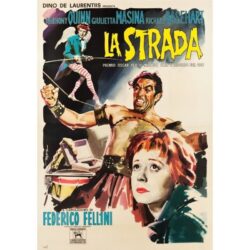
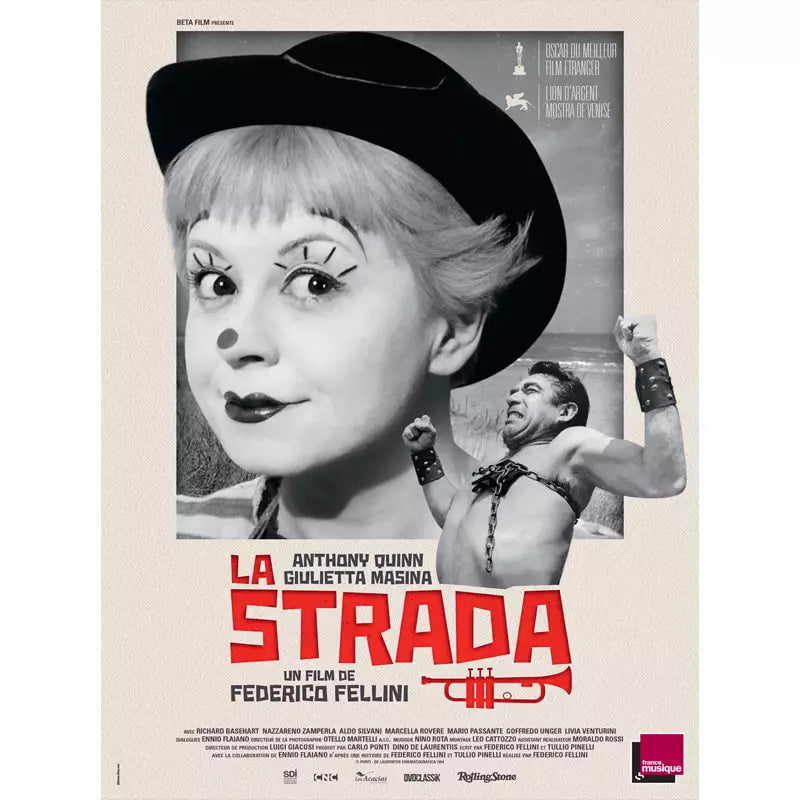
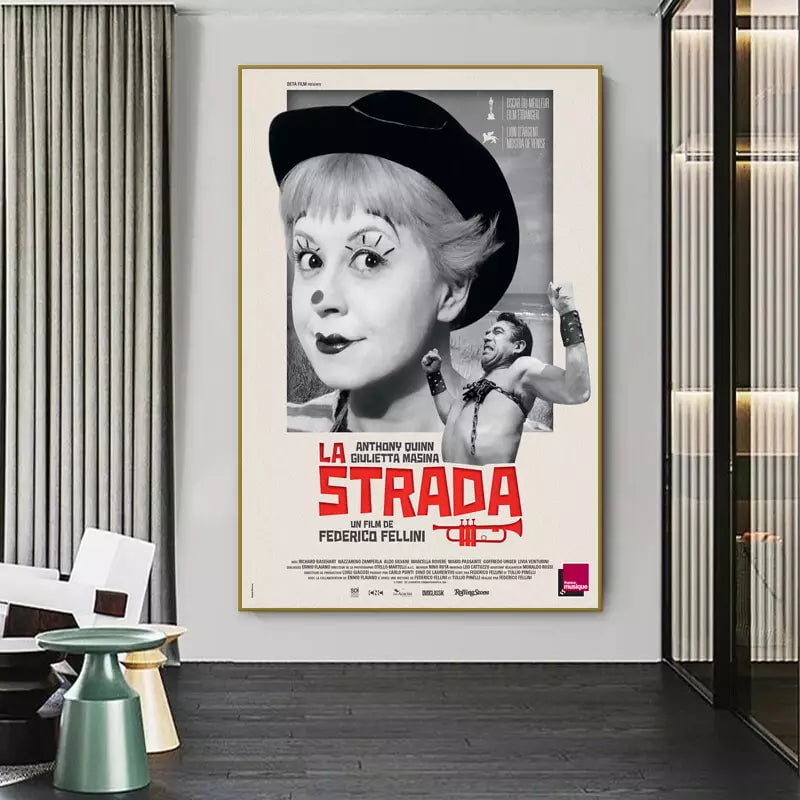
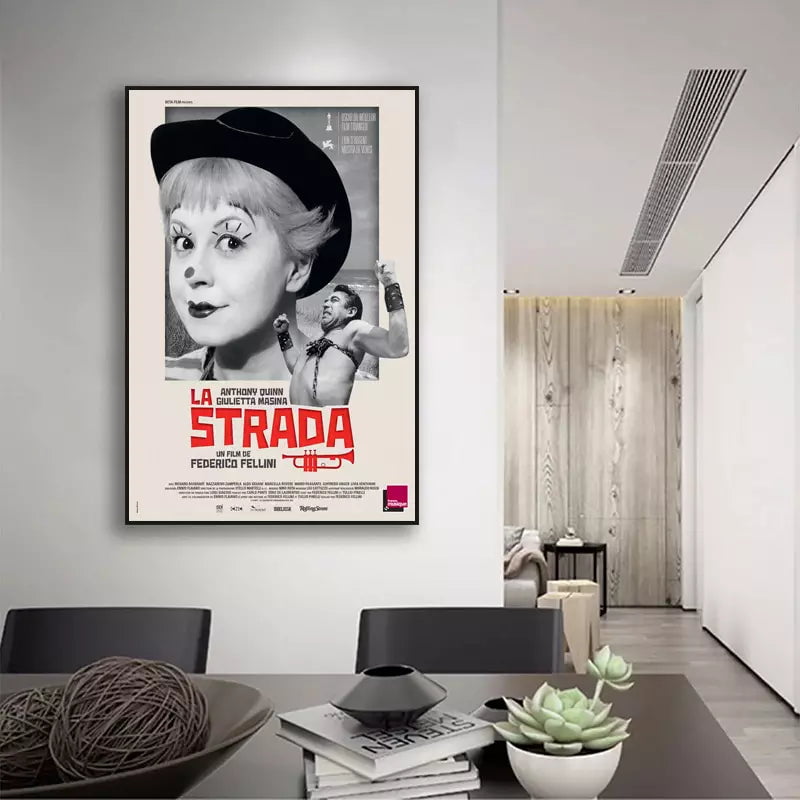
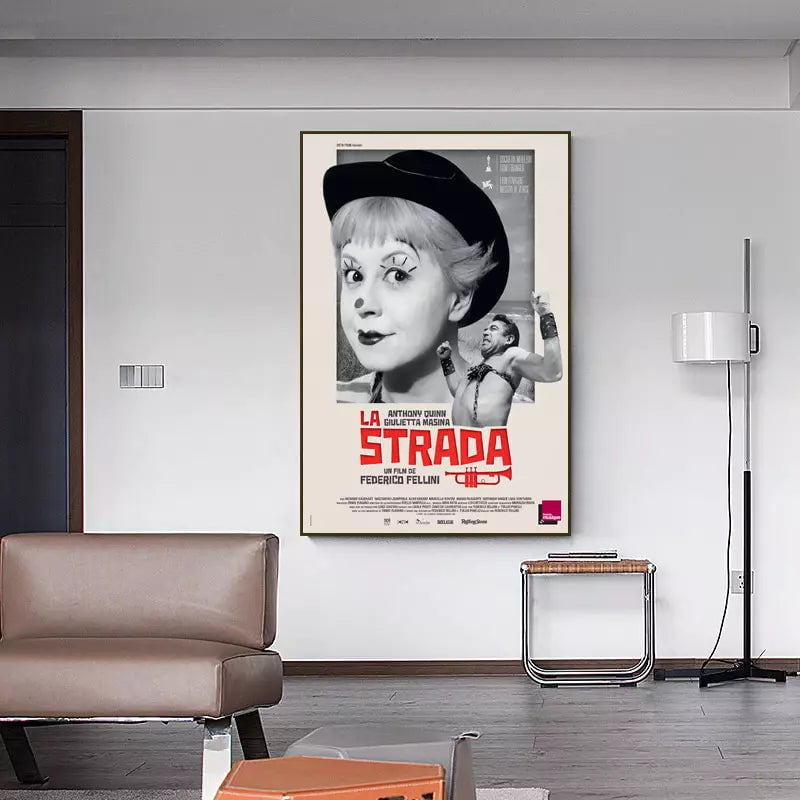
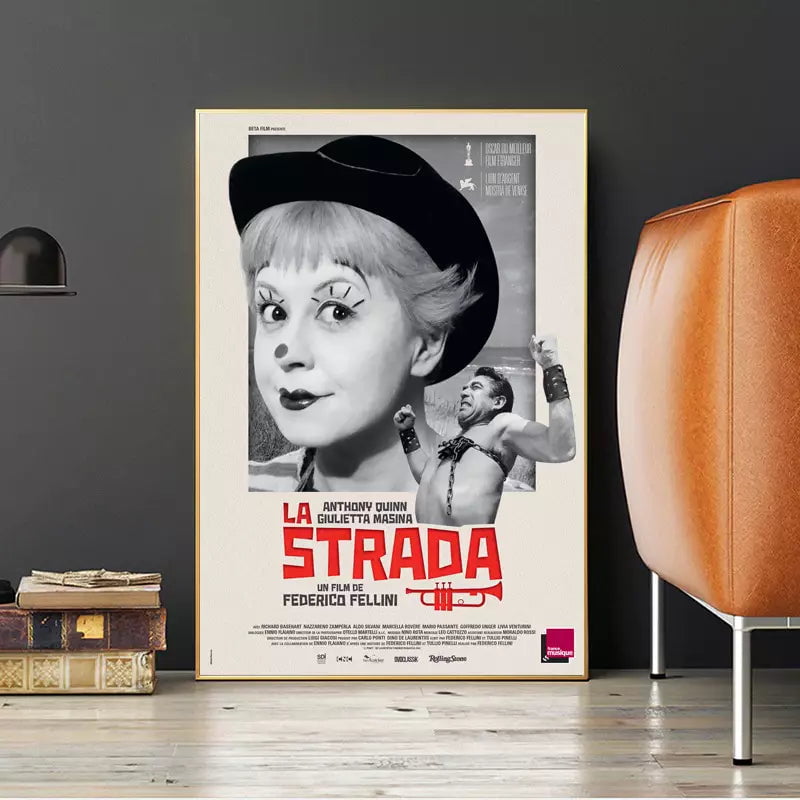
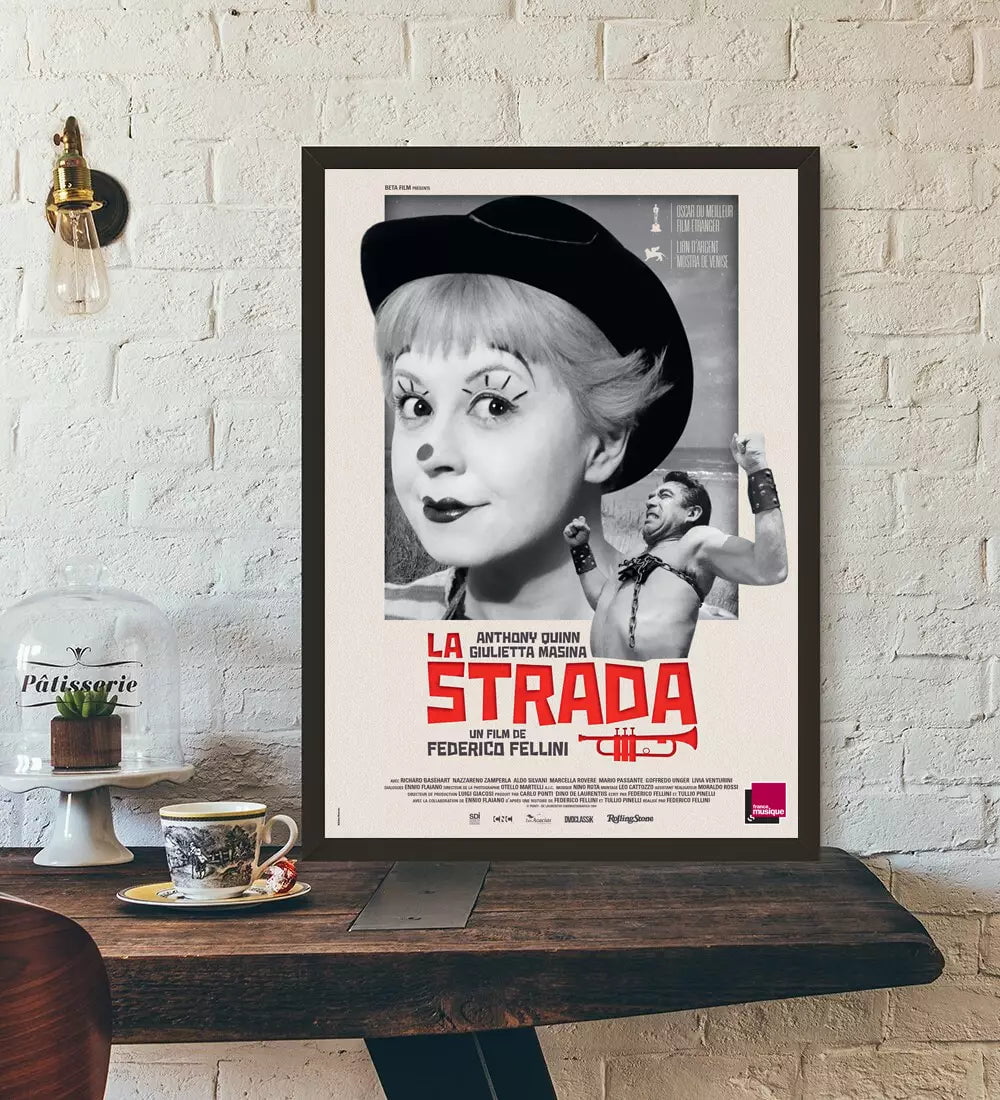
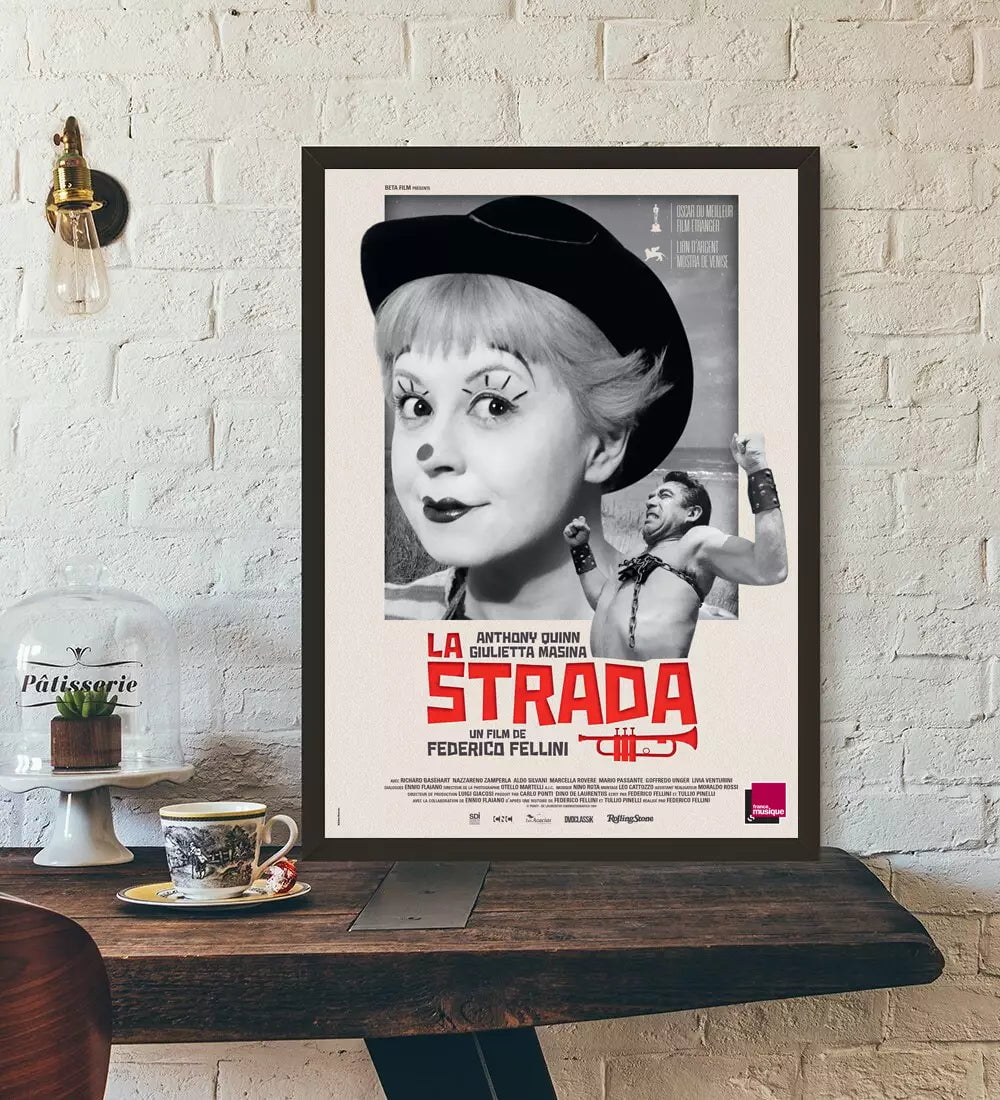
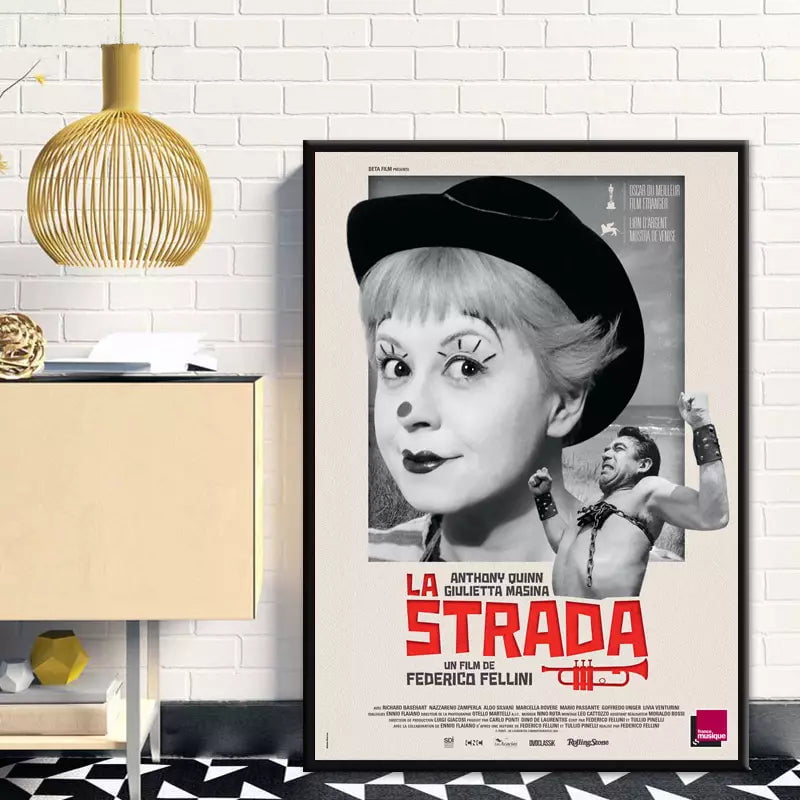
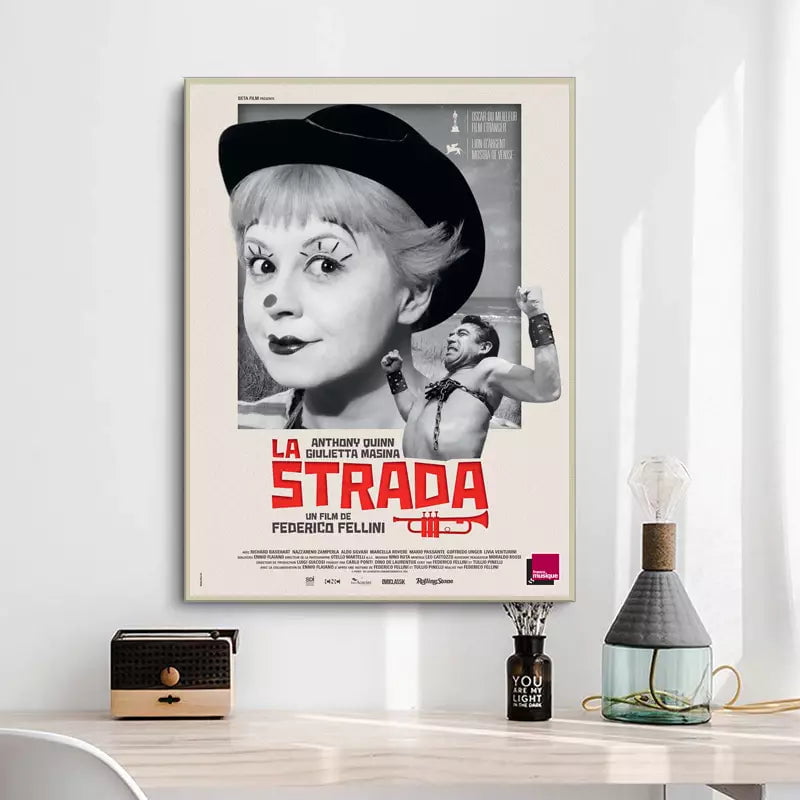
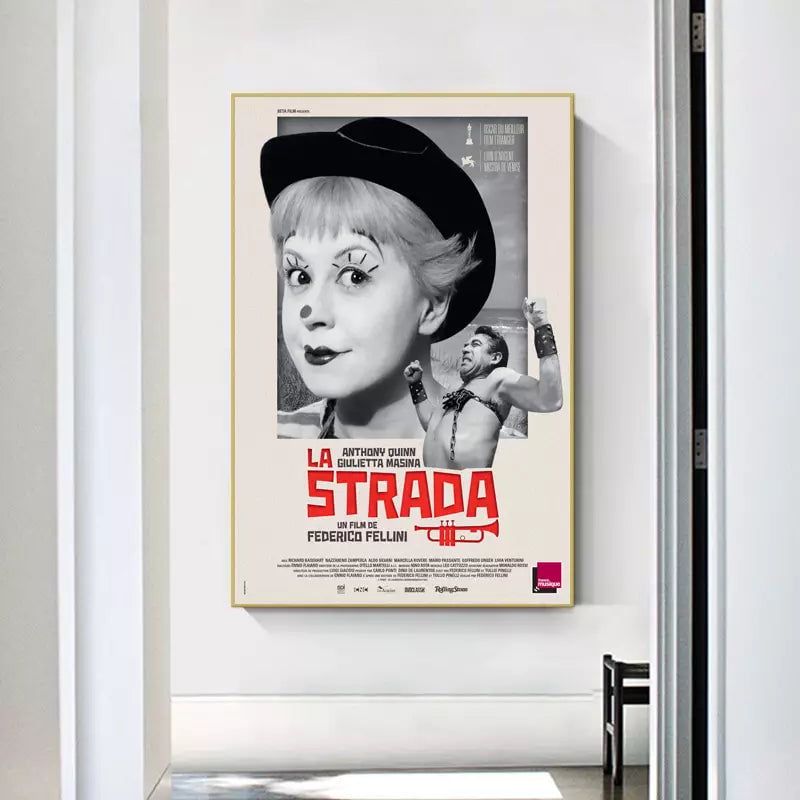
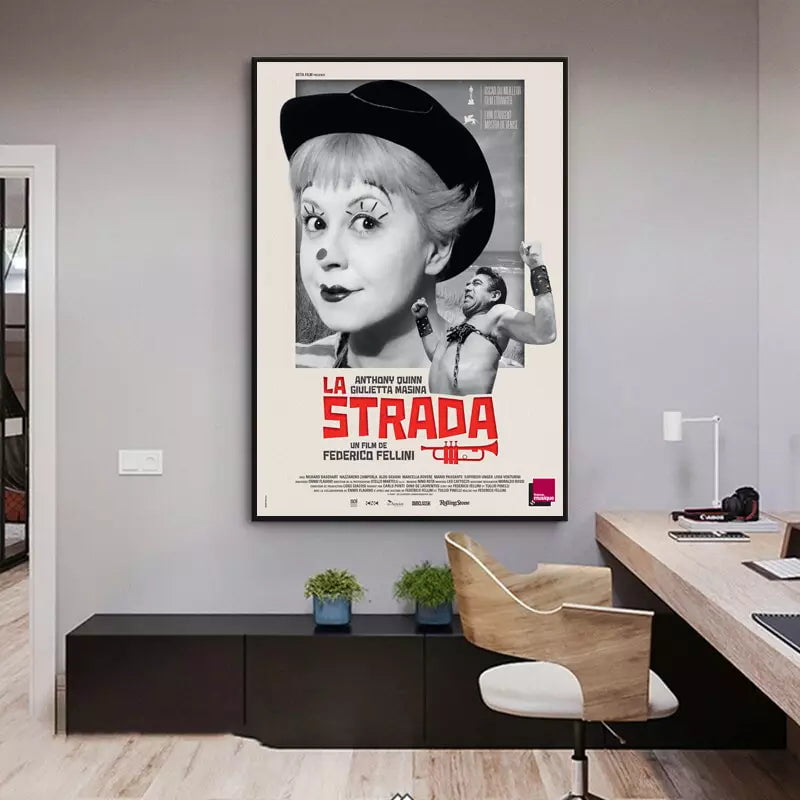
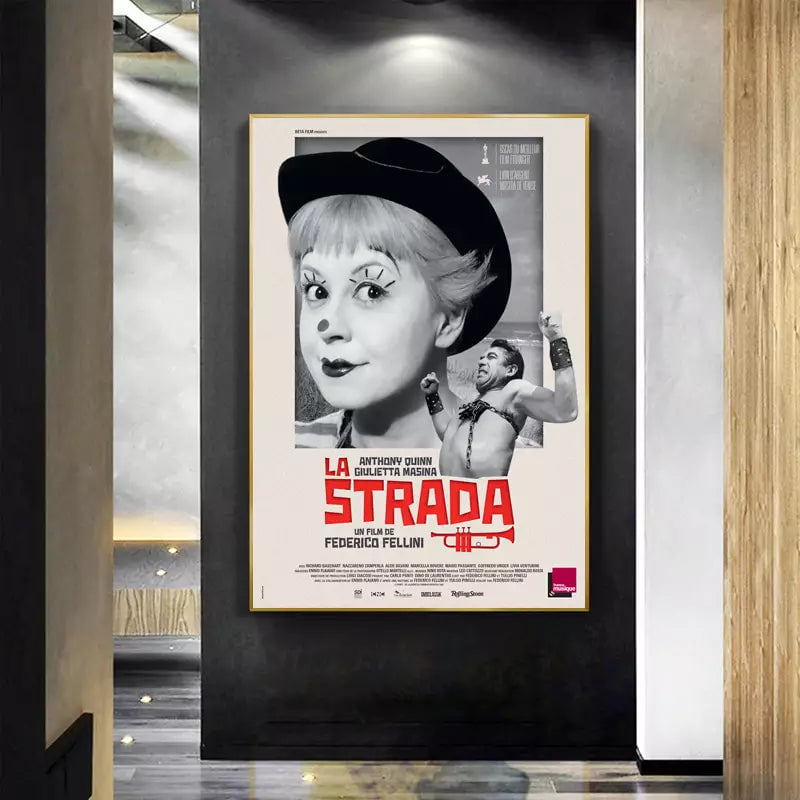

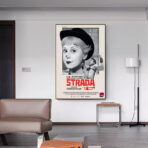
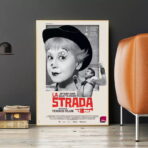
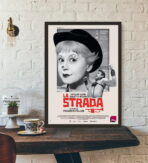



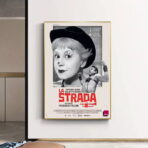
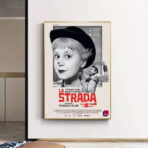

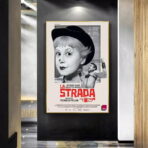







Discover this La Strada poster, Federico Fellini’s masterpiece that takes you on a poignant journey through Italy, between laughter and tears. Immerse yourself in the poetic universe of this cult film and let yourself be carried away by emotion. This cinematic work is a true ode to life and love, carried by endearing and touching characters. The director tells the story of Gelsomina, a naive and simple young woman, who is forced to work for Zampanò, a gruff and solitary acrobat. Together, they travel the roads of Italy and meet different people, each more colorful than the last. The film is imbued with melancholy, poetry, and tenderness. Fellini offers us a visual and emotional journey through Italy in the 1950s, between picturesque settings and moving scenes. Actors Giulietta Masina and Anthony Quinn deliver remarkable performances, driven by a captivating score by Nino Rota.
- Paper Feature:
- 🎨 Canvas: global standard in terms of printing and imitating a “painting canvas” look.
- By default, the poster contains a 4cm white border for framing (frame not included). If you don’t want it, please choose “without white border”.
- ✅ Size: Multiple choices available. ✅
- High UV resistance.
- Color vibrancy maximum, glare-free.
- Paper recycled, guaranteeing environmental friendliness.
- Poster packaged carefully and delivered in a protective tube for total protection.
- FREE STANDARD DELIVERY.
⚠️ Frame not included. ⚠️
Description of this La Strada Poster
La Strada is a 1954 drama film directed by Federico Fellini.
It is the work that gave the director great international notoriety, which in 1957 won the Academy Award for Best Foreign Language Film at the 29th edition (the year in which this award category was established). The film was then selected as one of 100 Italian films to be saved.
Gelsomina is a fragile girl, probably with a slight mental disability, who lives in conditions of extreme poverty with her widowed mother and younger brothers. One day, Zampanò arrives in the village, a brutal acrobat who, to earn a living, transports his improbable shows through the poorest lands of a nation like Italy, still peasant and degraded. The man had already taken Rosa, Gelsomina’s sister, who died suddenly; at the man’s request, the mother also sells the second daughter to earn a minimum of money.
Gelsomina follows Zampanò, who teaches her to play the trumpet and has her participate as an auctioneer in his shows. Gelsomina’s joviality and naiveté do nothing to mitigate Zampanò’s terrible character, in whom the barbaric instinct for survival guides every action: often the man leaves her alone to waste the little money she earns on wine and women, and just as often she runs away, yet always ends up returning to him.
Gelsomina is drawn into this adventure by coming into contact with poor and grotesque realities; her path soon crosses that of a young acrobat, defined by all as “Matto,” with a much more serene character than Zampanò’s, as well as much more handsome. At one point, the three end up working together in the same circus, where the fool begins to mock Zampanò: however, he does not understand the irony, revealing himself to be as ignorant as a shoe (an expression often used in the film) and starts a fight, after which Zampanò is imprisoned. Gelsomina would have the opportunity to leave her master and join the circus, but she finds herself torn by the doubt of not counting anything without him: the madman then teaches her that all things in this world have their importance and thus persuades her to return from Zampanò to try to soften his grumpy and insolent character.
Zampanò is freed and the two set off again on their journey, finding themselves in a convent where the nuns realize the abuse that the man is exerting on the girl; they offer to stay with them, but she, strengthened by the madman’s words, refuses again. A few days later, the two find Matto, and Zampanò, still furious about the circus, hits him several times during a fight that is also witnessed by an impietritic Gelsomina. The madman, about to notice the broken wristwatch in the fight, collapses and dies.
The acrobat is forced to hide the body by throwing it under a bridge; Jasmine, upset by what he saw, begins to show an indefinable, inconsolable disturbance: during the shows, he keeps repeating that Zampanò killed the madman, she doesn’t want him to come near her, and in the short flashes of lucidity, he tells his master how she remained close to him thanks to the madman’s intercession.
Zampanò, after taking care of the girl for a short time, cannot bear the fact that Gelsomina continually remembers the crime he committed and decides to abandon her along a deserted road to continue wandering alone in Italy.
Many years pass: Zampanò has joined another circus and, during a break in a town, he hears a girl humming Jasmine’s song to herself: she discovers that the girl had arrived in that town, seriously ill, and in the rare moments of lucidity that the song had played with his trumpet; later, the girl was dead. Distraught by the news, Zampanò gets drunk and provokes another fight with his new circus colleagues, who send him away; alone and inconsolable, he gives in to a desperate cry by the sea.