
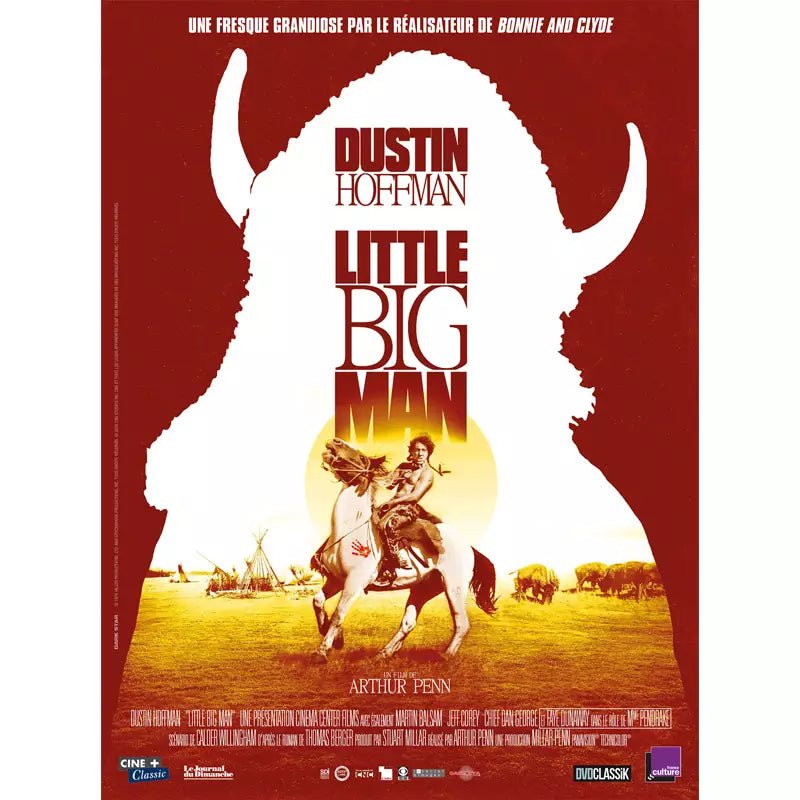
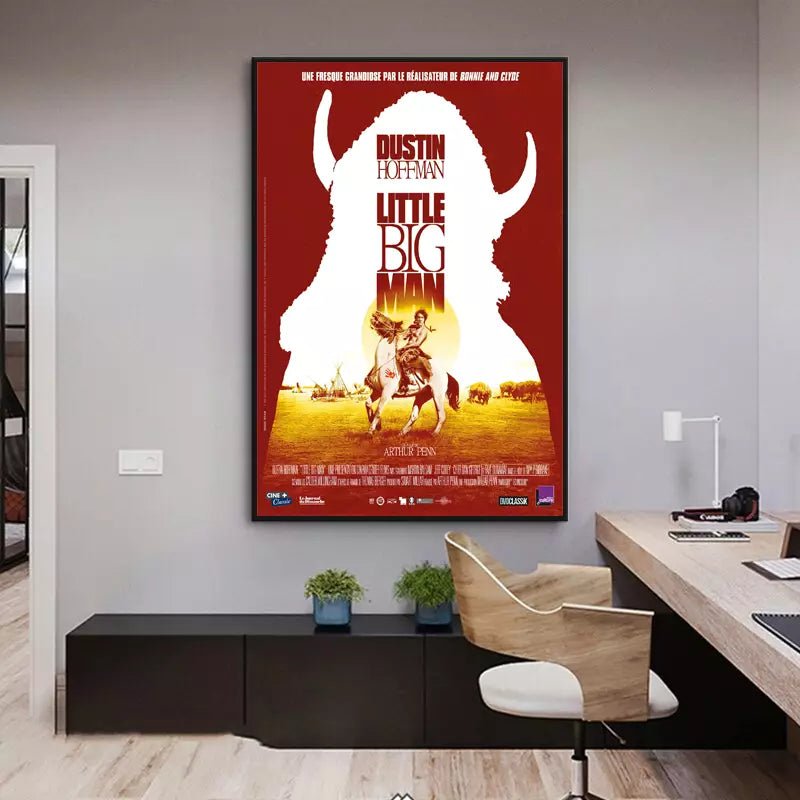
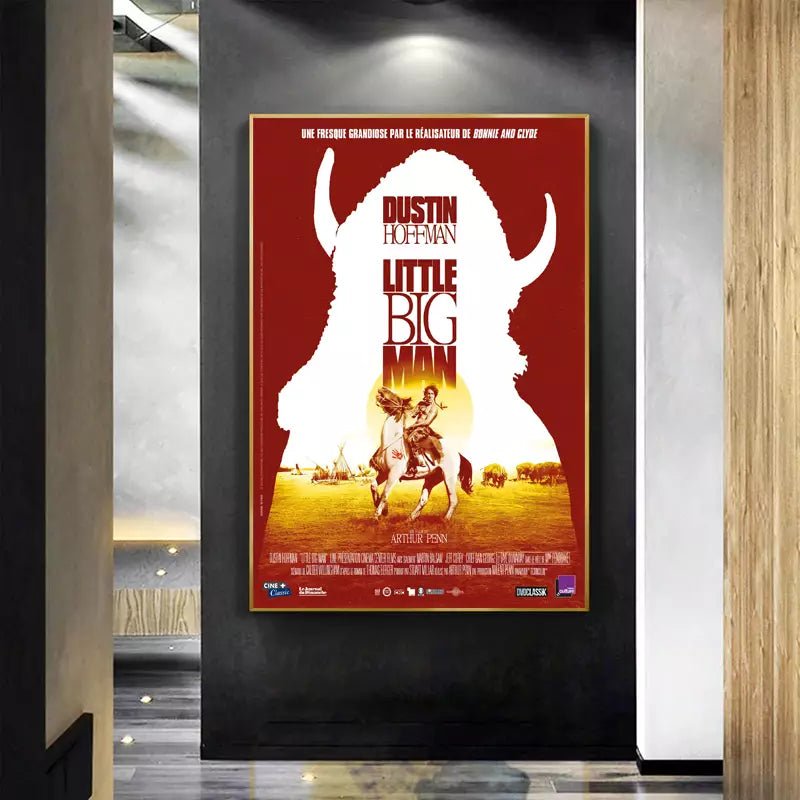
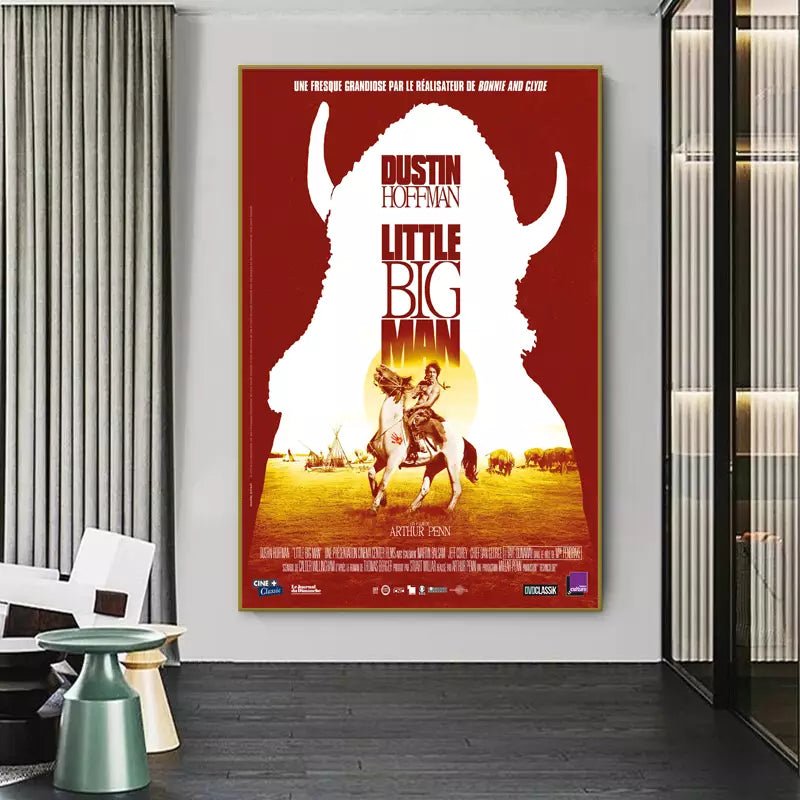
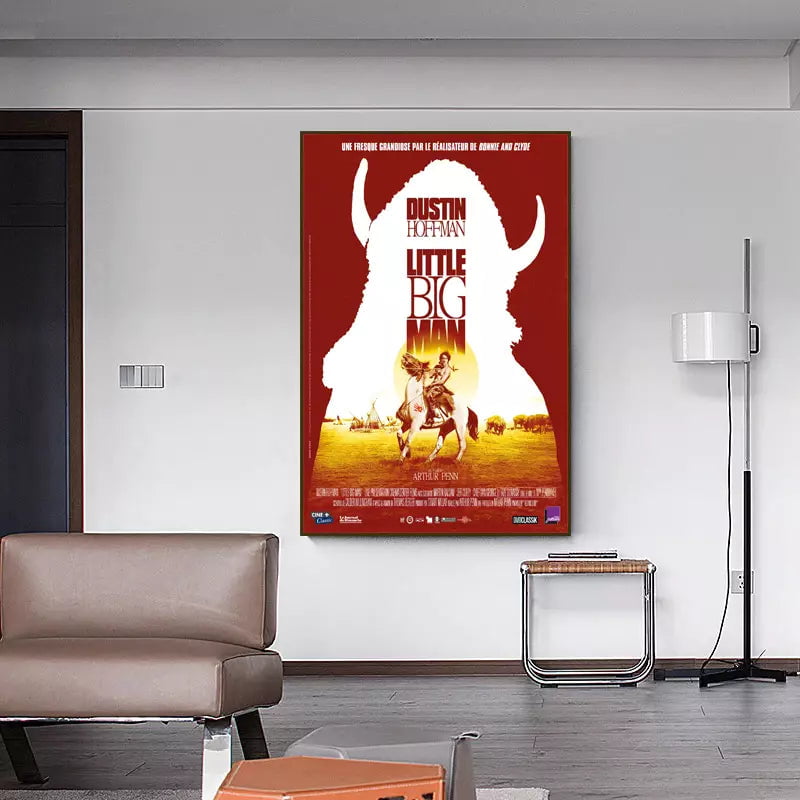
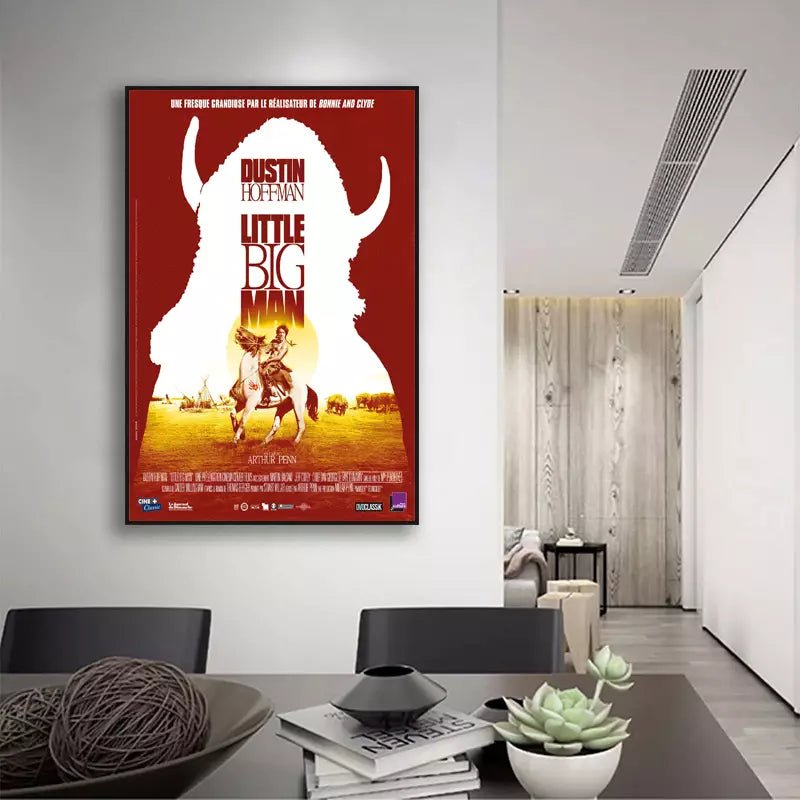
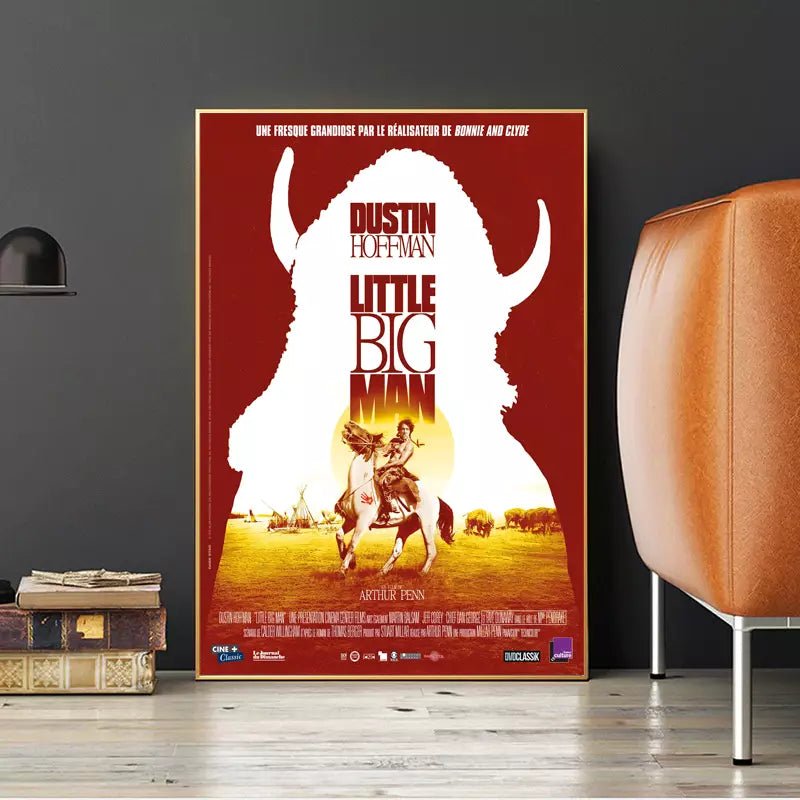
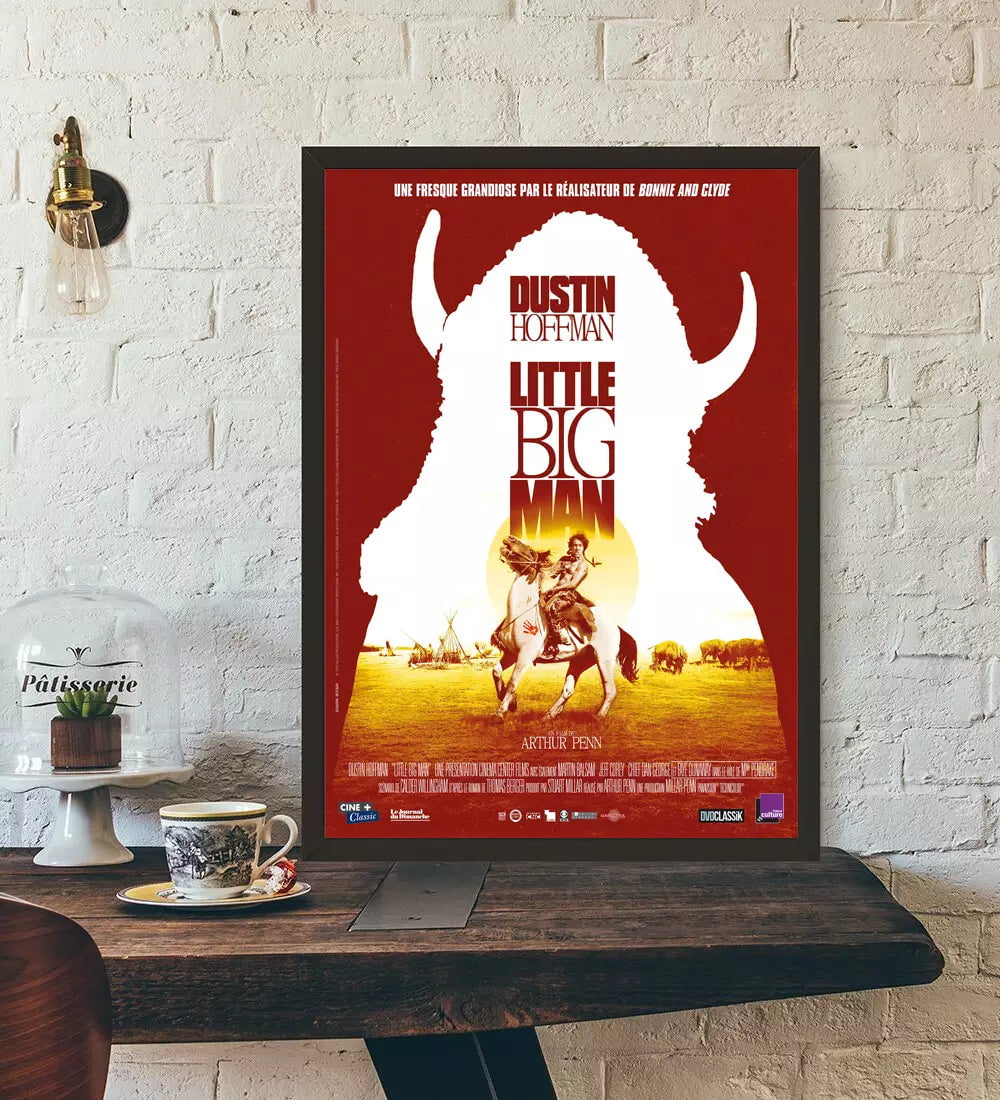
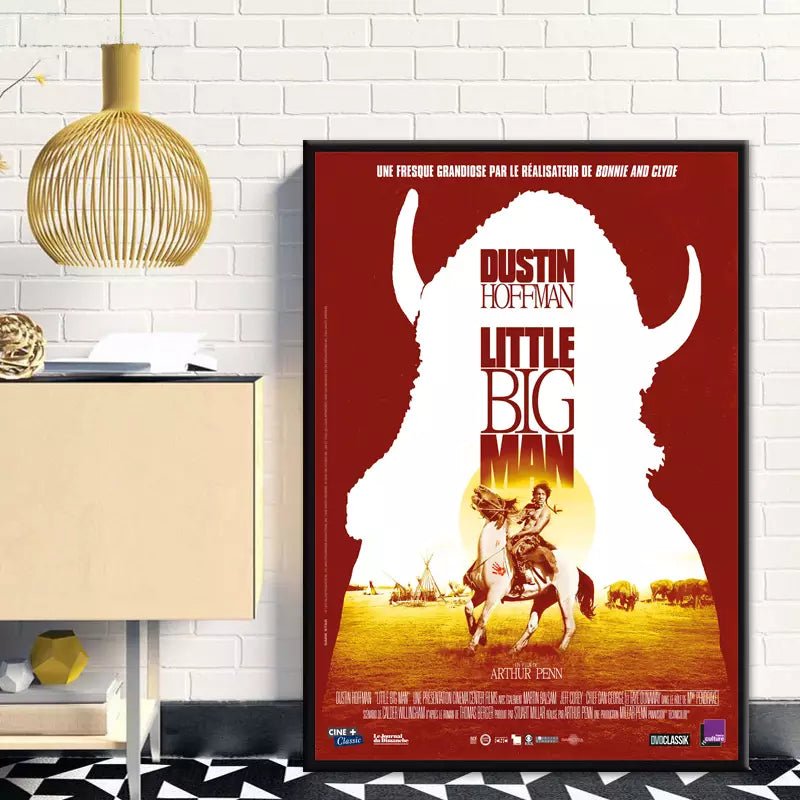
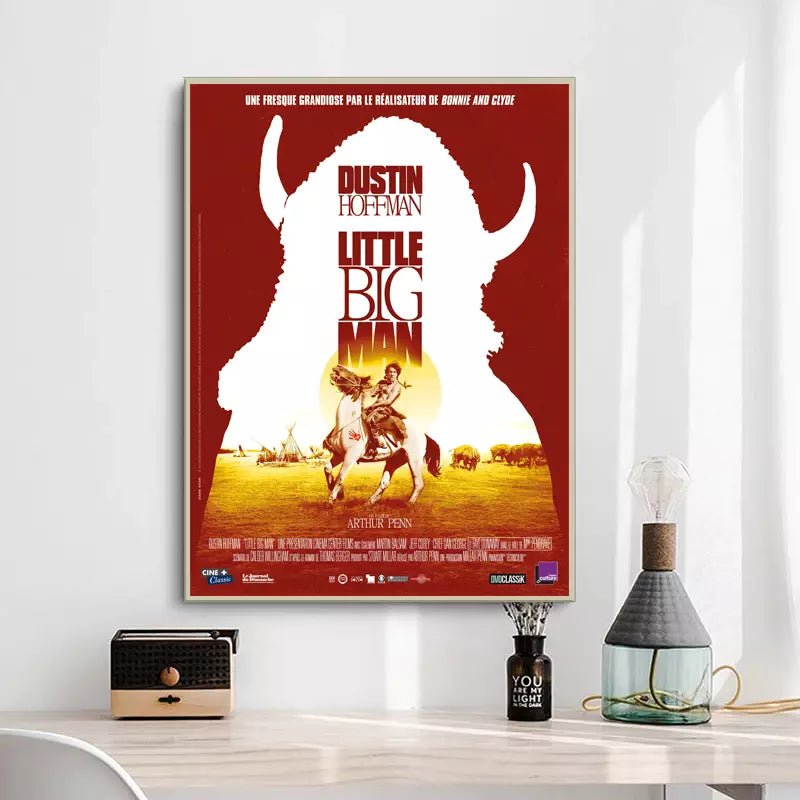
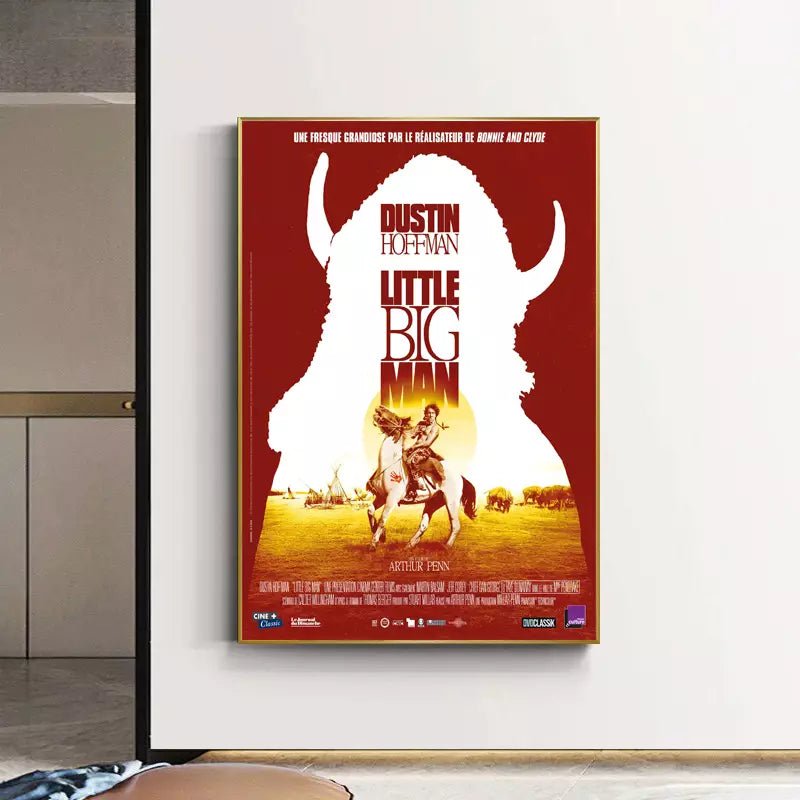
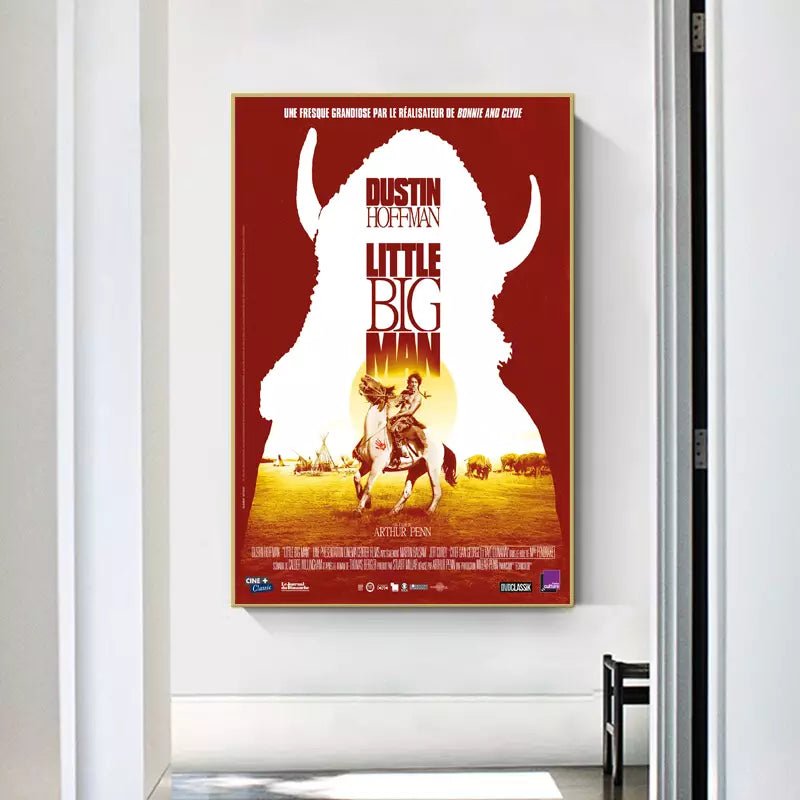

















Discover the Little Big Man Poster, a masterpiece of American cinema directed by Arthur Penn and released in 1970. This poster, depicting the main character, Jack Crabb, played by Dustin Hoffman, is imbued with a great emotional intensity that perfectly reflects the story of the film. “Little Big Man” is an epic journey across the American West, told through the eyes of Jack Crabb, a white man raised by an Indian tribe. The film addresses complex themes such as violence, racism, and the loss of cultural identity, while adding a touch of humor that makes this film a timeless masterpiece.
- Paper Feature:
- 🎨 Canvas: The global standard in printing and imitating a “canvas” look.
- By default, the poster contains a 4cm white border for framing (frame not included). If you don’t want it, please choose “without white border”.
- ✅ Size: several choices available. ✅
- High UV resistance.
- Maximum color brilliance , without reflections.
- Recycled paper guaranteed a environmentally friendly.
- Poster packaged carefully and delivered in a protective tube for total protection.
- FREE STANDARD DELIVERY.
⚠️ Frame not included. ⚠️
Description of this Little Big Man Poster
Little Big Man is a 1970 American western film directed by Arthur Penn and based on the 1964 novel Little Big Man by Thomas Berger. Although widely classified as a Western or epic, the film encompasses several literary/cinematic genres, including comedy, drama, and adventure. The film follows the life of a white man who was raised by members of the Cheyenne Nation during the 19th century and then attempts to reintegrate into American pioneer society. The film is a parody of the Western genre, contrasting the lives of white settlers and Native Americans throughout the boy’s life. It stars Dustin Hoffman, Chief Dan George, Faye Dunaway, Martin Balsam, Jeff Corey, and Richard Mulligan.
Little Big Man is an early revisionist Western in its sympathetic portrayal of Native Americans and its exposure of the wicked practices of the U.S. Cavalry. The revision uses elements of satire and tragedy to examine prejudice and injustice. Little Big Man is an anti-establishment film of the time, indirectly protesting America’s involvement in the Vietnam War by negatively portraying the U.S. armed forces.
In 2014, Little Big Man was deemed “culturally, historically, or aesthetically significant” by the Library of Congress and selected for preservation in the National Film Registry.
“Little Big Man” is a 1970 American film directed by Arthur Penn. Based on the novel of the same name by Thomas Berger, the film follows the epic journey of Jack Crabb, a white man raised by a Cheyenne tribe in the American West in the 19th century. The film is a historical epic that addresses complex themes such as violence, racism, and the loss of cultural identity.
The film begins with the story of Jack Crabb, played by Dustin Hoffman, who introduces himself as a 121-year-old man in a circus. He then tells his story to a reporter, from his childhood to the time he became a legend of the West. Jack’s story is marked by tragic events, such as the massacre of his family by Indians, which push him to join a Cheyenne tribe. He is raised by Chief Old Lodge Skins, played by Chief Dan George, and takes the name Little Big Man.
Over the years, Jack learns the customs and traditions of the Cheyenne tribe, but he also witnesses the atrocities committed by white men against the Indians, notably during the Battle of Little Big Horn in 1876. Jack is later captured by the whites and becomes the guide of a group of soldiers, before joining a band of outlaws and becoming a buffalo hunter.
The film also addresses the issue of Jack’s cultural identity, as he constantly finds himself torn between two cultures. He eventually joins the whites after learning of his family’s death and discovering that his sister is still alive. He then witnesses the birth of the buffalo meat industry, which led to the destruction of millions of animals and the ruin of Native American tribes.
“Little Big Man” is a poignant film that offers a realistic and brutal vision of the American West in the 19th century. Dustin Hoffman’s acting, along with the carefully recreated sets and costumes, make the film immersive and captivating. The music by composer John Hammond also contributes to the film’s emotional atmosphere.
In summary, “Little Big Man” is a classic of American cinema that offers a realistic and poignant vision of the history of the American West. The film addresses complex themes such as violence, racism, and the loss of cultural identity, and is carried by talented actors and captivating music.