
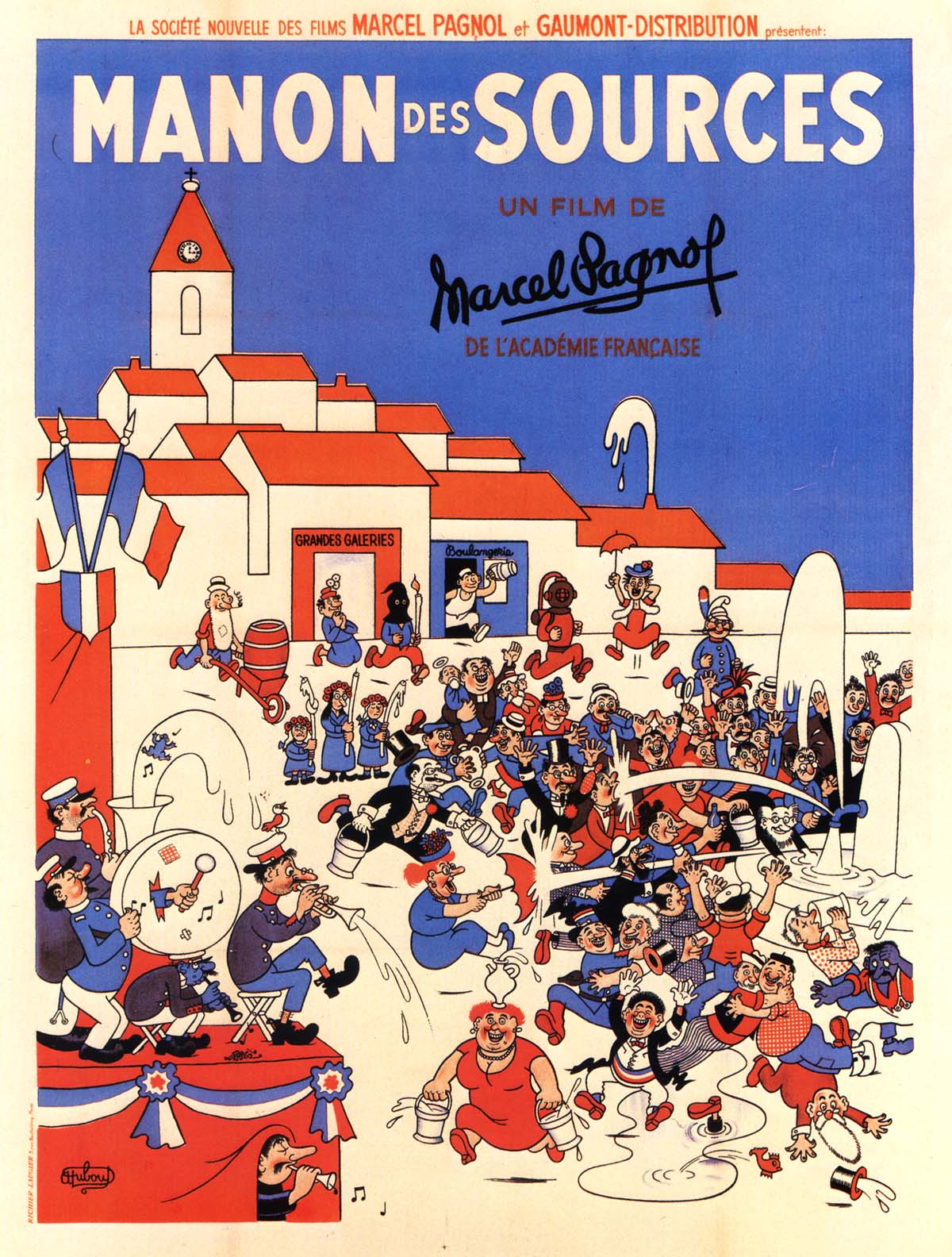
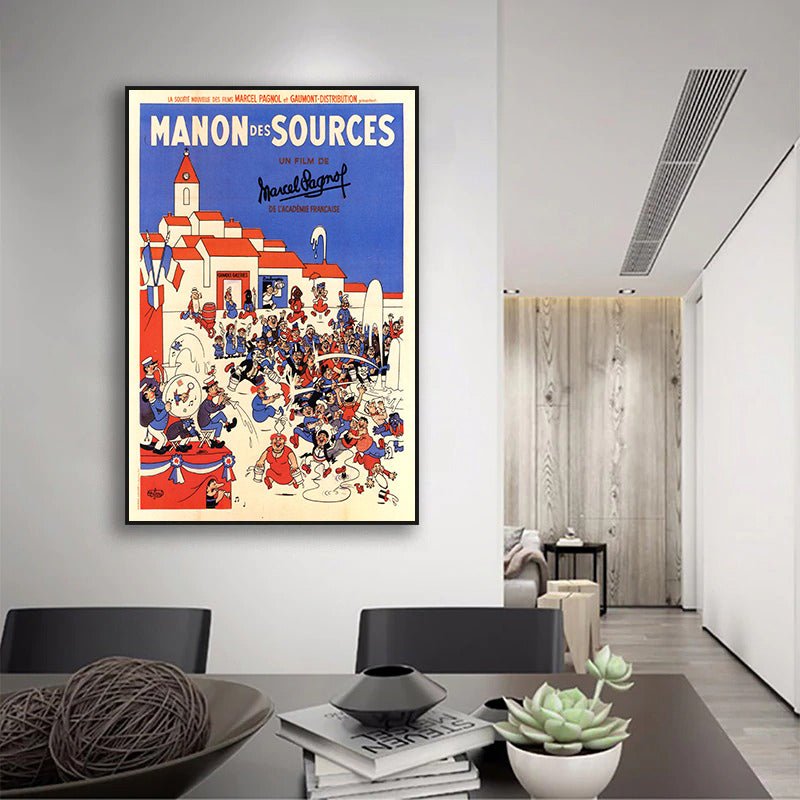
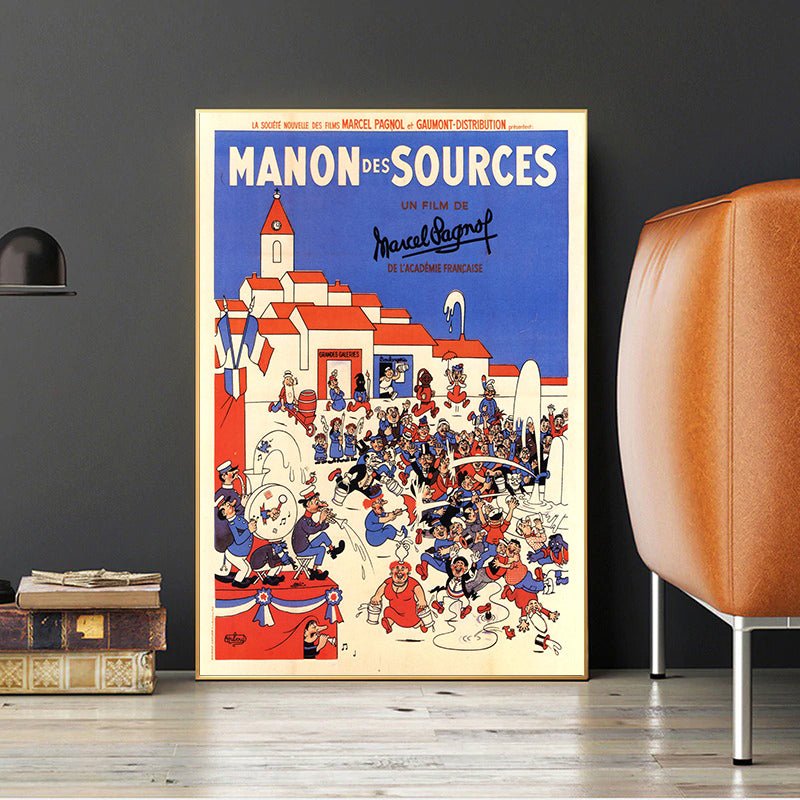
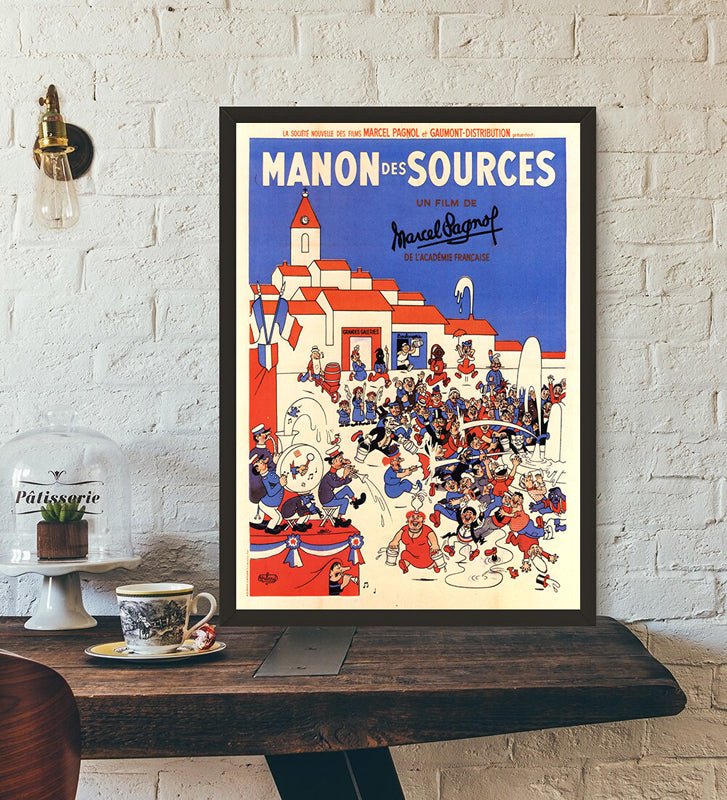
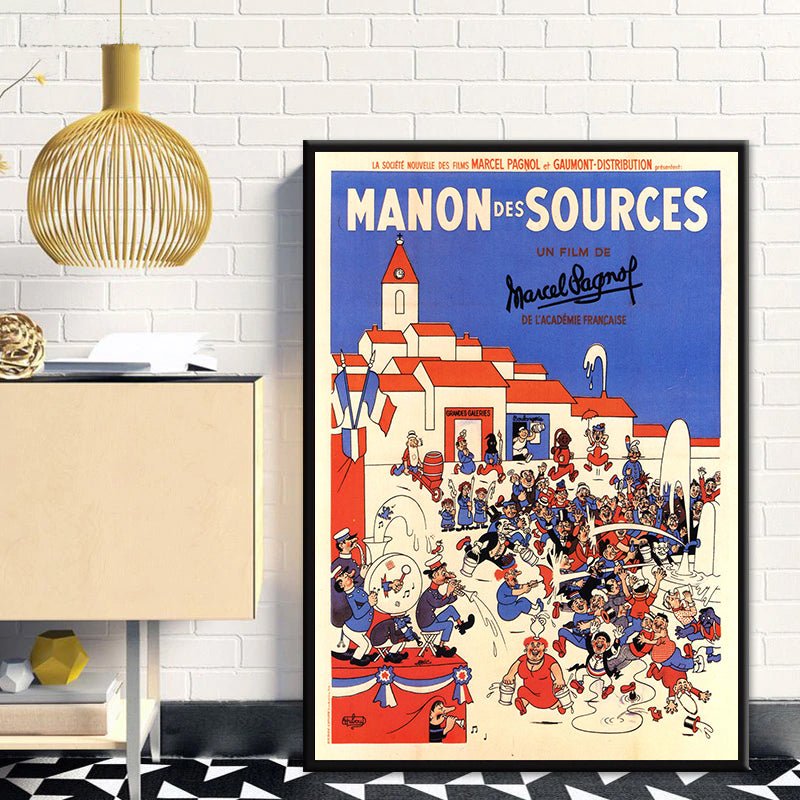
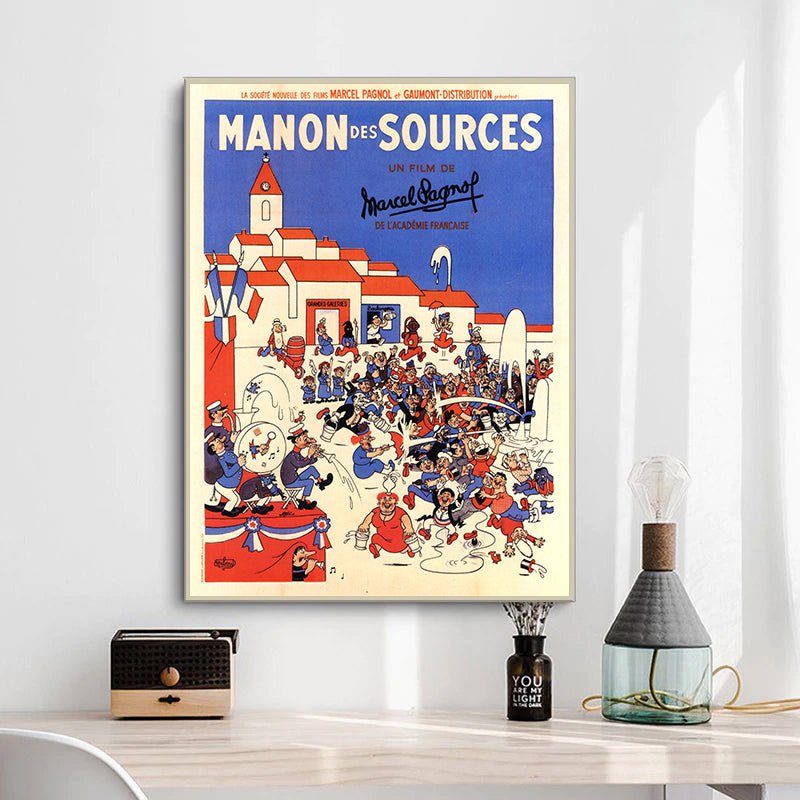
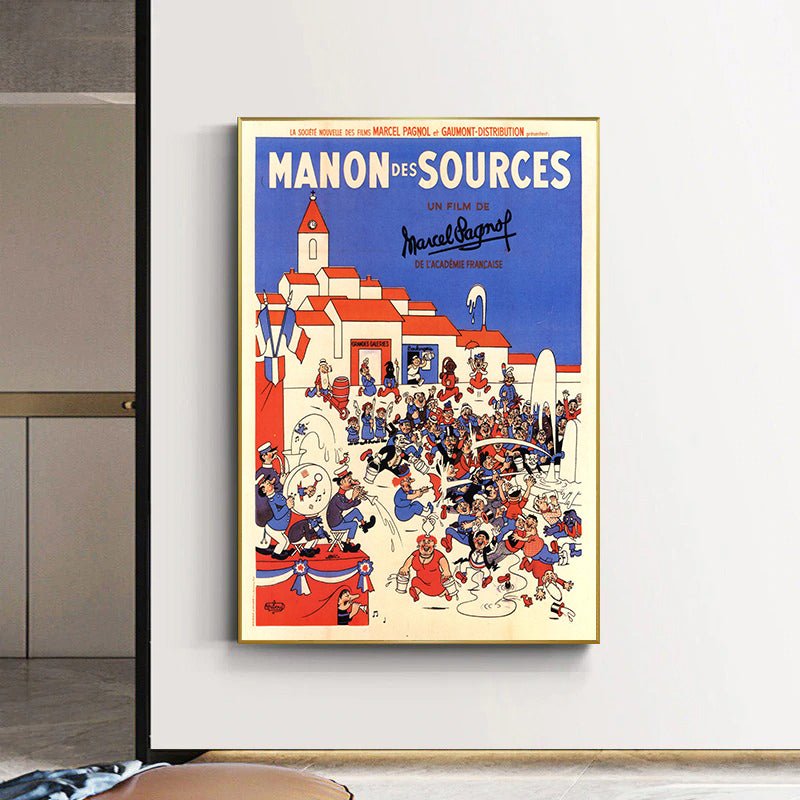
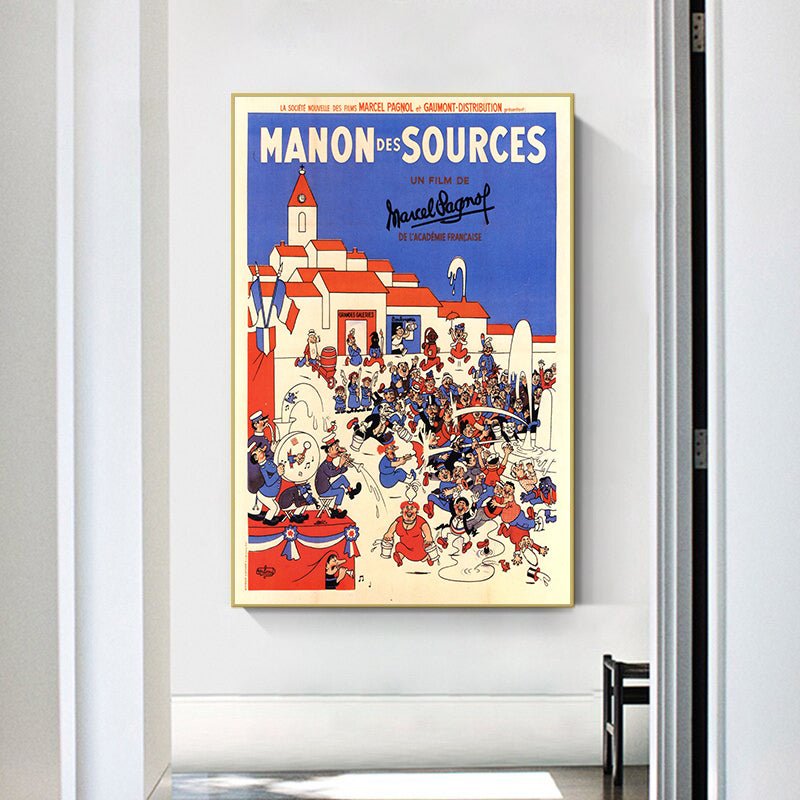
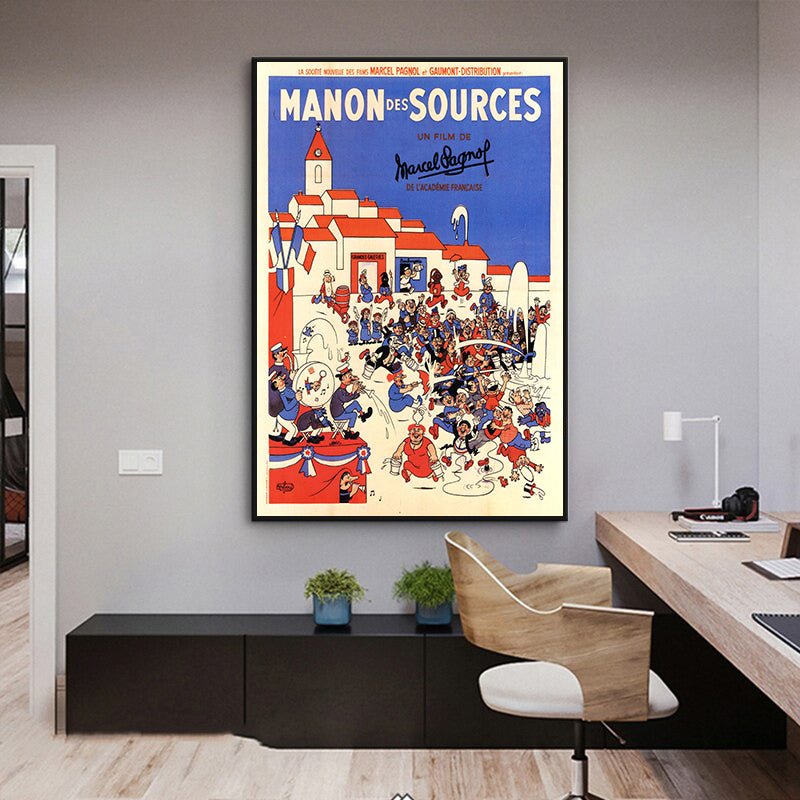
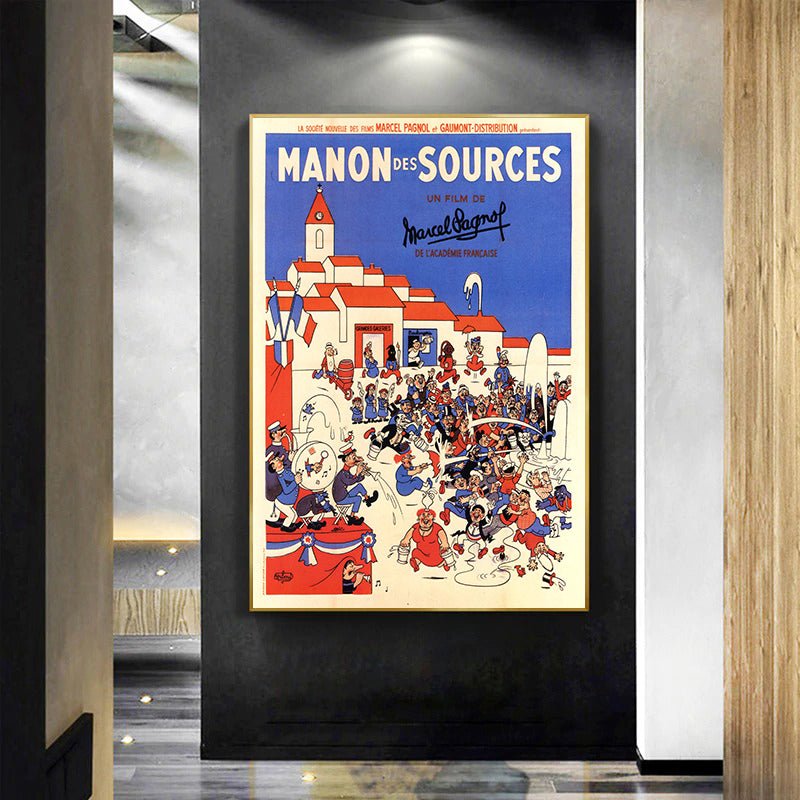
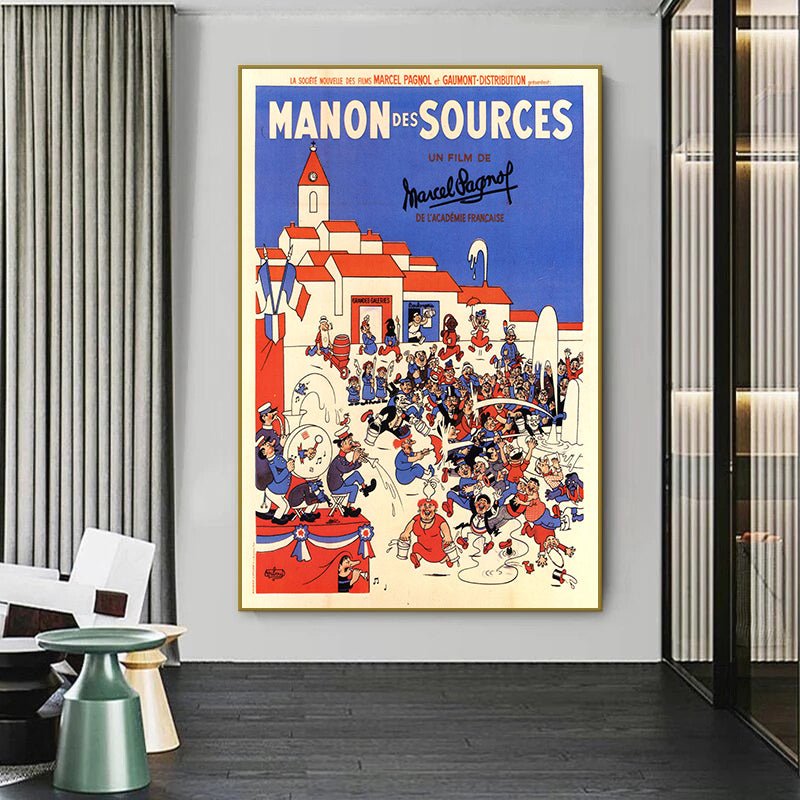
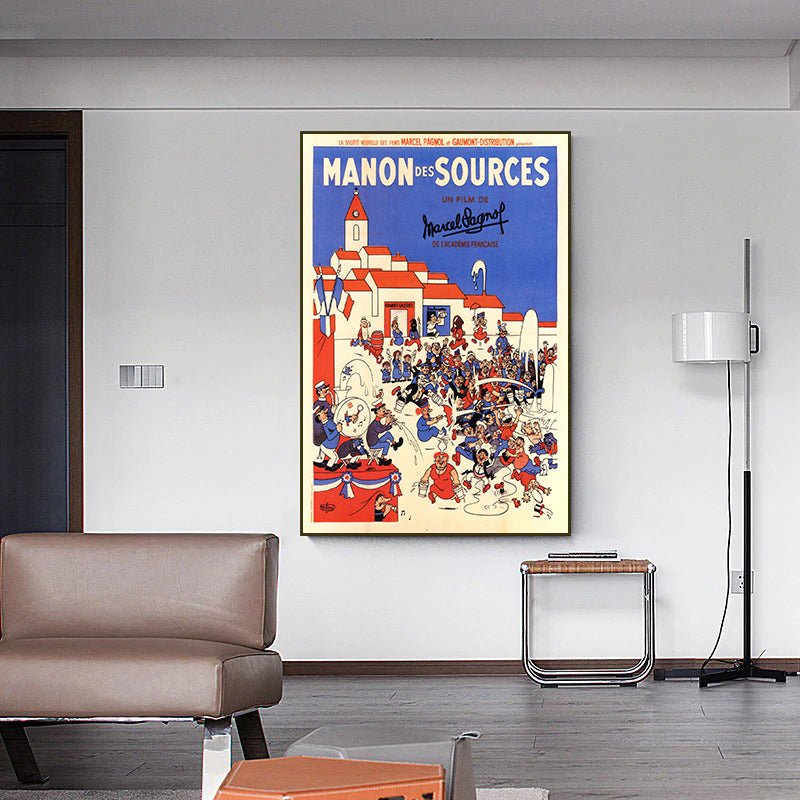












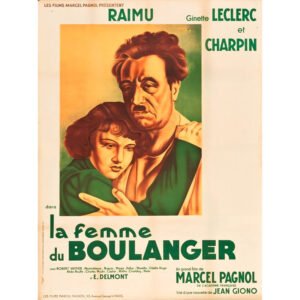

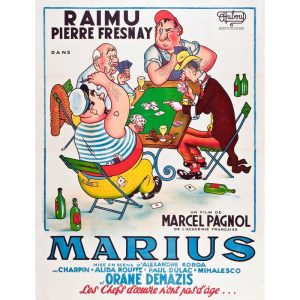








Discover this Manon Des Sources Poster, a story by Marcel Pagnol that will transport you to a world of natural beauty and human drama.
- Paper Feature:
- 🎨 Canvas: global standard in terms of printing and imitating a “painting canvas” look.
- By default, the poster contains a 4cm white border for framing (frame not included). If you don’t want it, please choose “without white border”.
- ✅ Size: Multiple choices available. ✅
- High UV resistance.
- Color vibrancy maximum, glare-free.
- Paper recycled, guaranteeing environmental friendliness.
- Poster packaged carefully and delivered in a protective tube for total protection.
- FREE STANDARD DELIVERY.
⚠️ Frame not included. ⚠️
Description of this Manon des Sources Poster
Manon des Sources is a 1986 French-language period drama film. Directed by Claude Berri, it is the second of two films adapted from the 1966 two-volume novel by Marcel Pagnol, who wrote it based on his own film of the same title. This is the sequel to Jean de Florette.
Jean de Florette and Manon des Sources were ranked 60th in Empire magazine’s 2010 list of the “100 Best Films of World Cinema.”
After the events of Jean de Florette, Jean’s daughter Manon lives in the Provençal countryside near Les Romarins, her father’s farm. She has taken up residence with a couple of elderly Piedmontese squatters who teach her how to live off the land, tending a herd of goats and hunting birds and rabbits. Ugolin Soubeyran, known as Galinette (solely through his uncle César), successfully began growing carnations with his uncle César Soubeyran, known as Papet, thanks to the water from the spring there.
After seeing her bathing naked in the mountains, Ugolin becomes interested in Manon. When he approaches her, she seems disgusted by his baseness and almost certainly by the memory of his involvement in her father’s downfall. But Ugolin’s interest in Manon becomes obsessive, to the point of sewing a ribbon of her hair onto his chest. At the same time, Manon is interested in Bernard, a handsome and cultured schoolteacher who has recently arrived in the village. As a child, Manon suffered the loss of her father, who died from a blow to the head while searching for a water source using explosives. César and Ugolino then bought the farm cheaply from his widow—Manon’s mother—and unblocked the spring. Manon witnessed this as a child. The two men directly profited from her death.
When she overhears two villagers talking about it, Manon realizes that many people in the village knew about the crime but said nothing, as the Soubeyran family was prominent locally. While searching for a goat that had fallen into a crevasse above the village, Manon discovers the underground spring that supplies water to the farms and the village. To get revenge on the Soubeyrans and the villagers, who knew but did nothing, she stops the flow of water using clay and rocks containing iron oxide found in the surrounding area.
The villagers quickly become desperate to find water to feed their crops and run their businesses. They come to believe that the flow of water has been stopped by a Providence to punish the injustice committed against John. Manon publicly accuses Caesar and Ugolino, and the villagers admit their own complicity in John’s persecution. They never accepted him because he was a foreigner and physically deformed. Caesar tries to evade the accusations, but an eyewitness, a poacher who had trespassed on the vacant property at the time, comes forward to confirm the crime, shaming Caesar and Ugolino. Ugolino desperately tries to ask for Manon’s hand, but she rejects him. The Soubeyrans flee in disgrace. Rejected by Manon, Ugolin commits suicide by hanging himself from a tree, seemingly ending the Soubeyran line.
The villagers ask Manon to participate in a religious procession to the village fountain because she is an orphan, hoping that acknowledging the injustice will restore the flow of water to the village. With Bernard’s help, Manon unblocks the spring in advance, and water reaches the village just as the procession reaches the fountain. Manon marries Bernard.
Meanwhile, César has been shattered by his nephew’s suicide. Delphine, one of his old acquaintances, returns to the village and tells him that Florette, his love at the time, has written to him to tell him she is carrying their child. Without a response from him, she had attempted an abortion. Florette left the village, married a blacksmith from Créspin, and the child was born alive but hunchbacked.
César, who had left to do his military service in Africa, never received her letter and did not know that she had given birth to his child. By a cruel twist of fate, Jean, the man he drove to despair and death without ever meeting him, is the son he always wanted. Now realizing that she is related to him, César sadly watches as the pregnant Manon rushes home that evening, wishing to reconcile with her only grandson, but knowing that it will never happen.
Devastated and no longer having the will to live, César dies peacefully in his sleep. In a letter, he leaves his possessions to Manon, whom he acknowledges as his natural granddaughter and the last of the Soubeyrans.