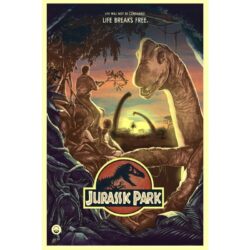
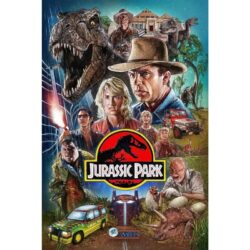
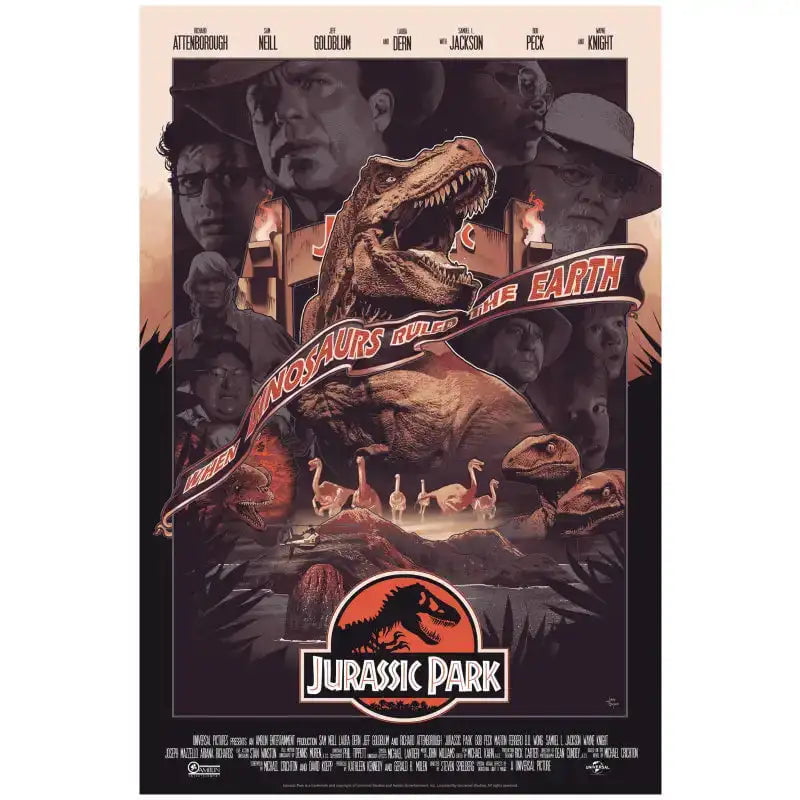
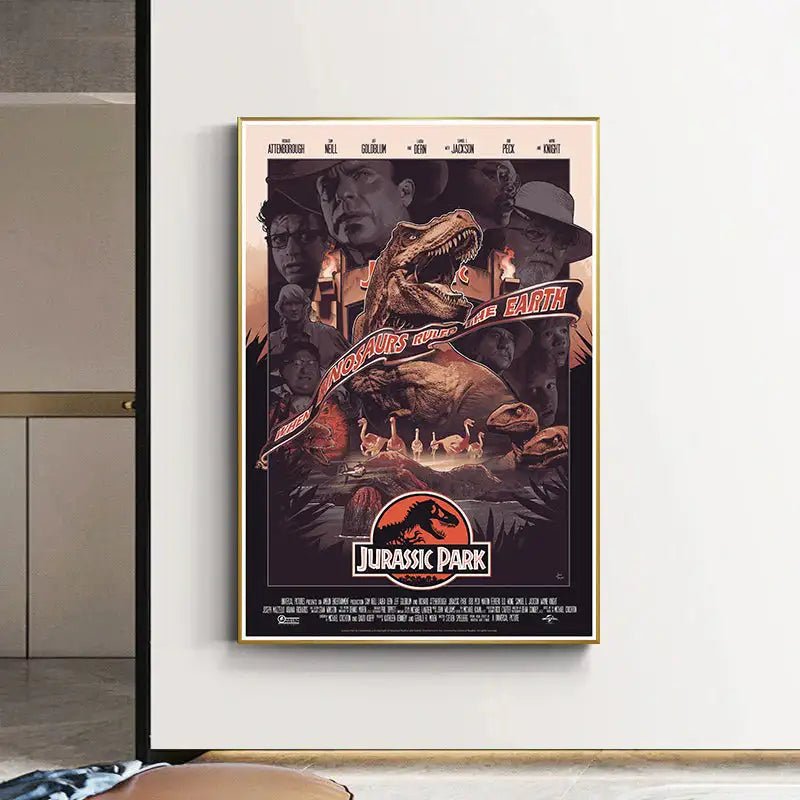
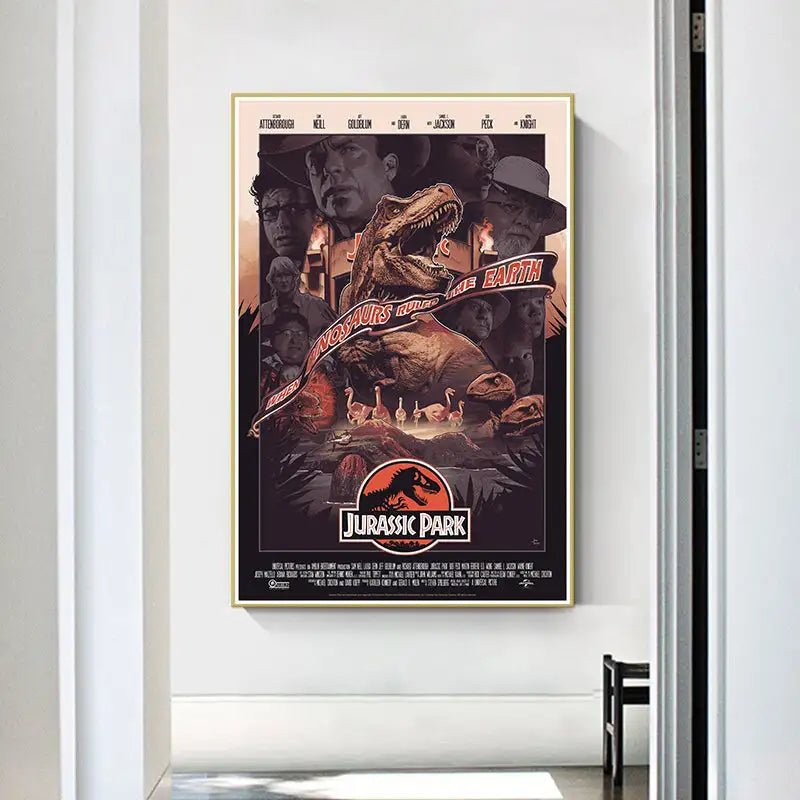
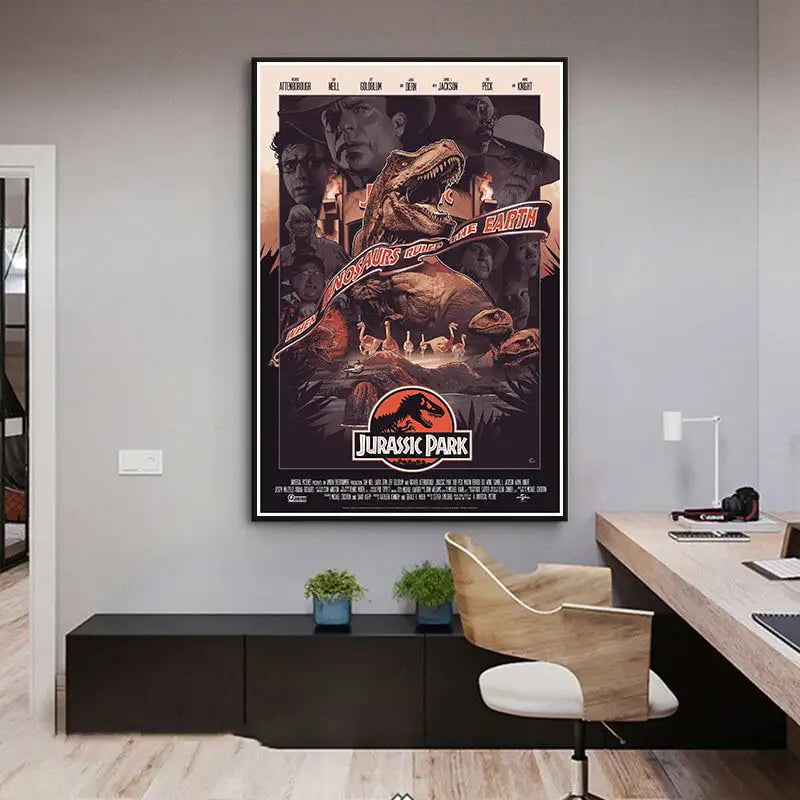
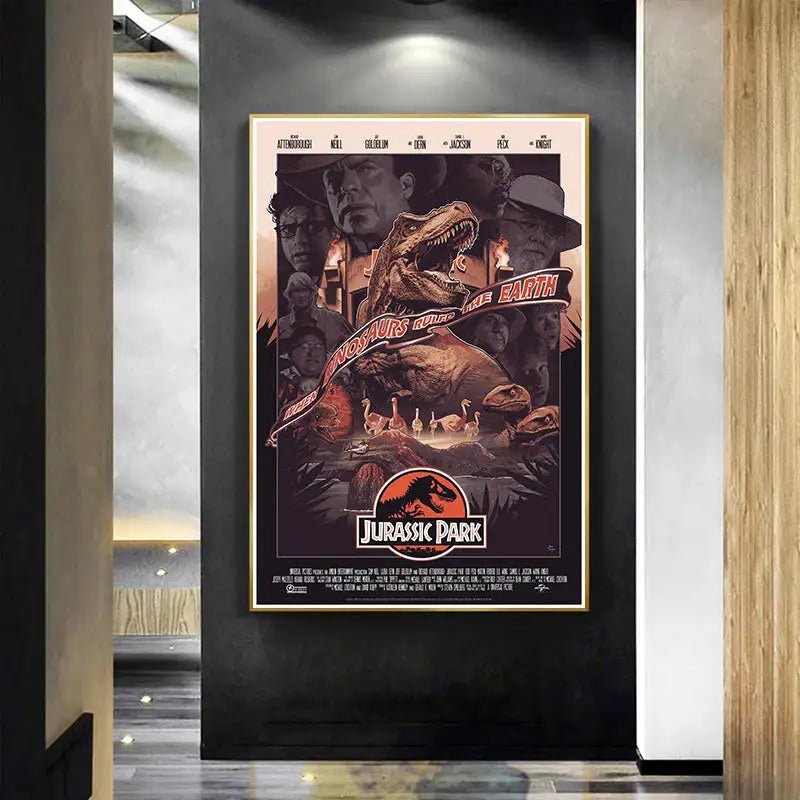
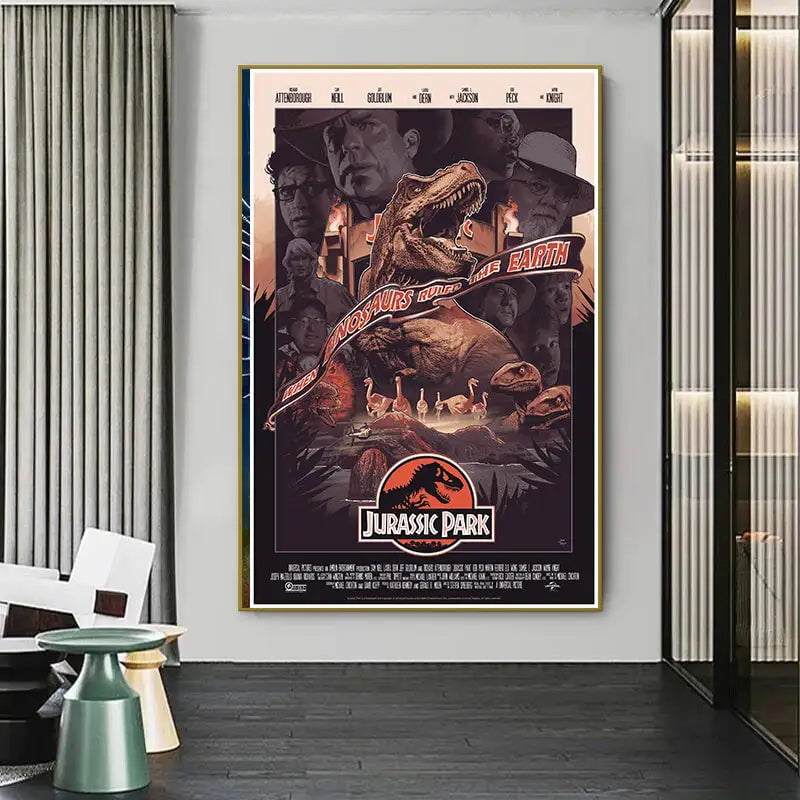
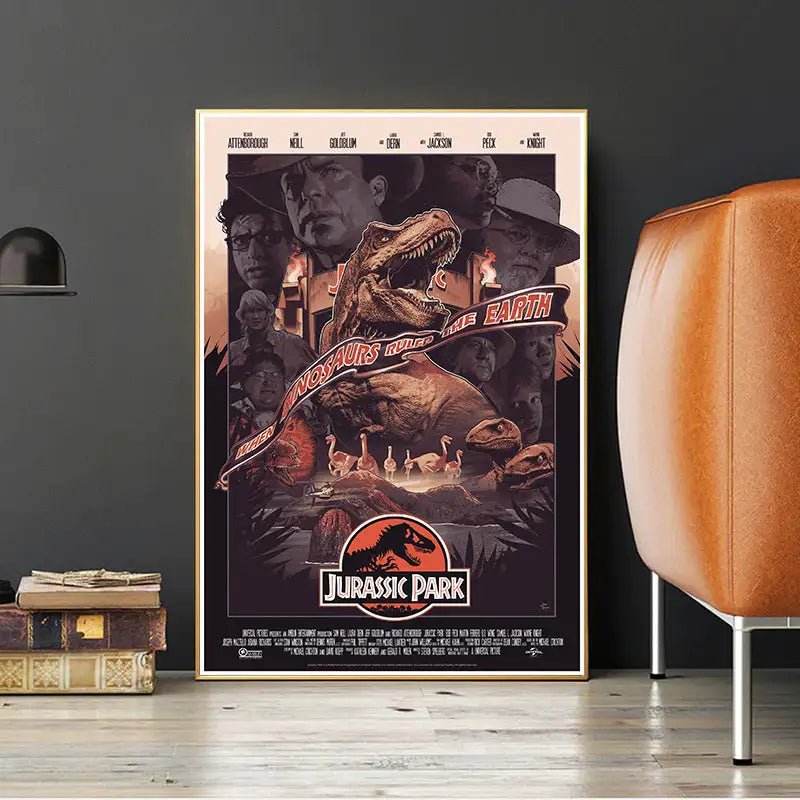
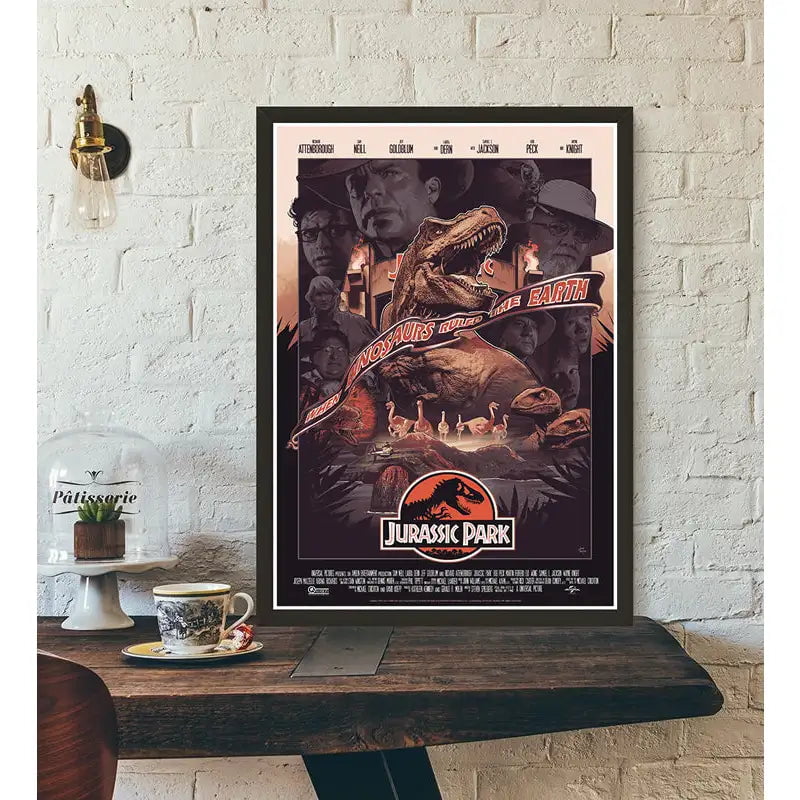
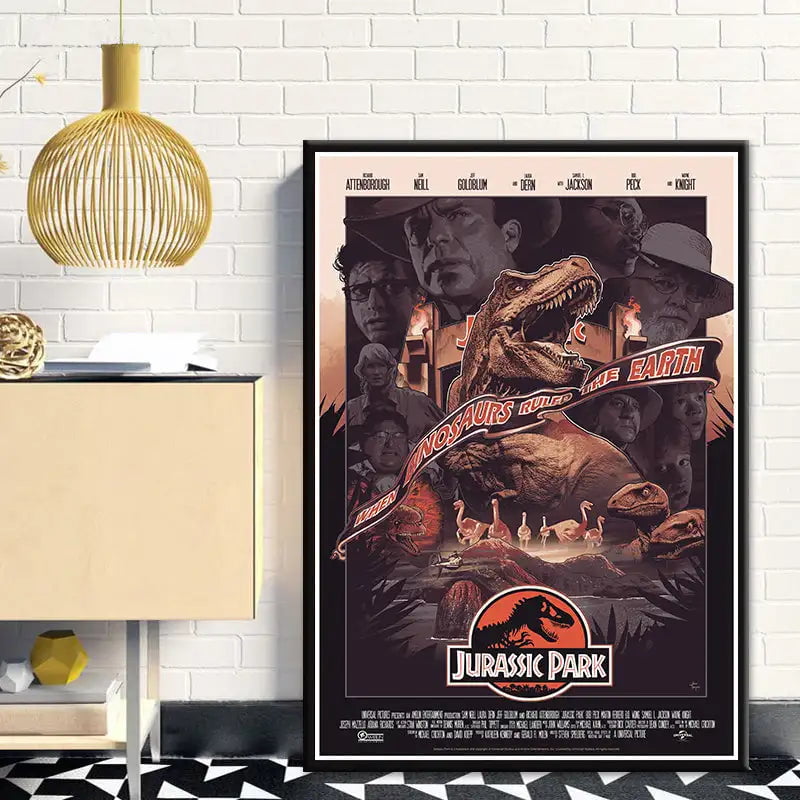
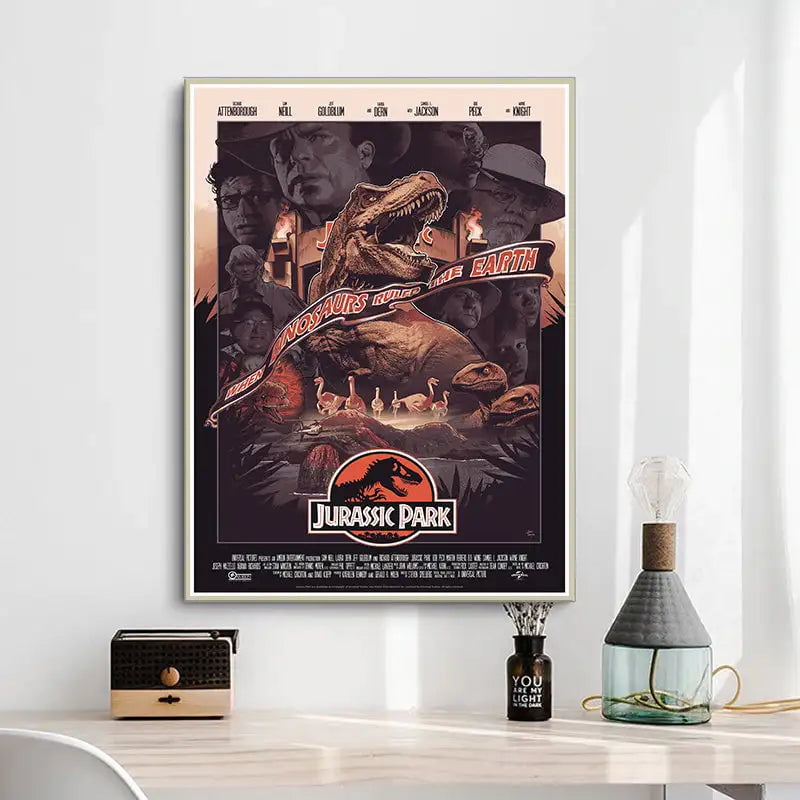
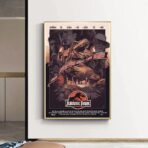
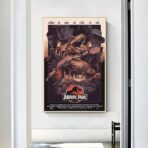
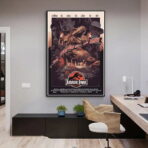
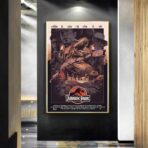
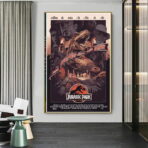
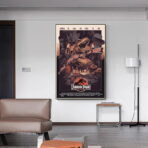
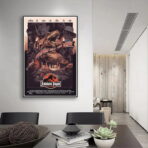
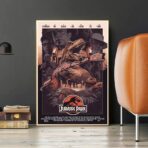
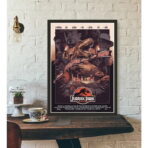
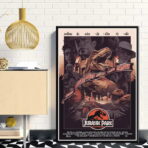
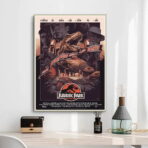

Rediscover the incredible world of dinosaurs with this superb Jurassic Park Movie Poster, a cult classic!
- Paper Feature:
- 🎨 Canvas: global standard in terms of printing and imitating a “painting canvas” look.
- By default, the poster contains a 4cm white border for framing (frame not included). If you don’t want it, please choose “without white border”.
- ✅ Size: Multiple choices available. ✅
- High UV resistance.
- Color vibrancy maximum, glare-free.
- Paper recycled, guaranteeing environmental friendliness.
- Poster packaged carefully and delivered in a protective tube for Total protection.
- FREE STANDARD DELIVERY.
⚠️ Frame not included. ⚠️
Description of this Jurassic Park Movie Poster
Jurassic Park is a 1993 science fiction adventure film directed by American filmmaker Steven Spielberg. Based on the book of the same name by Michael Crichton, the film follows a group of people at an amusement park featuring cloned dinosaurs created by a billionaire philanthropist and a team of genetic scientists. During a pre-publication visit, the dinosaurs escape and endanger the lives of those in the park.
Before its publication in 1990, four film studios were interested in adapting Crichton’s book, but Universal Pictures secured the rights to the book and hired Spielberg to direct and Crichton to adapt it for the big screen. The final screenplay was written by Koepp, who omitted several expository and violent passages from the novel and made changes to the characters. Filming took place in California and Hawaii between August and November 1992, with a cast consisting primarily of actors Richard Attenborough, Sam Neill, Jeff Goldblum, and Laura Dern. Post-production, overseen by Spielberg from Poland during the filming of Schindler’s List, lasted until May 1993. It included innovative computer-generated imagery and life-size animatronic models to recreate the film’s dinosaurs, with support from Industrial Light & Magic and Stan Winston. To design the film’s sound, Spielberg invested in the creation of DTS, a company specializing in digital surround sound formats.
Jurassic Park proved to be a success, grossing over $900 million worldwide during its original theatrical release and was ranked as the highest-grossing film in cinematic history until the release of Titanic (1997). Critics praised its groundbreaking special effects, John Williams’s score, and Spielberg’s direction. It also won over twenty awards, including three Academy Awards for technical achievement in visual effects and sound. Following its 3D re-release in 2013 to commemorate the 20th anniversary of its release, it became the 17th film to exceed $1 billion in box office revenue. In 2018, the Library of Congress recognized it as “culturally, historically, and aesthetically significant,” and it was selected for preservation in the National Film Registry.
On Isla Nublar, located near Costa Rica, an employee of InGen – International Genetic Technologies, Inc. is killed by a dinosaur while being transported to Jurassic Park, an amusement park whose main attraction is dinosaurs cloned by geneticists. As a result, director John Hammond is pressured by the park’s investors to conduct an investigation to ensure the site’s safety before it opens to the general public.
Soon after, paleontologist Alan Grant, paleobotanist Ellie Sattler—whom he is visiting during a paleontological dig in Montana—mathematician Ian Malcolm, and investor representative Donald Gennaro arrive on the island to analyze Jurassic Park’s specimens and facilities. As part of their welcome tour, they are informed of the process used to clone dinosaurs from fossilized material found in prehistoric mosquitoes that fed on the blood of dinosaurs during the Jurassic era and have been preserved in amber ever since. While most of the team tours the park in electric vehicles with Hammond’s grandsons, Lex and Tim Murphy, a tropical cyclone hits the park, causing heavy rains and leaving those who have not been evacuated incommunicado. Simultaneously, programmer Dennis Nedry jams the park’s computer security system to break into the labs alone and steal dinosaur embryos to give to a rival company, InGen. Nedry’s action disrupts the power supply to several of the facility’s perimeter fences that protect the dinosaurs, and disables the vehicles transporting visitors right outside the Tyrannosaurus rex facility. The dinosaurs eventually escape the facility, including the T. rex, from which Grant and Hammond’s grandchildren manage to escape after abandoning their vehicles, while Malcolm is injured and is later helped by Ellie and park official Robert Muldoon. The next day, Grant and the children encounter wild dinosaur nests on their way to the visitor center, implying that the creatures have procreated despite the manipulation of their genetic material. To unlock the security systems, engineer Ray Arnold, Ellie, and Muldoon go to the power distribution shack to manually activate the switches. Later, Ellie finds Grant, the children, Hammond, and Malcolm in the computer control room. After calling for help over the phone, velociraptors infiltrate the room, forcing the protagonists to go to the park’s visitor center for safety.
In the final scenes, the T. rex is seen attacking the velociraptors in the visitor center, while Ellie, Grant, Malcolm, Hammond, and the children board a helicopter at the park’s helipad and leave the island. On board the aircraft, the children fall asleep on Grant’s lap as he watches the pelicans fly in the distance. It’s worth noting that the original script ended with a T. rex skeleton falling on the velociraptors in the visitor center, shortly before Hammond arrives and shoots them with a shotgun. This conclusion was deemed simplistic, so it was decided to incorporate the scene where the T. rex attacks the dinosaurs and allows the protagonists to escape the island by helicopter.