

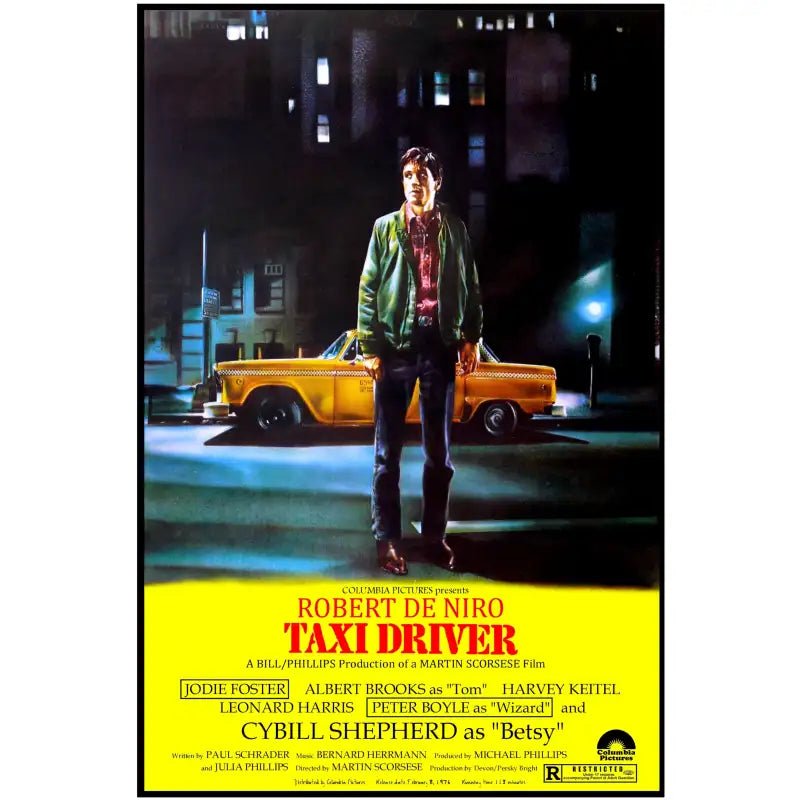
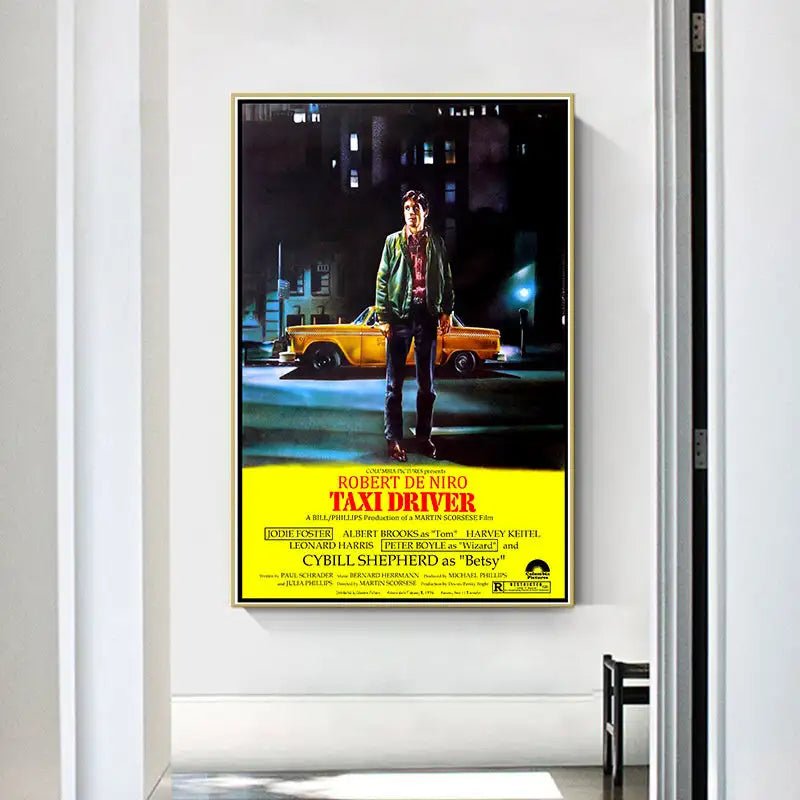
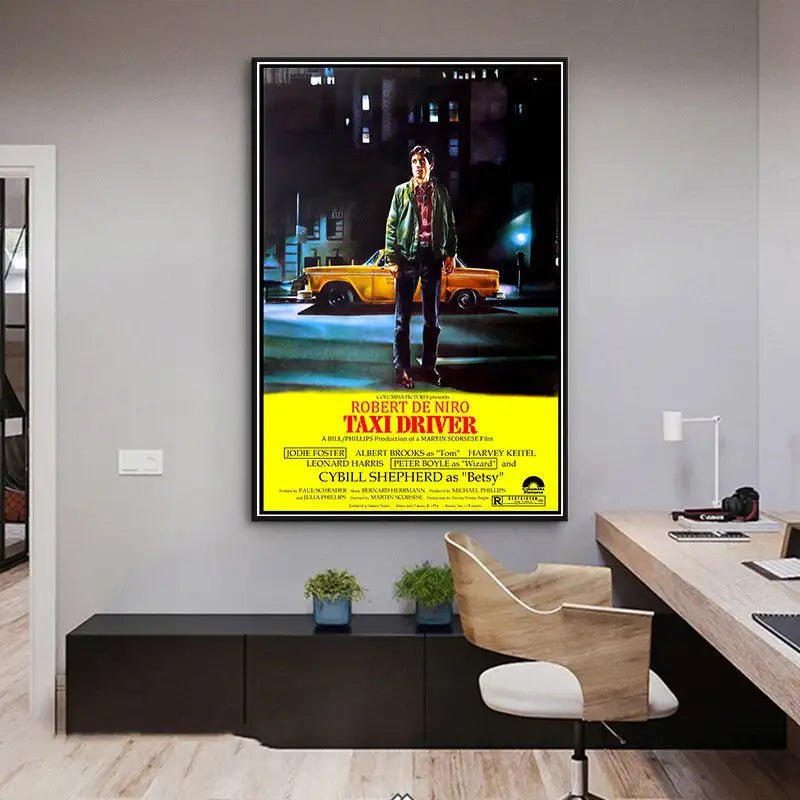
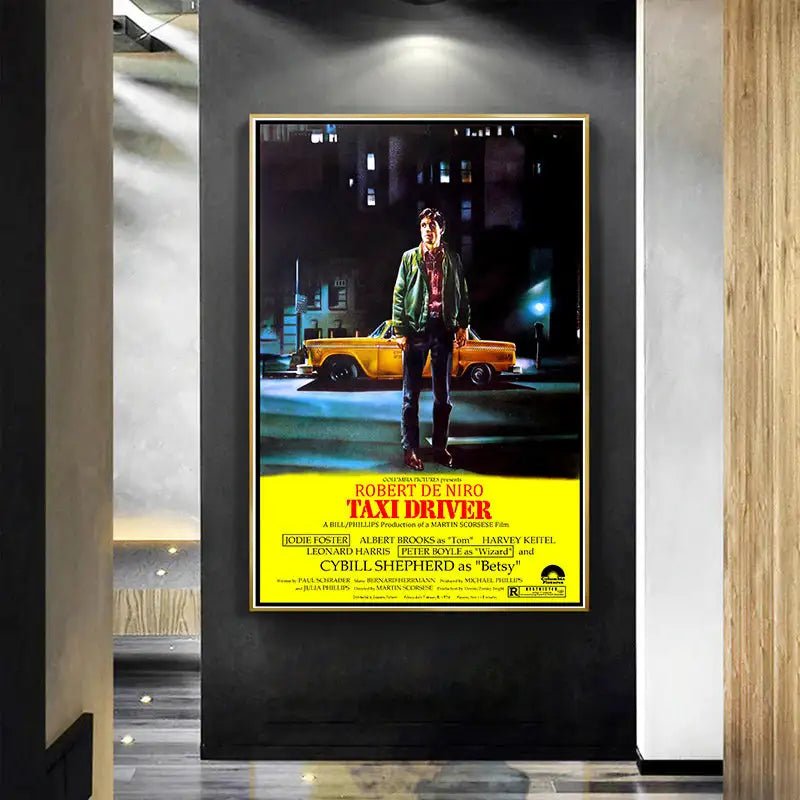
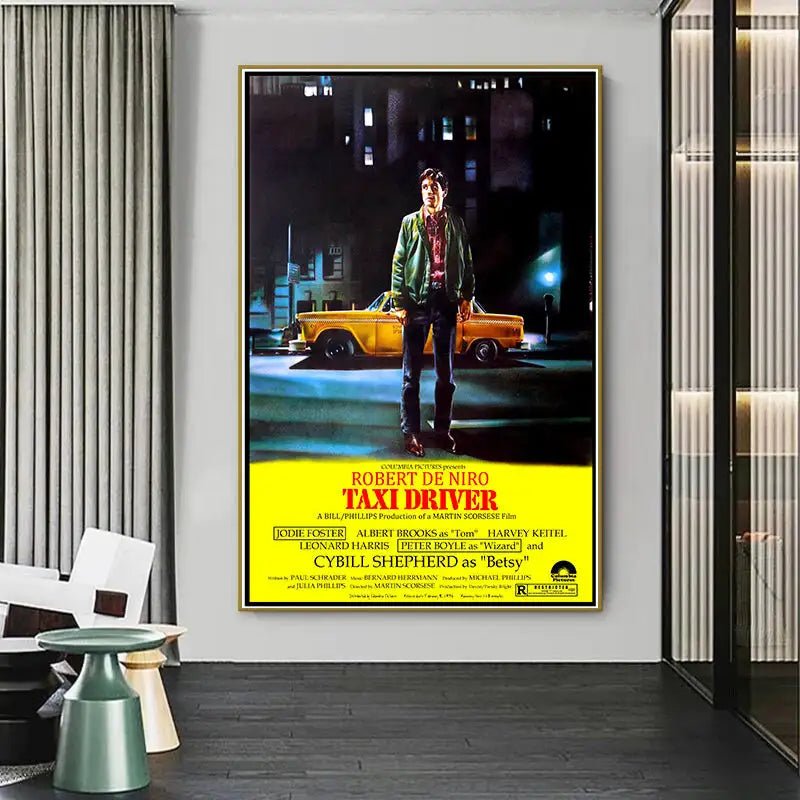
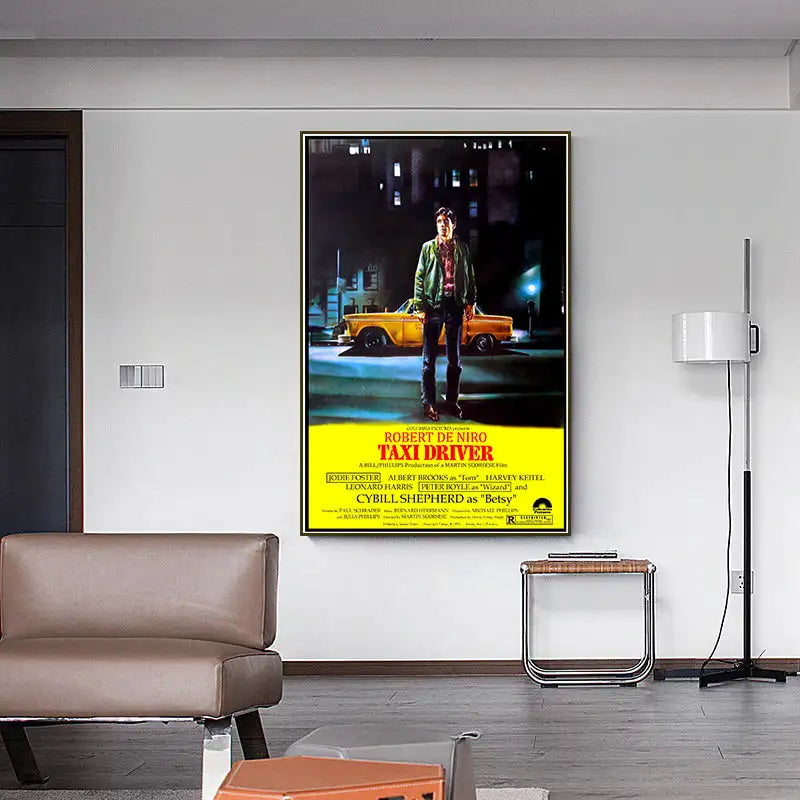
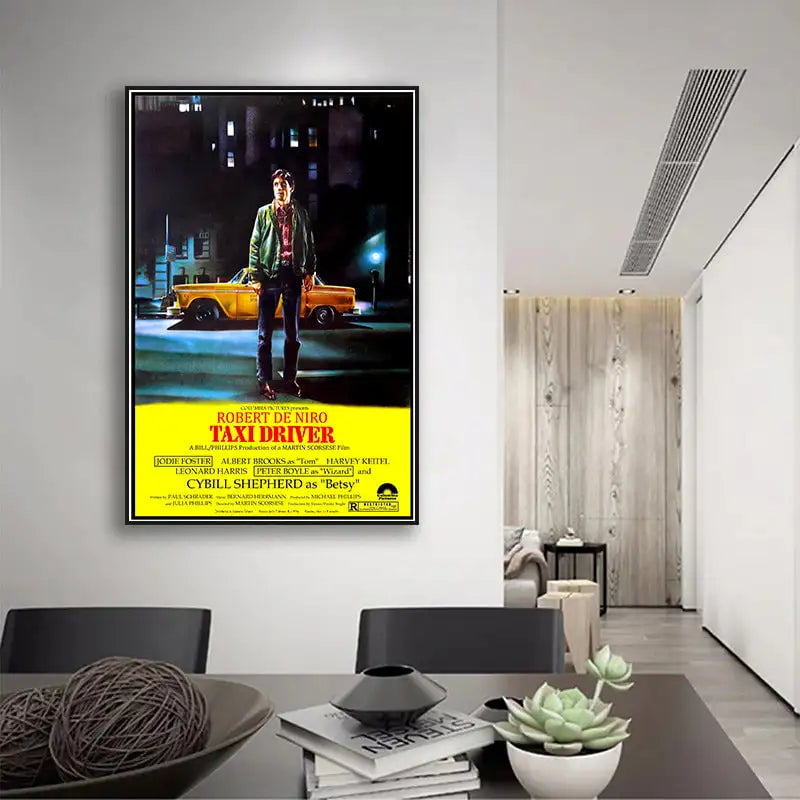
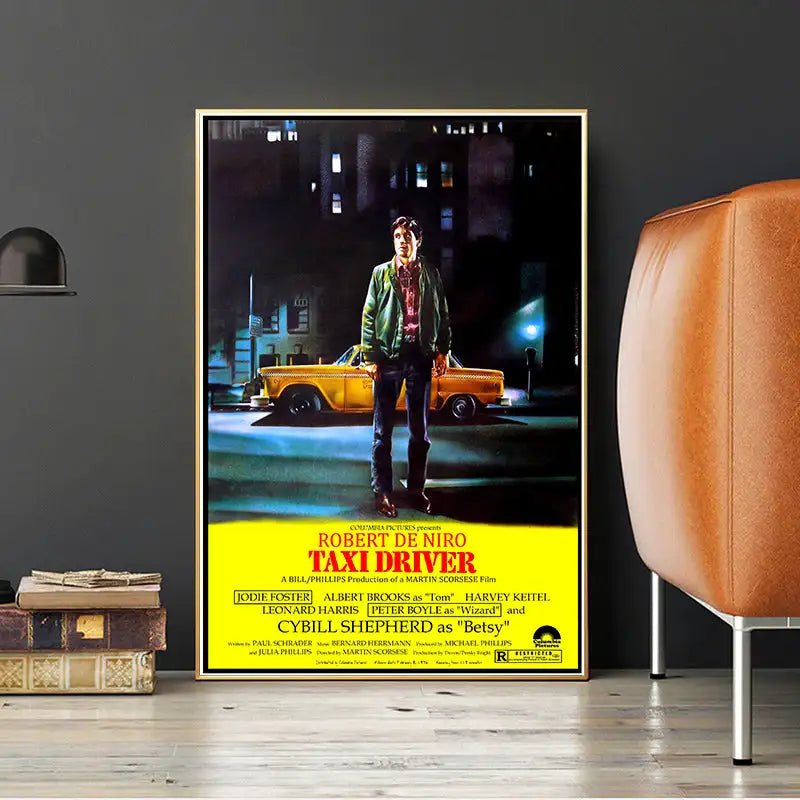
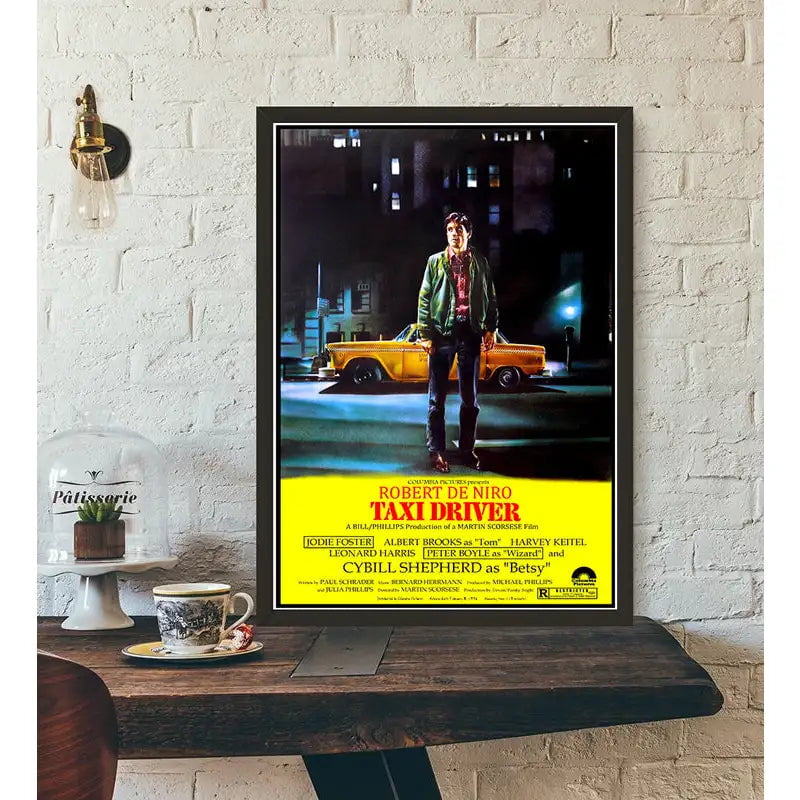
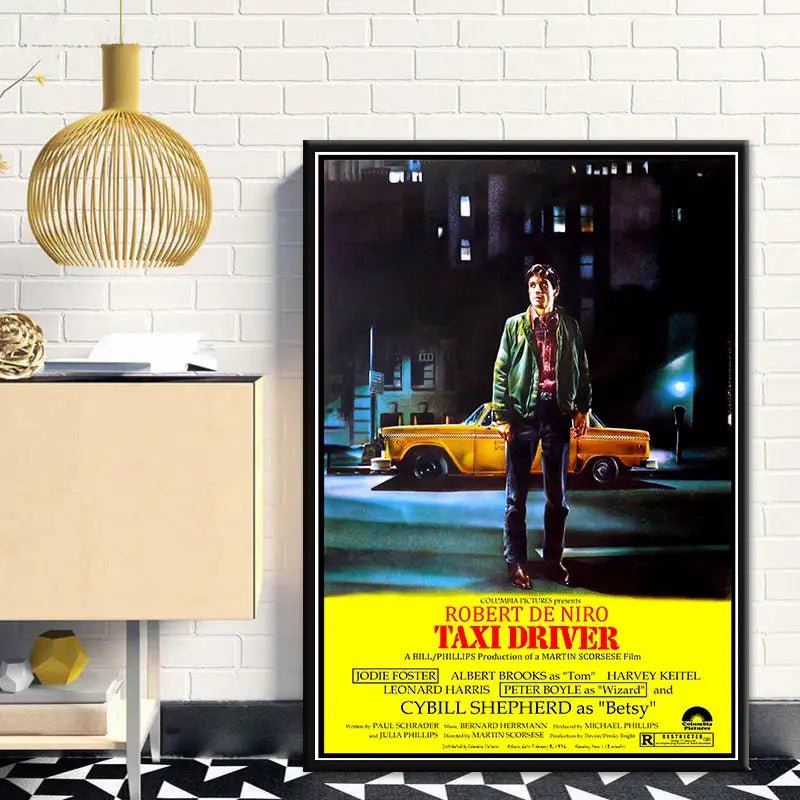
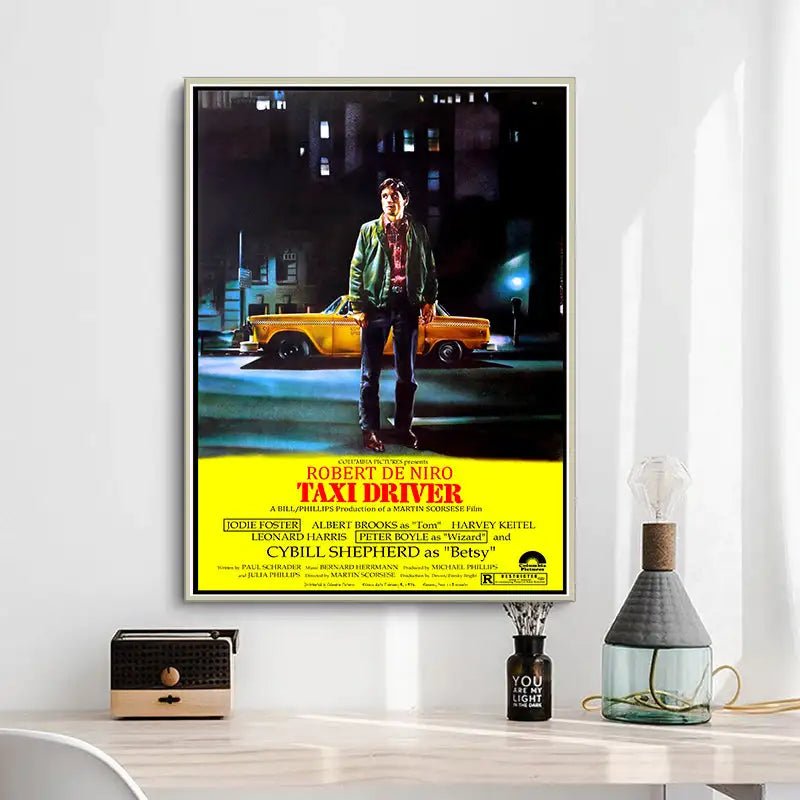
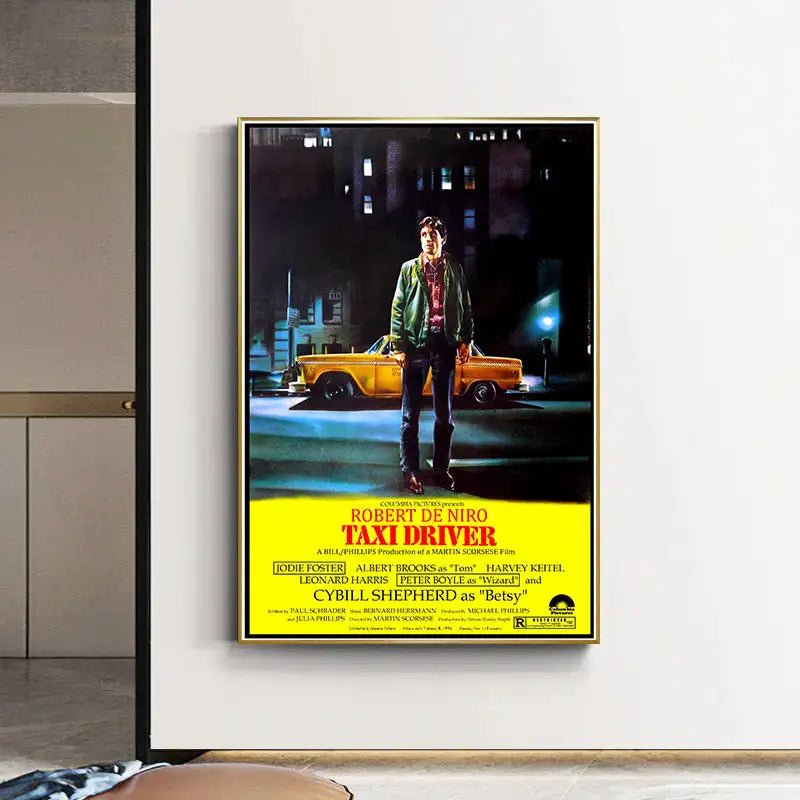


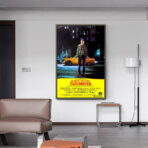
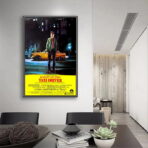
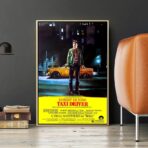
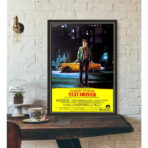
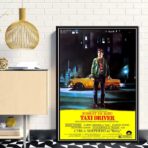

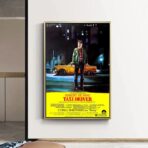



Discover this Taxi Driver and immerse yourself in the dark and captivating world of a New York taxi driver, played by Robert De Niro.
- Paper Feature:
- 🎨 Canvas: global standard in terms of printing and imitating a “painting canvas” look.
- By default, the poster contains a 4cm white border for framing (frame not included). If you don’t want it, please choose “without white border”.
- ✅ Size: Multiple choices available. ✅
- High UV resistance.
- Color vibrancy maximum, glare-free.
- recycled paper, guaranteeing environmental friendliness.
- Poster packaged carefully and delivered in a protective tube for Total protection.
- FREE STANDARD DELIVERY.
⚠️ Frame not included. ⚠️
Description of this Taxi Driver Poster
Taxi Driver is a 1976 American neo-noir psychological thriller film directed by Martin Scorsese, written by Paul Schrader, and starring Robert De Niro, Jodie Foster, Cybill Shepherd, Harvey Keitel, Peter Boyle, Leonard Harris, and Albert Brooks. Set in a decaying and morally bankrupt New York City after the Vietnam War, the film follows Travis Bickle (De Niro), a veteran working as a taxi driver, and his deteriorating mental state as he works the city’s night shift.
Taking inspiration from The Wrong Man (1956) and A Bigger Splash (1973), Scorsese wanted the film to feel like a dream for the audience. With cinematographer Michael Chapman, filming began in the summer of 1975 in New York City, with the cast taking pay cuts so the project could be completed on a low budget of $1.9 million. Production wrapped that same year. Bernard Herrmann composed the film’s music in what would be his final score, completed just hours before his death; The film is dedicated to her.
The film was released theatrically on February 7, 1976, by Columbia Pictures, and was a critical and commercial success despite controversy over the graphic violence at the end of the film and the role of a child prostitute played by the then 12-year-old Foster. The film received numerous awards, including the Palme d’Or at the 1976 Cannes Film Festival and four nominations at the 49th Academy Awards, including Best Picture, Best Actor (for De Niro), and Best Supporting Actress (for Foster).
Although Taxi Driver generated further controversy due to its role in motivating John Hinckley Jr. to attempt to assassinate then-President Ronald Reagan, the film has remained popular and is considered one of the most culturally important and inspirational films of its era, and one of the greatest films ever made. In 2012, Sight & Sound ranked it the 31st greatest film of all time in its decennial critics’ poll, alongside The Godfather: Part II, and the 5th greatest film of all time in its directors’ poll. In 1994, the film was deemed “culturally, historically, or aesthetically” significant by the United States Library of Congress and was selected for preservation in the National Film Registry.
Travis Bickle is a 26-year-old honorably discharged U.S. Marine and Vietnam War veteran who suffers from PTSD and lives alone in New York City. Travis takes a job driving night cabs to cope with his chronic insomnia and loneliness. He frequently visits the pornographic theaters on 42nd Street and keeps a diary in which he consciously attempts to include aphorisms such as “you’re only healthy if you feel good.” He is disgusted by the crime and urban decay he witnesses in Manhattan and dreams of getting rid of “the scum of the streets.”
Travis falls in love with Betsy, a campaign volunteer for Senator and presidential candidate Charles Palantine. Travis enters the campaign office where she works and invites her for coffee, which she accepts. Betsy confesses that she feels a special connection with Travis and agrees to go out with him. During their date, Travis takes Betsy to a porn theater, which disgusts her and causes her to leave. He attempts to reconcile with her, but to no avail. Enraged, he bursts into the campaign office where she works and berates her before being ordered to leave.
Experiencing an existential crisis and witnessing various acts of prostitution in the city, Travis confides his violent thoughts to a fellow cab driver nicknamed Wizard. However, Wizard rejects them and assures him that he will be okay. To find an outlet for his rage, Travis begins an intense physical training regimen. A fellow cab driver recommends a black market gun dealer, Easy Andy, from whom Travis purchases four handguns. At home, Travis practices drawing his weapons and modifies one so that it can be concealed and quickly deployed from his sleeve. He begins attending Palantine’s gatherings to assess his safety. One night, Travis shoots and kills a man who was attempting to rob a convenience store run by one of his friends. While traveling around town, Travis regularly encounters Iris, a child prostitute. He solicits her and attempts to persuade her to stop working as a prostitute. Soon after, Travis cuts his hair into a mohawk and attends a public gathering where he plans to assassinate Palantine. However, he is chased away by Secret Service agents, who see him open his jacket and slip his hand inside. That evening, Travis goes to the brothel where Iris works and shoots her pimp, Sport. He enters the building and engages in a shootout with Sport and one of Iris’s clients, a mafioso. Travis is shot several times but manages to kill both men. He then fights with the bouncer, stabbing him in the hand with his shoe knife and finishing him off with a shot in the head. Travis attempts suicide, but runs out of bullets. Wounded and bloody, he collapses on a couch next to a sobbing Iris. As police respond to the scene, a delirious Travis mimics shooting himself in the head with his finger.
Travis falls into a coma due to his injuries. He is hailed by the press as a heroic vigilante and is not prosecuted for the murders. He also receives a thank-you letter from Iris’s father. After recovering, Travis grows his hair long and returns to work, where he meets Betsy as a passerby; they exchange cordial words, Betsy saying she followed his story in the newspapers. Travis drops her off at her house, refuses to take her money, and drives off smiling. He suddenly becomes agitated after noticing something in his rearview mirror.