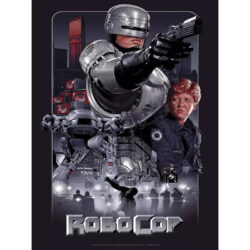
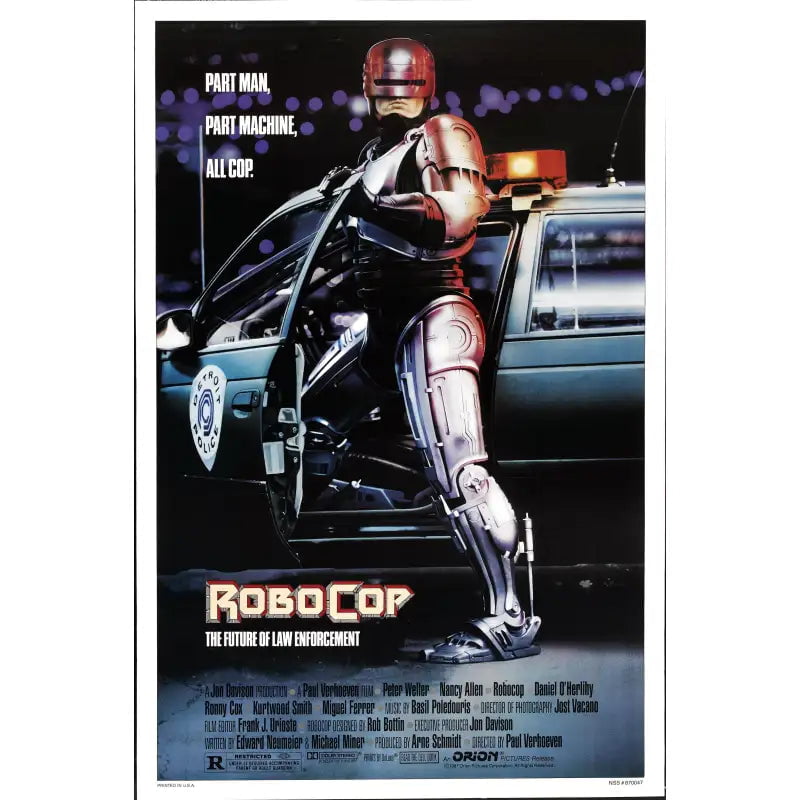
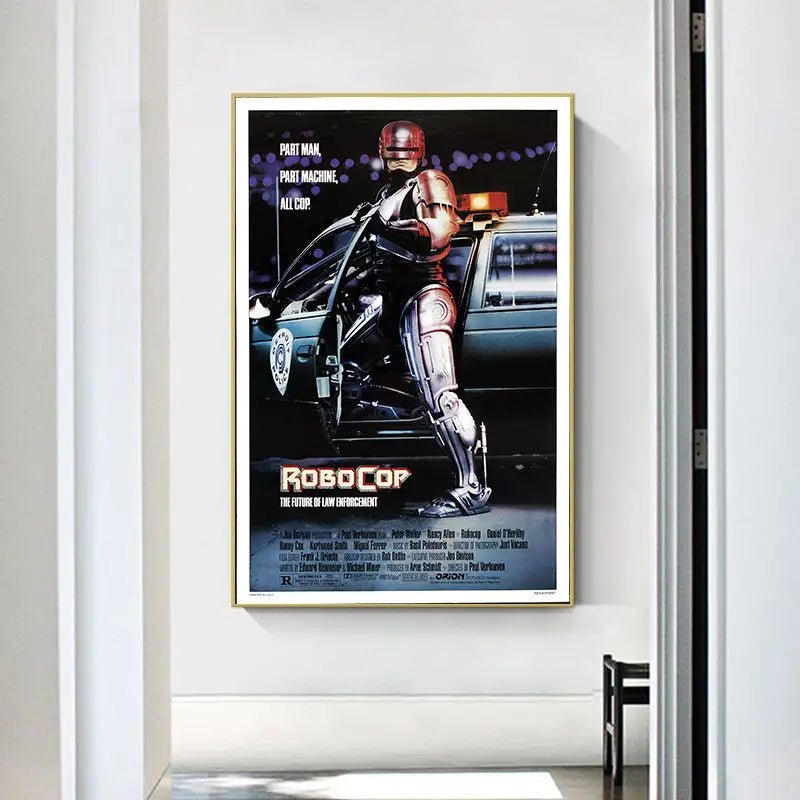
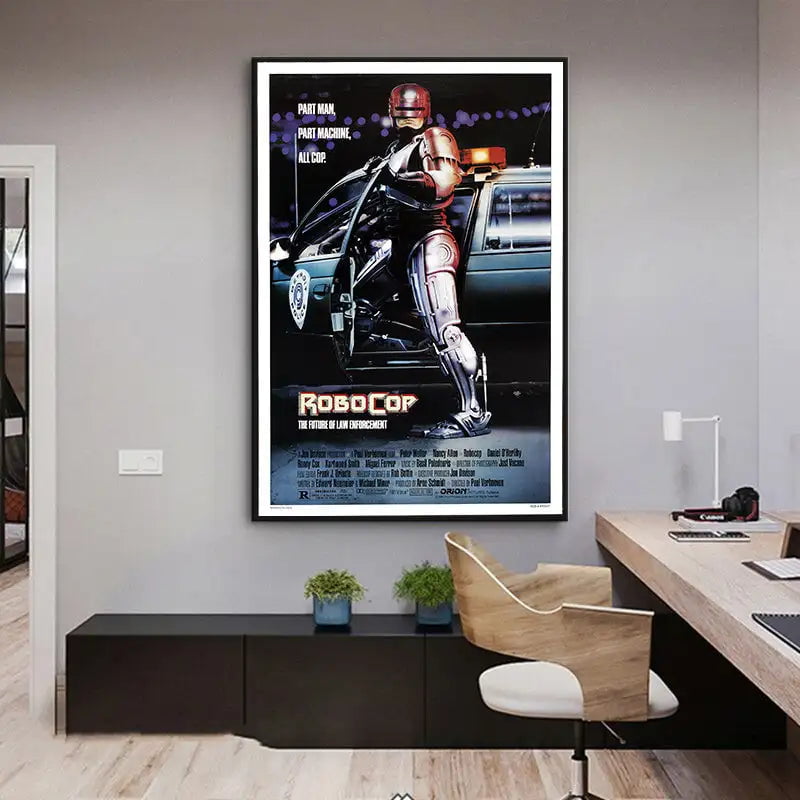
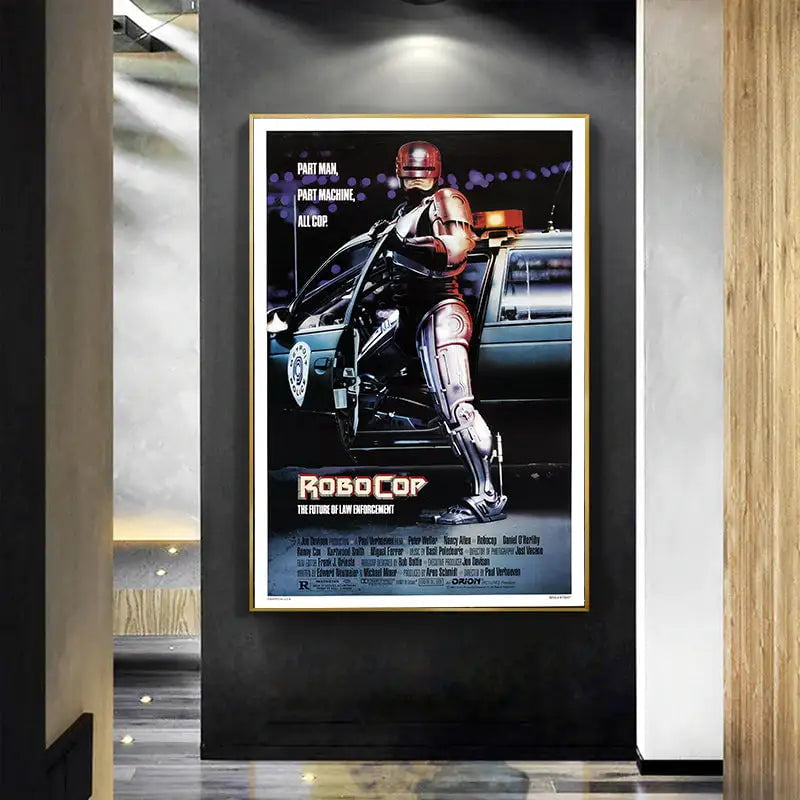
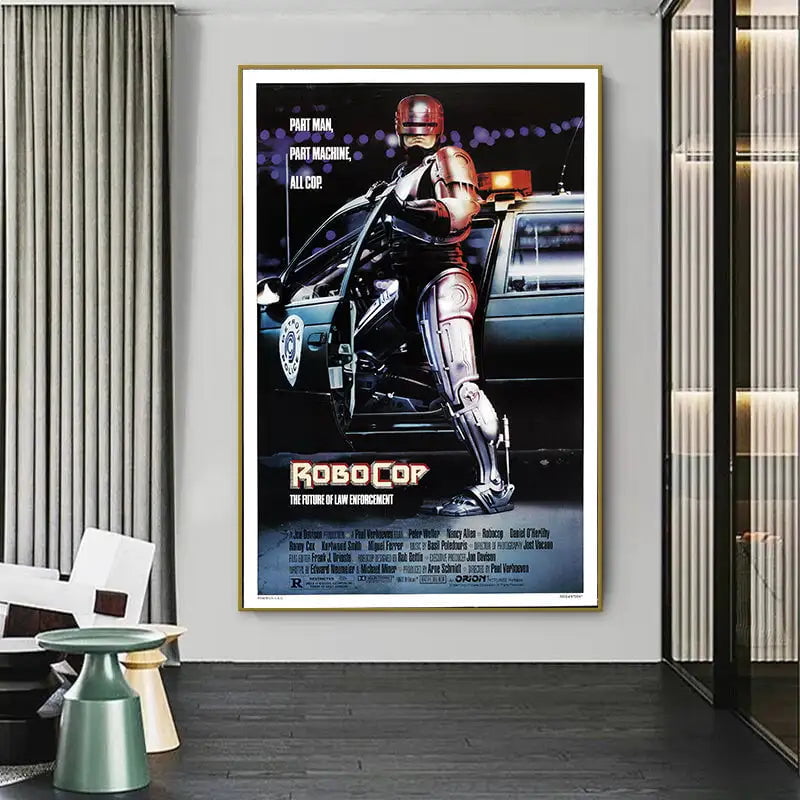
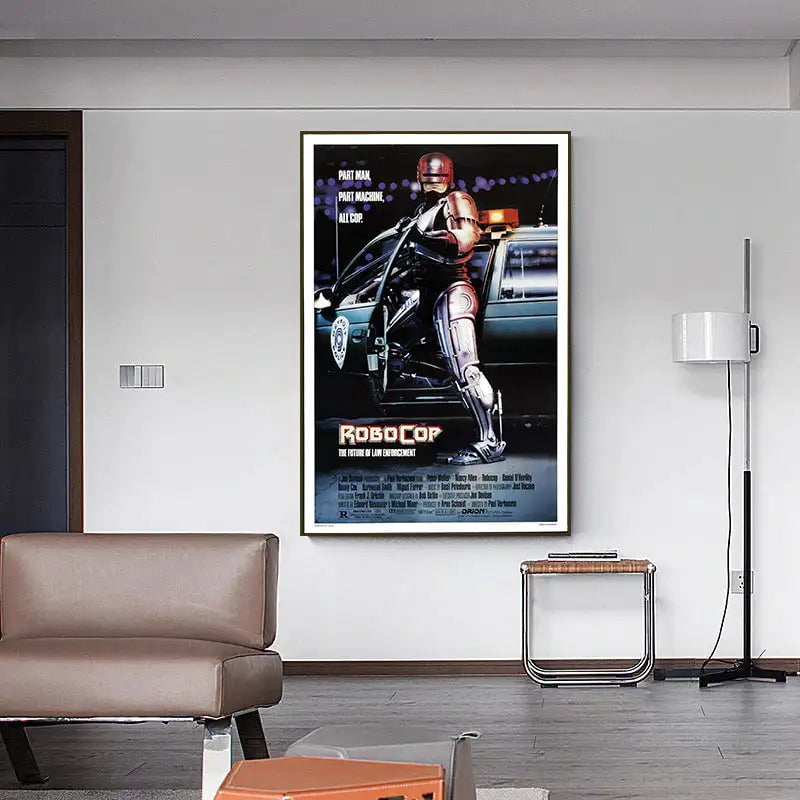
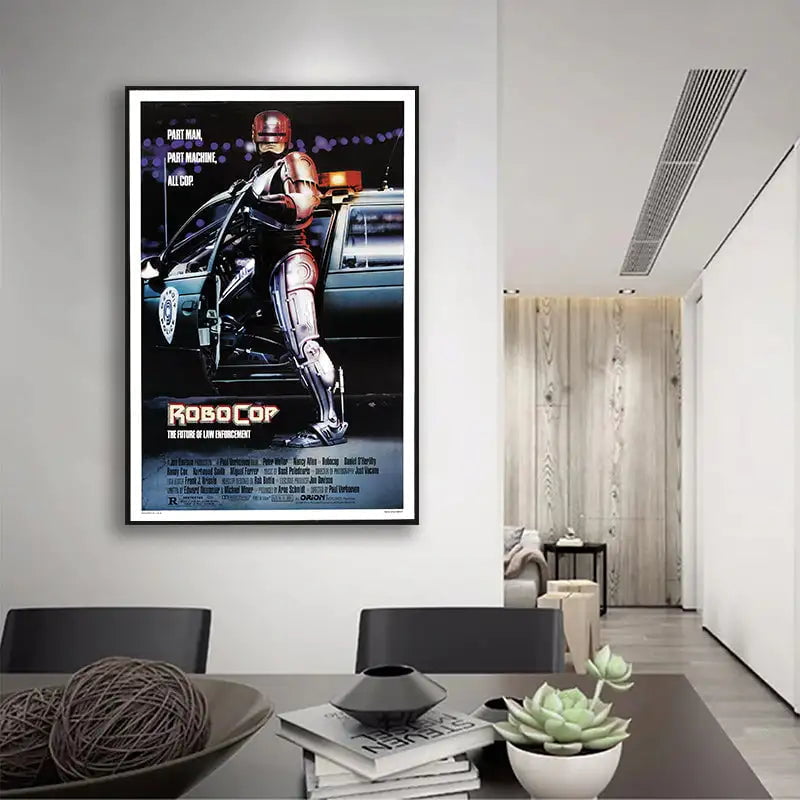
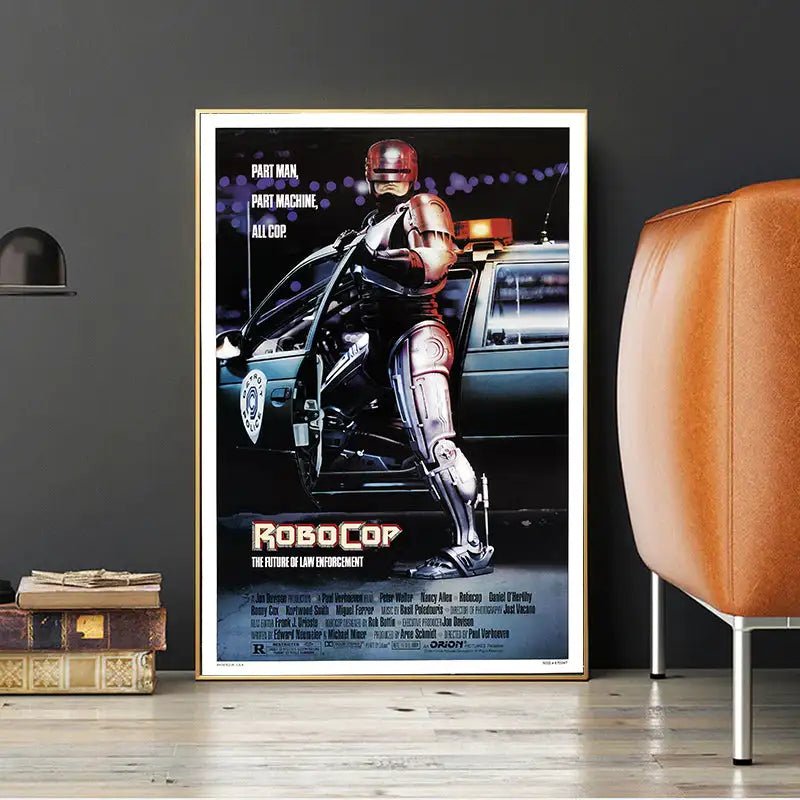
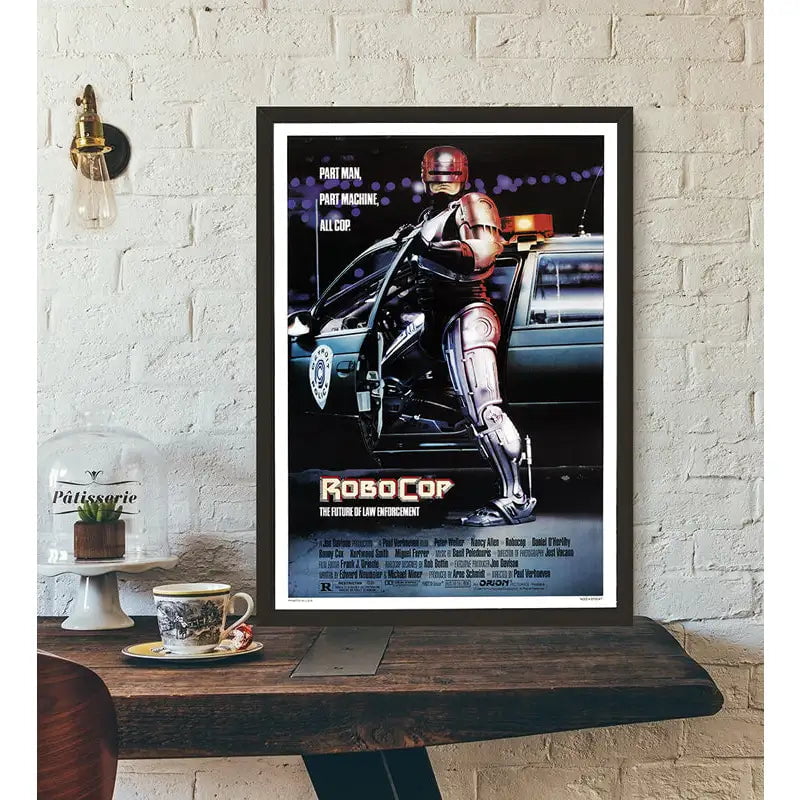
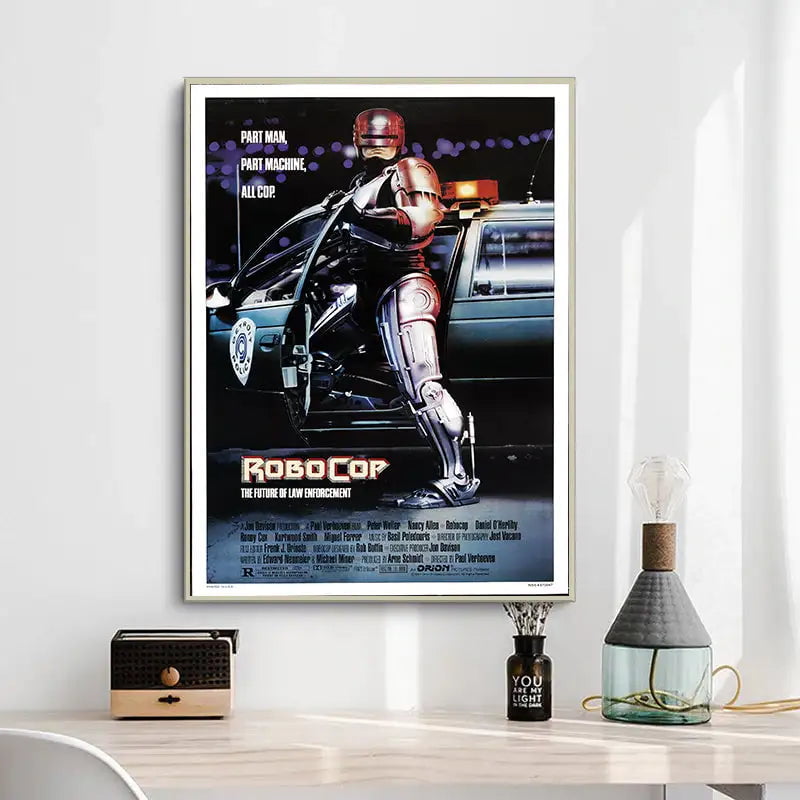
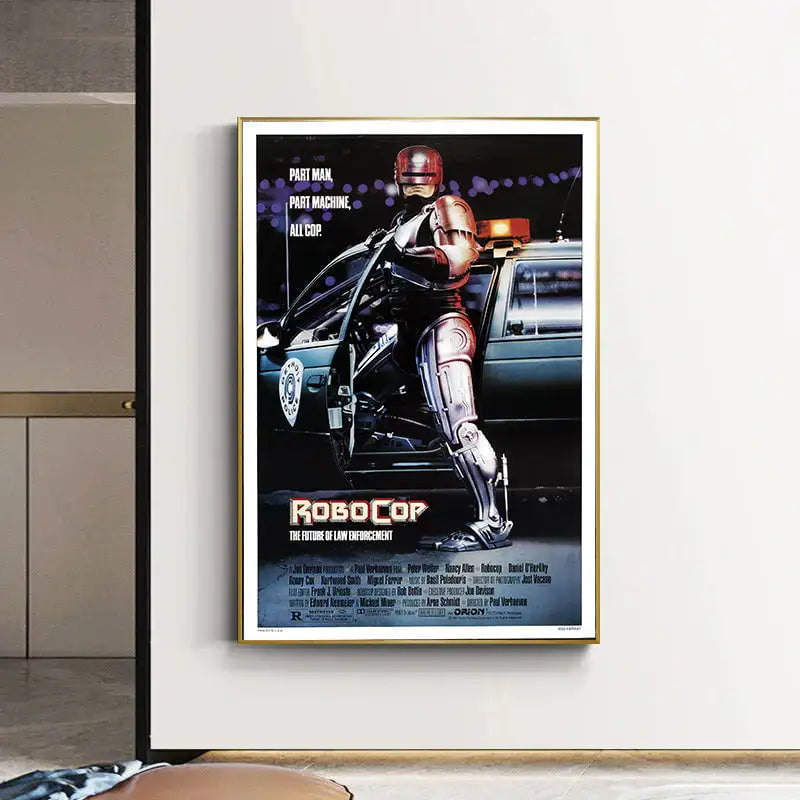
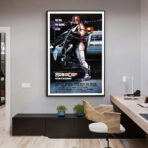
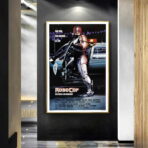
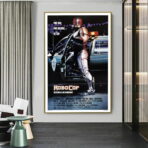
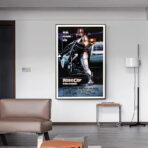
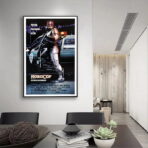
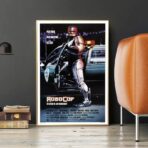
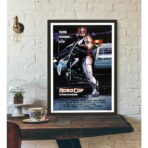
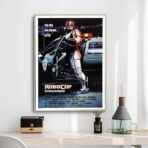
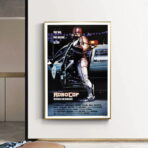



Half man, half machine, but 100% cop, discover the dark and peculiar world of the future with this superb 1987 Robocop Movie Poster!
- Paper Feature:
- 🎨 Canvas: world standard in terms of printing and imitating a “painting canvas” look.
- By default, the poster contains a 4 cm white border for framing (frame not included). If you don’t want it, please choose “without white border”.
- ✅ Size: Multiple choices available. ✅
- High UV resistance.
- Maximum color vibrancy, no glare.
- Recycled paper, ensuring environmental friendliness.
- Poster packaged carefully and delivered in a protective tube for total protection.
- FREE STANDARD DELIVERY.
⚠️Frame not included. ⚠️
Description of this Robocop 1987 Poster
RoboCop is a 1987 American science fiction action film directed by Paul Verhoeven and written by Edward Neumeier and Michael Miner. The film stars Peter Weller, Nancy Allen, Daniel O’Herlihy, Ronny Cox, Kurtwood Smith, and Miguel Ferrer. Set in a crime-ridden near-future Detroit, RoboCop centers on police officer Alex Murphy (Weller), who is murdered by a gang of criminals and later resurrected by the megacorporation Omni Consumer Products as the law-enforcement cyborg RoboCop. Unaware of his former life, RoboCop wages a brutal campaign against crime while trying to come to terms with the remaining fragments of his humanity. The film was conceived by Neumeier while working on the set of Blade Runner (1982), and he developed the idea with Miner. Their script was purchased in early 1985 by producer Jon Davison for Orion Pictures. Finding a director proved difficult; Verhoeven rejected the script twice because he didn’t understand its satirical content, until his wife convinced him. Filming took place between August and October 1986, primarily in Dallas, Texas. Rob Bottin led the special effects team, creating practical effects, violent gore, and RoboCop’s costume. Verhoeven emphasized the violence throughout the film, making it so eccentric that it became comical. Despite this, censorship boards deemed the film too extreme, and several scenes were shortened or altered to achieve an acceptable theatrical rating. Despite anticipated difficulties in marketing the film, particularly due to its title, the film was expected to perform well thanks to pre-release critical screenings and positive word of mouth. RoboCop was a financial success upon its release in July 1987, grossing $53.4 million. Critics praised the film as an intelligent action film with deeper philosophical messages and satire, but were more mixed about the film’s extreme violence. The film was nominated for several awards and won an Academy Award as well as numerous Saturn Awards. Since its release, RoboCop has been re-evaluated by critics and hailed as one of the best films of the 1980s and one of the greatest science fiction and action films ever made. The film was praised for its portrayal of a robot affected by the loss of humanity, in contrast to the stoic and unemotional robotic characters of the time. The film has continued to be analyzed for themes such as the nature of humanity, personal identity, corporate greed, and corruption, and is considered a critique of the Reaganomics policies of its era. The success of RoboCop spawned a franchise that included the sequels RoboCop 2 (1990) and RoboCop 3 (1993), a children’s animated series, multiple live-action television shows, video games, comic books, toys, clothing, and other merchandise. A remake was released in 2014. A direct sequel to the original 1987 film, tentatively titled RoboCop Returns, is in development as of 2020; it ignores the other entries in the series.