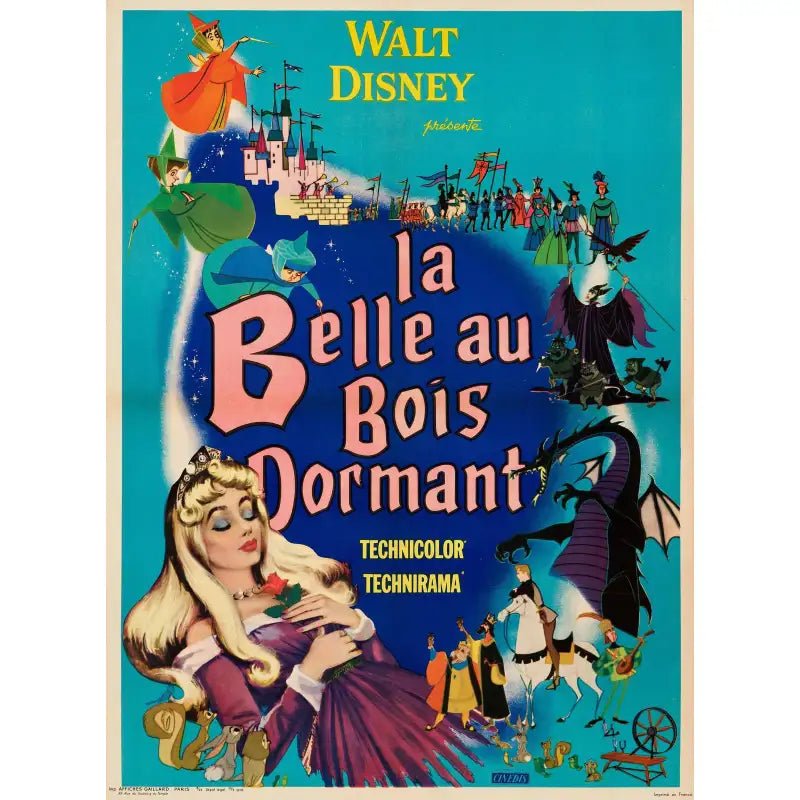
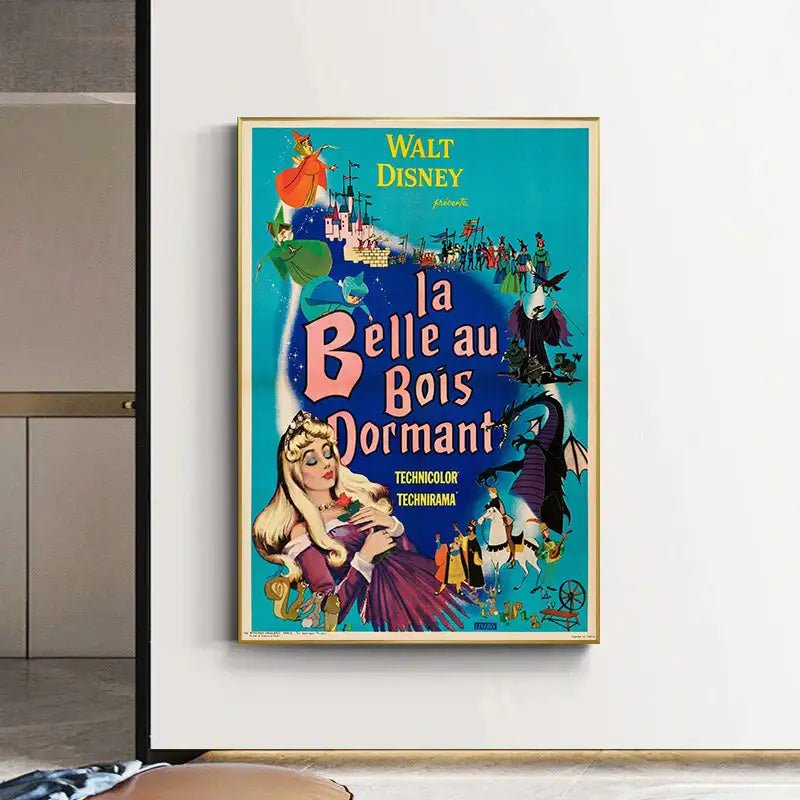
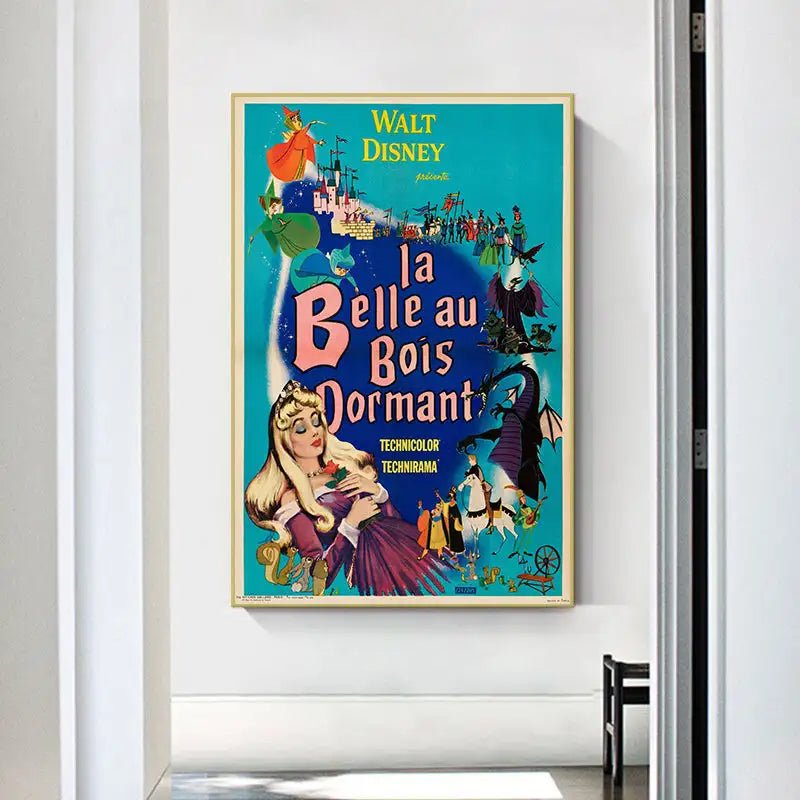
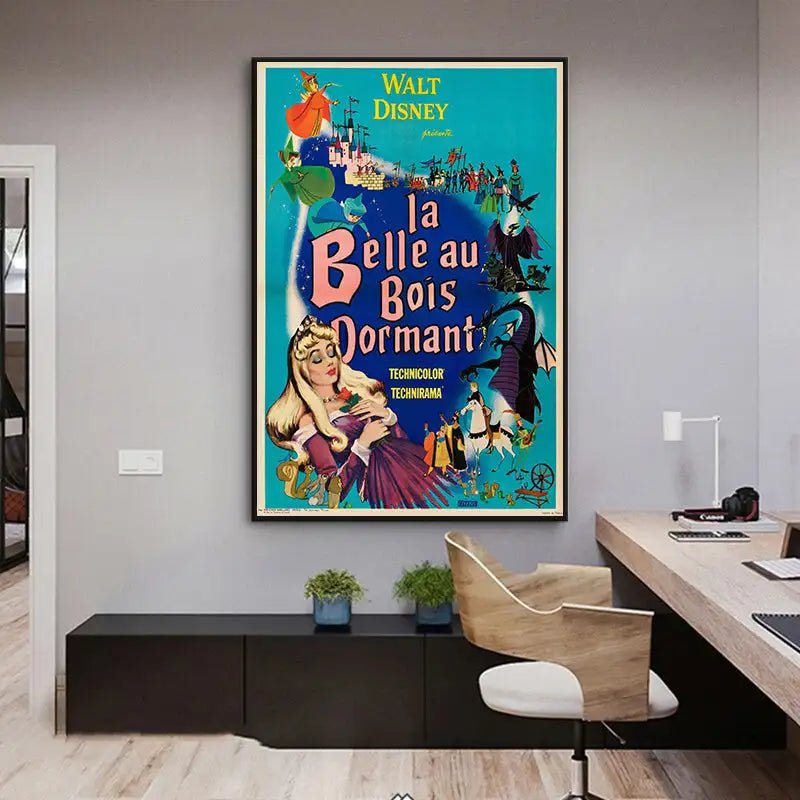
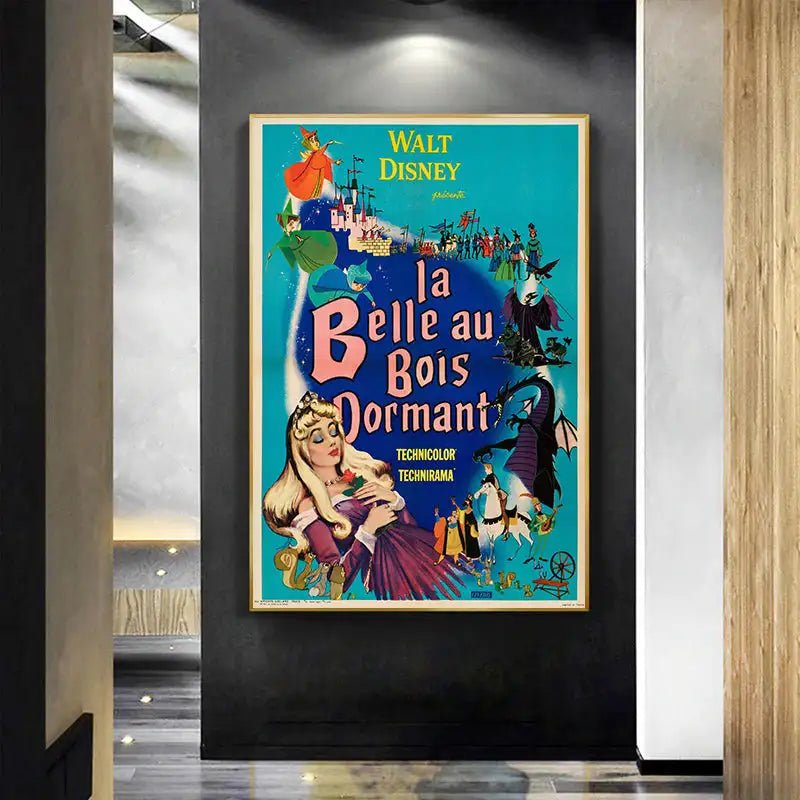
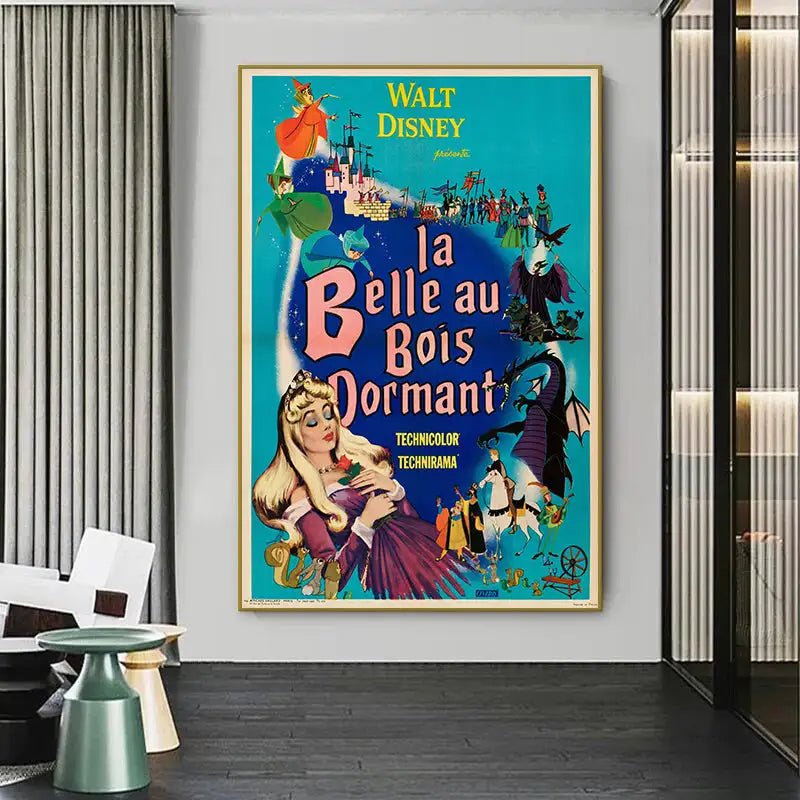
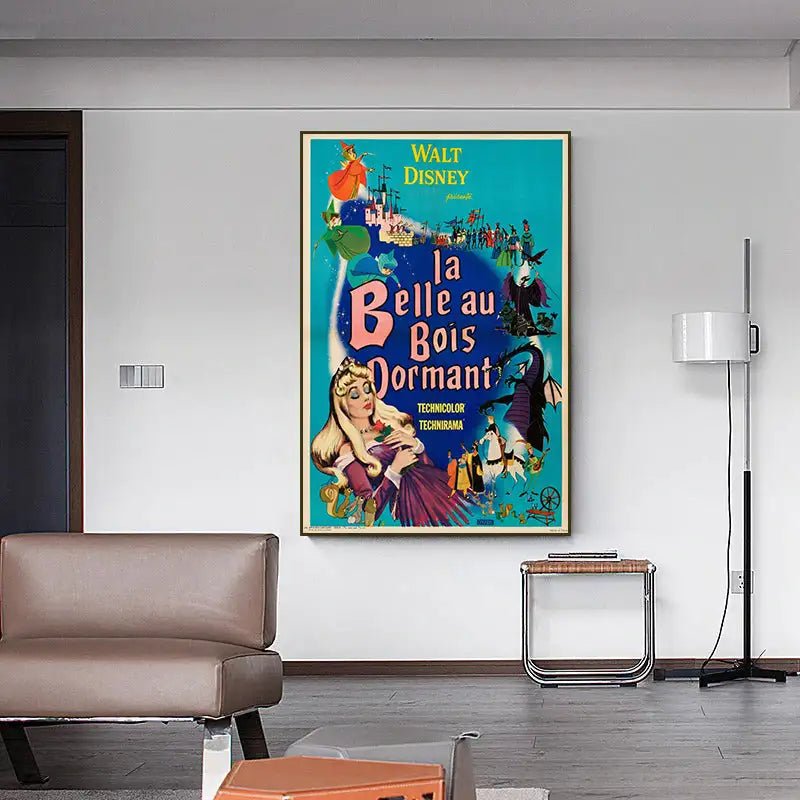
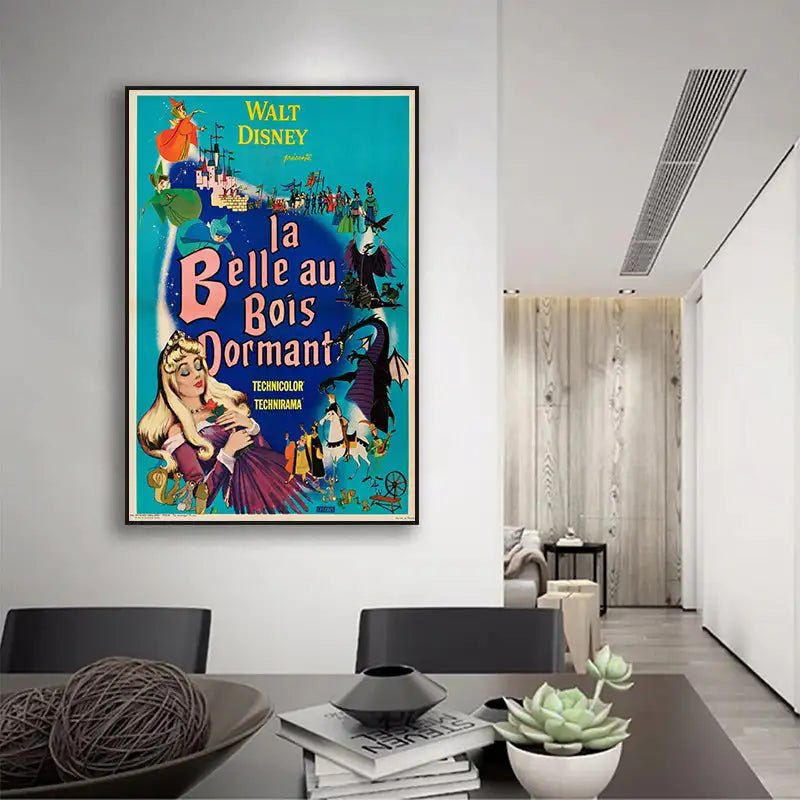
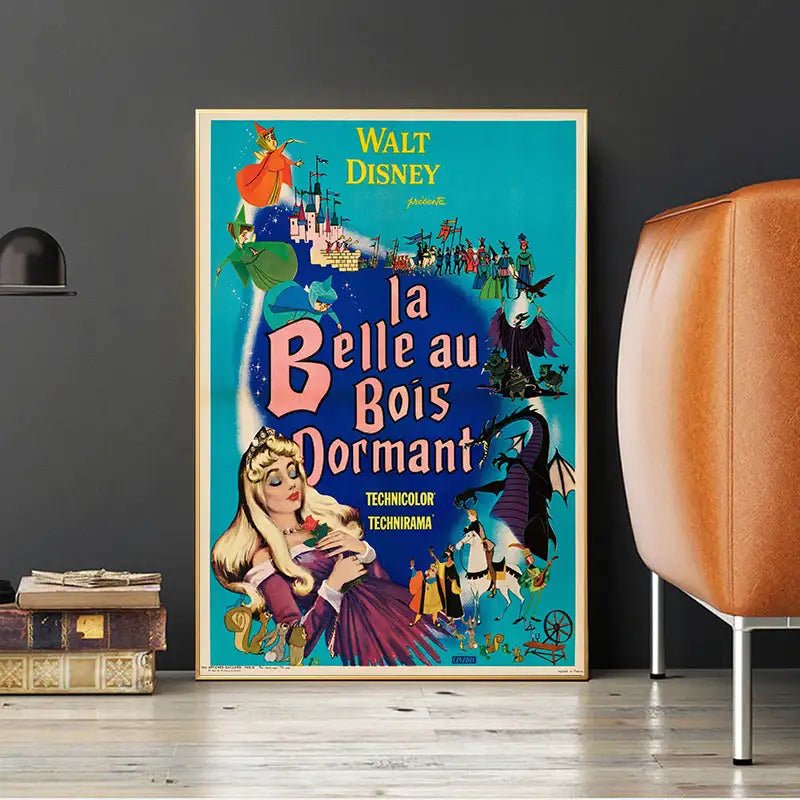
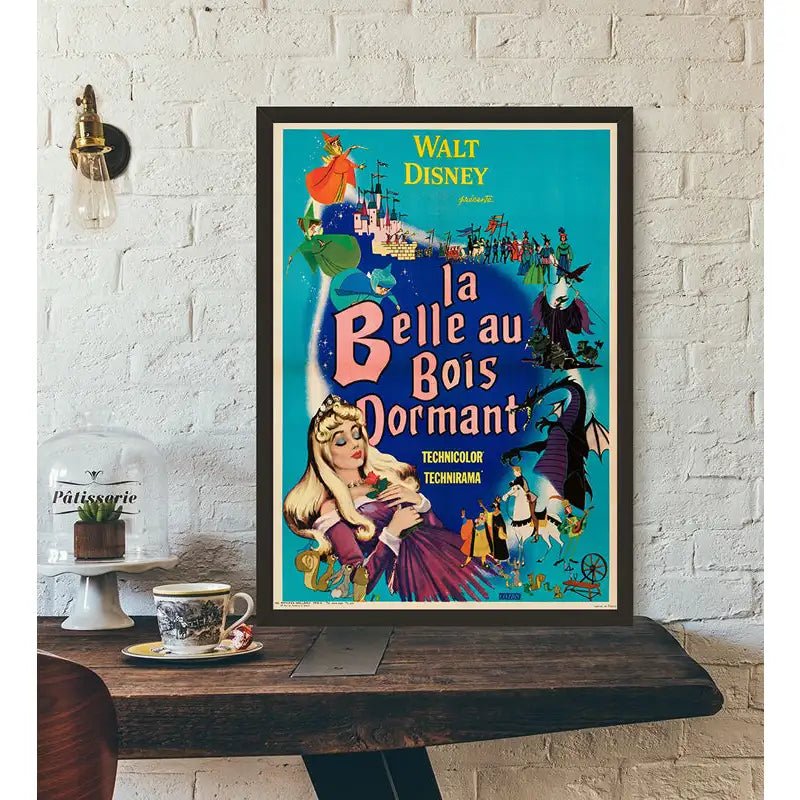
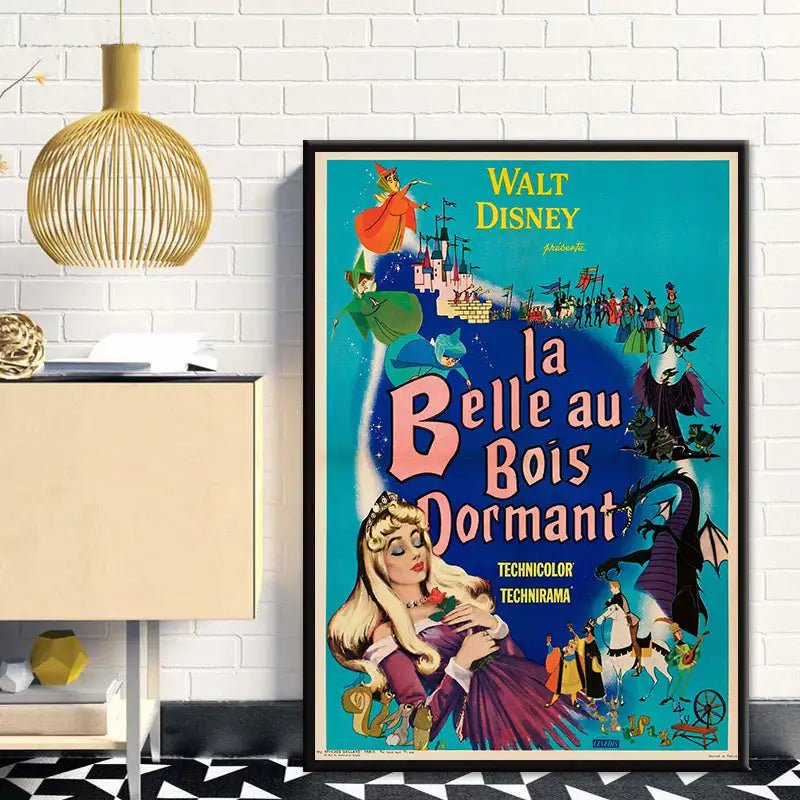
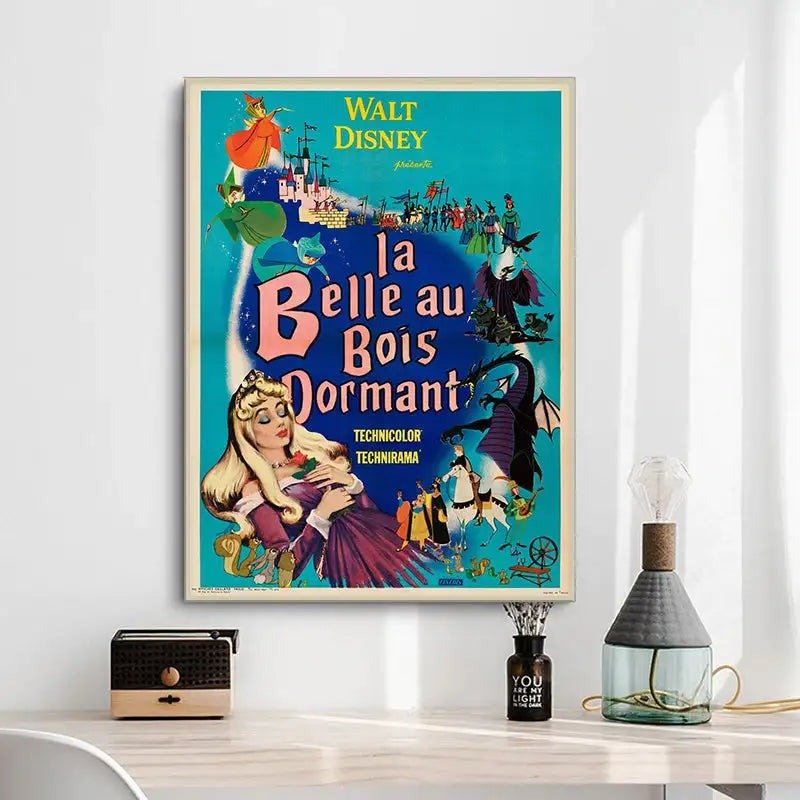
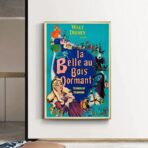
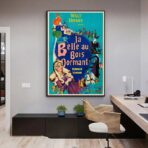
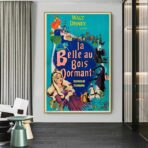
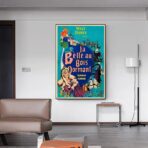

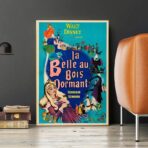
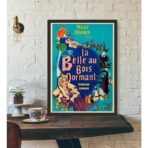
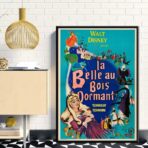
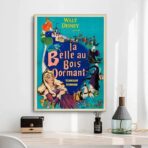
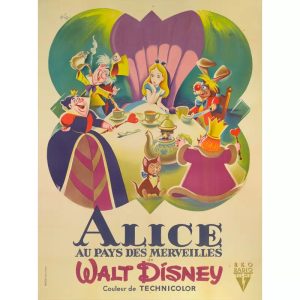
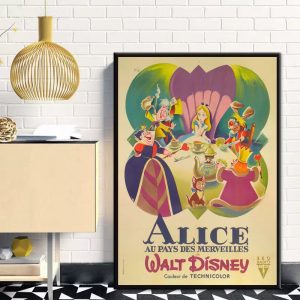

Find Aurora in this superb adaptation of Walt Disney and this splendid Sleeping Beauty Poster which will be ideal for your decoration.
- Paper characteristics:
- 🎨 Canvas: global standard in terms of printing and imitating a “painting canvas” look.
- By default, the poster contains a 4cm white border for framing (frame not included). If you don’t want it, please choose “without white border”.
- ✅ Size: Multiple choices available. ✅
- High UV resistance.
- Color vibrancy maximum, glare-free.
- recycled paper, guaranteeing environmental friendliness.
- Poster packaged carefully and delivered in a protective tube for Total protection.
- FREE STANDARD DELIVERY.
⚠️ Frame not included. ⚠️
Description of this Sleeping Beauty Poster
Sleeping Beauty is a 1959 American animated musical fantasy film produced by Walt Disney Productions and distributed by Buena Vista Distribution. Based on the 1697 fairy tale of the same name by Charles Perrault, it is Disney’s 16th animated feature film. Clyde Geronimi was the main director, while Wolfgang Reitherman, Eric Larson, and Les Clark directed the film’s various sequences. Starring the voices of Mary Costa, Bill Shirley, Eleanor Audley, Verna Felton, Barbara Luddy, Barbara Jo Allen, Taylor Holmes, and Bill Thompson, the film follows young Princess Aurora, who was cursed by the wicked fairy Maleficent to die from a sting on the spinning wheel’s spindle, but was saved by the three good fairies, who altered the curse so that the princess fell into a deep sleep only to be awakened by true love’s kiss. Walt Disney first considered making Sleeping Beauty in the late 1930s, but the film didn’t go into production until the early 1950s. It took nearly ten years and $6 million to produce, making it the most expensive Disney animated film of the time. The film’s tapestry-like design was conceived by Eyvind Earle, who was inspired by pre-Renaissance European art, while the musical score and songs, composed by George Bruns, were based on Pyotr Tchaikovsky’s 1889 ballet The Sleeping Beauty. Sleeping Beauty was the first animated film to be photographed using the Super Technirama 70 process,[3] as well as the second animated feature film to be filmed in anamorphic widescreen, after Lady and the Tramp (1955).[4] It was also the last Disney animated feature to be hand-inked before the studio switched to the Xerox process, starting with One Hundred and One Dalmatians (1961).[5]
Sleeping Beauty was released theatrically on January 29, 1959, to a mixed reception from critics, who praised its art direction and musical score but criticized the plot and characters. Upon its initial release, the film grossed $5.3 million on a $6 million budget, making it a box office flop and causing Disney to lose interest in animated films. 6] However, subsequent reissues of the film were highly successful. 7] It has since become one of the most artistically acclaimed Disney films. It was also nominated for the Academy Award for Best Score – Musical at the 32nd Academy Awards. A live-action reimagining of the film was released in 2014, followed by a sequel in 2019. That same year, the film was selected for preservation in the United States National Film Registry by the Library of Congress because it is “culturally, historically, or aesthetically significant.”