
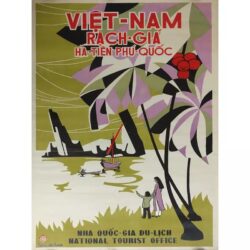
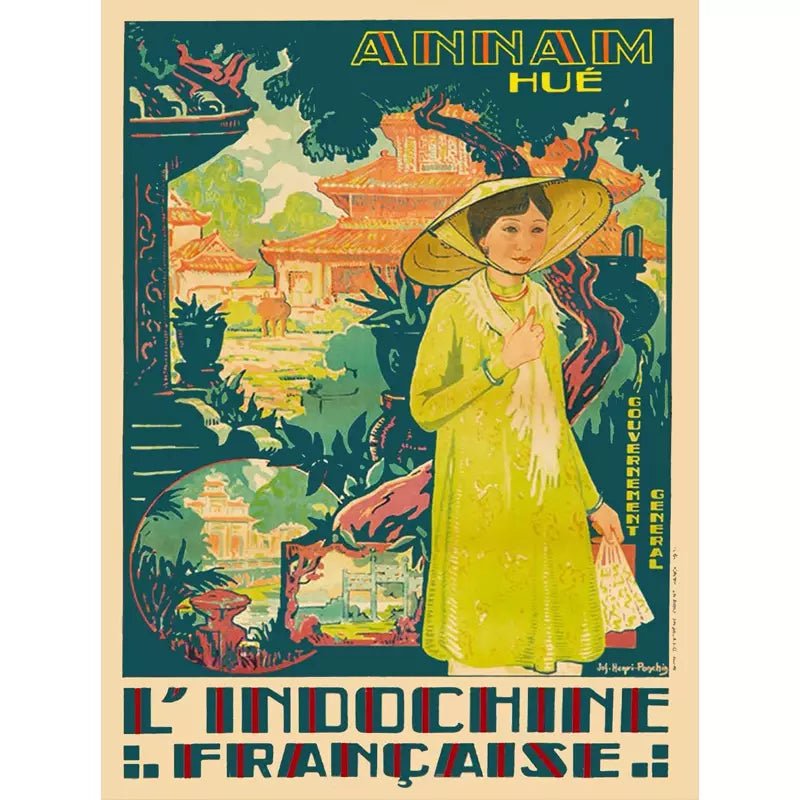
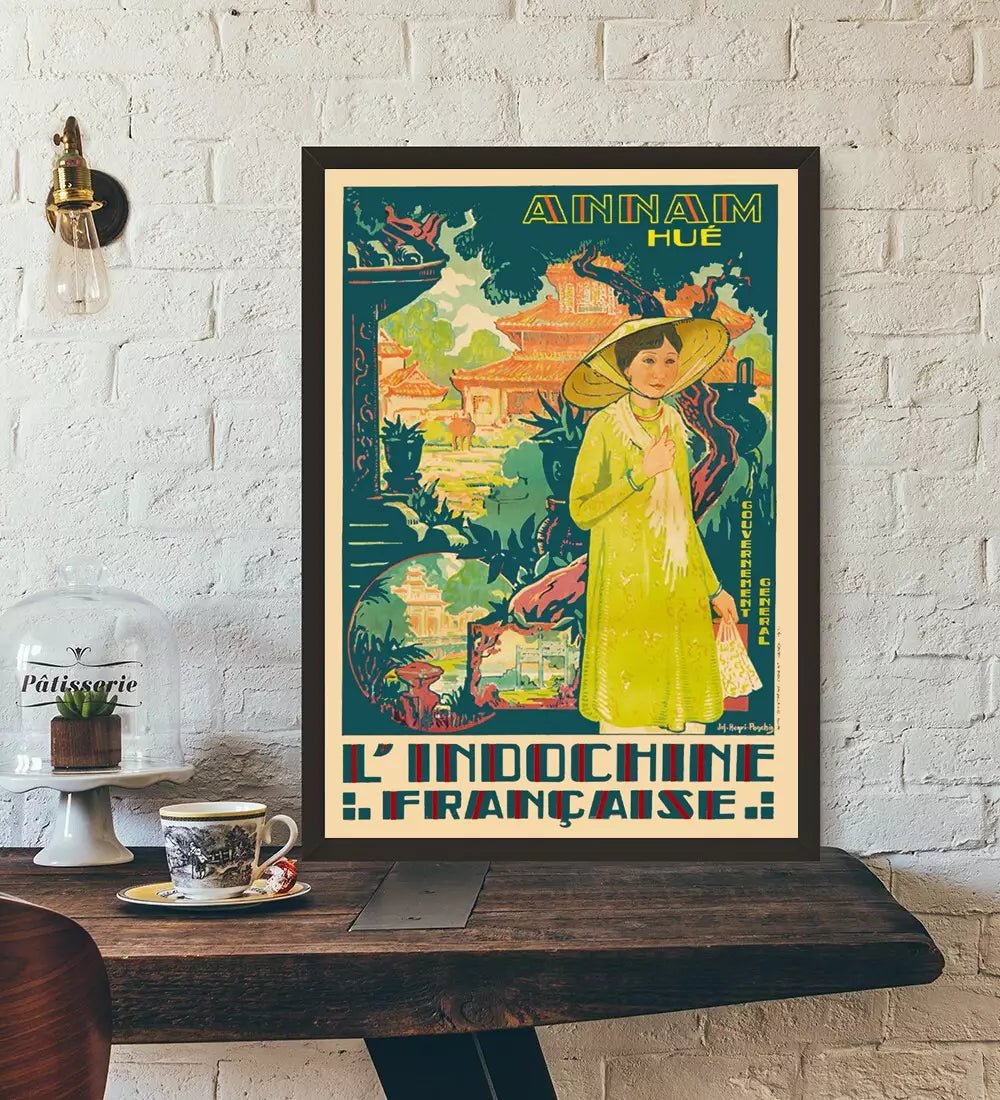
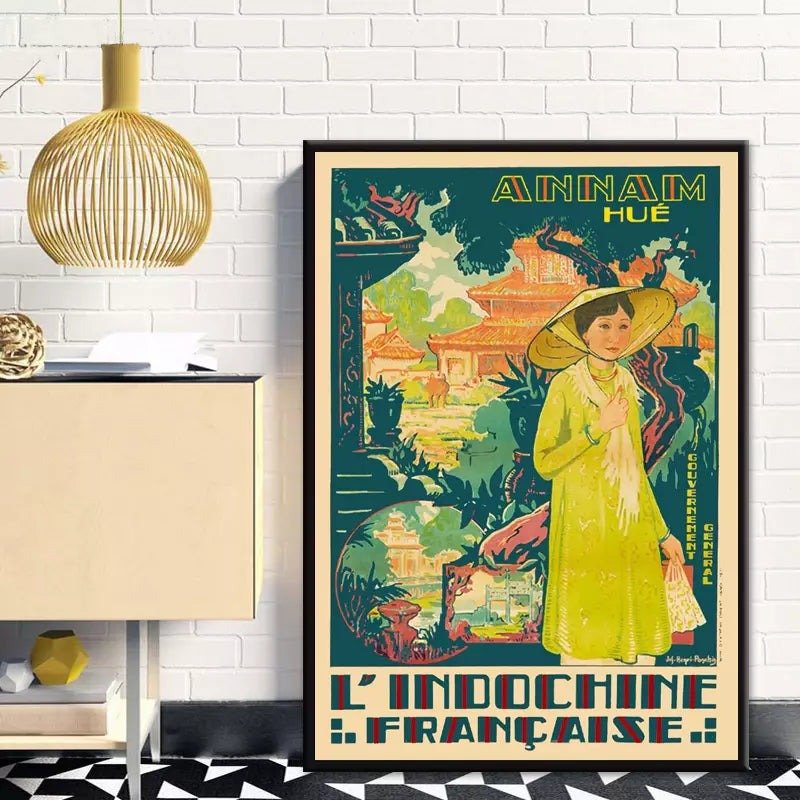
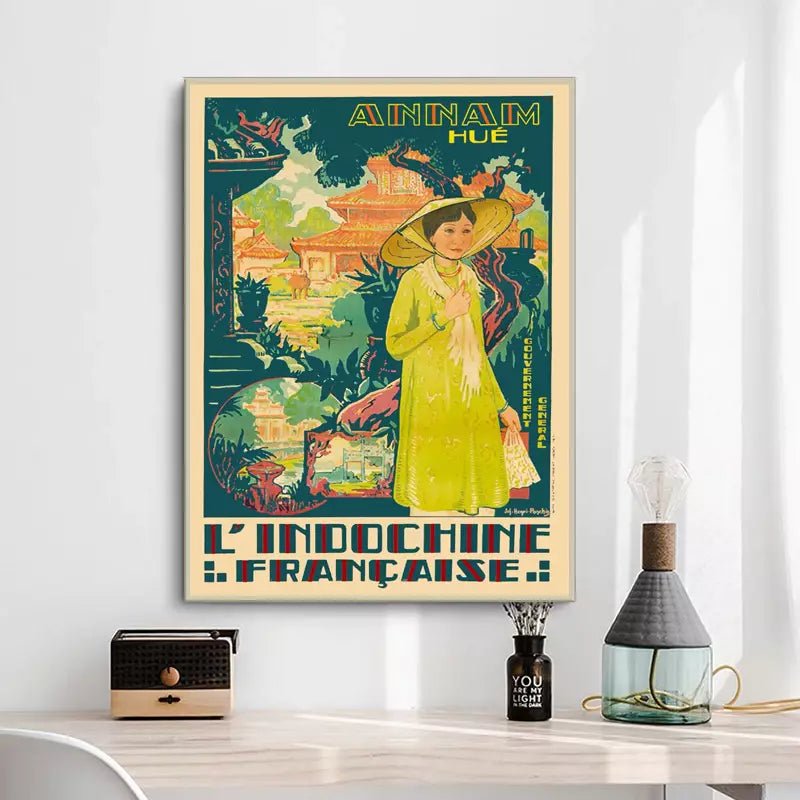
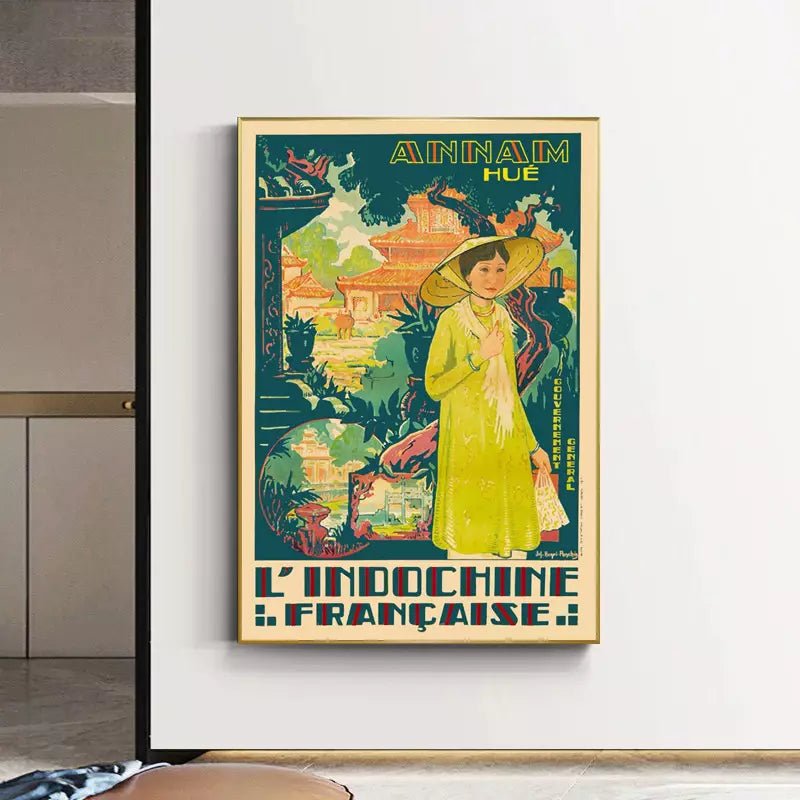
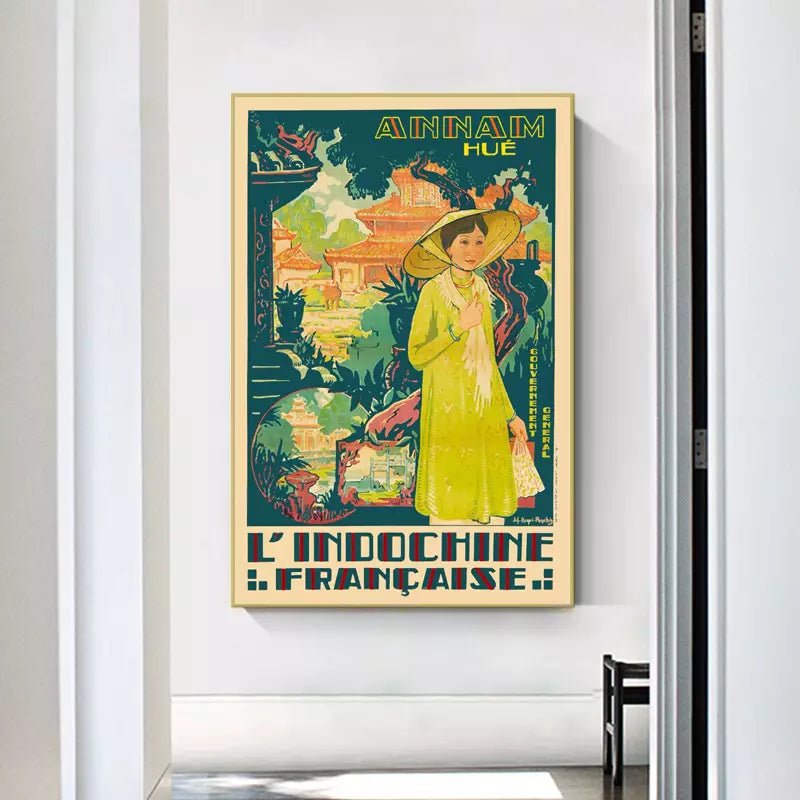
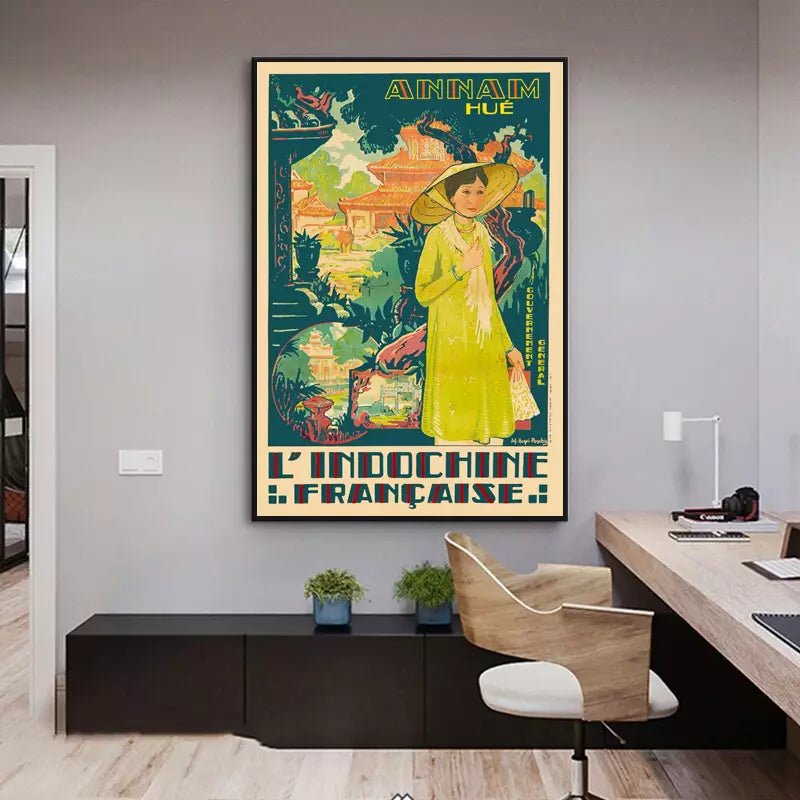
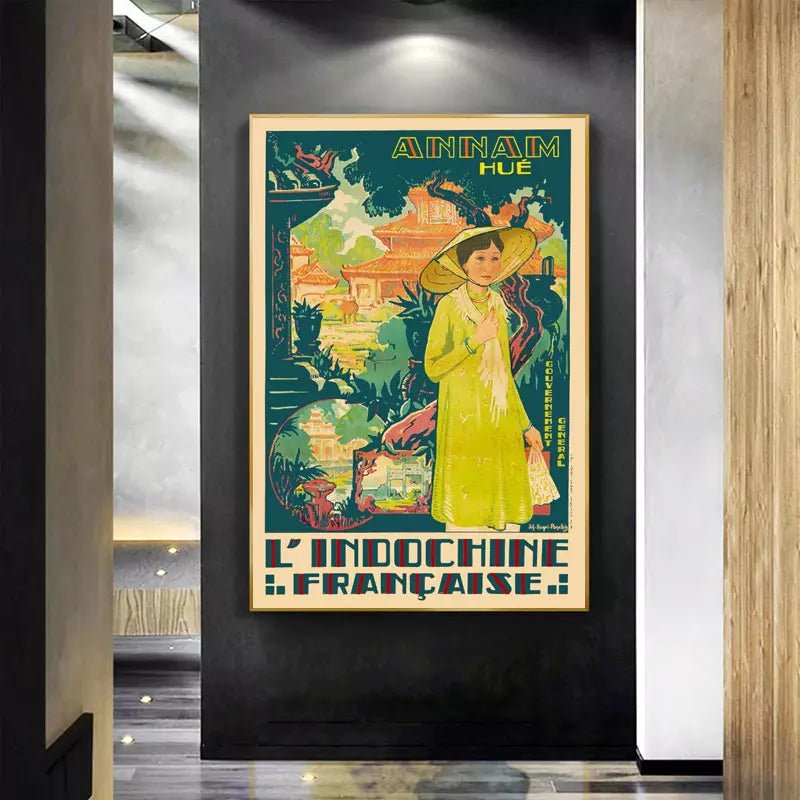
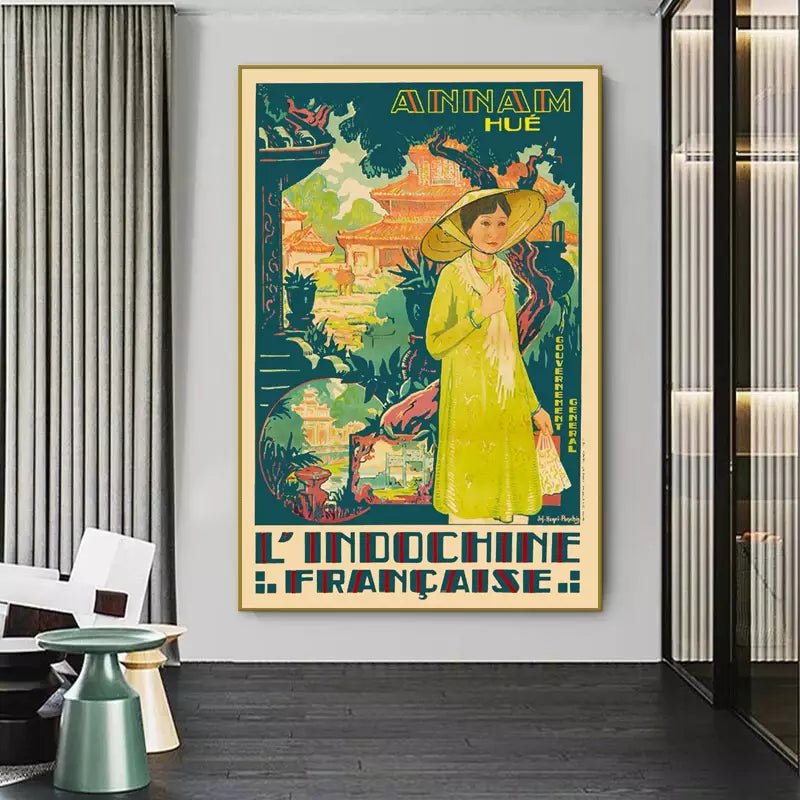
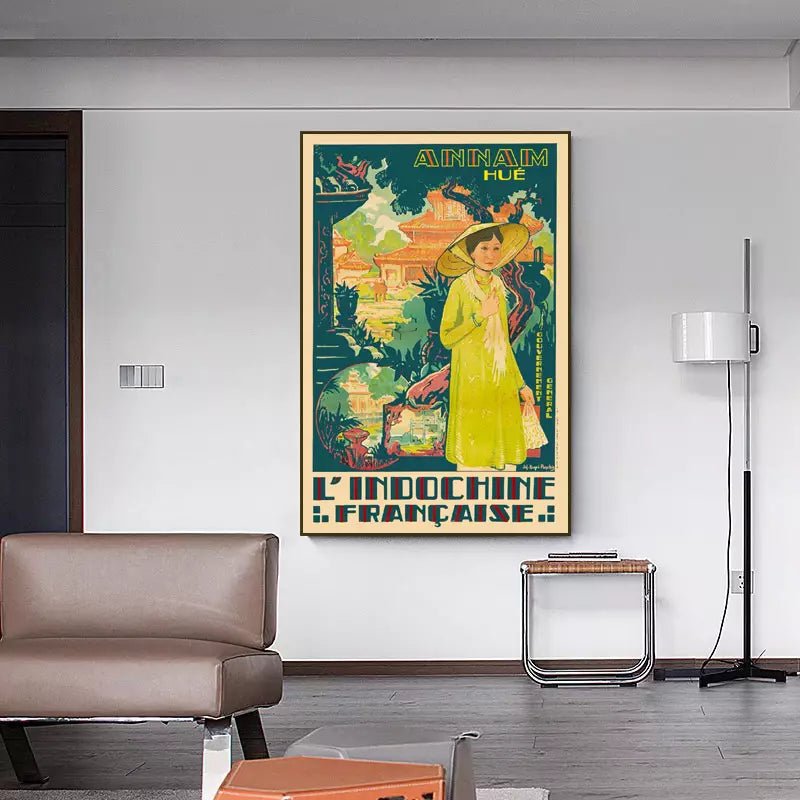
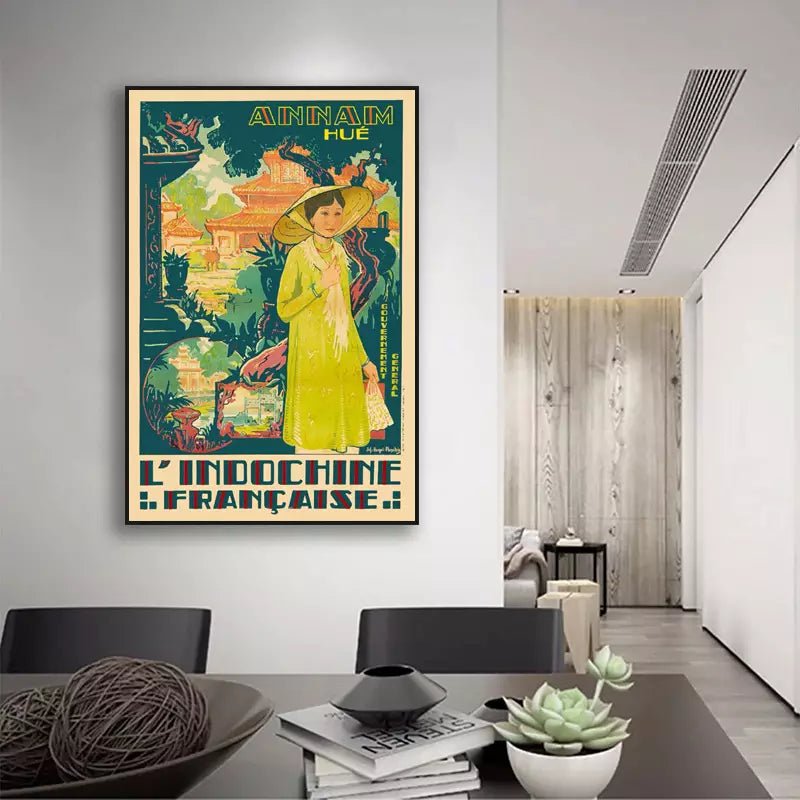
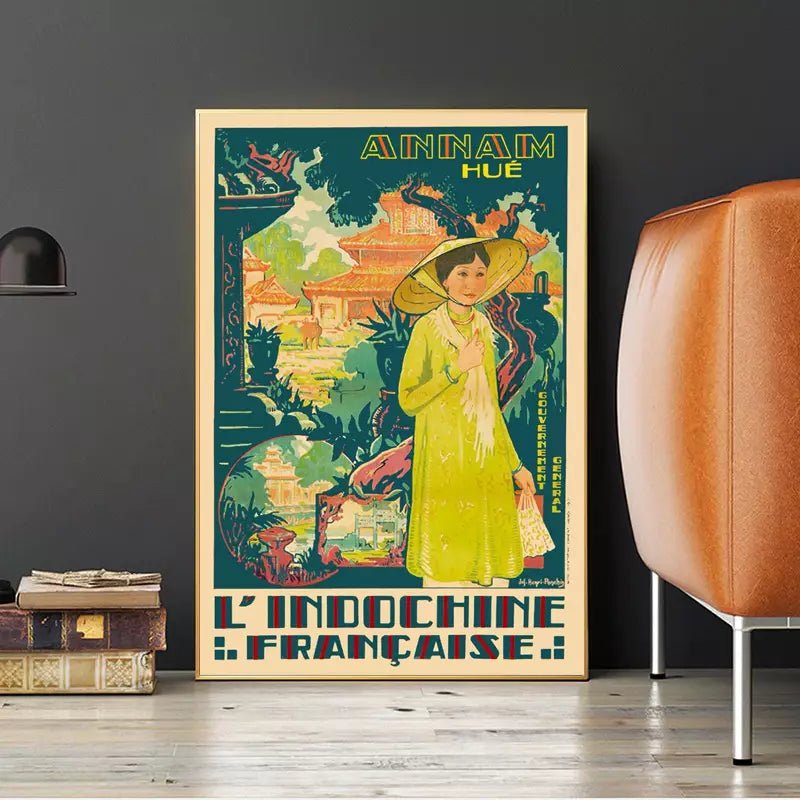


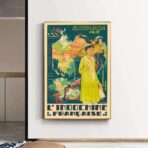


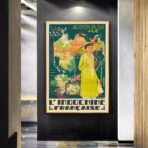



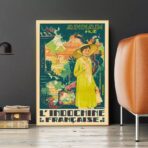




Discover this Vintage Vietnam Poster that transports you to a bygone era, evoking the exotic charm of French Indochina. This poster captures the very essence of this fascinating region, with its unique blend of cultures, enchanting landscapes, and captivating history. The title “French Indochina” evokes a time when Vietnam, Laos, and Cambodia were under French rule, creating a rich cultural fusion and a distinct architectural heritage. Whether you are fascinated by the history, the delicious cuisine, the natural beauty of the landscapes, or the warm hospitality of the locals, this Vintage Vietnam Poster is an invitation to explore and appreciate all the richness this region has to offer. Hang it in your home for a touch of exotic nostalgia and to remind you of the wonders of Vietnam, from the bustling streets of Hanoi to the pristine beaches of Ha Long Bay.
- Paper Feature:
- 🎨 Canvas: Global standard in printing and imitating a “painting canvas” look.
- By default, the poster contains a 4cm white border for framing (frame not included). If you don’t want it, please choose “without white border”.
- ✅ Size: several choices available. ✅
- High UV resistance.
- Maximum color brilliance without reflections.
- Recycled paper guaranteed environmental friendliness.
- Poster wrapped carefully and delivered in a protective tube for total protection.
- FREE STANDARD DELIVERY.
⚠️ Frame not included. ⚠️
Description of this Vintage Vietnam Poster
French Indochina was a colony of the French Empire in Southeast Asia, which existed from the mid-19th century until the first half of the 20th century. This region mainly included the territories corresponding to modern-day Vietnam, Laos, and Cambodia. Here is a detailed description of French Indochina:
- 1. Colonial History: The expansion of the French Empire into Indochina began in the mid-19th century. France established its dominance over the region through treaties, trade agreements, and military intervention. Indochina became a formal French colony in 1887.
- 2. Administration: French Indochina was administered as a federation of three separate territories: Tonkin (north), Annam (center), and Cochinchina (south). Laos and Cambodia were also included, although their statuses were slightly different.
- 3. Cultures and Influences: French Indochina was the scene of a complex cultural encounter between Asian traditions and European culture. French influences were evident in architecture, cuisine, education, and administration, while preserving local traditions and customs.
- 4. Resistance and Independence: Over the decades, nationalist movements emerged, demanding independence for French Indochina. The colony was the scene of uprisings and conflicts, including the Indochina War (1946-1954), which ended with the region being divided into three independent countries: Vietnam, Laos, and Cambodia.
- 5. Legacy: French Indochina left a complex legacy in the countries it affected. French influences are still visible in colonial architecture, cuisine, language (French is still taught in some countries), and educational institutions. Colonial history has also left its mark, particularly due to the violent conflicts that marked the quest for independence.
- 6. Tourism: The former regions of French Indochina are now popular tourist destinations, attracting travelers with their natural beauty, cultural heritage, and fascinating history. Cities such as Hanoi, Saigon (Ho Chi Minh City), Luang Prabang, and Phnom Penh are examples of popular destinations.
French Indochina is a complex historical period marked by significant cultural interactions, conflicts, and transformations. It remains an important part of Southeast Asian and French history, bearing witness to the challenges of colonization and the struggle for independence.