
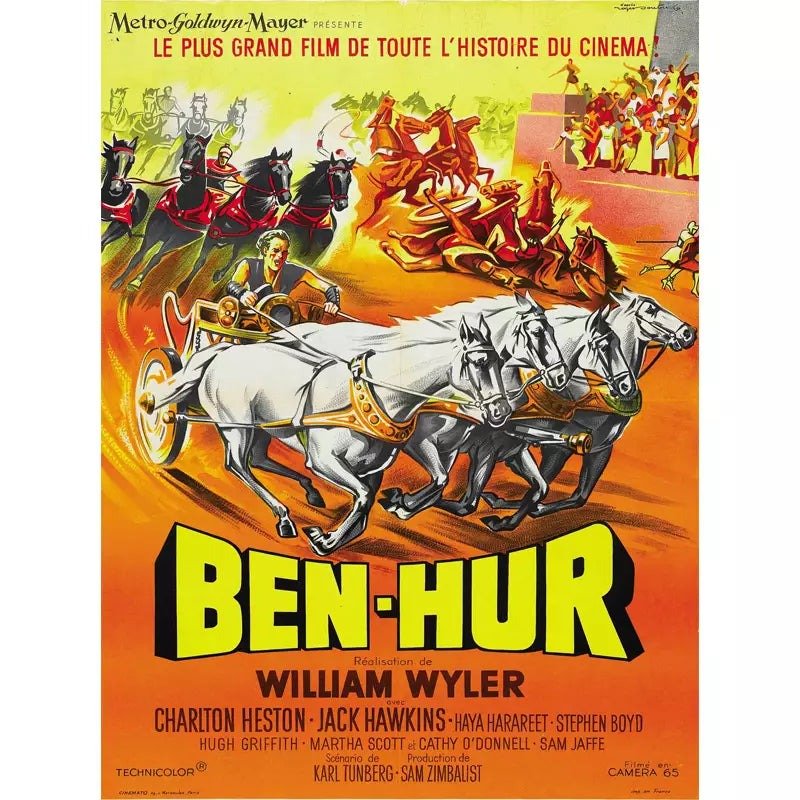
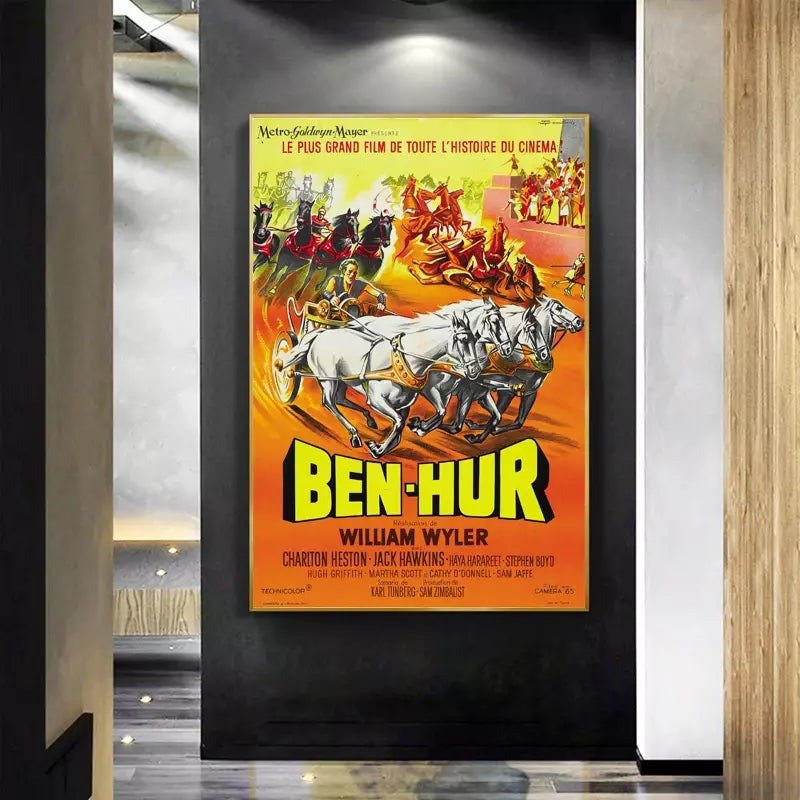
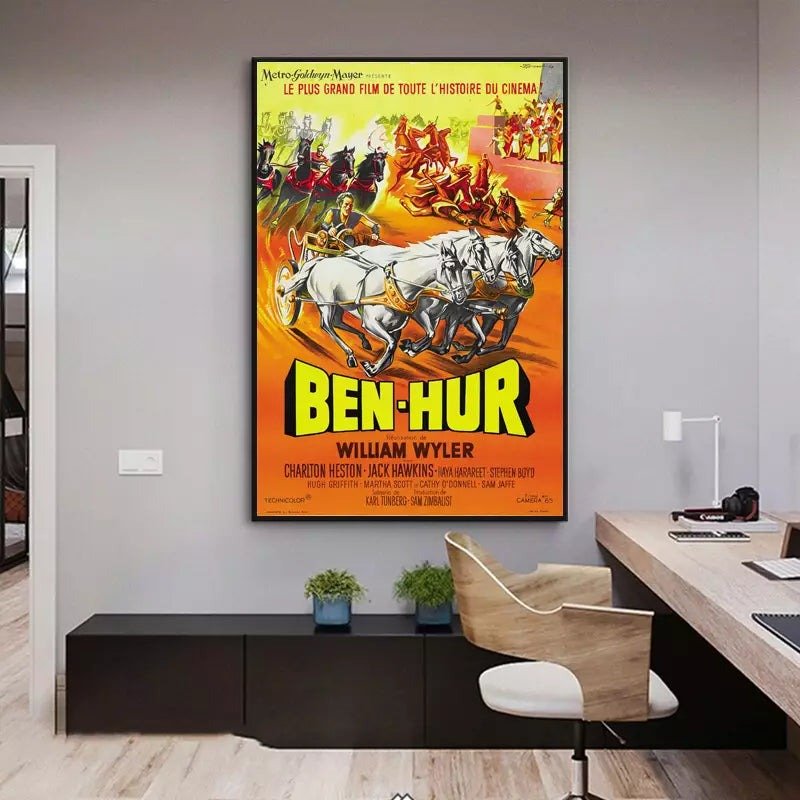
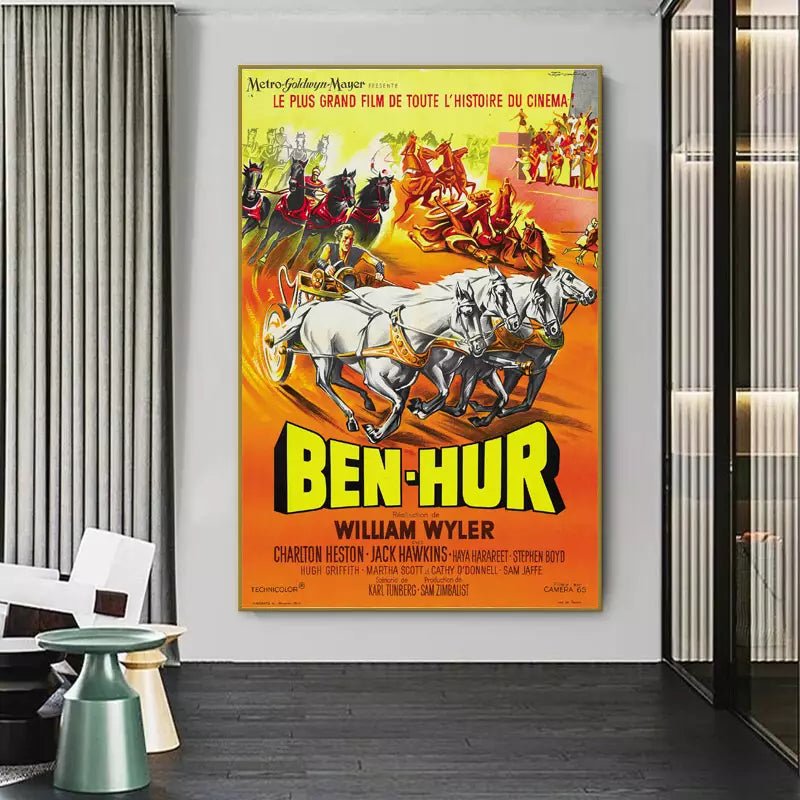

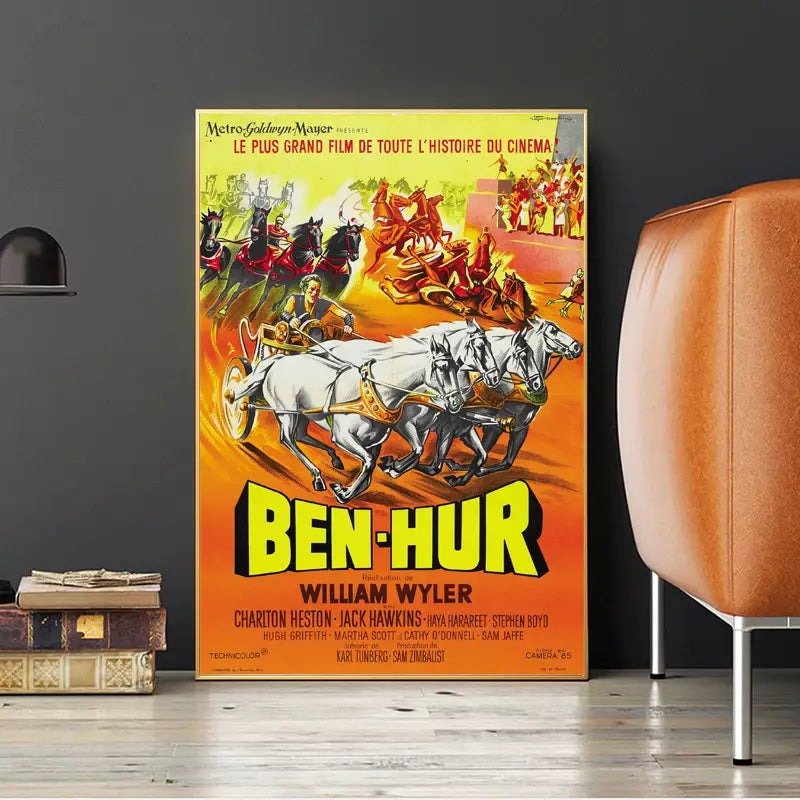

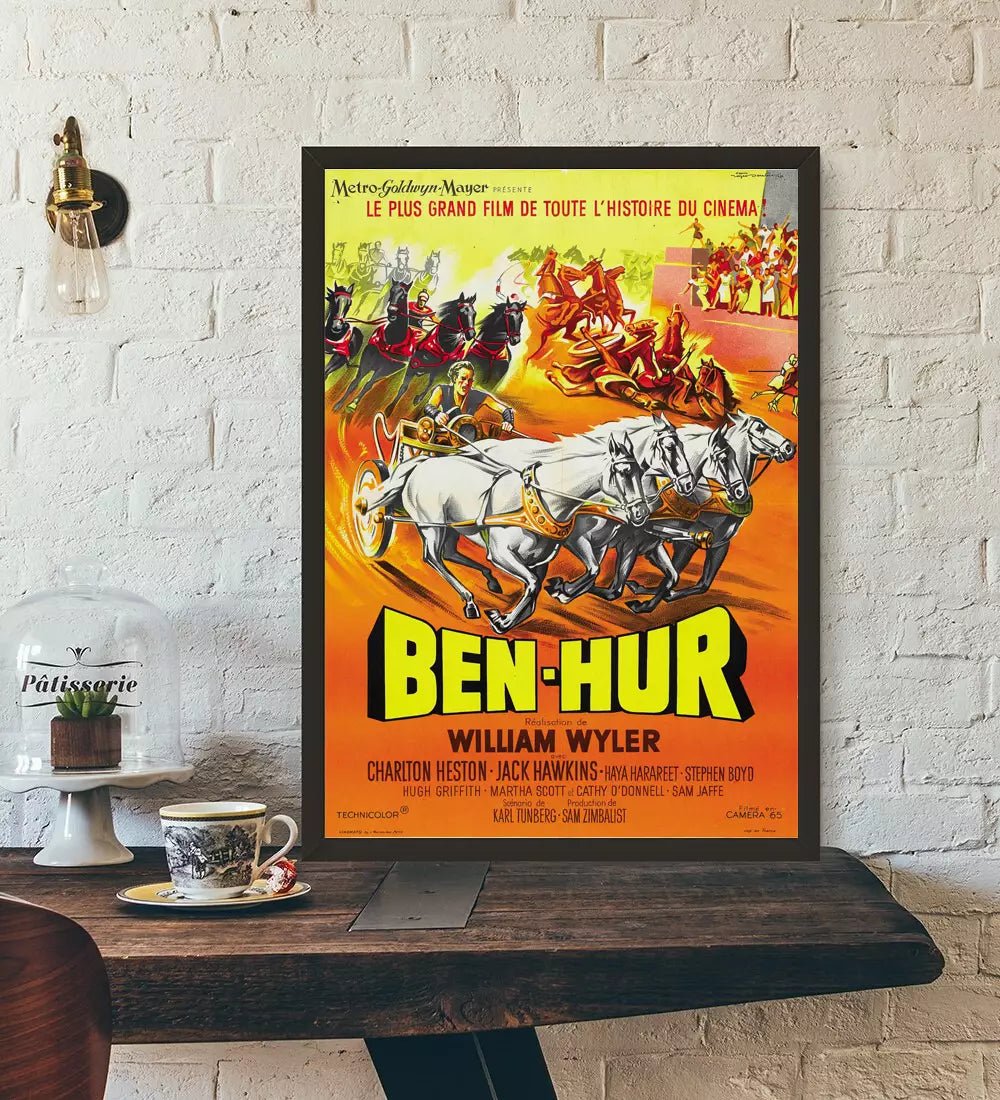

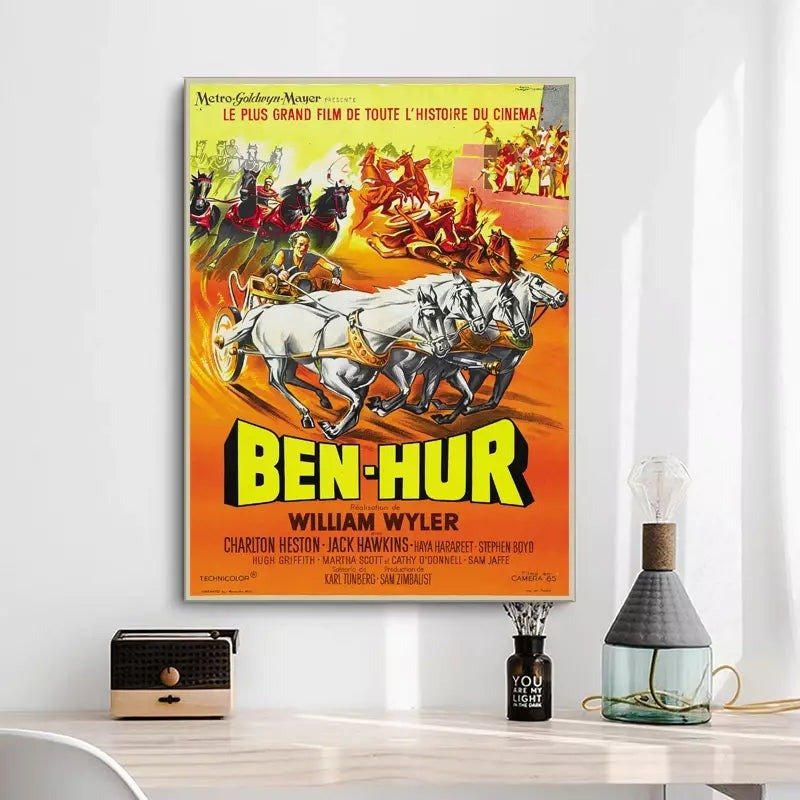
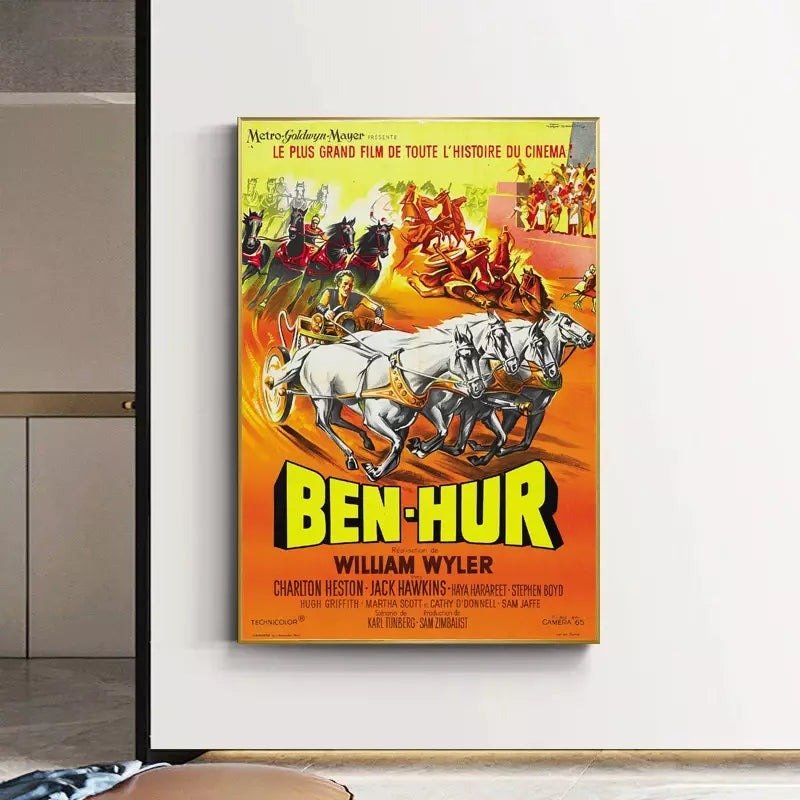




















With this Ben-Hur Poster, immerse yourself in the unforgettable world of this superb cinematic epic captivates with its overflowing passion, brilliant bravery, and unwavering determination. Through masterful staging, this masterpiece transports viewers on a grandiose adventure that blends betrayal, redemption, and triumph. Let yourself be swept away by the intensity of the emotions, from spectacular battles to deep human relationships, for an extraordinary cinematic experience.
- Paper Feature:
- 🎨 Canvas: global standard in terms of print and imitating a “painting canvas” look.
- By default, the poster contains a 4cm white border for framing (frame not included). If you don’t want it, please choose “without white border”.
- ✅ Size: Multiple choices available. ✅
- High UV resistance.
- Maximum color brilliance without reflections.
- Recycled paper guaranteed environmental friendliness.
- Poster wrapped carefully and delivered in a protective tube for total protection.
- FREE STANDARD DELIVERY.
⚠️ Frame not included. ⚠️
Description of this Ben-Hur Poster
Ben-Hur is a 1959 American epic religious film directed by William Wyler, produced by Sam Zimbalist, and starring Charlton Heston. A remake of the 1925 silent film with a similar title, it is adapted from the novel Ben-Hur: A Tale of the Christ (1880) by Lew Wallace. The screenplay is credited to Karl Tunberg, but includes contributions from Maxwell Anderson, S. N. Behrman, Gore Vidal, and Christopher Fry.
Ben-Hur had the largest budget ($15.175 million), as well as the largest sets constructed, of any film produced at the time. Costume designer Elizabeth Haffenden oversaw a team of 100 costume designers to create the costumes, and a workshop employing 200 artists and workers provided the hundreds of friezes and statues needed for the film. Filming began on May 18, 1958, and ended on January 7, 1959, shooting 12 to 14 hours a day, six days a week. Preproduction began in Italy at Cinecittà around October 1957, and postproduction lasted six months. Under the direction of cinematographer Robert L. Surtees, Metro-Goldwyn-Mayer executives made the decision to produce the film in widescreen. More than 200 camels and 2,500 horses were used in the filming, along with some 10,000 extras. The naval battle was filmed using action figures in a huge tank behind Metro-Goldwyn-Mayer Studios in Culver City, California. The nine-minute chariot race has become one of cinema’s most famous action sequences. The score, composed and conducted by Miklós Rózsa, was at the time the longest ever composed for a film and had a profound influence on cinema for over 15 years.
After a $14.7 million marketing effort, Ben-Hur premiered at the Loew’s State Theatre in New York City on November 18, 1959. It was the highest-grossing and highest-grossing film of 1959, becoming the second-highest-grossing film in history after Gone with the Wind. It won a record eleven Academy Awards, including Best Picture, Best Director (Wyler), Best Actor in a Leading Role (Heston), Best Supporting Actor (Griffith), and Best Color Cinematography (Surtees); it also won Golden Globe Awards for Best Motion Picture – Drama, Best Director, and Best Supporting Actor for Stephen Boyd. In 1998, the American Film Institute named it the 72nd greatest American film and the second best American epic film in the AFI’s Top 10. In 2004, the National Film Preservation Board selected Ben-Hur for preservation in the Library of Congress’s National Film Registry because of its cultural, historical, or aesthetic significance.
In the Prologue, a baby is born in Bethlehem among the shepherds and is visited by Magi in a cave.
In the year 26[b] CE, in Jerusalem, Judah Ben-Hur, a wealthy Jewish prince and merchant, lives with his mother, Miriam, and younger sister, Tirzah. The family’s loyal steward, Simonides, arrives with his beautiful daughter, Esther. Judah grants Simonides’ request that Esther marry a free man and offers her his freedom as a wedding gift. Separated since childhood, Judah and Esther quickly fall in love.
Judah’s Roman friend, Messala, returns to Jerusalem as commander of the fortress Antonia. Their joyful reunion is short-lived, however, as Messala fully embraces the glory and imperial power of Rome, while Judah remains committed to his faith and the freedom of the Jewish people. When Messala asks Judah to hand over potential rebels to the Roman authorities, Judah refuses. He tells his family that they will never see Messala again.
The new governor of Judea and his retinue enter the city. As Judah and Tirzah watch from the upper terrace, roof tiles fall, frightening the governor’s horse and causing it to fall. Messala realizes it was an accident, but he condemns Judah to the galleys and imprisons Miriam and Tirzah. Simonides tries to intervene, but Messala stops him as well. Judah vows revenge on Messala. As he and other slaves are led to the galleys, they stop in Nazareth to water the Romans’ horses. Judah asks for water, but the Roman commander refuses. Judah collapses, but is revived by a local man (Jesus) who gives him a drink.
After three years in the galleys, Judah is assigned to the flagship of the Roman consul Quintus Arrius. Arrius notices Judah’s determination and self-discipline and offers to train him as a gladiator or charioteer, which Judah refuses. When the Roman fleet is attacked by Macedonian pirates, Arrius orders Judah chained. The ship’s hull is rammed, flooding the galley. Judah frees the other rowers and then rescues Arrius, who has been thrown overboard. Clinging to the wreckage and believing his fleet lost, Arrius attempts suicide, but Judah stops him. After being rescued, Arrius learns that the battle has been won. He then asks Emperor Tiberius to free Judah and adopts him as his son. While in Rome, Judah becomes a champion charioteer.
Back in Judea, he meets Balthasar and the Arab sheik Ilderim. Seeing Judah’s prowess as a charioteer, the sheik asks him to drive his four horses in a chariot race before the new governor of Judea, Pontius Pilate. Judah refuses, despite knowing that Messala is participating in the race. Balthasar tells Judah about a prophet he seeks who preaches love and forgiveness, and urges Judah to rid himself of his all-consuming hatred and vengeance.
In Jerusalem, Judah returns to his abandoned home. There, he finds Esther, who never married, living with her weakened father Simonides, as well as Malluch, a mute former prisoner. Messala imprisoned and tortured Simonides, but he protected Judah’s fortune. Introducing himself as the son of Quintus Arrius, Judah confronts Messala and demands to know the fate of his mother and sister. Messala then orders Miriam and Tirzah released from prison. Both have contracted leprosy and are secretly expelled from the city. Before going to the Valley of the Lepers, the women find Esther and beg her to hide their condition from Judah. To prevent him from searching, Esther tells Judah that they are dead.
In revenge, Judah agrees to drive Sheik Ilderim’s horses against Messala in the chariot race. The sheik tricks Messala into making a huge bet on himself before revealing Judah as his driver. During the race, Messala drives a chariot with steel blades on the wheel hubs designed to incapacitate competitors. He attempts to destroy Judah’s chariot, but destroys his own instead. He is dragged behind his horses and then trampled by another chariot, while Judah wins the race. Before dying, Messala cruelly announces to Judah that his mother and sister are alive in the Valley of the Lepers.
Judah goes to the leper colony where he unexpectedly meets Esther and Malluch, who are bringing supplies to Miriam and Tirzah. Malluch prevents Judah from seeing his family, and Esther persuades him to hide as they wish. Judah and Esther then follow a crowd to hear what may be Jesus Christ’s Sermon on the Mount.
Judah meets Pontius Pilate, who fears that Judah’s victory will stir up rebellion against Roman power. Judah rejects his heritage and Roman citizenship. Returning to the leper colony with Esther, he reveals himself to Miriam, who tells him that Tirzah is dying. Judah and Esther take Miriam and Tirzah to hear Christ, but Jesus’ trial has begun. As Jesus carries his cross through the streets, he collapses. Judah recognizes him as the same man who gave him water years before. Judah gives him water, but a Roman soldier intervenes. While Judah witnesses Jesus’ crucifixion, Miriam and Tirzah, who have taken refuge in a cave with Esther during a violent storm, are miraculously healed.
Judah, freed from hatred, returns home and finds Esther. He then finds that Miriam and Tirzah are completely healed. Embraced, the four rejoice in the miracle.