
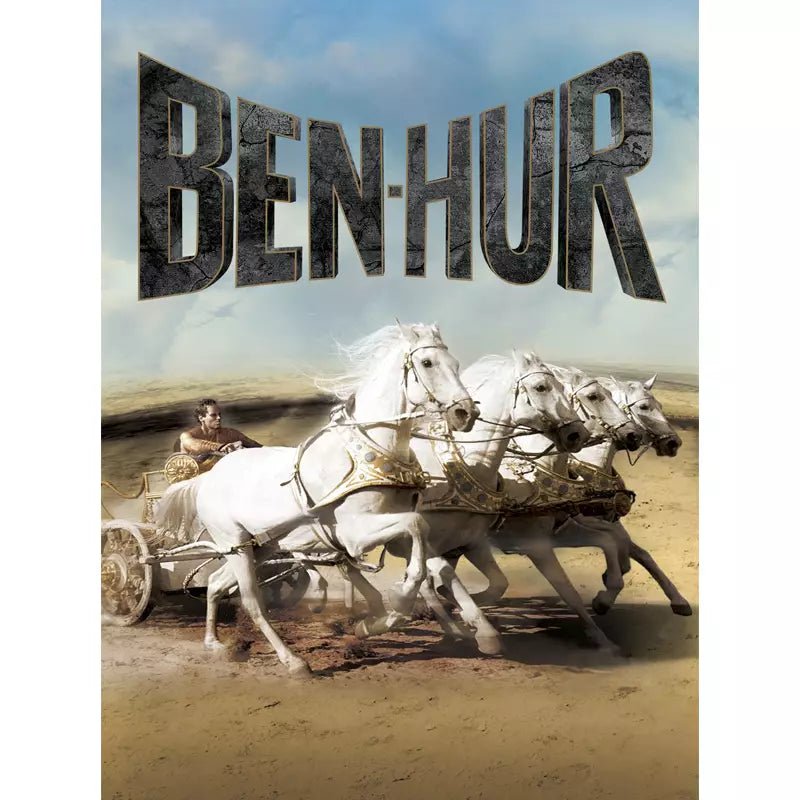
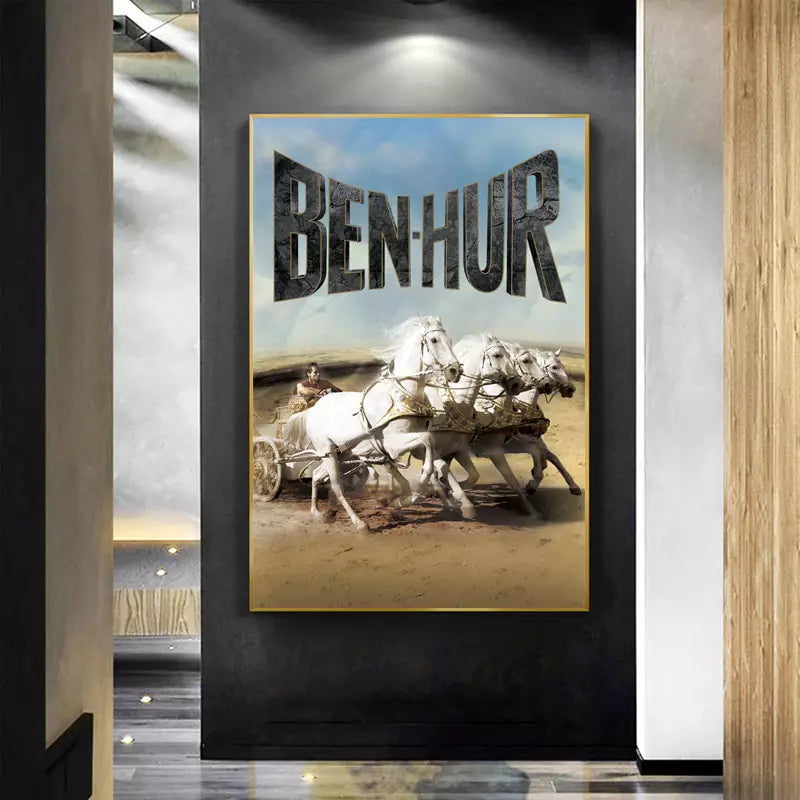
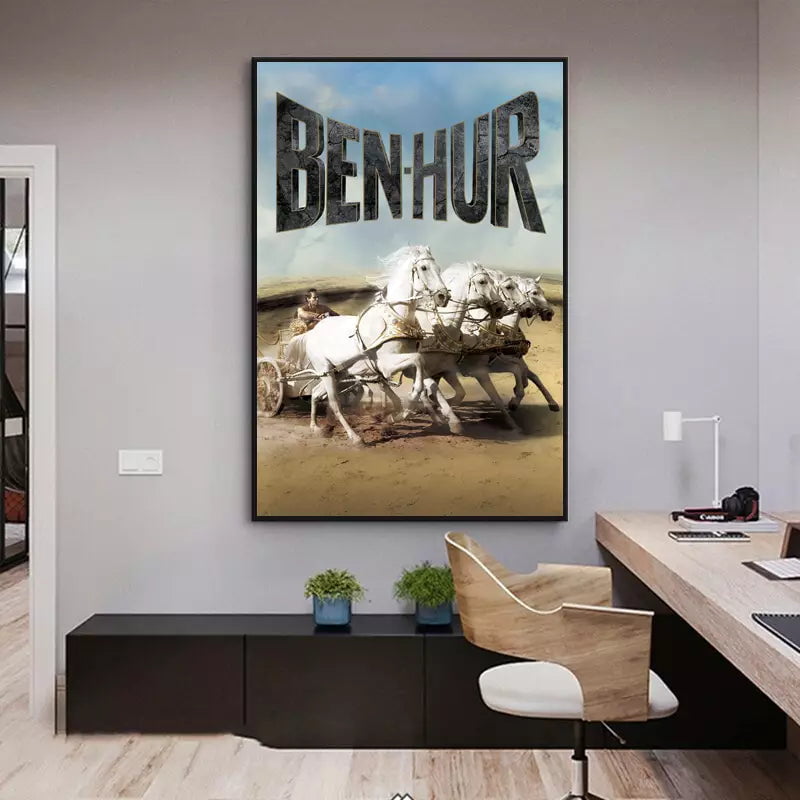
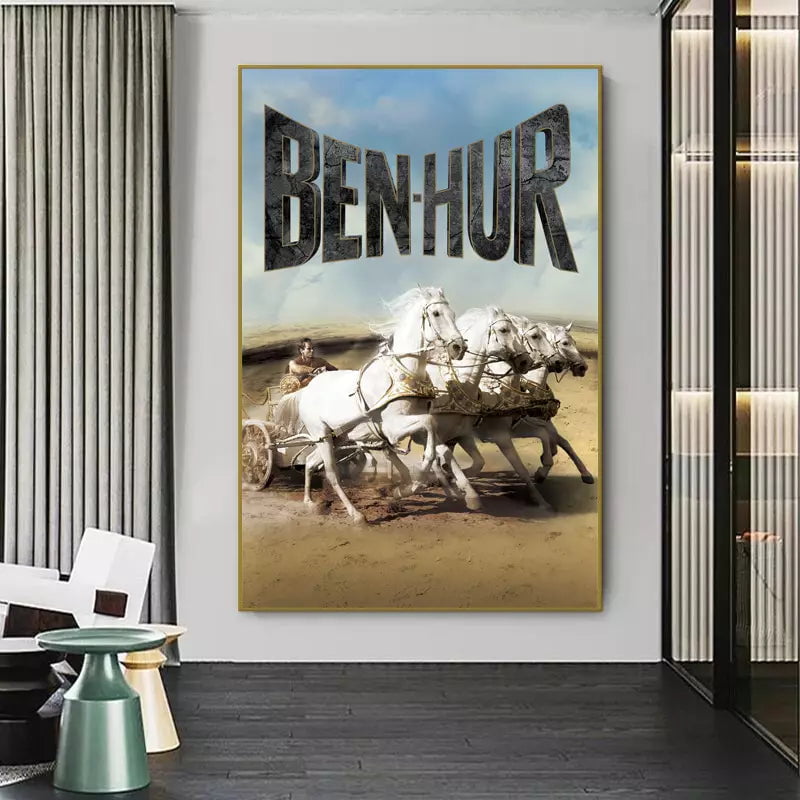


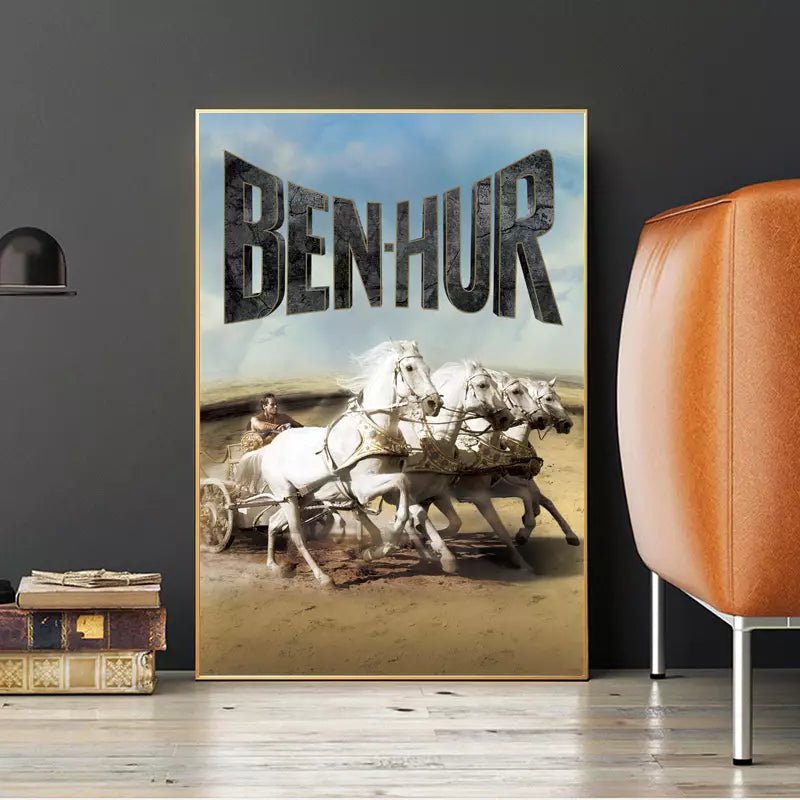

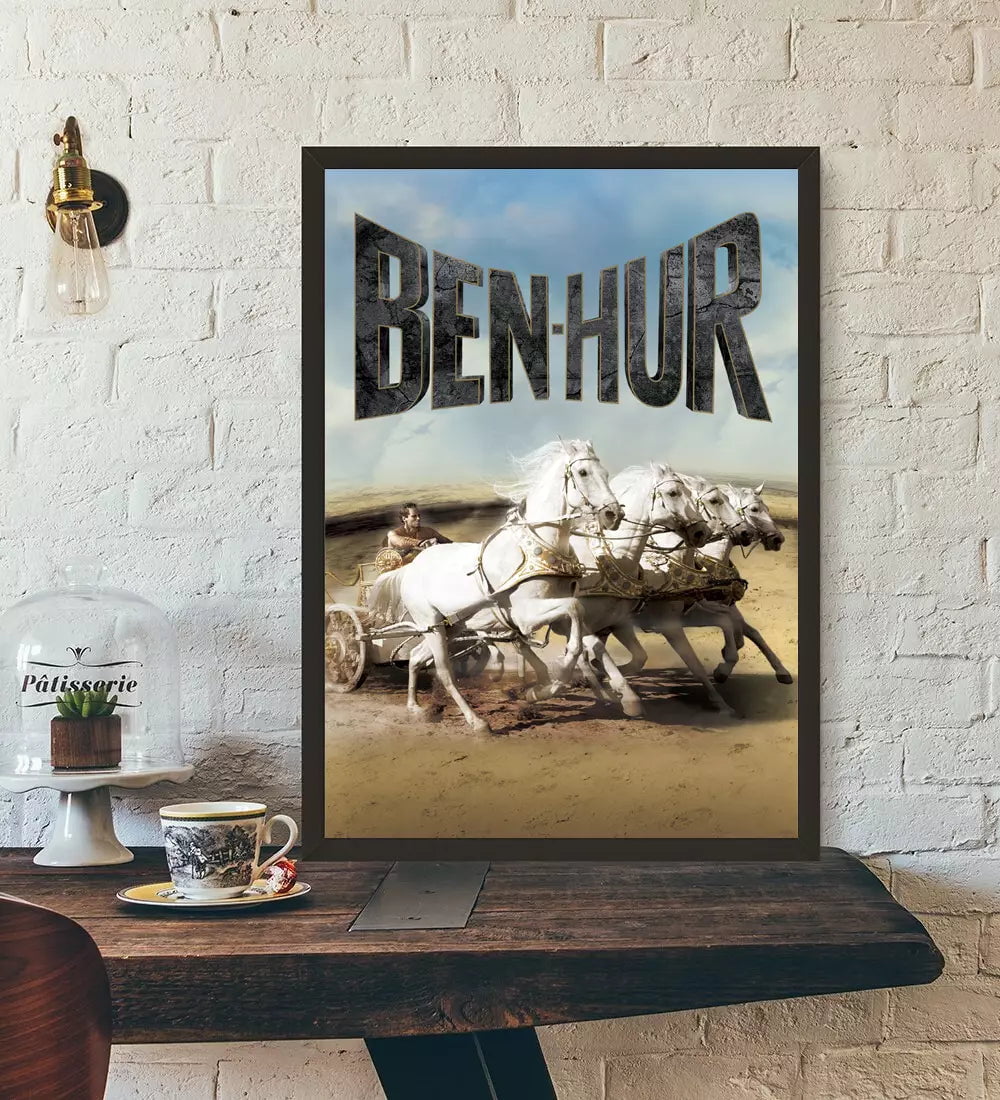
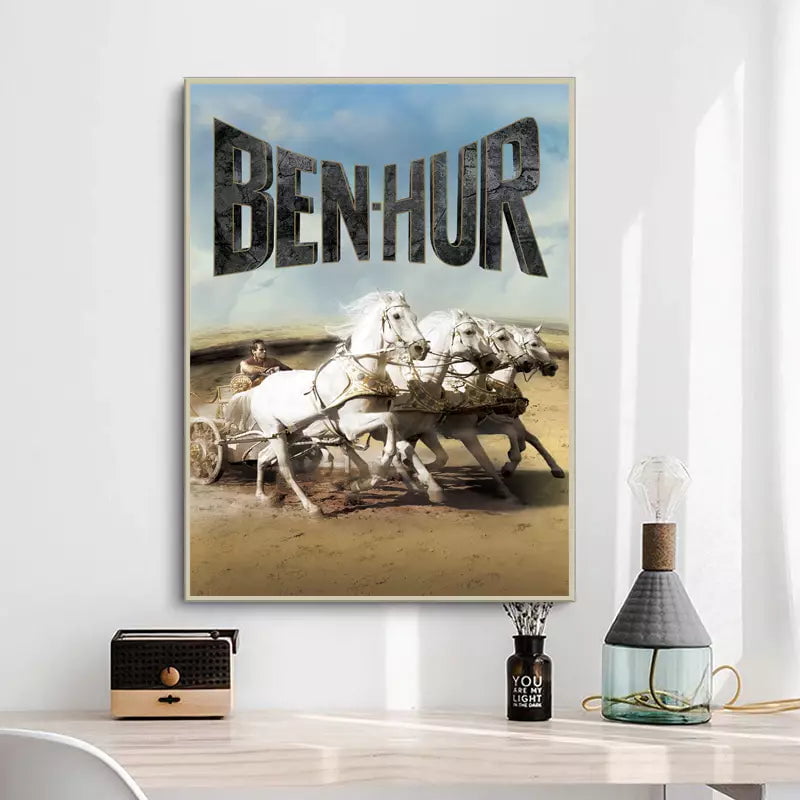






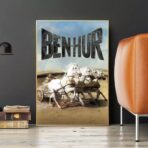













Dive into the heart of a legendary epic with this Ben-Hur Poster. This cinematic masterpiece, imbued with intense emotions, transports you into a whirlwind of passion, bravery, and determination. Experience an incredible adventure, between betrayal and redemption, through grandiose scenes and spectacular battles. Let yourself be captivated by the power of human relationships, the beauty of the landscapes, and the magnitude of the stakes. Ben-Hur is much more than a film; it is a memorable cinematic experience that will remain etched in your memories.
- Paper Feature:
- 🎨 Canvas: global standard in terms of print and imitating a “painting canvas” look.
- By default, the poster contains a 4cm white border for framing (frame not included). If you don’t want it, please choose “without white border”.
- ✅ Size: Multiple choices available. ✅
- High UV resistance.
- Maximum color brilliance without reflections.
- Recycled paper guaranteed environmental friendliness.
- Poster wrapped carefully and delivered in a protective tube for total protection.
- FREE STANDARD DELIVERY.
⚠️ Frame not included. ⚠️
Description of this Ben-Hur Poster
Ben-Hur is a 1959 American epic drama film set primarily in the Roman province of Judea during the reign of Emperor Tiberius. It was directed by William Wyler and produced by Sam Zimbalist for Metro-Goldwyn-Mayer. It stars Charlton Heston, Stephen Boyd, Jack Hawkins, Hugh Griffith, and Haya Harareet. An adaptation of the 1925 silent film of the same name, Ben-Hur is based on the 1880 novel of the same name by Lewis Wallace. The screenplay was written by Karl Tunberg, although Maxwell Anderson, S. N. Behrman, Gore Vidal, and Christopher Fry contributed to it.
Ben-Hur had the largest budget ever made for a film, over $15 million. Two hundred artists and workers built the largest sets ever used for a film, with hundreds of friezes and statues, while costume designer Elizabeth Haffenden led a team of 100 seamstresses. Filming began on May 18, 1958, and continued until January 7, 1959, with shooting days of twelve to fourteen hours, six days a week. Preproduction began at Cinecittà Studios in Rome in October 1957, and postproduction lasted six months. MGM executives asked cinematographer Robert L. Surtees to shoot the film in widescreen, which Wyler did not like. More than 200 camels, 2,500 horses, and some 10,000 extras were used in the shoot. The naval battle was filmed with action figures in a large water tank at Metro Studios in Culver City, California. The nine-minute chariot race is one of the most famous sequences in cinematic history, while the soundtrack, composed and conducted by Miklós Rózsa, is the longest ever created for a film and profoundly influenced cinema for over 15 years.
After spending $14.7 million on promotion, Ben-Hur was released at the Loew Theatre in New York City on November 18, 1959. It was the highest-grossing film of that year and became the second-highest-grossing film of that year, just behind Gone with the Wind. The film won a record eleven Academy Awards, including Best Picture, Best Director (Wyler), Best Actor (Heston), Best Supporting Actor (Griffith), and Best Cinematography (Surtees), a feat unmatched until the release of Titanic in 1997 and The Lord of the Rings: The Return of the King in 2003. Ben-Hur also received three Golden Globe Awards—for Best Motion Picture (Drama), Best Director, and Best Supporting Actor (Boyd). Today, Ben-Hur is considered one of the greatest films in cinematic history, and in 2004, the National Film Preservation Board selected it for preservation in its National Film Registry as a “culturally, historically, or aesthetically significant” film.
The film takes place in Judea in the year 30 CE. The Roman Empire, lord and master of the known world, rules with an iron fist over its vast territories, including Judea, harshly subjugating its inhabitants. They eagerly await the arrival of a new Messiah who will free the Jewish people from the Roman yoke. Among them is Judah Ben-Hur (Charlton Heston), a wealthy prince who trades spices from the East to Rome, a respected man who believes in his people’s faith and in their God.
The Romans respond by sending two legions under the command of Messala (Stephen Boyd), Ben-Hur’s former childhood friend. Judah Ben-Hur sees in Messala a friend and also a possibility of change for his people, a hope for understanding and respect. Conversely, Messala sees in his former friend the man who will “point the finger” at Rome’s Jewish enemies for their past friendship. Ben-Hur refuses the deal, and Messala, furious, breaks off their relationship.
Ben-Hur, fearful of his former friend, knows he must now be careful. However, a stroke of bad luck strikes: his only sister, Tirzah, leans on the edge of the roof of her house, and a tile comes loose as the procession carrying the governor passes, causing her and her horse to fall. This incident, though accidental, leads to his former friend imprisoning him along with his mother and sister, accused of attempting to attack the new governor of Judea, Valerius Gratus. Judah attempts to escape from prison, but not before speaking to Messala, threatening him with a spear, and persuading him to release his mother and sister by proclaiming his innocence. After the failed assassination attempt on the tribune, Judah is sent to the port of Tyre, without trial, as a galley slave. Ben-Hur vows to avenge Messala, even if it costs him his life.
On the way to the port, Judah meets Jesus of Nazareth, who will give him water. The face of the one who helped him will remain etched in his memory, the same one who, with a firm and peaceful gaze, overcomes a Roman overseer’s threat to him and Judah by giving him water, even though only minutes earlier the population had been forbidden to provide water only to him. After three years of hardship, Ben-Hur meets Quintus Arrius, the first consul of Rome, whose life he saves when the galley sinks in a naval battle against the Macedonians. In gratitude to Judah, Quintus adopts him as a son, which brings him wealth, the title of chariot champion in the Roman circus five times in a row, as well as various titles. However, despite the wealth, power, and glory of Rome, Ben-Hur knows he has an oath to fulfill and can’t wait any longer, especially when Judah meets the next governor of Judea, Pontius Pilate, at one of the many meetings held in his father’s palace. He asks his father to return to Judea and settle his family’s affairs. Knowing that Judah is unlikely to return, Quintus grants his request, knowing that the father-son bond still exists. The time for revenge has come.
On the way to Jerusalem, Ben-Hur meets Balthasar and Sheikh Ilderim, an Arab merchant famous for his passion for betting on horse races. From Balthasar, he learns that there is someone to believe in, a Messiah, the son of God, who will deliver men from their anger and hatred. From the sheikh, however, he discovers that Messala participates in chariot races and the circus arena, where death is not a crime.
Fueled by his hatred, Judah agrees to compete against Messala in the races and, on the other hand, sets out in search of his mother and sister. Returning to Judea, he discovers that everything he has known has been reduced to ruins, that his family has disappeared, and that the only explanation he has is that of the daughter of one of his slaves, Esther, whom Judah loved deeply, and of her father, a butler loyal to the Ben-Hur family, who was tortured and left paralyzed.
After condemning Judah to the galleys, Messala not only confiscated all of Ben-Hur’s possessions, but he also went on a rampage against his mother and sister, locking them in the deepest dungeons. Upon Judah’s return and determined to exact his revenge, a tense Messala sends for Judah’s family in exchange for forgetting what happened eight years earlier. To his surprise, so many years spent in an unsanitary cell in the dungeons have made them sick with leprosy. Once freed, the mother and sister crawl home to find ruin and poverty. Esther promises to tell no one about their future and their painful final destination: the Valley of Lepers, not even her son Judah.
Esther immediately confesses to Judah that his mother and sister died in prison and tries to convince him to give up his quest. Judah, angry and hateful, is torn between his revenge against his tormentor and his old childhood friendship. But he knows that Messala will not change and that his only chance of revenge for his family’s supposed death is to defeat and humiliate him in the circus arena. To do this, he must participate in the chariot race with the sheikh’s white horses: Athaïs, Rigel, Aldebaran, and Antares. Before the race, Sheikh Ilderim cannot contain himself and challenges Messala to a thousand talents of gold if he beats him and three thousand if he wins, not without declaring that his chariot driver is the circus champion Judah Ben Hur, which does not prevent Messala from accepting the challenge.
Nine riders participate in the race, including chariots from Assyria, Phoenicia, Cyprus, Athens, Judea, and Rome. Judah Ben-Hur defeats Messala with his falchion chariot and black Friesian horses, who eventually falls from his chariot and is fatally crushed and trampled by another chariot at the beginning of the final lap of the race. His body bloodied, he is definitively doomed to be mutilated to survive. Messala, with a dying breath, informs Judah that his mother and sister are alive, but isolated in the Valley of Lepers. Therefore, as Judah senses, they are doomed to a slow and horrible death.
Judah immediately goes to the Valley of Lepers where, to his surprise, he finds Esther carrying food for his mother and sister. Ben-Hur demands an explanation for the lie and tragically acquiesces to his mother’s wish not to show herself. His faith lost, he hates Esther and feels his inner demons overwhelm him. He then decides to go to the governor Pontius Pilate and renounce his Roman citizenship, since it was Rome’s fault that his mother and sister died in life. This affront is resented by Pilate, and in his eyes, he becomes one of the rebellious Jews.
Judah decides to go to the Valley of the Lepers, to the surprise of Esther and her mother, paying little attention to his illness and seeking out Thersa, his sister, who is dying in one of the caves. Devastated, he walks through the streets of Jerusalem with his mother, sister, and Esther, granting the latter’s insistent request to have them healed by the rabbi of Galilee, whom he has heard preach and perform miracles, while a procession of people shouts at the arrival of the newly crucified, among them a man who once gave the hero a drink. Ben-Hur, grateful, tries to return the favor by giving him water. However, a Roman soldier throws the water away before Jesus can drink and breathe fresh air, freeing himself from his heavy burden. This encounter, and then witnessing the crucifixion of the man who saved him from death, leads Judah to find peace and lessen his anger through forgiveness. He returns again in the catharsis of what he has seen when he sees his sister and mother miraculously healed. Together, in a great embrace, joy overflows.