


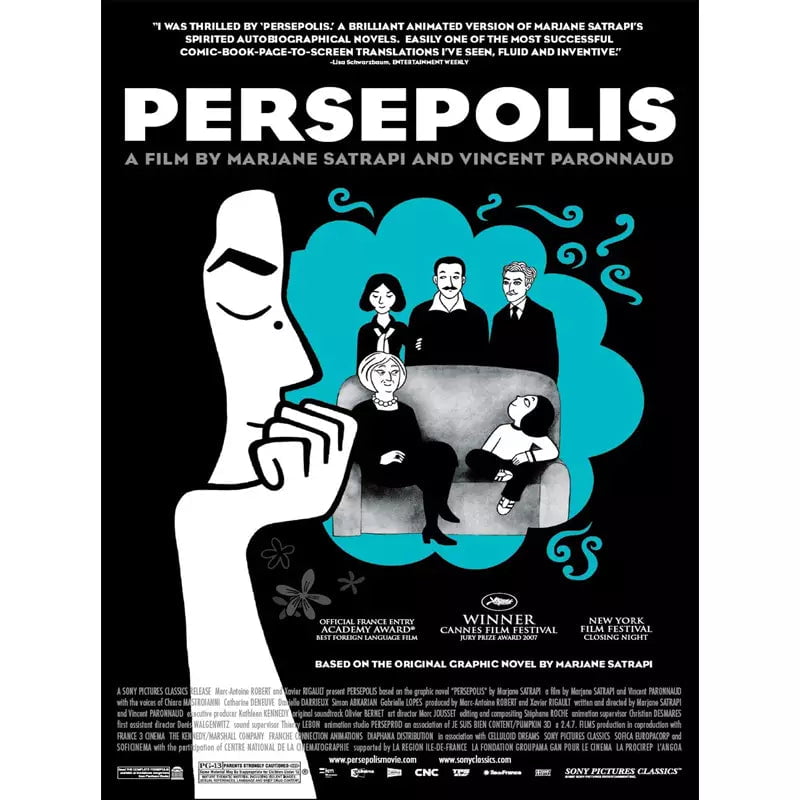
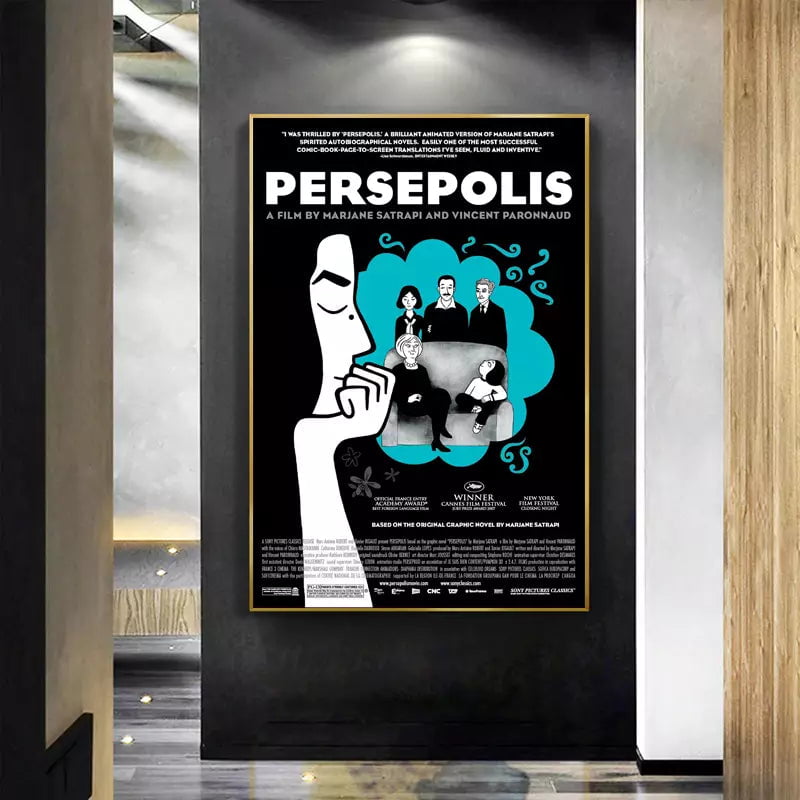
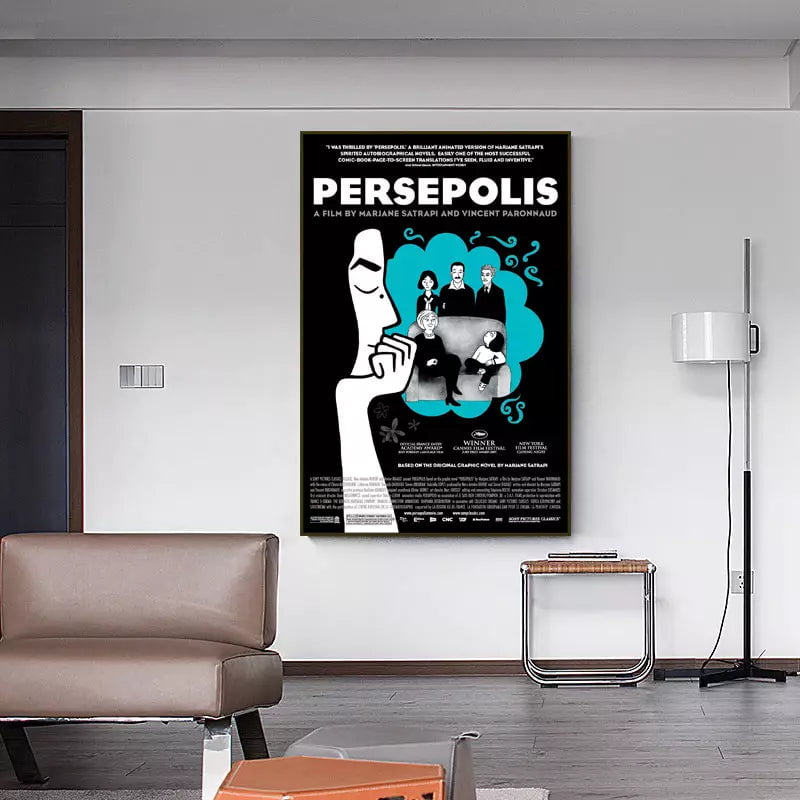
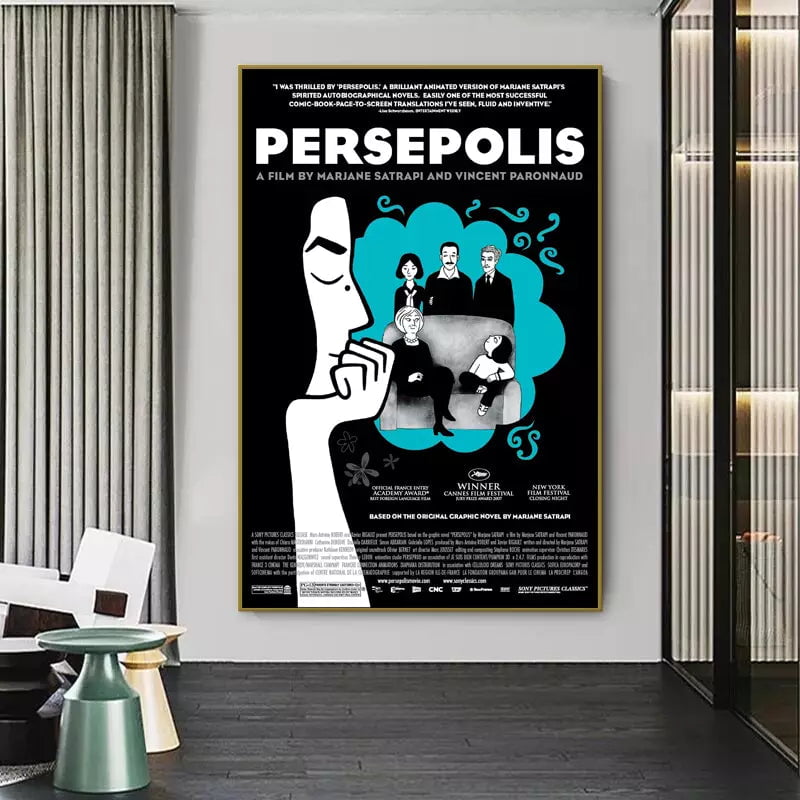
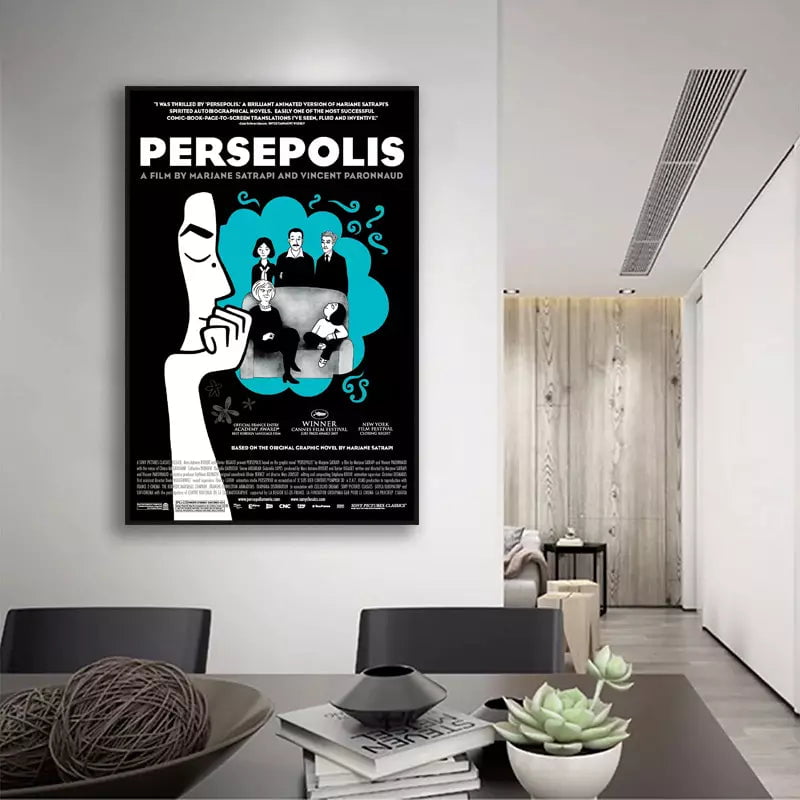
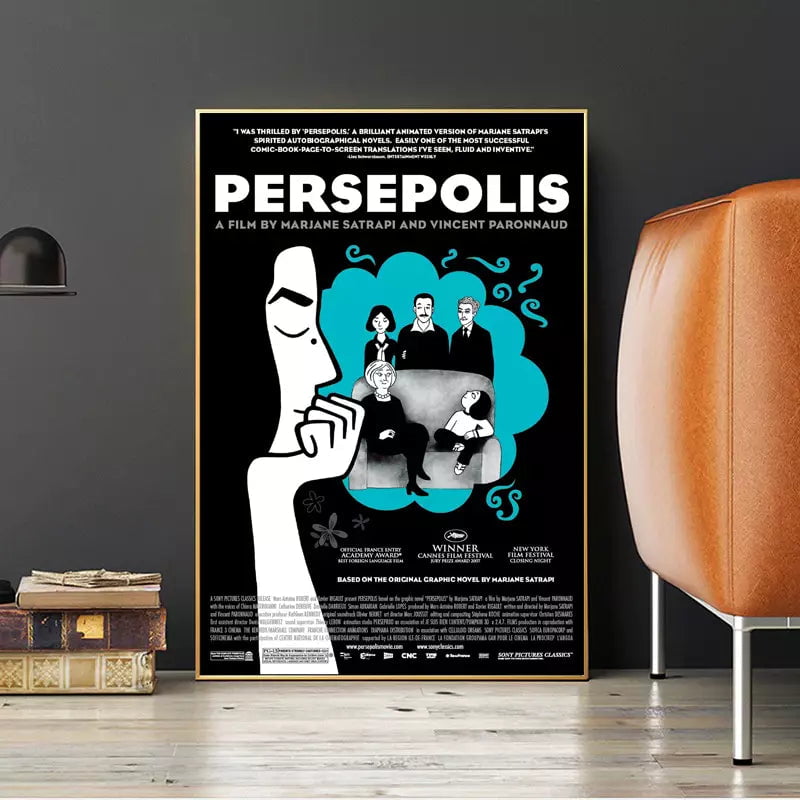
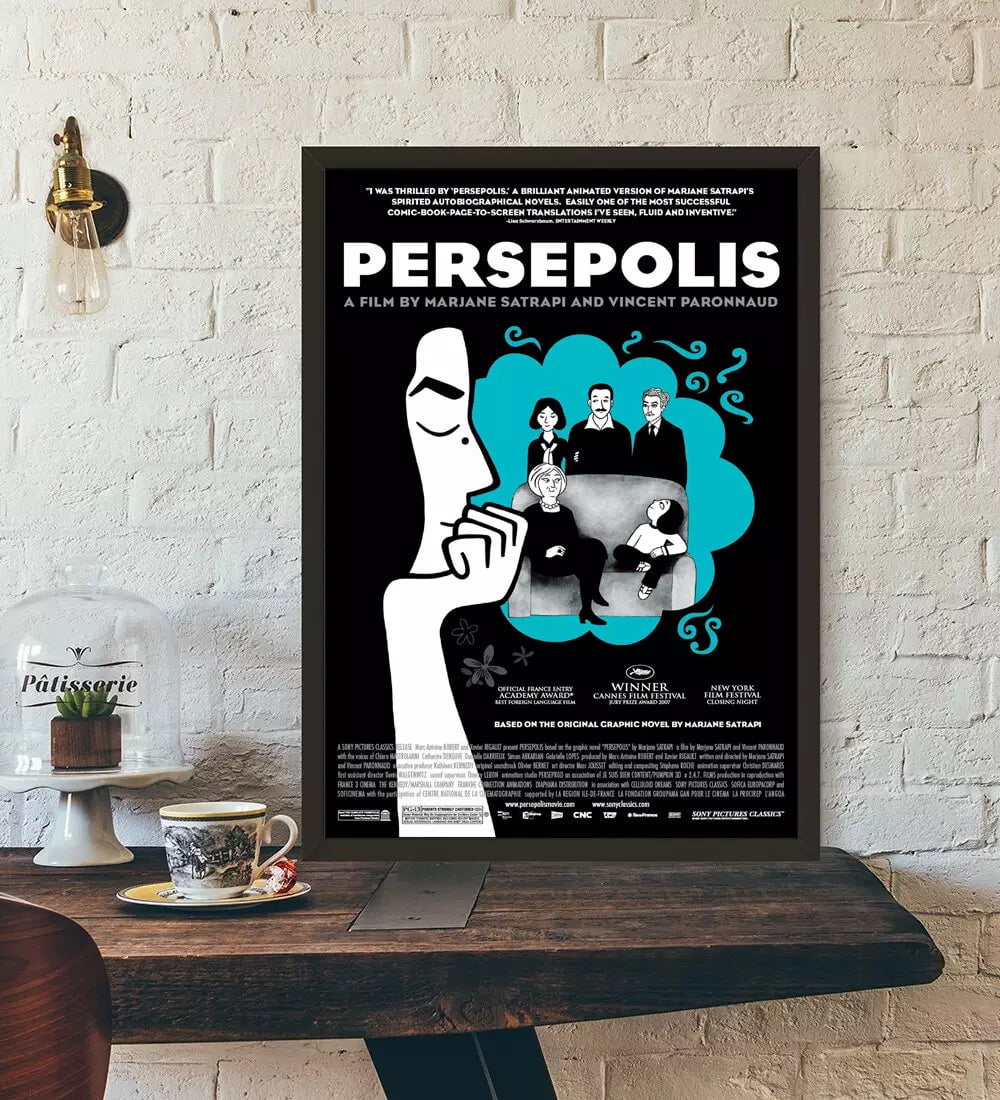
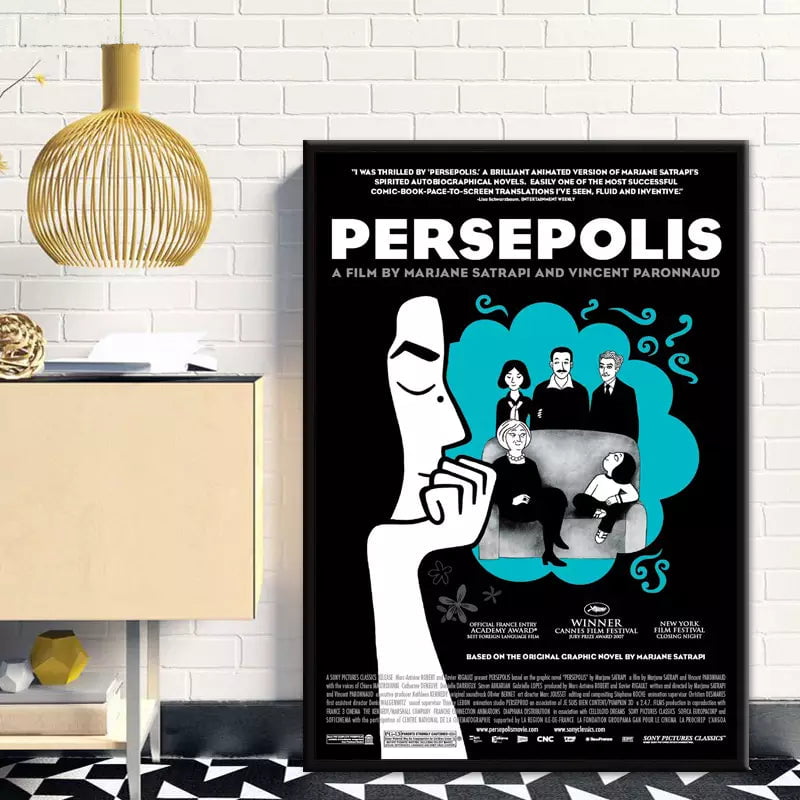
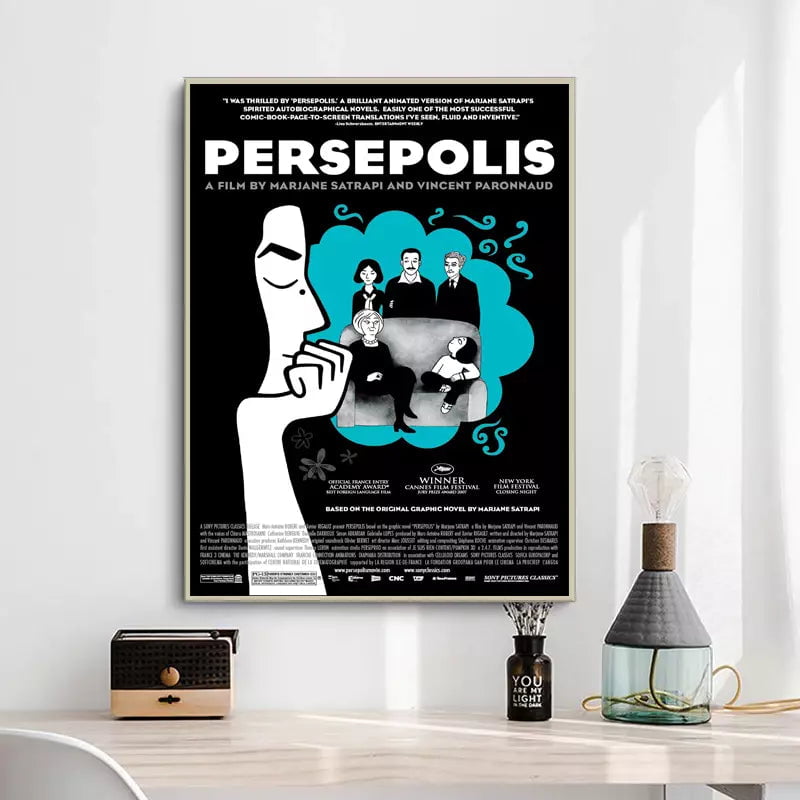
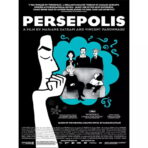
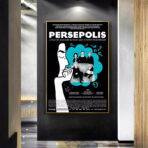
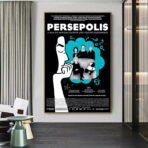

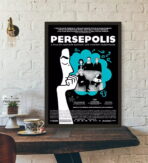










This Persepolis American Poster vividly depicts the moving story of a young Iranian woman as she struggles to find her identity through challenges and joys. Be transported by this animated masterpiece that subtly explores deep emotions, resilience, and self-discovery, delivering an unforgettable cinematic experience.
- Paper Feature:
- 🎨 Canvas: Global standard in printing and imitating a “painting canvas” look.
- By default, the poster contains a 4cm white border for framing (frame not included). If you don’t want it, please choose “without white border”.
- ✅ Size: several choices available. ✅
- High UV resistance.
- Maximum color brilliance without reflections.
- Recycled paper guaranteed environmental friendliness.
- Poster wrapped carefully and delivered in a protective tube for total protection.
- FREE STANDARD DELIVERY.
⚠️ Frame not included. ⚠️
Description of this American Persepolis Poster
Persepolis is a 2007 adult animated biographical drama film based on the autobiographical graphic novel of the same name by Marjane Satrapi. It was written and directed by Satrapi in collaboration with Vincent Paronnaud. The story follows a young girl as she comes of age against the backdrop of the Iranian Revolution. The title refers to the historic city of Persepolis. The film was an international co-production made by companies in France and Iran. It premiered at the 2007 Cannes Film Festival, where it co-won the Jury Prize, alongside Silent Light. It was released in France and Belgium on June 27, 2007, earning universal acclaim from critics. The film was selected as the French entry for Best Foreign Language Film at the 80th Academy Awards and was nominated for Best Animated Feature.
At Paris-Orly Airport in France, Marjane “Marji” Satrapi is about to board a plane to Tehran, but changes her mind at the last minute. She spends the entire day at the airport, reflecting on her life before her departure for France.
During the 1979 Iranian Revolution against the Shah of Iran, Marji’s bourgeois family participates in rallies, despite being forbidden from attending. Marji’s uncle, Anoosh, comes to dinner upon her release from prison, inspiring Marji with stories of his life on the run from the government.
The Shah is deposed, and elections for a new leadership power begin; Islamic fundamentalists win the elections and begin imposing strict Islamic law, forcing women to dress “moderately” and wear headscarves. Anoosh is rearrested and executed for his political beliefs. Over time, many Iranians escape abroad. The Iran-Iraq War breaks out, and the Iranian government takes away even more social freedoms. Marji’s uncle, Taher, suffers a heart attack and must go to England for surgery, but only those approved by the Board of Health can leave the country. When Marji’s aunt asks permission, she finds that the hospital director is her former window cleaner, who is incompetent and obsessed with religion. Marji and her father visit Khosro for a fake passport. Khosro shelters Niloufar, a woman wanted for her communist beliefs. When Niloufar is captured and executed, Khosro escapes. Taher dies.
Growing up, Marji buys heavy metal music on the black market and wears Western clothes. When she refutes a teacher’s lies about government abuses, she is expelled. Fearing arrest, her parents send her to a French high school in Vienna to live with her mother’s best friend. Marjane will live in a boarding school with Catholic nuns. Marji makes few friends and feels isolated. After insulting a nun, she is expelled. She moves from house to house until she rents a room from Dr. Frau Schloss, a former teacher.
One night, as she leaves a party where she lies about being French, Marji hears her grandmother’s voice telling her to stay true to herself. Schloss accuses Marji of stealing, and Marji leaves. She spends the day on a park bench, reflecting on her actions and realizing she has nowhere else to go. After living on the streets for a few months, she contracts bronchitis and nearly dies. She wakes up in a Viennese hospital.
Marji returns to Iran with her family’s hopes that the end of the war will improve their lives. She becomes depressed and attempts suicide by overdosing on medication. After coming out of her depression, she attends university and begins dating her classmate Reza.
While waiting outside for Reza, Marji lies to a police officer to avoid being arrested for wearing makeup. Her grandmother is disappointed and tells her that her grandfather and uncle died for freedom and that she should never sacrifice her integrity. Marji gives a speech in class, challenging the sexist double standard in the university’s forum on public morality, but Marji and Reza’s families are fined when the two are caught holding hands in public. Marji and Reza marry but divorce a year later. Fundamentalist police raid a party Marji is attending. The women are detained while the men escape to the rooftops. One of them, Nima, falls to his death. Marji decides to leave Iran. Before leaving, she visits the graves of her grandfather and uncle. Her mother forbids her to return, and her grandmother dies shortly after she leaves. In the present, at Orly, Marji gets into a taxi. As she leaves the airport, the driver asks her where she is from. She replies, “Iran.” She recalls her last memory of her grandmother.