
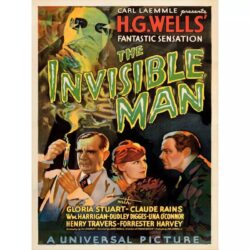
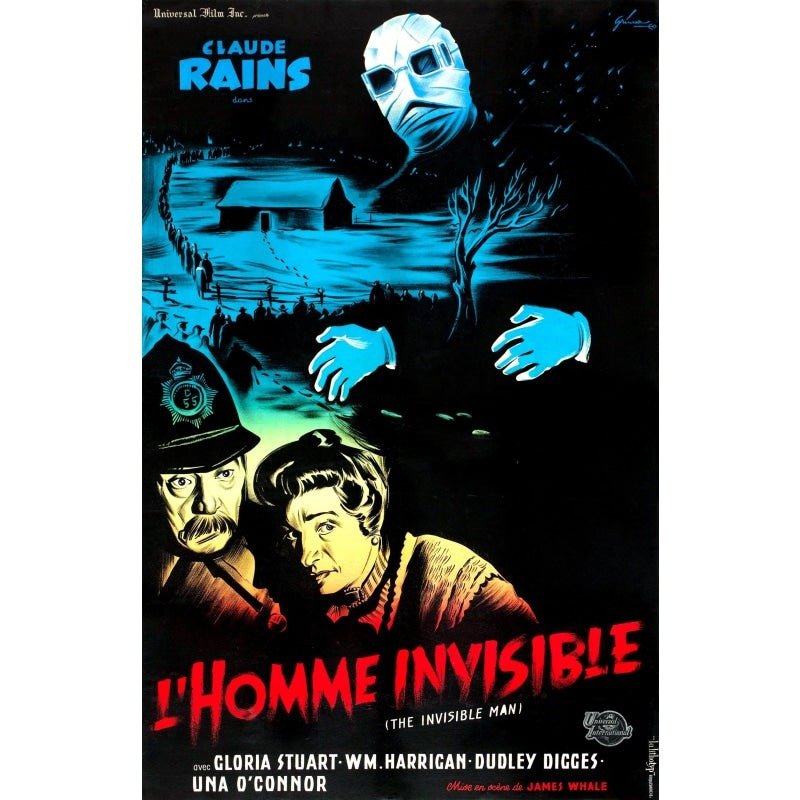
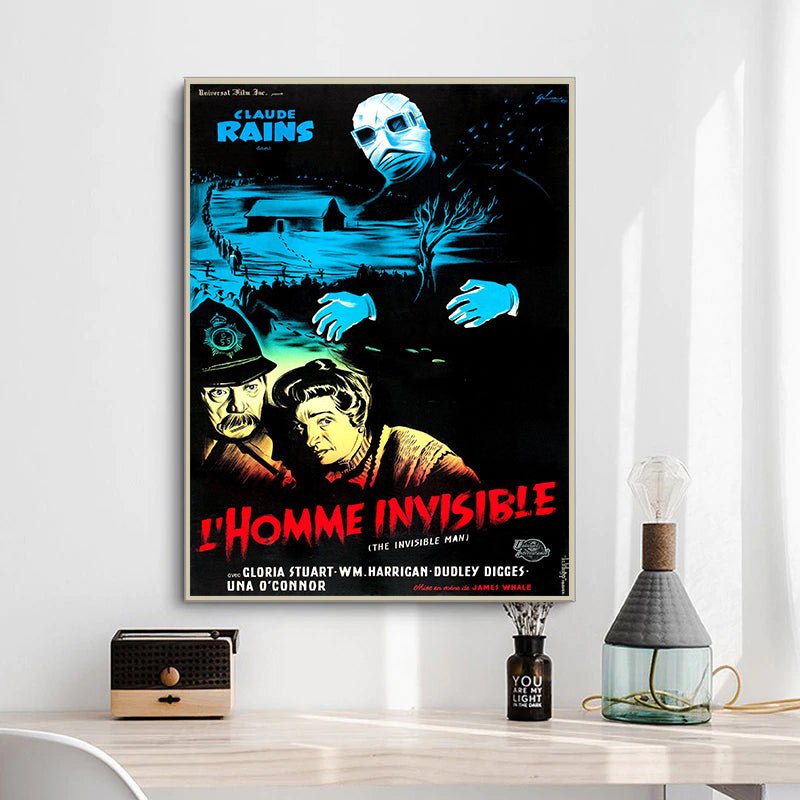
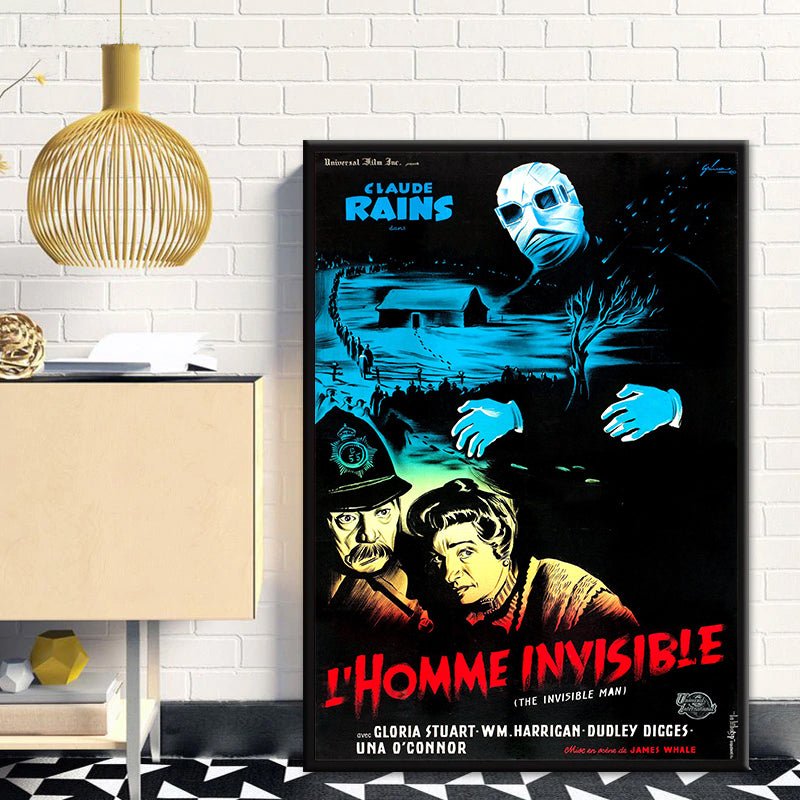
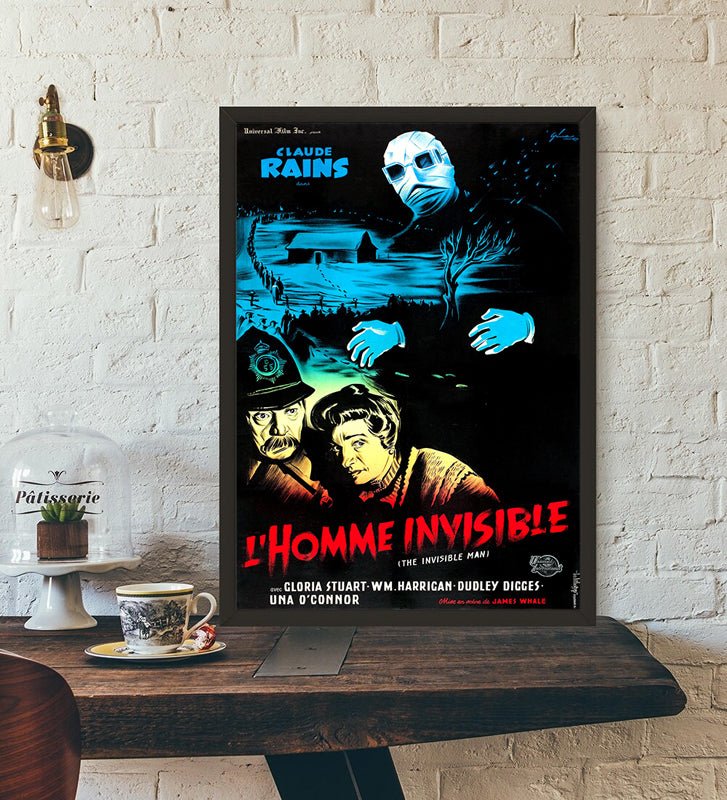



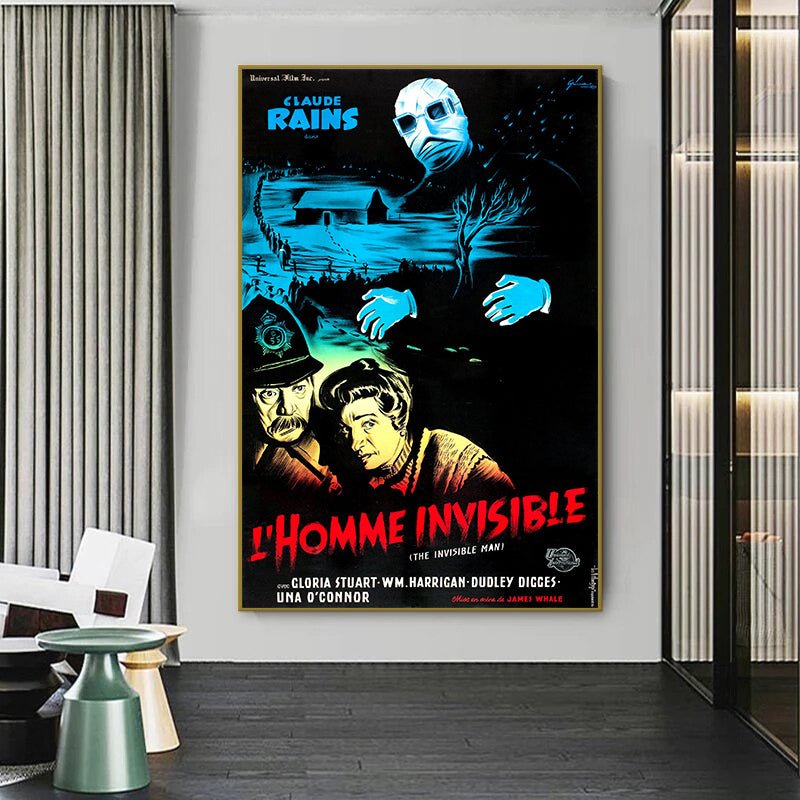
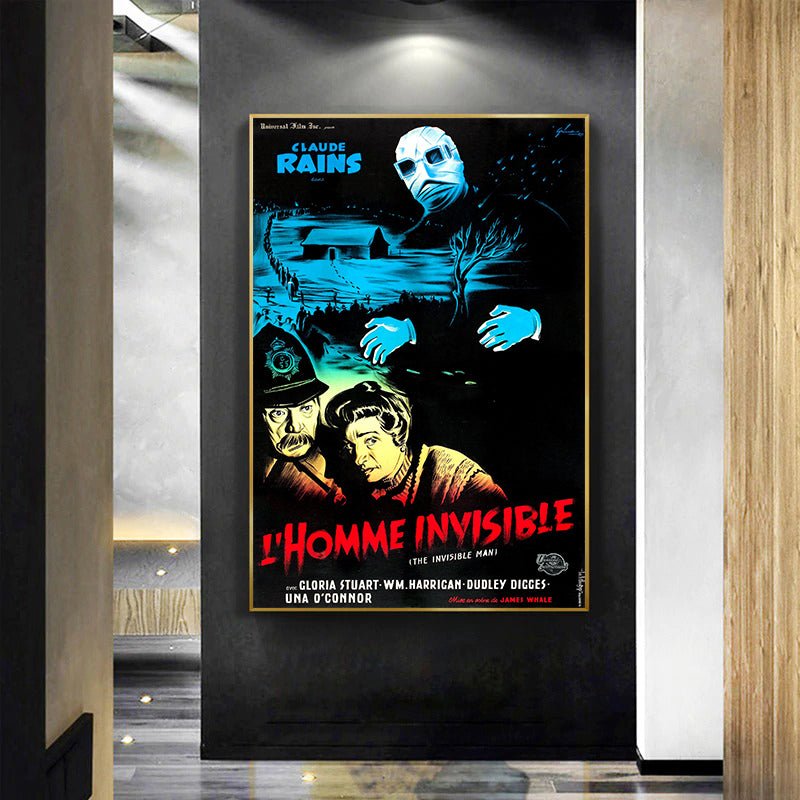
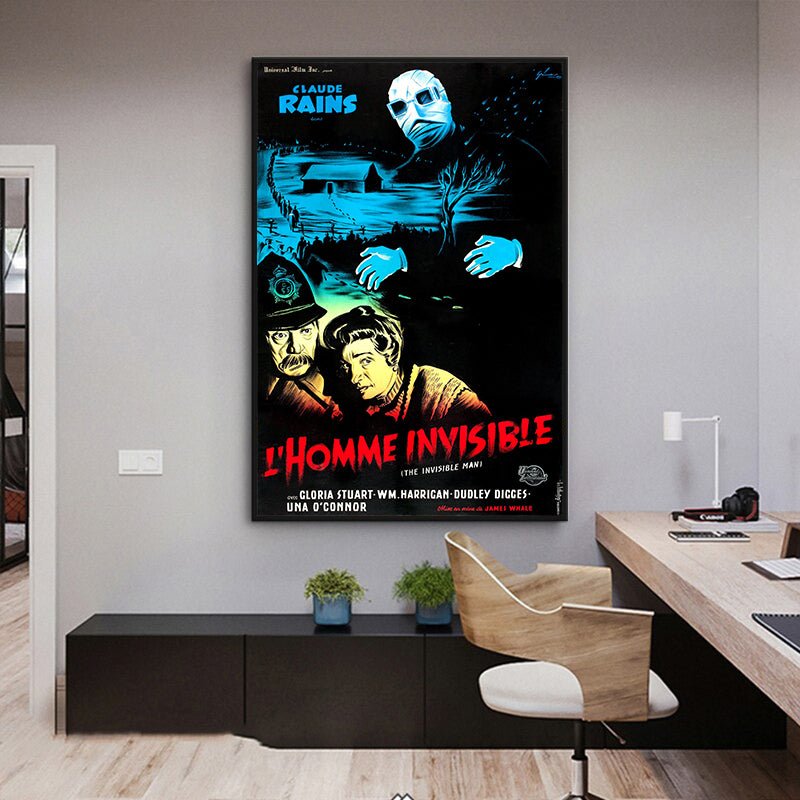
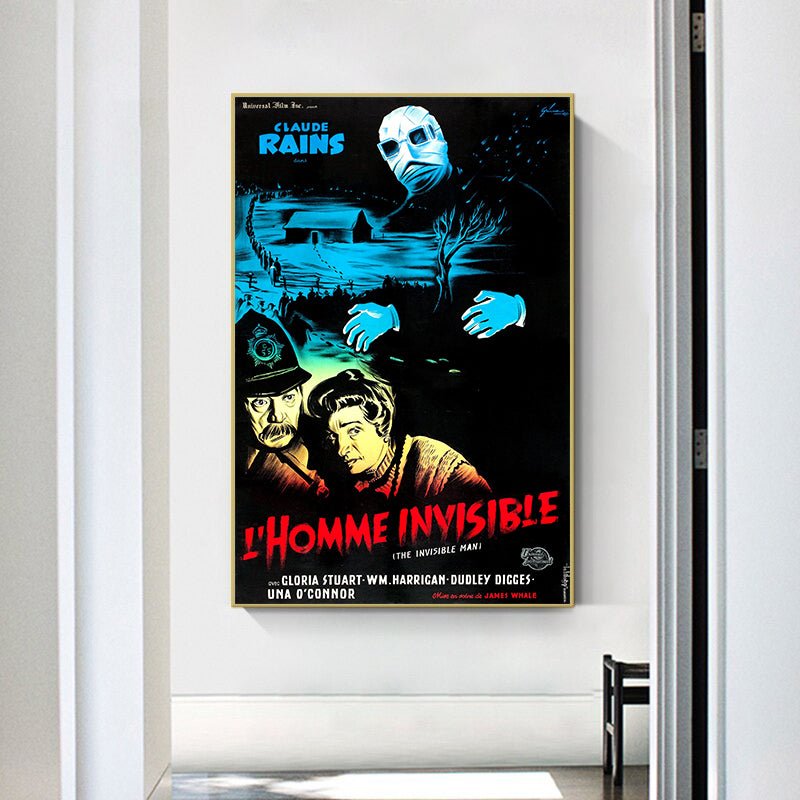
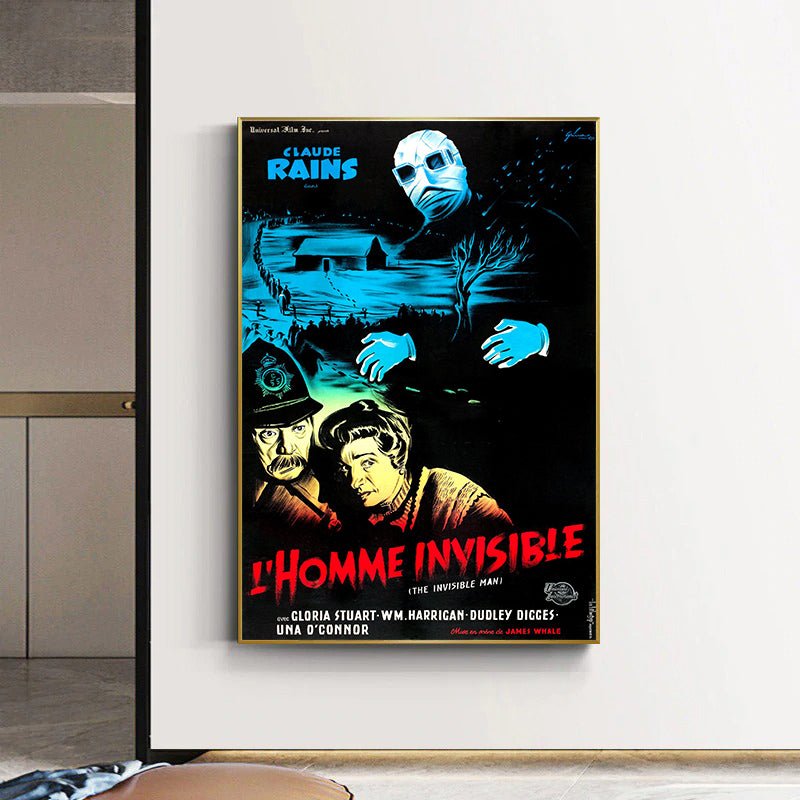







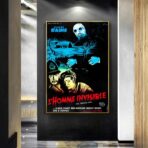















With this vintage The Invisible Man Poster, rediscover the unique suspense of the famous film while giving a retro touch to your interior decor!
- Paper characteristics:
- 🎨 Canvas: global standard in terms of printing and imitating a “painting canvas” look.
- By default, the poster contains a 4cm white border for framing (frame not included). If you don’t want it, please choose “without white border”.
- ✅ Size: Multiple choices available. ✅
- High UV resistance.
- Color vibrancy maximum, glare-free.
- recycled paper, guaranteeing environmental friendliness.
- Poster packaged carefully and delivered in a protective tube for Total protection.
- FREE STANDARD DELIVERY.
⚠️ Frame not included. ⚠️
Description of this The Invisible Man Poster
The Invisible Man is a 1933 American science fiction horror film directed by James Whale. Based on H. G. Wells’s The Invisible Man (1897) and produced by Universal Pictures, the film stars Claude Rains, Gloria Stuart, and William Harrigan. The film features Dr. Jack Griffin (Rains), covered in bandages and his eyes obscured by dark glasses, the result of a secret experiment that renders him invisible, who lodges himself in the village of Iping. Never leaving his quarters, the stranger demands that the staff leave him completely alone until his landlady discovers he is invisible. Griffin returns to the laboratory of his mentor, Dr. Cranley (Henry Travers), where he reveals his secret to Dr. Kemp (William Harrigan) and his former fiancée, Flora Cranley (Gloria Stuart), who soon learn that Griffin’s discovery is driving him mad, leading him to prove his superiority over others by playing harmless pranks at first, then turning to murder.
The Invisible Man was in development for Universal as early as 1931, when Richard L. Schayer and Robert Florey suggested that Wells’s novel would make a good sequel to the studio’s hit horror film, Dracula. Universal chose to make Frankenstein in 1931. Several screenplay adaptations were written, and several potential directors, including Florey, E.A. Dupont, Cyril Gardner, and screenwriters John L. Balderston, Preston Sturges, and Garrett Fort, signed on to develop the project with the intention of making it into a film for Boris Karloff. After working on The Old Dark House and The Kiss Before the Mirror, Whale signed on, and fellow screenwriter R.C. Sherriff developed a script in London. Production began in June 1933 and ended in August 1933, with two months of special effects work following the end of filming.
Upon its release in 1933, the film was a major financial success for Universal and received positive reviews from several trade publications, including The New York Times, which listed it among its best films of 1933. The film spawned several relatively unrelated sequels in the 1940s and a 2020 remake. The film has continued to receive praise in reappraisals by critics such as Carlos Clarens, Jack Sullivan, and Kim Newman, and has been listed among their favorite genre films by filmmakers John Carpenter, Joe Dante, and Ray Harryhausen. In 2008, The Invisible Man was selected by the Library of Congress for inclusion in the United States National Film Registry due to its “cultural, historical, or aesthetic significance.”